Never Buy Strawberries if You Notice This at the Grocery Store
Strawberries are one of the most disappointing fruits in the grocery store. They look incredible in the clamshell — bright red, perfectly shaped, packed tight — and then you get them home, bite into one, and it’s pale, hollow, and tasteless.
That gap between how strawberries look and how they actually taste is bigger than almost any other fruit. Here’s how to close it.
The Color Goes All the Way to the Tip
This is the first thing to check, and most people miss it because they’re looking at the top of the clamshell instead of the bottom.
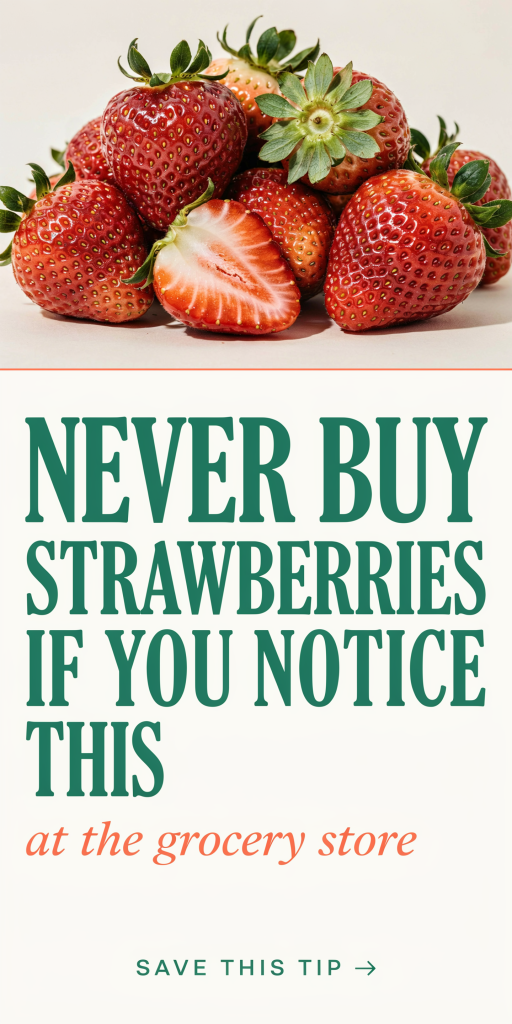
A flavorful strawberry is fully red from the leafy green cap all the way down to the very tip. What you’re looking for — and avoiding — is a berry that’s red on top but fades to white or pale pink at the bottom.
That white tip isn’t just cosmetic. It means the strawberry was picked before it was ripe, and unlike bananas or avocados, strawberries do not continue to ripen after they’re harvested. What you see is what you get. A white-tipped strawberry will never develop the sugar content it would have had if left on the plant longer.
Flip the clamshell over and look at the berries on the bottom layer. If they show white or pale areas, the whole container is likely the same.
The Seeds Should Be Yellow, Not Red
Look closely at the tiny seeds — technically called achenes — on the surface of the berry. On a properly ripe strawberry, they are yellow or off-white.
Red seeds are a sign the berry is overripe or has been sitting too long. It’s a subtle detail but a consistent one, and it’s easy to spot once you know to look for it.
The Green Cap Tells You About Freshness
The leafy green cap on top of each strawberry, called the calyx, is a freshness indicator that most shoppers ignore completely.
What you want: bright green, crisp-looking, perky caps that fan out naturally from the berry.
What to avoid:
- Brown or wilted caps — the strawberries are old. They may still be edible but are well past their prime.
- Caps that are flat or pressed down against the berry — a sign of age and handling stress
- Missing caps entirely — the berry has been jostled enough to lose the stem, which also means the top of the fruit is exposed and deteriorating faster
Fresh caps mean recently harvested. Wilted caps mean the berry has been in transit or on the shelf longer than ideal.
Check the Bottom of the Clamshell
Before anything else, look through the plastic at the bottom of the container. This is the most important thirty seconds you’ll spend in the produce section.
You’re looking for:
- Juice or moisture pooling at the bottom — berries are already breaking down inside the container. The ones on the bottom layer are likely mushy or moldy.
- Any visible mold at all — even one moldy berry contaminates the others faster than you’d think. Mold spores spread in the confined, humid environment of a sealed clamshell. One bad berry today means half the container is unusable tomorrow.
- Dark, mushy-looking berries pressed against the clear plastic — soft spots and collapse at the bottom of the container are a reliable sign the batch is on its way out.
A single moldy berry in the container is reason enough to pick a different clamshell. This is not being overly selective — it’s buying fruit that will actually last through the week.
Size Is Not a Quality Indicator
Bigger strawberries are not better strawberries. In fact, the opposite is often true.
Very large strawberries tend to have a higher water content, which dilutes flavor. Smaller to medium berries are typically denser, more concentrated in sugar, and more flavorful. The giant strawberries that look impressive in the container are often the blandest ones in the batch.
If you’re choosing between two containers and one has noticeably smaller, more uniform berries with good color, that’s usually the better buy.
Smell Them if You Can
A ripe, flavorful strawberry has a distinct fragrance — sweet, slightly floral, unmistakably strawberry. If you can open the container slightly and hold it near your nose, you should be able to smell them.
If there’s no scent at all, the berries were picked too early and will taste like nothing. If the smell is fermented or off in any way, they’re already turning.
This is harder to do with sealed containers, but many stores have open displays or loosely closed clamshells that make it possible. When you can do the smell test, it’s one of the most reliable indicators of flavor available to you before you buy.
The Red Flags to Walk Away From
Put the container back if you see:
- White or pale pink tips on the majority of berries
- Any mold anywhere in the container
- Juice pooling at the bottom
- Brown, wilted, or collapsed green caps
- A fermented or off smell when opened
- Berries that look dull, shriveled, or wrinkled rather than plump and glossy
How to Store Them Once You’re Home
Strawberries go bad faster than almost any other fruit in your refrigerator. A few things that actually extend their life:
Don’t wash them until you’re ready to eat them. Water accelerates mold growth, and wet strawberries in a container deteriorate within a day.
Store them in a single layer if possible, or at least spread them out rather than keeping them stacked in the original clamshell. Pressure and contact between berries speeds up bruising and breakdown.
Line your storage container with a paper towel to absorb excess moisture.
If you know you won’t use them within two days, rinse, hull, and freeze them. Frozen strawberries hold their flavor well and go straight into smoothies, sauces, or baking without thawing.
The Bottom Line
The clamshell is designed to show you the top layer at its best. Your job is to look past it — flip the container, check the bottom, look at the tips of the berries, and check the caps. Thirty seconds of attention at the store is the difference between strawberries that taste like strawberries and ones that taste like cold water in a red shape.