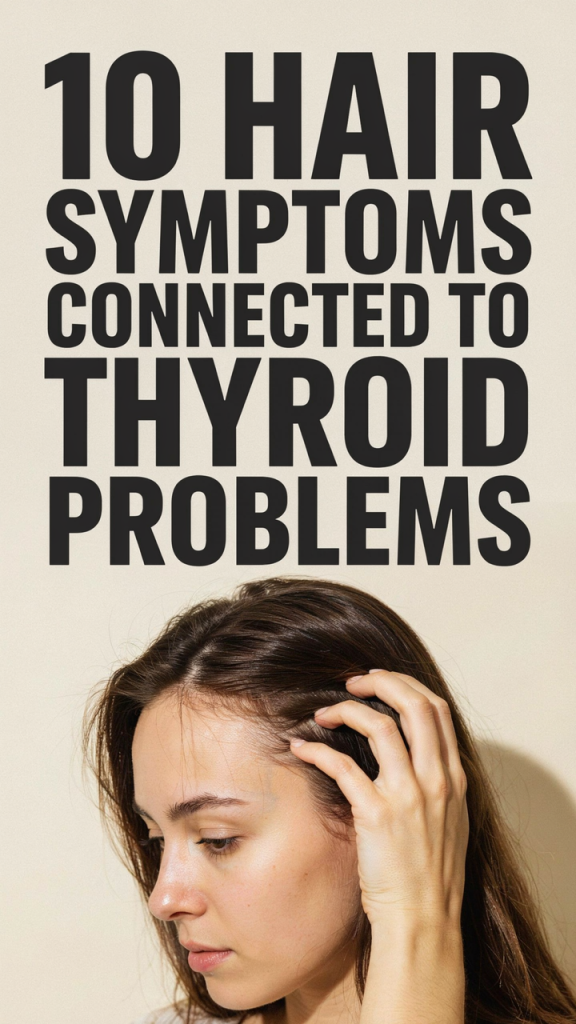
10 Hair Symptoms That Signal Thyroid Problems — What To Watch For In 2026
Hair changes are often dismissed as cosmetic annoyances, but they can be one of the earliest and most visible clues that something’s off with your thyroid. In 2026, with better awareness and more accessible testing, we’re in a stronger position to notice patterns, and act on them. In this text we’ll walk through ten hair-related symptoms commonly linked to thyroid dysfunction, explain why they happen, and outline when to get tested. Our aim is practical: help you recognize warning signs, understand the mechanisms behind them, and know what steps to take with your clinician and in everyday hair care.
How Thyroid Function Directly Affects Hair Growth And Quality
Thyroid hormones, primarily thyroxine (T4) and triiodothyronine (T3), play a central role in regulating metabolism, and hair follicles are metabolically active miniature organs. When thyroid hormone levels drift above or below the healthy range, the hair growth cycle is disrupted. To understand why hair changes happen, it helps to remember the three main phases of the hair cycle: anagen (growth), catagen (transitional), and telogen (resting/shedding). Thyroid dysfunction shortens the anagen phase and can push more follicles prematurely into telogen, resulting in diffuse thinning and increased shedding.
Both hypothyroidism (low thyroid function) and hyperthyroidism (overactive thyroid) can affect hair, but patterns and accompanying symptoms differ. Hypothyroidism tends to produce dry, coarse hair, slowed regrowth, and thinning, while hyperthyroidism more often causes rapid shedding and fine, brittle hair. Beyond hormones, thyroid disease can alter scalp sebum production, blood flow, and the microenvironment around follicles, which further affects hair quality.
Autoimmune thyroid conditions, Hashimoto’s thyroiditis and Graves’ disease, add another layer: autoimmune attack can coexist with other autoimmune processes (like alopecia areata) or create systemic inflammation that damages follicles. For anyone tracking their hair changes, correlating those changes with other symptoms, fatigue, temperature intolerance, weight shifts, mood changes, helps clarify whether a thyroid evaluation is warranted.
Thinning Hair And Generalized Hair Loss
One of the most common presentations we see is diffuse thinning across the scalp rather than a single bald patch. In thyroid-related hair loss, the hairline often remains intact while overall density drops. This is because altered thyroid hormone levels affect many follicles simultaneously, pushing them into the telogen (resting) phase.
Thyroid-related thinning can develop gradually over months. People typically notice wider part lines, ponytails that feel less full, or more scalp visibility under bright light. Clinically, this pattern can resemble telogen effluvium, a condition often triggered by stress, illness, surgery, or hormonal shifts, so timing and accompanying symptoms are key to differentiating causes. If thinning follows a significant life event, telogen effluvium may be the primary culprit, but an underlying thyroid disorder can both trigger and sustain the problem.
We recommend tracking density photos monthly and noting other symptoms like cold intolerance or constipation that point to hypothyroidism, or palpitations and unexplained weight loss that suggest hyperthyroidism. A simple blood panel, TSH and free T4, will screen thyroid status. In cases of persistent diffuse thinning even though normalized labs, referral to a dermatologist for trichoscopy or scalp biopsy can separate thyroid-related changes from pattern hair loss and autoimmune conditions.
Dry, Brittle Hair And Increased Breakage
Dryness and breakage are hallmark complaints when thyroid function is low. Hypothyroidism slows metabolic processes, which reduces sebum production and moisture delivery to hair shafts. The result: hair feels coarse, straw-like, and snaps when brushed or styled. We often see this in combination with rough, dry skin and increased nail brittleness.
Molecularly, reduced thyroid hormone levels impair keratinocyte function, the cells that form the hair shaft, leading to weaker structural proteins and decreased elasticity. That makes hair more susceptible to mechanical damage (combing, styling, heat) and environmental damage (UV, pollutants). In practical terms, even normal styling practices can cause disproportionate breakage.
To mitigate breakage while addressing the underlying thyroid issue, we recommend gentler handling: wide-tooth combs, microfiber towels, and lower-heat styling. Moisture-retaining conditioners with humectants (glycerin, panthenol) and lightweight oils (argan, jojoba) help temporarily. While topical care improves appearance, resolving the root metabolic problem is crucial, hair quality generally begins to recover only after thyroid function is adequately treated, which may take months because follicular turnover is slow.
Hair Loss At The Outer Eyebrows, Scalp Patchiness, And Spot Loss
A classic, sometimes overlooked sign of thyroid disease, particularly hypothyroidism, is loss of the lateral (outer) third of the eyebrows. We’ll often notice patients thinning at that specific location before they recognize scalp changes. The mechanism isn’t fully pinned down, but it likely reflects regional differences in follicle sensitivity to thyroid hormone and autoimmune targeting in Hashimoto’s.
Scalp patchiness and spot loss can point toward autoimmune overlap. Alopecia areata is an autoimmune condition that causes well-demarcated round patches of complete hair loss and sometimes coexists with autoimmune thyroid disease. When thyroid antibodies are elevated, we become more vigilant for multifocal patchy loss rather than uniform thinning.
If someone presents with eyebrow thinning or discrete scalp patches, we advise checking thyroid antibodies (anti-TPO, anti-thyroglobulin) along with standard thyroid function tests. Dermatologic evaluation is helpful: trichoscopy can reveal yellow dots, black dots, or exclamation-point hairs that suggest alopecia areata, while biopsy can distinguish scarring versus non-scarring causes. Management often involves coordinating endocrinology and dermatology care, correcting thyroid dysfunction, topical or intralesional corticosteroids for alopecia areata, and exploring immunomodulatory therapies when appropriate.
Changes In Hair Texture, Color, And Slower Regrowth
Subtle changes, hair becoming noticeably finer, coarser, or changing color, are common but easy to dismiss. With hypothyroidism, hair often becomes coarser and drier: in hyperthyroidism it can become finer and more fragile. Color changes are less predictable but can occur because the pigment-producing melanocytes within follicles are sensitive to metabolic shifts and oxidative stress.
Slower regrowth after shedding or haircut is another meaningful clue. A healthy anagen phase sustains continuous growth: when thyroid levels are low, anagen shortens and recovery from shedding events slows considerably. We sometimes see patients who, after correcting thyroid levels, still wait many months before noticing thicker new growth. That delayed recovery is normal, hair cycles operate on months-long timelines.
Practical testing is simple: TSH, free T4, and, when autoimmune disease is suspected, anti-TPO. If labs are abnormal, begin treatment and document progress with photos every 8–12 weeks. For cosmetic help during the waiting period, low-level laser therapy and topical minoxidil can stimulate follicles and accelerate visible improvement, but they should be used in concert with medical management rather than as a substitute for treating the thyroid disorder.
Excessive Shedding, Timing, And Pattern Recognition
Excessive shedding, more hair in the shower, on the pillow, or in the sink, can be alarming. The key is timing: telogen effluvium typically causes a surge of shedding about two to three months after a triggering event (illness, childbirth, major stress, or metabolic disturbance). Thyroid dysfunction can act as both a trigger and a chronic driver of shedding.
Recognizing patterns helps direct testing. Diffuse, synchronous shedding following an identifiable stressor points to telogen effluvium: persistent, lower-grade shedding accompanied by symptoms like fatigue or cold intolerance suggests chronic hypothyroidism. We watch for seasonal patterns too, some people report worse shedding in late summer, which may overlap with other triggers but still warrant thyroid screening if prolonged.
Quantifying shedding can be useful: standardized methods, like the hair pull test or 60-strand hair counts, are available in dermatology clinics. At home, consistent photo documentation and simple metrics (how often you clear the drain of hair, or ponytail circumference) give practical trend data. If shedding is heavy or prolonged beyond six months, or if accompanied by other systemic symptoms, we advise prompt thyroid testing and dermatologic evaluation.
Diagnosis, Tests, And Treatment Options (Plus Practical Hair Care Tips)
When we suspect thyroid-related hair changes, testing is straightforward but should be thoughtful. Initial labs: TSH and free T4, these screen for hypothyroidism and hyperthyroidism. If autoimmune thyroid disease is a concern, add anti-TPO and anti-thyroglobulin antibodies. For complex cases, free T3, reverse T3, and a full metabolic panel can add context. Discuss medication history: certain drugs (amiodarone, lithium) can affect thyroid function and hair.
Treatment depends on the underlying disorder. For hypothyroidism, levothyroxine replacement is the standard: optimized dosing often restores hair health gradually over months. For hyperthyroidism, antithyroid medications, radioactive iodine, or surgery might be necessary: once thyroid levels normalize, shedding typically slows. If autoimmune alopecia coexists, targeted dermatologic therapies, topical or intralesional steroids, immunotherapy, can be effective alongside endocrine care.
Practical hair care measures we recommend while medical treatment takes effect:
- Minimize mechanical stress: low-tension hairstyles, soft scrunchies, and limited brushing when wet.
- Reduce thermal and chemical damage: lower heat settings, space out coloring or relaxing treatments.
- Use nourishing, lightweight conditioners and occasional protein treatments to strengthen shafts without weighing hair down.
- Consider topical minoxidil or low-level laser devices to support regrowth, discuss these with your clinician, especially if you’re on medications that affect hair growth.
Nutrition and lifestyle matter: ensure adequate protein, iron, vitamin D, and B12 levels, deficiencies can compound thyroid-related hair problems. And remember mental health: stress management supports both thyroid control and hair recovery. Communication between patient, endocrinologist, and dermatologist gives the best outcomes.
Conclusion
Hair changes are a visible, meaningful window into thyroid health. By watching for thinning, eyebrow loss, texture shifts, and unusual shedding patterns, and correlating those signs with other symptoms, we can often detect thyroid problems earlier. Testing is simple, treatment is effective for many people, and practical hair care measures ease the transition while follicles recover. If you or someone you care for notices persistent or worrying hair changes, let’s test thyroid function and work with clinicians to create a plan, hair recovery takes time, but with the right steps, most people see measurable improvement within months.