Top 10 Healthiest Foods To Buy At Trader Joe’s (2026): Easy Picks For A Nutrient-Packed Cart
We shop at Trader Joe’s because it’s one of the few national grocery chains that mixes value, convenience, and interesting ingredient choices without feeling overwhelming. Over the years we’ve learned which Trader Joe’s items give us the most nutrition per dollar and which ones consistently show up in our weekly carts. In this guide we highlight the Top 10 Healthiest Foods To Buy at Trader Joe’s in 2026, selections that balance real nutrient density, affordability, and broad availability across stores. We’ll explain how we chose these picks, give a quick at-a-glance list, then dive deeper into the best protein and plant-based staples that will form the backbone of healthier, simpler meals. Whether you’re feeding a family, meal-prepping for the week, or just trying to eat more whole foods, these Trader Joe’s finds will make smart grocery runs faster and more reliable.
How We Chose These Foods (Nutrition, Price, And Availability)
Our selection process blends three practical criteria: nutritional value, price-per-serving, and store availability. We focused on items that deliver meaningful amounts of protein, fiber, unsaturated fats, vitamins, and minerals while avoiding products that rely primarily on marketing or added sugars. Why those criteria? Because for everyday health gains, a nutrient-dense ingredient that’s affordable and available wins every time, you’re more likely to buy it repeatedly.
Nutrition: We prioritized whole or minimally processed foods. That includes fatty fish for omega-3s, legumes for fiber and plant protein, dairy or dairy-alternatives with live cultures, and whole grains and seeds that provide micronutrients and slow-release energy. When packaged options were chosen, we favored those with short ingredient lists and minimal added sodium or sugars.
Price-per-serving: Trader Joe’s is known for good value, but not every “unique” product is cost-effective. We roughly compared typical package sizes and realistic serving sizes to estimate cost per serving. Items that deliver multiple servings of nutrition (e.g., a bag of frozen vegetables or a can of beans) moved up the list.
Availability: Not every Trader Joe’s carries regional exclusives, seasonal specials, or limited-run items. We limited recommendations to products and categories that are broadly stocked in 2026. When a specific SKU varies by store, we suggested the general category (for example: “frozen wild-caught salmon” rather than a single brand). That keeps this list useful whether you live in Seattle, Orlando, or Austin.
Practicality: Finally, we considered how easy each item is to use in real life. Foods that work across breakfast, lunch, and dinner, or that require minimal prep, scored higher. This guide isn’t about aspirational superfoods you’ll forget about after one week. It’s about dependable choices you’ll actually reach for.
Quick List: Top 10 Healthiest Trader Joe’s Finds At A Glance
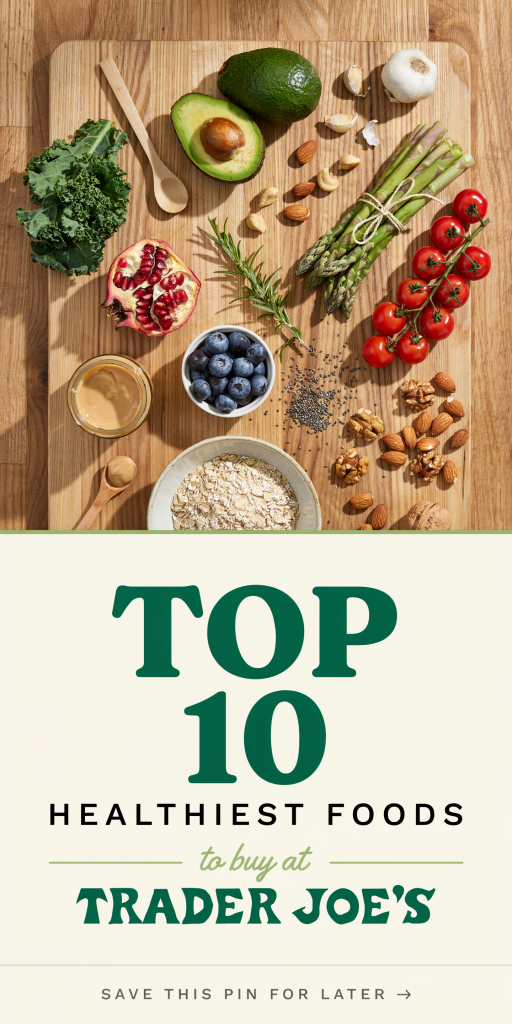
Here’s the shortlist, the Top 10 Healthiest Foods To Buy at Trader Joe’s (2026). We’ll expand on the most important picks below.
- Wild-caught frozen salmon
- Plain Greek yogurt (full-fat or low-fat)
- Organic canned or dried beans (black, chickpeas, navy)
- Dry or pre-cooked quinoa
- Frozen mixed vegetables (steamable bags)
- Extra-firm organic tofu
- Nuts and seeds (raw almonds, chia seeds)
- Steel-cut oats or old-fashioned rolled oats
- Frozen fruit (berries, mango chunks)
- Extra virgin olive oil (cold-pressed)
Why this list format? It helps you shop quickly: aim for a mix of protein (salmon, yogurt, tofu, beans), fiber-rich carbs (quinoa, oats, beans), healthy fats (olive oil, nuts), and produce (frozen veg + fruit). The items above cover most nutrient needs while keeping meal prep flexible. If you want to swap ingredients for dietary reasons, think in category terms: a plant-based protein instead of salmon, or coconut oil only if you’re intentionally using it for high-heat cooking, but we recommend olive oil for general everyday use.
Best Protein Picks: Why These Options Deliver
Protein is a foundation of satiety, muscle maintenance, and metabolic health, so we prioritized versatile items that meet those needs without very costly. Trader Joe’s has a mix of animal and plant proteins that are easy to cook or ready to eat. Below are two of our top choices and the reasons they earn a spot on the Top 10 Healthiest Foods To Buy at Trader Joe’s list.
Both items are staples for mornings, lunches, quick dinners, or prepping high-protein snacks. We also highlight simple ways we use them in real life, not fancy recipes, just practical ideas that save time and deliver nutrition.
Wild-Caught Salmon — Omega-3 Rich And Versatile
Why we like it: Trader Joe’s frozen wild-caught salmon fillets deliver an excellent omega-3 EPA/DHA profile per serving, along with about 20–25 grams of high-quality protein for a typical 4–5 ounce portion. Compared to farmed salmon, wild-caught tends to have a slightly leaner fat profile and fewer additives. The frozen format is convenient, we keep fillets in the freezer and defrost what we need.
How we use it: A straightforward pan-sear with a squeeze of lemon, a quick bake under 400°F for 10–12 minutes, or flaked into salads and grain bowls. It’s also forgiving in sheet-pan dinners with frozen vegetables. For meal prepping, cooked portions keep well for 3–4 days in the fridge and freeze again if needed.
Nutrition notes: Fatty fish like salmon supply long-chain omega-3s that support cardiovascular and neurological health. If you’re tracking sodium, check packaging, some pre-seasoned or smoked varieties can be higher in salt. For cost-conscious shoppers, frozen wild-caught portions often beat fresh equivalents on price per ounce, especially outside prime coastal markets.
Shopping tip: Look for “wild-caught” on the label and simple packaging. If Trader Joe’s lists the catch region, that can be a helpful clue about sustainability, though their buying practices already favor responsible sourcing in many cases.
Greek Yogurt — High-Protein Probiotic Option
Why we like it: Plain Greek yogurt is a compact source of protein, calcium, and live cultures (probiotics) when labeled as such. A typical serving (about 6–7 ounces) supplies around 15–20 grams of protein, making it useful for breakfast, snacks, or as a cooking ingredient to add creaminess without excess oil. Trader Joe’s offers both full-fat and lower-fat versions: we choose based on satiety needs and calorie targets.
How we use it: We stir in frozen berries and a sprinkle of chia seeds for a quick breakfast, swap it for sour cream in dips and tacos, or mix it into pancakes and marinades for added tang and tenderness. Plain avoids added sugars, flavored varieties can be tasty but often include unnecessary sweeteners.
Nutrition notes: The protein helps with appetite control and muscle repair, while probiotics support gut health in many people. If dairy is an issue, Trader Joe’s also stocks unsweetened, higher-protein plant yogurts (pea-protein or coconut blends), though traditional dairy Greek yogurt often gives the best protein-to-calorie ratio.
Shopping tip: Buy larger tubs if you use yogurt frequently: it’s usually more economical than single-serve containers. And always check the ingredient list: short ingredient lists are a positive sign, and “live active cultures” are what we look for on the label.
Best Plant-Based Staples For Everyday Meals
Plant-forward eating is often the most affordable route to better nutrition. Trader Joe’s offers pantry and freezer staples that make vegetables, legumes, whole grains, and minimally processed plant proteins easy to cook. Below we cover the items we reach for most when we want fiber, micronutrients, and steady energy without fuss.
We prioritize options that are shelf-stable or freezer-friendly because they reduce waste and save time. That means canned or dried beans, whole grains like quinoa and oats, frozen vegetables and fruit, and long-shelf-life nuts and seeds. These staples form the backbone of balanced meals and are especially helpful when fresh produce is low or expensive.
Beans, Lentils, And Quinoa — Affordable Fiber And Protein
Why we like them: Beans and lentils provide inexpensive plant protein, plenty of soluble and insoluble fiber, and essential micronutrients like iron, magnesium, and folate. Trader Joe’s carries a range of canned beans (black beans, chickpeas, cannellini) and dried lentils that cook quickly without prolonged soaking. Quinoa adds a complete-plant-protein profile and cooks faster than many whole grains.
How we use them: Canned beans are a pantry shortcut, rinse to reduce sodium and add to salads, tacos, and one-pan sautés. Lentils cook in 20–30 minutes and become an easy base for soups or simple spiced bowls. Quinoa works as a side, a salad base, or mixed into a skillet with vegetables and a drizzle of olive oil. For meal prep we batch-cook a big pot of quinoa and a few cans of seasoned beans: those two items can be recombined in a dozen different ways during the week.
Nutrition notes: A half-cup of cooked lentils provides roughly 9 grams of protein and 8 grams of fiber: similar figures apply to many beans. Quinoa’s complete amino acid profile makes it especially valuable for vegetarian meals. If iron absorption is a concern, pair these foods with vitamin C sources (citrus, bell peppers) to enhance uptake.
Shopping tip: Dried beans are generally cheaper per serving than canned and store longer, but canned beans are perfect when time counts. For quinoa, buy the plain grain rather than pre-seasoned packets to keep sodium and added ingredients in check.
Conclusion: How To Build Balanced Grocery Trips At Trader Joe’s
The Top 10 Healthiest Foods To Buy at Trader Joe’s give us a reliable template: combine a high-quality protein, a fiber-rich grain or legume, healthy fats, and produce (fresh or frozen) at each grocery run. With the items on our list, wild-caught salmon, Greek yogurt, beans, quinoa, frozen vegetables and fruit, tofu, oats, nuts and seeds, and olive oil, you can assemble balanced meals quickly without complicated recipes.
A few final practical tips: plan for versatility (buy ingredients that serve multiple uses), favor bulk tubs over single-serve where it saves money, and lean on frozen produce to avoid waste. Trader Joe’s makes it easy to pick up nutrient-dense staples that fit many diets. If you leave with even three or four of these items on your first trip, you’ll be well on your way to a healthier, simpler weekly meal plan.