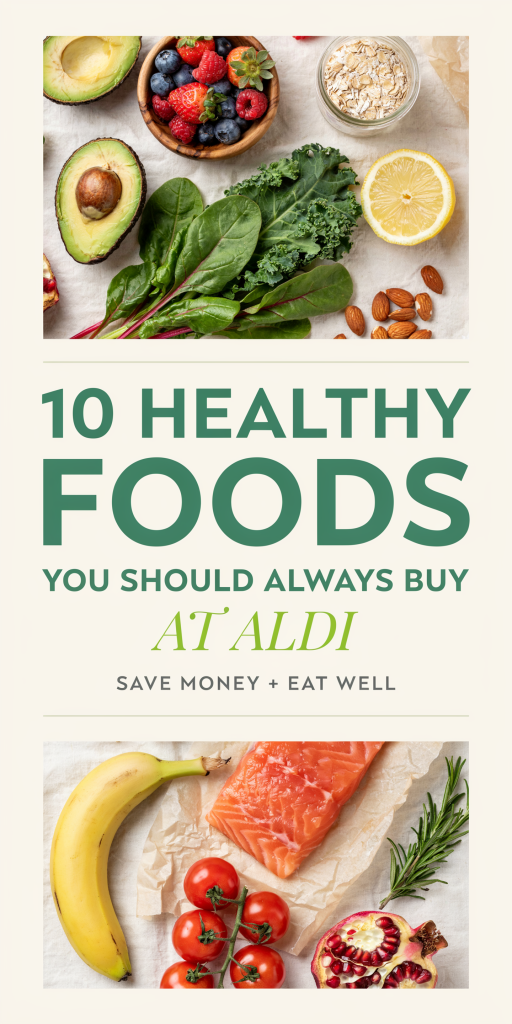
10 Healthy Foods You Should Always Buy at Aldi — Smart, Affordable Picks for 2026
We’re always looking for ways to eat better without blowing our grocery budget, and Aldi keeps showing up as one of the smartest places to do that. In 2026, Aldi’s mix of private-label brands, seasonal produce, and steady staples makes it easy to stock a pantry focused on health: fiber-rich grains, lean proteins, quality fats, and nutrient-dense frozen options. This guide highlights 10 healthy foods we recommend buying at Aldi every time we shop, the items that deliver the best mix of nutrition, price, and convenience. We’ll explain why each pick is a winner, how to use it at home, and what to watch for when you’re shopping so you get value and quality. Let’s make healthy shopping simple, affordable, and, yes, actually enjoyable.
Why Aldi Is A Great Choice For Healthy Grocery Shopping
Aldi’s model is built around low overhead, efficient shelving, and a tight selection of private-label brands, and that combination benefits anyone trying to buy healthier food on a budget. We find that Aldi’s smaller footprint and curated selection remove decision fatigue: instead of wading through 50 versions of the same product, we can focus on whole foods and value-driven staples.
Aldi also leans into seasonal produce and competitive pricing on core health items like oats, nuts, canned beans, and frozen fish. Their private labels (e.g., Simply Nature for organic options and Friendly Farms for dairy) often deliver quality comparable to national brands at a lower cost. That’s not marketing fluff: comparing unit prices in our local stores consistently shows Aldi beating big-box supermarkets on per-ounce cost for many health-forward foods.
Another advantage: Aldi rotates weekly deals and Aldi Finds, which are limited-time bargains that often include useful kitchen staples and healthier specialty items (like olive oil, whole-grain pasta, or nut butters). We recommend watching those weekly ads and planning to buy nonperishable healthy picks when they’re featured.
Finally, shopping at Aldi is fast. The store layout encourages efficient trips, which helps us stick to a healthy list and avoid impulse buys. With a little planning, Aldi becomes not just affordable but a reliable source of smart, nutritious groceries.
Fresh Produce Picks: Apples, Leafy Greens, And Berries
Fresh produce is the foundation of a healthy diet, and Aldi’s produce section consistently delivers value. We prioritize apples, leafy greens, and berries because they’re versatile, nutrient-dense, and affordable year-round or near-seasonally at Aldi.
Apples: Aldi usually stocks multiple apple varieties at competitive prices. Apples are high in fiber and polyphenols, making them a great grab-and-go snack or a natural sweetener in oatmeal and salads. We buy apples in both single bags for immediate use and larger bags when they’re on sale, then store them in the crisper to extend shelf life.
Leafy Greens: Aldi’s lines often include organic and conventional options for spinach, kale, and spring mix. Greens are essential for micronutrients (vitamin K, folate, calcium) and are cheap ways to bulk up meals. We keep a bag of baby spinach for smoothies and salads, and a bunch of kale for soups and sautés. To reduce waste, we wash and dry a week’s worth and store greens in paper-lined containers, it keeps them usable for longer.
Berries: Fresh berries can be pricey, but Aldi usually offers berry packs that are cost-effective compared to other stores. Berries are high in antioxidants, vitamin C, and fiber: we use them in yogurt bowls, oatmeal, and smoothies. When fresh berries are on markdown or part of Aldi Finds, we’ll buy extra and freeze them for later use.
Shopping tips: check for firmness and color in apples, avoid slimy or discolored greens, and inspect berry containers for mold. Buying frozen berries when fresh ones are expensive is a smart swap, they’re picked and frozen at peak ripeness and often cost less per serving.
Whole Grains And Legumes: Steel-Cut Oats, Quinoa, And Canned Beans
Whole grains and legumes are cornerstones for satiety, fiber intake, and blood sugar control, and Aldi carries excellent options that fit both nutrition and budget goals. We rely on steel-cut oats, quinoa, and canned beans as pantry mainstays because they’re versatile, store well, and deliver strong nutritional value.
Steel-Cut Oats: Compared with instant varieties, steel-cut oats offer a chewier texture and often a lower glycemic response. Aldi’s steel-cut oats are usually sold in resealable bags that are affordable and long-lasting. We cook a big pot at the start of the week and flavor it differently each morning: fresh berries, a spoonful of nut butter, or a sprinkle of cinnamon and chopped apples.
Quinoa: A complete protein plant source, quinoa is great for salads, bowls, and as a rice alternative. Aldi’s quinoa typically comes in both white and tri-color blends. It cooks quickly and pairs well with canned beans, roasted vegetables, and a simple vinaigrette. For meal prep, we’ll make a quinoa salad and portion it for lunches that stay satisfying for hours.
Canned Beans: Beans are an inexpensive protein and fiber source. Aldi’s canned black beans, chickpeas, and navy beans are reliable for soups, chili, and grain bowls. We look for cans with low sodium or rinse higher-sodium cans to reduce sodium content. Canned beans also function as a quick protein when we need to throw together a healthy weeknight meal.
Buying strategy: buy grains in bulk when on sale, use airtight containers to extend shelf life, and keep a rotation of canned and dry legumes. These staples allow us to build balanced meals, protein, fiber, and complex carbs, without a lot of prep time.
Lean Proteins: Fresh Chicken Breasts And Canned Tuna
Protein is essential for muscle maintenance, satiety, and metabolic health, and Aldi has two lean, cost-effective protein plays: fresh chicken breasts and canned tuna. Both give us flexibility across meals and pair well with the grains and produce we already buy.
Fresh Chicken Breasts: Aldi’s fresh chicken is frequently priced lower than national grocery chains, and their pre-portioned packs make it easy to control portions. We opt for boneless, skinless breasts or buy family packs and separate into meal-sized portions for freezing. Quick cooking methods, grilling, baking, or pan-searing, keep chicken moist and lean. Marinating in yogurt and spices or brining briefly can improve texture and flavor without adding excess calories.
Canned Tuna: Canned tuna is a convenient pantry protein with a long shelf life. Aldi carries both chunk light and albacore options, as well as tuna in water to keep calories and fat lower. Tuna works for salads, sandwiches, and mixed into grain bowls for a fast, high-protein lunch. We recommend checking the label for sustainably sourced options (when available) and rinsing tuna if it’s packed in oil and we want to reduce added fat.
Recipe ideas: shredded chicken can top salads or be turned into a healthy chicken taco with lettuce wraps: canned tuna mixed with Greek yogurt, chopped celery, and lemon makes a creamy, protein-rich spread without heavy mayonnaise.
Shopping notes: buy chicken when it’s marked down close to the sell-by date only if you’ll freeze it right away. For canned tuna, compare unit prices and watch for multipack deals, they often offer the best per-ounce value.
Dairy And Alternatives: Greek Yogurt And Unsweetened Plant Milk
Dairy and its alternatives can be powerful tools for getting protein, calcium, and probiotics into our diet. Aldi often stocks cost-effective Greek yogurt and a range of plant milks, including unsweetened options, both of which we use regularly for breakfast, snacks, and cooking.
Greek Yogurt: Aldi’s Greek yogurt (Friendly Farms or special regional brands) is high in protein and low in added sugar when you choose plain varieties. We use plain Greek yogurt as a base for savory dips, a topping for baked potatoes, and as a substitute for sour cream in recipes. For a quick parfait, layer Greek yogurt with berries and a sprinkle of oats or nuts.
Unsweetened Plant Milk: Aldi’s plant milk selection usually includes unsweetened almond, oat, and soy milks. Choosing unsweetened versions removes empty calories from added sugars while providing a dairy-free base for cereal, coffee, and smoothies. Unsweetened soy milk offers higher protein than many plant milks, while almond and oat milks provide lower-calorie or creamier textures depending on the use.
Label checks: with yogurt, watch for added sugars, flavored varieties can pack a surprising amount. With plant milks, check ingredient lists for unnecessary stabilizers if you prefer minimal processing, though these additives don’t pose a major health concern for most people.
Practical tip: buy large tubs of plain Greek yogurt when on sale and portion into smaller containers with fruit and granola for breakfasts or snacks. Unsweetened plant milks are handy for households with mixed preferences: we often keep at least one dairy and one plant-based option on hand.
Nuts, Seeds, And Healthy Fats: Almonds, Chia Seeds, And Avocado
Healthy fats are crucial for satiety, brain health, and nutrient absorption. Aldi has affordable options for nuts, seeds, and fresh avocados, three categories we consider essential on every trip.
Almonds: Aldi’s bulk or snack-pack almonds offer a convenient protein-and-fat-rich snack that’s portable and filling. Almonds supply vitamin E, magnesium, and monounsaturated fats, great for heart health. We keep raw or dry-roasted almonds handy for salads, oatmeal toppings, or an afternoon energy boost. Portion control matters: a small handful (about 1 ounce) is a sensible snack serving.
Chia Seeds: Chia seeds are tiny nutrition powerhouses, offering fiber, omega-3 ALA, and a gel-forming property that’s useful in recipes. Aldi’s chia seeds are affordable compared to specialty stores. We use them to make overnight oats, chia pudding, or add a tablespoon to smoothies for extra fiber and thickness. They’re also a good emergency thickener for soups.
Avocado: Fresh avocados at Aldi rotate between very affordable and mid-range prices depending on seasonality, but they’re consistently a high-value item nutritionally. Avocados provide heart-healthy monounsaturated fats, fiber, and potassium. We use them in toast, salads, or as a creamy component in dressings and sauces. If avocados are hard, store them at room temperature to ripen, then refrigerate to slow the process when ready.
Storage and savings: buy almonds in resealable bags to extend freshness: store chia seeds in a cool, dark cupboard: and buy avocados in mixed ripeness so some are ready to eat immediately while others ripen later. These fats make meals more satisfying and help us avoid less-nutritious, highly processed snacks.
Frozen And Convenience Staples: Frozen Vegetables And Wild Salmon
Frozen foods get a bad rap, but at Aldi they’re some of the healthiest buys, especially when fresh produce isn’t in season. We lean on frozen vegetables and wild salmon for convenience, nutrition, and shelf stability.
Frozen Vegetables: Aldi’s frozen vegetables (broccoli, mixed veggies, spinach, and stir-fry blends) are often less expensive than their fresh counterparts and just as nutritious because they’re flash-frozen at peak ripeness. They’re perfect for quick sides, soups, and casseroles. We keep a few varieties in the freezer for nights when we don’t have time to prep fresh produce: steaming or roasting frozen vegetables retains nutrients and makes for fast, healthy meals.
Wild Salmon: Aldi’s frozen wild-caught salmon has become a reliable option for a high-quality omega-3 source. Compared to fresh fish, frozen salmon often costs less and can be portioned and stored longer without losing nutritional value. We thaw fillets overnight in the fridge or cook from frozen when recipes allow. Simple treatments, lemon, olive oil, salt, pepper, and a short bake, deliver an easy, healthful main course.
Convenience ideas: steam frozen veggies and toss with quinoa and canned beans for a balanced bowl in 10–15 minutes: top roasted sweet potatoes with flaked salmon and a dollop of Greek yogurt for a quick dinner. Frozen options reduce waste and make maintaining a healthy routine simpler on busy days.
Smart Shopping Tips For Buying These Foods At Aldi
To make the most of Aldi’s offerings, we follow a few practical shopping habits that keep costs low and quality high. These tips help us avoid waste and get the healthiest items reliably.
- Check Aldi Finds and Weekly Ads: Aldi’s limited-time deals often include organic staples and higher-ticket healthy items. We scan the weekly ad before shopping and add sale items to our list so we don’t miss bargains.
- Buy Mixed Ripeness Produce: When buying avocados and other perishable produce, get a mix of ripe and slightly firm items so some are ready to eat and others last. This reduces waste and ensures a steady supply.
- Freeze & Rotate: For proteins like chicken and salmon, we portion and freeze immediately. For produce, freeze berries or vegetables if we can’t use them before spoilage. Labeling dates helps keep the rotation intact.
- Compare Unit Prices: Aldi’s simplified range usually makes this easier, but we still check unit prices on packaged goods (per ounce or per serving) to confirm we’re getting the best value. Multipacks are often the best per-unit deal.
- Read Labels, Especially for Added Sugar and Sodium: With items like yogurt, canned beans, and plant milks, reading labels helps us choose plain or low-sodium/unsweetened versions. This small step reduces added sugars and excess sodium in our meals.
- Embrace Private Labels: Aldi’s in-house brands (Simply Nature, Specially Selected, Earth Grown) often match or beat national brands in quality and price. We aren’t brand-loyal when the private label provides better value.
- Plan Meals Around Staples: Build weekly menus centered on the 10 items in this guide. When our meal plan uses what’s on sale, we spend less and eat more healthfully.
Using these strategies, Aldi becomes a predictable, economical source for healthy eating rather than a lottery of hit-or-miss items.
Conclusion
Aldi gives us an efficient path to eating healthier without overspending. By focusing on these 10 items, apples, leafy greens, berries, steel-cut oats, quinoa, canned beans, chicken breasts, canned tuna, Greek yogurt, unsweetened plant milk, almonds, chia seeds, avocados, frozen vegetables, and wild salmon, we cover most nutritional bases: fiber, lean protein, healthy fats, and vitamins.
Pair these staples with simple meal planning, smart freezing, and label-reading, and we’ll not only save money but also build a sustainable, nourishing grocery routine for 2026. Ready to try? Start with a short shopping list of three to five items from this guide and see how quickly they upgrade your meals and your wallet.