Summer Dinner Bowls To Use Up Produce Fast: 25 Simple Ideas And Strategies For 2026
Summer brings a bounty: tomatoes that taste like sunlight, tender zucchini, and herbs that explode with aroma. But it also brings the weekly fridge puzzle, how do we turn all this beautiful produce into dinner before it softens or wilts? Summer dinner bowls are our best answer. They’re fast, flexible, and forgiving: a bowl lets us mix and match whatever’s on hand, transform leftovers into something new, and finish a meal in the same time it takes water to boil. In this guide we’ll explain why bowls are the fastest route to using up produce, show how to build balanced bowls in minutes, share time-saving meal-prep hacks, and offer five no-recipe bowl ideas to empty your crisper tonight. Read on and by dinner you’ll have something fresh, vibrant, and waste-free on the table.
Why Summer Dinner Bowls Are The Fastest Way To Use Up Produce
Summer dinner bowls speed up produce use for a few simple reasons: they’re designed around what’s available, they minimize fiddly steps, and they turn small leftover bits into flavor-building accents rather than waste.
First, bowls are ingredient-agnostic. Instead of hunting for a recipe that demands an exact list of items, we start with the produce we have and layer it into a bowl. A leftover half-ear of corn becomes kernels folded into the base. A handful of herbs becomes a bright finishing touch. That mindset flips the typical cooking equation: we don’t force our fridge to fit the recipe, we make the recipe fit the fridge.
Second, bowls reduce cooking time. Many summer ingredients taste best raw or only lightly cooked: tomatoes, cucumbers, summer squash, peppers, leafy greens and herbs. That means most components either don’t require heat or need just a quick sear or roast. We can transform a pile of produce into dinner in 10–20 minutes, ideal for weeknights when produce is on its last legs.
Third, bowls are forgiving of portion size and weird odds-and-ends. A small roasted sweet potato chunk, a single leftover sausage, or the last few olives in a jar all find purpose as supporting players. Mixing textures, creamy avocado, crunchy radish, chewy grains, helps small amounts of each ingredient shine without taking center stage.
Finally, bowls encourage batch-friendly preparation. Roast a tray of assorted vegetables, cook a pot of grains, and you’ve got the components to assemble multiple different bowls across the week. That efficiency reduces the chance that produce will go unused and end up in the compost.
Put together, these factors make summer dinner bowls both the fastest and the most waste-conscious way to use up produce. They’re the culinary equivalent of tidying the fridge by making dinner, and doing it deliciously.
How To Build A Balanced Summer Dinner Bowl In Minutes
A reliable bowl follows a simple formula: base + vegetables + protein + texture + dressing. Once we internalize that blueprint, we can build satisfying dinners in minutes using whatever produce we need to use up. Below, we break down each component and give practical tips for speed and flavor.
Base (30–40% of the bowl): Grains, greens, or legumes. Choose something that will carry sauces and provide staying power. Quick options include pre-cooked or leftover rice, quick-cook couscous or quinoa (ready in 10–12 minutes), canned beans (drained and rinsed), torn romaine or mixed salad greens, or even shredded cabbage. Mixing warm grain with cool salad greens creates contrast and helps wilt sturdier leaves.
Vegetables (40–50%): This is where our summer surplus lives. Think in terms of two or three types: one raw, one cooked, one pickled or bright. Raw cherry tomatoes or sliced cucumber bring freshness: blistered peppers, roasted zucchini, or sautéed corn add caramelized flavor: quick pickles (thinly sliced onion or radish tossed with vinegar and salt for 10–15 minutes) add acidity and crunch. Aim to use half a large vegetable or a handful of smaller ones per bowl.
Protein (10–20%): Protein turns a bowl into a meal. For speed, we reach for canned tuna or salmon, canned chickpeas, tofu (pan-fried or cubed and marinated), rotisserie chicken, leftover steak, or fried eggs. Proteins can be cold or briefly heated in a hot pan with olive oil and a pinch of salt.
Crunch & Fat (accents): Texture keeps a bowl interesting. Nuts, seeds, toasted breadcrumbs, or thinly sliced raw veg (radishes, jicama) add bite. Healthy fats, sliced avocado, olives, crumbled feta, or a drizzle of extra-virgin olive oil, carry flavor and satisfy appetite.
Herbs & Aromatics: Fresh herbs are rapid flavor accelerants. Basil, mint, dill, and chives make produce pop. If we have only small amounts, we chiffonade them and use as an aromatic dusting across the bowl.
Speed strategies: Keep mise en place minimal. Use one pan for quick cooking, sear proteins while you toast seeds or char peppers under the broiler. Use the microwave for rapid steaming (asparagus tips or sweet potato cubes). If you’re assembling multiple bowls, let people customize toppings family-style.
Portion & balance check: We aim for a roughly even distribution across textures and flavors. If the bowl feels starchy-heavy, add a bright acidic element (a quick squeeze of lemon or a splash of vinegar). If it feels dry, add a spoonful of yogurt, a vinaigrette, or a drizzle of tahini.
We’ve found that having a short checklist in our heads, base, veg, protein, crunch, herb, dressing, gets dinner on the table quickly and ensures no ingredient goes unused.
Meal-Prep Hacks To Stretch Your Produce And Save Time
To make produce stretch and evenings easier, we rely on a handful of dependable meal-prep moves. These strategies reduce food waste, speed assembly, and give our bowls more variety during the week.
- Roast a sheet pan of mixed vegetables every Sunday (or whenever we have time). Chop zucchini, peppers, cherry tomatoes (on the vine), mushrooms, and onion: toss with oil, salt, and pepper: roast at 425°F for 20–25 minutes. Store in airtight containers and use across multiple bowls, reheat or serve cold.
- Batch-cook a grain and a legume. A pot of quinoa, farro, or brown rice plus a pot of lentils or a can of beans gives us immediate bases and protein boosts. Grains and legumes also absorb dressings beautifully and keep well for 4–5 days refrigerated.
- Keep quick-pickle jars in rotation. Thinly sliced onion, cucumber, carrot, or radish pickled in a simple brine brightens nearly every bowl and lasts a week in the fridge.
- Flash-char bulk peppers or corn. Grill or char corn cobs and cut kernels off for salads and bowls, or blister peppers in a hot pan and store them sliced. These cooked items add smoky depth without requiring nightly effort.
- Roast a tray of protein. Bake marinated tofu cubes, chicken thighs, or salmon fillets. Portion into containers so we can heat and toss atop bowls during the week.
- Make a jarred dressing rotation. Store three to four dressings in mason jars and label them. When dinner time comes, we simply shake and pour.
- Use freezer-friendly components. Herb stems can be bundled and frozen for stocks: blistered tomatoes, roasted peppers, or cooked beans freeze well and revive in a hot pan. We’ve rescued soggy tomatoes by roasting and then freezing them for later use in sauces or bowls.
- Keep a “bowl drawer.” Dedicate one shelf in the fridge to prepped components: washed greens, chopped onions, roasted veggies, and a container of grains. When it’s dinner time, building bowls becomes effortless.
These hacks turn meal prep into a small upfront investment that pays off in less food waste, faster dinners, and more enjoyable midweek meals.
Five No-Recipe Bowl Ideas To Empty Your Crisper Tonight
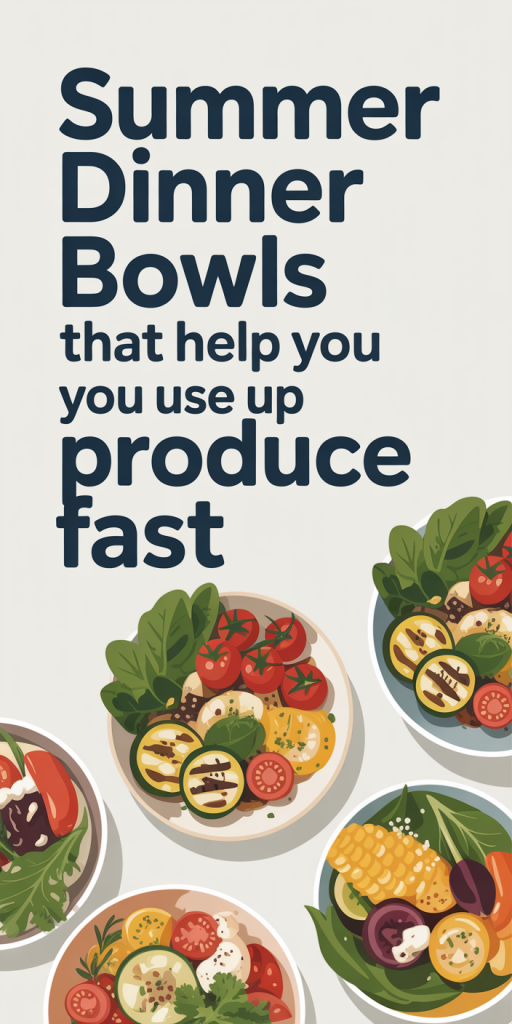
When we’re in a hurry or the fridge is overflowing, these five no-recipe bowl templates let us clear produce fast. Each one is intentionally flexible, swap proteins, grains, or whatever vegetables need to go.
- Mediterranean Summer Bowl
- Base: Mixed greens + a spoonful of cooked farro or rice
- Veg: Halved cherry tomatoes, cucumber ribbons, roasted peppers
- Protein: Canned tuna or chickpeas
- Crunch: Toasted pepitas or almonds
- Finish: Crumbled feta, lemon-tahini drizzle, chopped parsley
Why it works: Bright tomatoes and cucumber keep this bowl refreshing. The lemon-tahini ties salty tuna or creamy chickpeas to the grains.
- Warm Grain & Veg Bowl with Fried Egg
- Base: Warm quinoa or brown rice
- Veg: Sliced zucchini sautéed quickly with garlic, roasted cherry tomatoes
- Protein: Pan-fried or soft-poached egg
- Crunch: Crispy shallots or toasted breadcrumbs
- Finish: Soy-sesame drizzle or a spoonful of pesto, scallions
Why it works: A runny yolk becomes an instant sauce that uses up roasted vegetables, and the crispy topping adds contrast.
- BBQ-Style Corn & Black Bean Bowl
- Base: Cilantro-lime rice or mixed greens
- Veg: Grilled corn kernels, diced avocado, thin red onion
- Protein: Black beans (rinsed) or shredded rotisserie chicken
- Crunch: Tortilla chip crumbs or toasted pumpkin seeds
- Finish: Smoky chipotle-lime dressing, chopped cilantro
Why it works: Sweet summer corn and creamy avocado make this hearty and summery: it’s perfect for larger quantities of corn or tomatoes.
- Panzanella-Inspired Veggie Bowl
- Base: Cubes of day-old bread or cooked farro
- Veg: Heirloom tomatoes (chunked), cucumber, basil, roasted eggplant
- Protein: Cubed mozzarella or beans
- Crunch: Pan-toasted bread cubes or toasted pine nuts
- Finish: Red wine vinaigrette, lots of torn basil
Why it works: Stale bread becomes a feature, soaking up dressing and using up tomatoes and basil in a single bowl.
- Cool Yogurt & Herb Bowl (for hotter nights)
- Base: Shredded cabbage or mixed greens
- Veg: Cucumber, radish, cherry tomatoes, grated carrot
- Protein: Flaked smoked salmon, grilled tofu, or leftover salmon patties
- Crunch: Roasted chickpeas or pistachios
- Finish: Yogurt-herb sauce, lemon zest, chopped dill
Why it works: The creamy yogurt refreshes and preserves delicate vegetables, turning minimal produce into a satisfying, cooling dinner.
Each template is a framework. If we have extra basil, we pile it on: if we’re emptying a pint of cherry tomatoes, we halve and scatter them across multiple bowls. The templates are designed to reduce decision fatigue and get produce eaten before it loses its peak.
Conclusion: Turn Extra Produce Into Easy, Delicious Dinners Every Night
Using up summer produce doesn’t have to feel urgent or wasteful. With the bowl mindset, base, veg, protein, crunch, dressing, we can turn odds and ends into meals that are fast, flexible, and flavorful. Small prep habits (a roasted sheet pan, quick pickles, a jar of dressings) make assembly even easier and dramatically reduce waste. Tonight, before anything goes limp, we suggest grabbing whatever’s in the crisper, picking one of the no-recipe bowl templates above, and building dinner in under 20 minutes. Once you start seeing your fridge through a “bowl” lens, clearing produce becomes less of a chore and more of a creative ritual, and that’s how we win the summer.