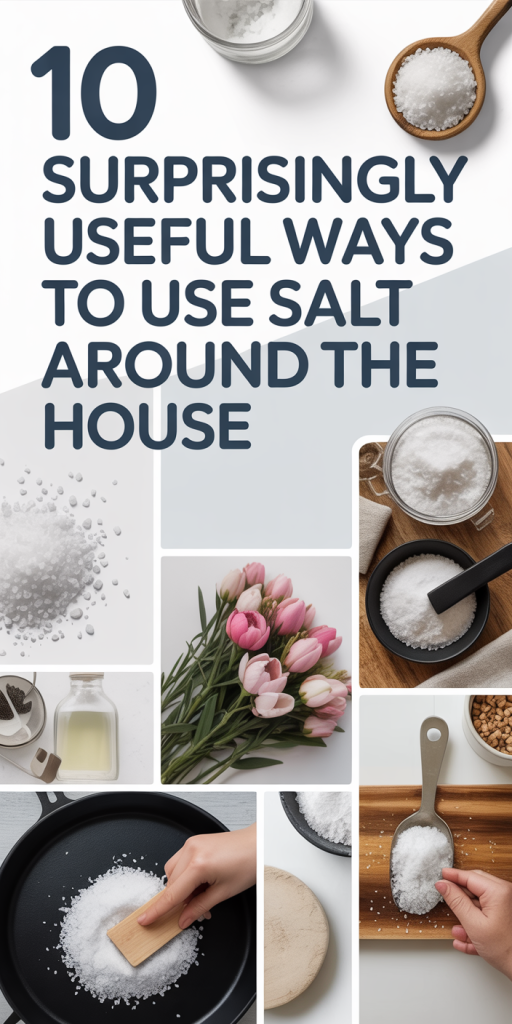
10 Surprisingly Useful Ways To Use Salt Around the House (And How To Do Them Right)
Salt is one of those humble pantry staples we take for granted, but it’s also an inexpensive, nontoxic, and surprisingly versatile tool for everyday household problems. Over the years we’ve tested and relied on salt for quick fixes and deeper cleaning tasks, from refreshing a tired cutting board to keeping weeds out of pathway cracks. In this guide we show 10 surprisingly useful ways to use salt around the house and, importantly, how to do each one the right way so you get consistent, reliable results. Whether you’re looking to save money, reduce chemical use, or just learn clever life hacks, these salt-based tricks are practical, easy, and work with items you already have on hand.
1. Freshen And Revive Cutting Boards And Wooden Utensils
Wooden cutting boards and utensils absorb odors and stains over time, especially when we work with garlic, onions, or fish. Salt is an abrasive deodorizer that won’t damage wood if used correctly. Here’s how we revive boards and spoons the right way:
- What to do: Sprinkle coarse kosher or sea salt generously over the dry board. Cut a lemon in half and, with the cut side down, scrub the salt into the wood using circular motions. The salt acts as a mild abrasive while the lemon’s acid breaks down odors and light stains.
- Let it sit: After scrubbing, leave the salt–lemon paste on the board for 5–10 minutes (longer for strong odors). Then rinse with warm water and dry upright.
- For deeper cleaning: Make a paste of 1 part baking soda, 1 part coarse salt, and enough water to form a spreadable paste. Scrub, rinse, and oil the board after it’s fully dry with a thin coat of food-grade mineral oil.
- Tips to do it right: Don’t soak wooden boards in water, that warps them. Use coarse salt rather than table salt for better abrasion. After cleaning, always recondition wood to prevent cracking.
This simple routine keeps boards smelling fresh and extends their lifespan. We do this once a month or whenever a board starts to hold strong odors.
2. Remove Stains From Cookware And Burnt Pots
Burnt-on food and stubborn stains on stainless steel, cast iron (if properly seasoned), and ceramic pots are common kitchen headaches. Salt helps as a scrubbing agent and, paired with heat and a little liquid, loosens charred residues.
- Stainless and ceramic: For fresh burnt spots, drain excess oil, sprinkle coarse salt over the affected area, add a small amount of water to form a paste, and heat the pan briefly on low. Use a non-scratch pad to scrub. Rinse and wash normally.
- Cast iron (careful): If you have stuck-on food on a cast-iron skillet, pour a generous handful of coarse salt into the warm pan and scrub with a folded kitchen towel or stiff brush. The salt lifts residues without stripping the seasoning. Rinse with minimal water, dry thoroughly, and lightly oil.
- Tough stains: For persistent discoloration on stainless steel, make a paste of salt and white vinegar or lemon juice, apply to the stain, let sit 10–15 minutes, then scrub with a soft pad.
- Safety and longevity: Avoid abrasive metal scouring pads on most cookware as they can scratch finishes. For nonstick pans, do not use salt on the coated surface, it won’t help and may harm the coating.
Using salt this way saves elbow grease and preserves cookware when we do it correctly.
3. Deodorize And Clean Upholstery And Carpets
Salt can absorb moisture and neutralize odors in upholstery and carpets, handy for pet smells, spills, and general refreshes. It’s not a miracle cure for deep-set stains, but used properly it reduces odors and helps lift light spills.
- Fresh spills: Blot any liquid immediately with a clean cloth. Sprinkle table salt over the wet spot to draw moisture and prevent spreading. Let it sit 15–30 minutes, then vacuum. Repeat if needed.
- Grease spots: For oily stains, cover with a generous layer of salt to absorb grease. After 30–60 minutes vacuum it up and follow with a gentle carpet cleaner or a mixture of dish soap and water.
- Odor removal: For a deodorizing freshen-up, mix equal parts salt and baking soda, sprinkle over the fabric, let it sit for at least 30 minutes (overnight for strong odors), then vacuum thoroughly. Test an inconspicuous area first to ensure there’s no color fading.
- How to do it right: Use fine or table salt for better coverage on fabric. Avoid rubbing a salt layer into delicate textiles: allow it to sit and do the work of absorption. For large or old stains, consider professional cleaning.
When we need a quick, nonchemical deodorizer, salt is often our first small-scale remedy before moving to stronger treatments.
4. Unclog And Neutralize Drain Smells
Foul drain odors often stem from organic build-up in pipes. Salt combined with hot water and sometimes baking soda breaks down grease and helps neutralize smells without harsh chemicals.
- Basic flush: Pour a half cup of salt into the drain, follow with boiling water. The salt helps scrape and dissolve fatty residues and the heat melts grease.
- Step-up method: For tougher smells, pour a half cup of baking soda, then a half cup of kosher salt down the drain. Add a cup of white vinegar, expect foaming. After it calms, flush with a boiling kettle of water.
- Regular maintenance: We recommend doing a salt-and-boiling-water flush weekly for kitchen sinks to keep grease from building up.
- When to call pros: If drains are physically clogged (slow to empty) or smells persist after several treatments, it could be a deeper blockage or sewer issue. Then call a plumber.
Used responsibly, salt is a safe, inexpensive maintenance step between professional cleanings and a good alternative to frequent chemical drain cleaners.
5. Keep Produce Fresher And Prevent Fruit Flies
A sprinkle of salt can extend freshness for certain produce and help deter fruit flies when used correctly. Salt’s hygroscopic properties draw surface moisture and slow microbial growth for short-term storage.
- Reviving limp greens: For slightly wilted greens or herbs, fill a bowl with cold water and add a tablespoon of salt. Submerge the greens for 10–15 minutes: they’ll plump up and regain crispness. Rinse briefly before using.
- Tomatoes and mushrooms: A light saltwater rinse (1 tsp per cup water) can remove surface grime and reduce microbial load for a short period: don’t soak for long or flavor and texture will suffer.
- Fruit fly trap: Create a simple trap by mixing a tablespoon of salt with two tablespoons of apple cider vinegar and a splash of dish soap in a shallow bowl. The vinegar attracts flies, the salt increases density, and the soap breaks surface tension so they sink. Place near fruit bowls.
- Do it right: Don’t salt produce meant for long-term storage, salt draws out moisture and can accelerate spoilage over days. Use these tricks for same-day or next-day freshening and for targeted fruit-fly control.
We use salt sparingly around produce: a quick revive for leafy greens and an effective, low-toxicity fly trap for countertops.
6. Extinguish Small Grease Fires And Clean Oily Surfaces
Salt is an excellent tool for kitchen safety and cleanup. It can smother small grease fires and absorb oil spills on surfaces where paper towels or liquid cleaners fail.
- Smothering grease fires: If a small pan ignites, do NOT move the pan. Turn off heat if safe to reach and cover the flames with a metal lid. If the lid isn’t available, a generous layer of salt poured from a safe distance can smother the fire by cutting off oxygen. Fire extinguishers and calling emergency services remain primary responses for larger fires.
- Cleaning oil spills: For grease on countertops, tile, or the garage floor, cover the spill with a thick layer of salt and let it sit 15–30 minutes to absorb oil. Sweep or vacuum the salt, then clean the residue with dish soap and warm water.
- Do this right: Use coarse salt for thicker coverage. Never use salt on very hot surfaces where it could spatter and cause injury. For large or persistent fires, evacuate and call 911.
Salt gives us a low-cost, immediate option for managing small kitchen flare-ups and oily messes, but safety first: know when to escalate.
7. Brighten Whites And Remove Sweat Stains From Clothes
Salt can help lift yellowing and sweat stains from white garments and brighten faded whites without resorting to harsh bleaches. It’s particularly useful on cotton and other durable fabrics.
- Sweat stains: Make a paste of 2 parts table salt and 1 part hydrogen peroxide (or lemon juice for a milder option). Apply to the stained area, let sit 30–60 minutes in sunlight if possible, then launder as usual. Test on an inconspicuous area first.
- Brighten whites: Dissolve half a cup of salt in a bucket of warm water and soak white garments for 30 minutes before washing. Salt stabilizes dyes and can reduce dullness in fabric fibers.
- Underarm yellowing: For persistent underarm stains, mix salt, baking soda, and a little dish soap into a paste and scrub gently before washing.
- Do it right: Avoid using salt treatments on delicate fabrics like silk or wool. Always test first and avoid long soaks with acidic mixtures on colored garments to prevent fading.
When we need a gentler brightening method, salt-based pre-treatments give great results for everyday whites and sporty clothes.
8. Prevent Weeds And Moss In Cracks And On Walkways
Salt is a cheap and effective tool to control weeds and moss in sidewalk cracks, driveways, and between pavers. It works by drawing moisture from plants and disrupting their ability to grow, but it must be used with care to avoid harming nearby plants or soil.
- Application method: On a dry day, sprinkle table salt or rock salt directly into the cracks where weeds or moss are growing. For deeper reach, dissolve salt in hot water (about 1 part salt to 3 parts water) and pour into the cracks.
- Timing: Weeds are most vulnerable shortly after pushing through the surface: treat young growth for best results. Repeat applications may be necessary for stubborn roots.
- Environmental caution: Salt will damage surrounding plants and alter soil structure. Use it only in paved areas where runoff into gardens will be minimal. Rinse treated cracks with water a day after application if you’re worried about drift.
- Alternatives and safety: For environmentally sensitive areas, consider vinegar-based sprays or manual removal. For us, salt is a go-to for hardscape maintenance where collateral damage to soil is acceptable.
Used thoughtfully, salt saves time and money controlling unwanted growth between stones and asphalt.
9. Quick Household Fixes: Remove Red Wine, Stop Bleeding, And Tighten Wooden Joints
Salt is a surprisingly useful component in quick-fix first aid and home repairs. Here are several small but practical uses we rely on.
- Red wine spills: Blot excess liquid immediately. Cover the stain liberally with table salt, it absorbs the wine. Let it sit 5–10 minutes, then vacuum or brush off the salt and launder the fabric. For carpets, follow with a mild detergent solution.
- Stop minor bleeding: Salt has mild astringent properties. For small cuts or nosebleeds, rinse the wound gently, apply light pressure, and after bleeding slows, a pinch of salt dissolved in warm water can be used as a rinse to help clean the area. Note: For deep or persistent bleeding, get medical attention.
- Tighten wooden joints: If a loose wooden chair joint won’t hold, dust the joint, sprinkle a little salt into the hole or joint, then add a drop of wood glue or a damp toothpick with glue. The salt absorbs excess moisture from the glue, helping the bond set more quickly: clamp until dry.
- Do these right: For wine on delicate fabrics, test first and don’t scrub (dab). For bleeding, salt rinse is a cleanup step, not a substitute for proper wound care. For woodwork, use salt sparingly, too much can be abrasive in visible joints.
These quick fixes show salt’s diverse utility: it’s not a cure-all but a reliable, low-cost tool for many household surprises.
Conclusion
Salt is far more than a flavor enhancer: it’s a versatile, accessible household ally. From refreshing wooden boards to smothering tiny grease fires, deodorizing carpets, and keeping walkways weed-free, these methods give us low-cost, low-toxicity options for common chores. The key to doing them right is moderation and awareness, pick the right type of salt, test on inconspicuous areas, and avoid using it where soil or plants would be harmed. Try a few of these tricks this week and you’ll likely find salt earning a permanent spot on your household toolkit.