15 Weird But Genius Uses For Cornstarch At Home (Plus How To Do Them Safely)
Cornstarch is one of those kitchen staples that quietly sits in the pantry until we discover new ways it can simplify life. It’s cheap, non-toxic, and oddly versatile, from personal care to cleaning, crafts to cooking. In this guide we’ll explore 15 surprising, practical uses for cornstarch around the house, explain how to do each one safely, and point out a few simple tips that make the results better. Whether you’re tackling greasy stains, whipping up a cooling paste for sunburns, or making an outrageous science project like oobleck, we’ll walk through how cornstarch pulls double duty as a problem-solver and a low-cost substitute for specialty products. Read on and you’ll likely find at least a handful of tricks that will save money, reduce waste, and maybe make your life a little tidier, all with that humble white box on the shelf.
Use Cornstarch As A Dry Shampoo And Scalp Freshener
We’ve all been there: hair that looks limp, oily, or just overwashed. Cornstarch makes an effective, affordable dry shampoo alternative that soaks up excess oil without the aerosol propellants or perfumes in many store-bought products. Here’s how to use it and avoid a dusty surprise.
How to apply
- Tap a small amount (start with 1/2 teaspoon) of cornstarch into your palm or a small shaker. For dark hair, mix a pinch of cocoa powder to avoid visible white residue. For light hair, use cornstarch on its own.
- Focus on the roots and areas that look oily. Massage it in with your fingertips for 30–60 seconds so it absorbs oil and distributes evenly.
- Wait a minute or two, then brush or tousle your hair to remove excess powder and restore volume.
Tips and safety
- Use sparingly. Too much cornstarch makes hair feel dry and filmy. We usually need only a small amount between washes.
- Patch test first if you have a sensitive scalp. Cornstarch is inert, but adding essential oils or cocoa could irritate some people.
- Don’t inhale the powder. Keep it away from your face and apply gently: inhaled starch can be an irritant.
Bonus uses
- A pinch of cornstarch can freshen hat sweatbands or the inside of shoes: sprinkle, let sit for 15–30 minutes, then shake out.
When we want a simple oil-absorbing option that won’t strip hair, cornstarch is a reliable go-to. It’s inexpensive, discreet, and effective when applied correctly.
Absorb And Lift Grease: Degrease Clothes, Upholstery, And Kitchen Surfaces
Grease is one of the trickiest messes to manage, but cornstarch is excellent at absorbing fresh oil before it sets. We use it for clothes, upholstery, rugs, and even greasy stovetop spills.
On clothing and fabric
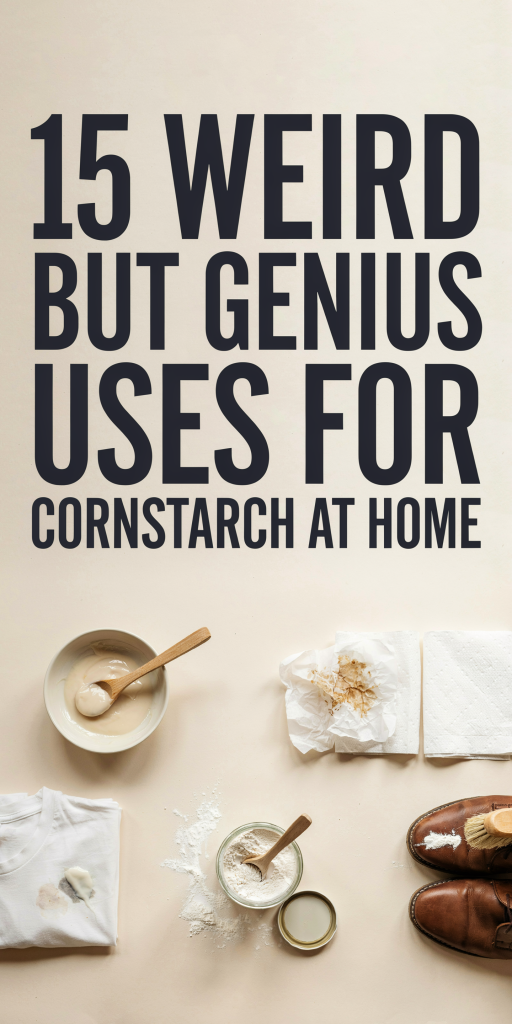
- Blot excess grease with a paper towel, then cover the stain with a generous layer of cornstarch.
- Let it sit for 15–30 minutes for fresh stains: for older stains, leave several hours or overnight.
- Brush off the powder, then launder as usual. For stubborn stains, repeat and pretreat with a small amount of dish soap before washing.
On upholstery and carpets
- Sprinkle cornstarch over the greasy spot, press lightly so it contacts the stain, and let it sit at least 30 minutes.
- Vacuum thoroughly. For deeper stains, work with a soft brush, reapply, then use a damp cloth to lift remaining residue.
On kitchen surfaces and pans
- If a pan has greasy residue, dust cornstarch while it’s warm (not flaming hot) and let it absorb oil for a few minutes before wiping.
- For countertops, sprinkle, leave briefly, then wipe with a damp cloth: follow with a mild cleaner if desired.
Why it works and precautions
- Cornstarch soaks up oil through a simple physical absorption process, no harsh solvents required.
- Avoid rubbing the powder into delicate fabrics: for silk or structured upholstery test on an inconspicuous area first.
Cornstarch won’t replace enzymatic detergents for set-in oil, but as an immediate, non-toxic first response it often prevents stains from becoming permanent. We keep a small jar handy in our laundry area for emergencies.
Soothe Skin Irritations And Make Cooling Pastes Or Bath Soaks
Cornstarch has a long history of calming irritated skin because it’s absorbent and can create a smooth, cooling paste. We use it to soothe chafing, mild rashes, sunburn discomfort, and diaper-area irritation for adults and kids (but not as a medicated treatment where a doctor’s care is needed).
Cooling paste for sunburn or chafing
- Mix cornstarch with cool water to create a thin paste, about 1 tablespoon of cornstarch to 2–3 tablespoons of water. Adjust until it spreads easily.
- Apply a thin layer to irritated skin and let it air-dry. The paste soothes, reduces stickiness, and absorbs excess moisture.
- Rinse off gently after 20–30 minutes. Don’t use on broken skin or open wounds.
Bath soaks for mild irritation
- Add 1/2 to 1 cup of cornstarch to a lukewarm bath and dissolve before soaking. This creates a silky, soothing water that can calm itchy or heat-irritated skin.
- Pat skin dry after bathing rather than rubbing to keep a protective powdering effect.
Safety and pediatric notes
- For diaper-area irritation in infants, cornstarch can help keep skin dry but avoid using it where yeast infections are present: talc-free, medicated treatments may be necessary.
- If symptoms worsen or if there’s significant blistering, discharge, fever, or severe pain, see a healthcare provider, cornstarch is not a substitute for medical treatment.
We find cornstarch is an easy, gentle option for short-term relief. It’s best for mild issues and works well in combination with standard care measures like cool compresses, hydration, and barrier ointments when appropriate.
Make A Natural Carpet And Room Deodorizer
Commercial deodorizers sometimes mask odors rather than neutralize them. Cornstarch helps absorb smells and oils trapped in fabrics when used on its own or combined with natural odor fighters like baking soda and essential oils.
Simple cornstarch deodorizer for carpets and rugs
- Mix 1 cup cornstarch with 1/2 cup baking soda for a boost in odor neutralization.
- Add 5–10 drops of an essential oil (like lavender or lemon) if desired, and stir until evenly distributed.
- Sprinkle lightly over carpet or area rug, let sit 15–30 minutes (longer for strong smells), then vacuum thoroughly.
For upholstery and mattresses
- Test a small area first. Sprinkle the mixture, work it gently into fabric with a brush, allow it to sit for 30 minutes, then vacuum.
- For mattresses, we recommend longer airing after vacuuming and occasional spot-cleaning as needed.
Room freshening jars
- Make a breathable jar: combine a few tablespoons of cornstarch with 6–8 drops of essential oil in a small jar with holes punched in the lid. Shake occasionally to refresh the scent.
Precautions
- Don’t use on heavily soiled fabrics or where liquid odors are due to mold, address the source first.
- Vacuum thoroughly to avoid leaving a powdery residue that attracts dirt.
By using cornstarch as part of a deodorizing mix, we control the ingredients and avoid artificial fragrances while addressing the oil-based component of many household odors.
Create Oobleck And Other Non‑Newtonian Mixes For Cleaning And Play
Cornstarch mixed with water becomes oobleck, a fascinating non-Newtonian fluid that behaves like a liquid when poured and a solid when struck. Aside from being an irresistible science demonstration for kids, oobleck has a few practical and playful cleaning and sensory uses.
Making oobleck
- Combine 1 part water with roughly 1.5–2 parts cornstarch (by volume). Start slow: 1 cup cornstarch to 1/2 cup water, stirring until you reach a custard-like consistency.
- Add food coloring for sensory play, but avoid if you’re using it on light fabrics or porous surfaces.
Playtime and sensory benefits
- Oobleck is excellent for tactile exploration, motor-skill practice, and calming sensory activities for children and adults.
- Supervise play to prevent ingestion: it’s non-toxic but messy.
Practical cleaning hacks (with caution)
- Oobleck can pick up small particulate debris: roll a blob over dusty surfaces or small crevices to collect lint and fine particles. It’s similar to those adhesive cleaning gels but biodegradable and inexpensive.
- Don’t use colored oobleck on porous or light-colored fabrics, stains can occur from dyes.
Cleanup and disposal
- Let oobleck dry and then scrape it into the trash. It clogs drains when wet, so avoid washing large amounts down the sink.
- If you get dried cornstarch on surfaces, vacuum or brush it off: a damp cloth can remove stubborn traces.
Oobleck turns kitchen cornstarch into a hands-on lesson in physics and an occasional niche cleaner for delicate spaces. We keep it as a planned activity and avoid accidental messes by preparing on washable surfaces.
Thicken Sauces, Make Crispy Coatings, And Rescue Over‑Reduced Gravies
In cooking, cornstarch is a workhorse thickener. It’s neutral in flavor, gluten-free, and fast-acting when used properly. We use cornstarch to thicken sauces, create light, crispy coatings, and fix gravies that have reduced too much.
Making a slurry
- To thicken: whisk 1 tablespoon of cornstarch into 1–2 tablespoons of cold water to make a smooth slurry. Add this to hot liquid while stirring: heat until the mixture just begins to simmer to activate the thickening power.
- Use about 1 tablespoon cornstarch per cup of liquid for a medium-thick sauce: adjust to taste.
Crisp coatings for frying
- Pat food dry, dredge in seasoned cornstarch (or cornstarch mixed with flour), then fry. Cornstarch promotes a light, crackly crust because it forms a brittle, low-moisture surface when fried.
- For extra crunch, some of us double-dredge: cornstarch, egg wash, then cornstarch again.
Rescuing over-reduced gravies
- If a sauce is too thin, use a slurry in small increments, stirring constantly until you reach the desired body.
- If it’s overly reduced and too salty, add unsalted liquid (water, broth, or milk depending on the recipe) then adjust seasoning: thicken with a small cornstarch slurry so the texture remains silky.
Cooking tips
- Never add cornstarch directly to hot liquid without a slurry: it will clump.
- Cornstarch-thickened sauces tend to break down if boiled for long periods: finish on a low simmer.
We find cornstarch indispensable in the kitchen for fast, consistent results. It’s particularly useful when you want to avoid the heavier mouthfeel of a cream-based thickener.
Use Cornstarch For Crafts, Homemade Paste, And To Remove Sticky Residue
Cornstarch is a crafty multitasker. It helps make smooth, non-toxic pastes and can lift sticky residues left by labels, tape, and adhesives. We use it for kid-friendly crafts and small household fixes.
Homemade paste for paper crafts
- For a basic paper glue: mix 1 tablespoon cornstarch with 1 cup cold water until smooth. Heat gently while stirring until it thickens, about the consistency of ketchup. Cool before using.
- This paste is excellent for papier-mâché, collages, and light bonding where archival strength isn’t required.
Removing sticky residue
- Sprinkle cornstarch over sticky areas (price tag glue, sticker backs), let it sit 10–15 minutes so the powder absorbs oils and softens the adhesive.
- Rub gently with a soft cloth or use a plastic scraper to lift the residue: follow with warm, soapy water.
- For stubborn glue, mix cornstarch with a little vegetable oil to form a paste, apply, let sit, then wipe away.
Crafts and modeling
- Cornstarch combined with baking soda and a bit of coconut oil or glycerin makes a pliable modeling dough for ornaments or decorations that air-dries fairly hard.
- We caution against prolonged storage of cornstarch-based dough because it can become dry or moldy over time unless preserved properly.
Safety and storage
- Keep homemade pastes refrigerated and discard after a few days to prevent microbial growth.
- Label jars clearly to avoid accidental cooking-use confusion.
From sticky-label rescue to classroom crafts, cornstarch supplies an inexpensive, safe option for gentle gluing and residue removal when we want to avoid harsh chemical solvents.
Conclusion
Cornstarch may seem ordinary, but it’s surprisingly adaptable: a dry shampoo, grease absorber, skin soother, deodorizer, playful science material, culinary thickener, and craft helper all in one pantry staple. We’ve walked through safe, practical methods for each use and offered tips to avoid common pitfalls, like inhaling powder, using it on broken skin, or pouring large amounts down the drain. The next time you reach for a specialty product, consider whether cornstarch can do the job more simply, cheaply, and with fewer chemicals. Try a few of these hacks, keep safety in mind, and you might be surprised at how many household problems that little white box can solve.