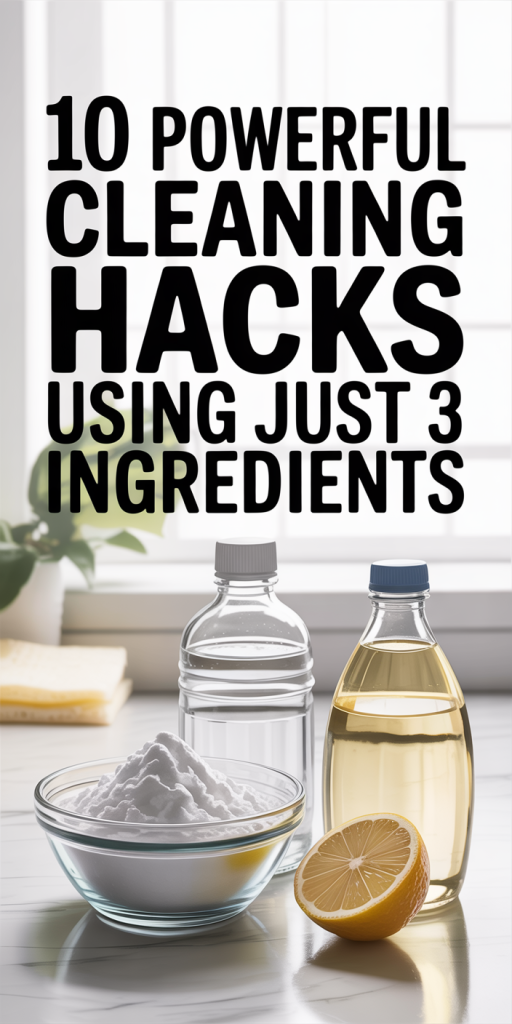
10 Powerful Cleaning Hacks Using Just 3 Ingredients: Vinegar, Baking Soda, and Dish Soap To Clean Faster in 2026
We’re always looking for cleaning solutions that are fast, effective, and kind to our wallets, and lately the simplest combinations have proven the most reliable. In this guide we’ll show you how to clean smarter in 2026 using only three pantry staples: white vinegar, baking soda, and liquid dish soap. These ingredients are versatile, inexpensive, and, when used together correctly, can replace many commercial cleaners for everyday tasks. Over the next sections we’ll explain the science behind why they work, cover safety and mixing basics, and give eight tested hacks with step-by-step instructions, timing tips, and troubleshooting notes. Whether you’re tackling grease, stains, drains, or glass, these three ingredients will become your go-to toolkit. Let’s get into it.
Why Vinegar, Baking Soda, And Dish Soap Work So Well Together
Vinegar, baking soda, and dish soap each have distinct chemical and physical properties that make them powerful cleaners on their own, and surprisingly effective in combination.
- Why vinegar helps: White vinegar is a dilute solution of acetic acid (usually 5–8%) that breaks down mineral deposits, dissolves some types of grease, and neutralizes alkaline residues. Its acidity helps remove hard-water spots, soap scum, and mineral stains on surfaces like glass, tile, and stainless steel.
- Why baking soda helps: Baking soda (sodium bicarbonate) is a mildly alkaline powder with gentle abrasive properties. It lifts dirt, neutralizes odors, and can react with acids to produce carbon dioxide, that fizzing action can help dislodge grime in tight spots. It’s also non-toxic and safe for many surfaces when used correctly.
- Why dish soap helps: Dish detergent is designed to cut grease. Its surfactants lower surface tension, allowing water to penetrate oily residues and emulsify fats so they rinse away easily. A few drops of dish soap add significant grease-cutting power to otherwise mild solutions.
How they work together: The trio combines acid (vinegar), base/abrasive (baking soda), and surfactant (dish soap). Used sequentially or blended into simple recipes, they attack a range of soils: vinegar dissolves mineral and alkaline residues, baking soda scrubs and deodorizes, and dish soap emulsifies oils. We don’t recommend mixing large amounts of vinegar and baking soda into a sealed container, the reaction creates gas, but measured use in cleaning recipes makes use of the fizz, abrasion, and surfactant action safely.
When they’re not ideal: Avoid strong vinegar use on natural stone (marble, travertine), certain hardwood finishes, and unsealed grout, the acid can etch or dull those surfaces. Also, vinegar won’t disinfect like bleach or alcohol solutions at recommended contact times: for sanitizing high-risk surfaces we’ll note alternatives.
In short: combined thoughtfully, these three pantry staples create flexible, low-cost cleaners for most daily tasks, which is why we rely on them in the hacks that follow.
Safety, Tools, And Mixing Basics Before You Start
Before we jump into recipes, let’s set some ground rules. Following these safety and mixing basics keeps our experiments effective and prevents damage.
Basic safety:
- Ventilate the area. Open windows or run a fan when using vinegar or any strong-smelling cleaner. That reduces irritation and disperses fumes.
- Wear gloves for prolonged contact. Vinegar and concentrated dish soap can dry sensitive skin: gloves protect both skin and nail beds.
- Don’t mix with bleach or hydrogen peroxide. Vinegar or dish soap combined with bleach releases chlorine gas or chlorinated byproducts: never do this. Also avoid mixing strong acids with ammonia-based cleaners.
- Test in an inconspicuous spot. For upholstery, rugs, painted surfaces, or laminate, spot-test before full treatment.
Tools we recommend:
- Spray bottles (labeled), one for vinegar solutions, one for water. Use opaque or dark bottles for light-sensitive environments.
- A small bowl and old toothbrush for paste and scrubbing work.
- Microfiber cloths, they trap dirt and minimize streaks, especially for glass.
- Plastic scrapers and non-scratch sponges for stovetops and ceramic cooktops.
- A funnel and measuring spoons for consistent mixing.
Mixing basics and ratios (our go-to measures):
- All-purpose spray: 1 part white vinegar to 1–3 parts water, plus 1–2 drops of dish soap per spray bottle (we usually use 1:3 for delicate surfaces, 1:1 for heavy soap scum).
- Degreasing paste: 3 parts baking soda + 1 part dish soap + small splash water to make a spreadable paste.
- Drain fizz: 1/2 cup baking soda followed by 1 cup white vinegar, then boil water.
- Spot spray for fabrics: 1 cup water + 1 tsp dish soap + 1/4 cup white vinegar in a spray bottle.
Practical tips:
- Label everything, we keep a permanent marker on bottles so we don’t confuse solutions.
- Use distilled or filtered water if your tap is very hard: it reduces mineral residue during cleaning.
- For stubborn jobs, allow contact time. Many solutions need 5–20 minutes to work: scrubbing immediately may waste effort.
With these safety and mixing basics in place, we can confidently use the three ingredients in targeted hacks without damaging surfaces or creating unnecessary risks.
All-Purpose Spray: Vinegar + Water + A Drop Of Dish Soap
Why we use it: This all-purpose spray is our go-to for countertops, appliances, light grease, and routine surface maintenance. It’s inexpensive, fast, and leaves surfaces reasonably fresh without strong chemical residues.
What you need:
- 1 cup white vinegar
- 1 cup warm water (or 3 cups water + 1 cup vinegar for a gentler mix)
- 1–2 drops liquid dish soap
- A spray bottle and microfiber cloth
How to make it:
- Combine vinegar and water in the spray bottle.
- Add 1–2 drops of dish soap (too much will leave residue or make rinsing harder).
- Gently swirl to mix, don’t shake vigorously.
- Label the bottle and date it: store away from direct sunlight.
How to use:
- For daily cleaning: Lightly mist countertops, wipe with a microfiber cloth, and buff dry. The soap helps break surface grease while vinegar dissolves mineral films.
- For sticky spots: Spray, let sit 3–5 minutes, then wipe with a damp cloth and dry.
- For appliances: Spray on exterior stainless surfaces, wipe in the direction of the grain, and buff with a dry cloth to reduce streaks.
Tips and troubleshooting:
- Avoid on stone: Don’t use on marble, limestone, or travertine, the acid can etch. For those surfaces, use a mild dish soap + water solution instead.
- Rinsing: If you notice a dull film from soap buildup, wipe the area with plain water and dry.
- Fresh scent: If the vinegar smell bothers you, add a few drops of essential oil (lemon or lavender) to the bottle, but keep quantities small, not every household likes fragrances.
When to skip it:
- Don’t rely on this as a disinfectant for high-risk areas post-illness: use an EPA-registered disinfectant or diluted bleach (properly ventilated and used per instructions).
Our all-purpose spray is the fastest way to maintain clean surfaces with materials we already have. With minor precautions it replaces many commercial multi-surface cleaners and keeps cleaning simple.
Oven And Stovetop Degreaser Paste: Baking Soda + Dish Soap + Water
Why this hack works: Ovens and stovetops collect baked-on grease that’s tough to shift. Baking soda acts as a gentle abrasive while dish soap breaks down oils: the paste clings to vertical surfaces and slowly loosens carbonized residue.
What you need:
- 1/2 cup baking soda
- 1–2 tsp liquid dish soap
- Water, added gradually to form a spreadable paste
- A bowl, spatula, rubber gloves, and a non-scratch scrub pad or plastic scraper
How to make and use it:
- Mix baking soda and dish soap in a bowl. Add water a teaspoon at a time until the paste reaches toothpaste or mayonnaise consistency.
- Put on gloves. Apply the paste liberally to grimy oven interiors, heavily soiled stovetop areas, or the inside of a microwave (if safe per manufacturer).
- Let it sit. For ovens and stubborn baked-on grease, allow 12–24 hours: for stovetops, 30–60 minutes is usually enough.
- Scrub gently with a plastic scraper or non-scratch pad. The paste should lift carbonized bits: for edges use an old toothbrush.
- Wipe away residue with a damp microfiber cloth and rinse with warm water.
For oven racks and trays:
- Remove racks and lay them in a bathtub or large sink. Sprinkle baking soda over them, spritz with water and a little dish soap, and let sit overnight. Scrub in the morning and rinse.
Microwave shortcut:
- For lighter microwave grime, place a microwave-safe bowl with 1 cup water and 2 tbsp vinegar. Microwave on high for 3–5 minutes until steaming, let sit 5 minutes, then wipe clean. For greasy microwaves add a dab of dish soap to a damp cloth.
Tips and caveats:
- Avoid abrasive pads on self-cleaning oven interiors, use plastic scrapers to prevent damage.
- Test on painted or enamel surfaces first. While baking soda is gentle, aggressive scrubbing can damage finishes.
- Rinse thoroughly: dish soap residue can attract dirt if left behind.
This degreaser paste gives us a cheap, low-toxicity way to restore ovens and stovetops without toxic aerosols, and it often outperforms store-bought oven cleaners on light-to-moderate grime.
Drain Clearing And Deodorizing: Baking Soda Followed By Vinegar + Hot Water
Why this works: Clogged drains often contain grease, soap scum, hair, and organic buildup that trap odors. Baking soda + vinegar creates fizzy action that helps dislodge debris: hot water flushes it away. This approach is non-corrosive compared to repeated use of chemical drain cleaners and is safe for most household plumbing.
What you need:
- 1/2 cup baking soda
- 1 cup white vinegar
- Boiling or very hot water (as hot as your pipes allow)
- A kettle or pot and a sink stopper (optional)
How to use it:
- Remove any visible debris from the drain top (hair, food scraps) by hand or with a wire hook.
- Pour 1/2 cup baking soda down the drain.
- Pour 1 cup white vinegar down the drain immediately. You’ll see fizzing, that agitation loosens grime.
- Let it sit 10–20 minutes (longer for slow drains).
- Flush with at least 2 cups of boiling or very hot water to wash loosened residues down the pipes.
When to repeat or escalate:
- For persistent clogs: Repeat the sequence once more. If the drain is still slow, use a plumber’s snake or mechanical auger.
- Don’t use this method if you’ve recently used a commercial chemical drain cleaner: mixing residues can create dangerous reactions.
Deodorizing tips:
- Once the drain is free, maintain it by pouring 1/2 cup baking soda down the drain weekly followed by 1 cup hot water, this reduces buildup and odors.
- For garbage disposals: Run cold water, pour in 1/2 cup baking soda, then add 1 cup vinegar and let fizz. After 5–10 minutes, run the disposal with cold water and a few ice cubes to sharpen blades and clear residues.
Limitations and safety:
- This method is excellent for organic clogs and slow drains but won’t remove metal objects or severe blockages deep in the traps.
- Use hot (not boiling) water if you have PVC pipes, very hot water can soften or damage plastic over time. Check your local plumbing recommendations.
Using baking soda and vinegar gives us a gentle, DIY-first approach to clear and deodorize drains. It’s low-cost, low-risk, and often restores normal flow without calling a plumber.
Carpet And Upholstery Spot Treatment: Baking Soda Lift + Vinegar/Dish Soap Spray
Why it helps: Baking soda absorbs moisture and odors while lifting loose particles: a light vinegar/dish soap spray breaks surface stains and helps emulsify oils. Combined with blotting and agitation, this method tackles common spills like coffee, pet accidents, and food stains without harsh chemicals.
What you need:
- Baking soda
- 1 cup warm water
- 1 tsp dish soap
- 1/4 cup white vinegar
- A spray bottle, clean towels or paper towels, a soft brush, and a vacuum
Step-by-step:
- Blot fresh spills immediately. Use a clean towel to absorb as much liquid as possible: don’t rub, rubbing spreads the stain.
- Sprinkle baking soda over the affected area generously and let it sit 10–20 minutes. For strong odors (like pet urine) leave it longer to absorb moisture and smell.
- Vacuum up the baking soda thoroughly.
- Prepare the spray: combine warm water, 1 tsp dish soap, and 1/4 cup white vinegar in a spray bottle. Lightly mist the stained area, don’t soak.
- Gently agitate with a soft brush or clean cloth, working from the outside of the stain toward the center.
- Blot with a dry towel to lift the stain and remaining moisture. Repeat spraying and blotting until the stain fades.
- Rinse by misting with plain water and blotting to remove soap residue, then allow to air dry or speed drying with a fan.
For set-in or protein-based stains (blood, sweat):
- Use cold water in the spray mixture. Warm water can set proteins. For stubborn protein stains consider enzymatic cleaners (store-bought) if the DIY approach fails.
Pet-accident tips:
- After the initial baking soda treatment and spraying, consider an enzyme cleaner if the odor persists, enzymes break down uric acid compounds that baking soda can’t fully neutralize.
Caring for delicate upholstery:
- Always test on an inconspicuous seam. If fabric dye transfers, don’t proceed. For silk, velvet, or antique textiles, consult a professional cleaner.
This two-step approach, absorb then treat, gives us an affordable, eco-friendly spot-treatment method that handles most everyday carpet and upholstery mishaps without heavy chemicals.
Glass And Mirror Cleaner: Diluted Vinegar With A Touch Of Dish Soap For Streak-Free Shine
Why vinegar + dish soap works for glass: Vinegar dissolves mineral deposits and film while dish soap cuts fingerprints and oily smudges. Used in a diluted mix and applied with the right technique, it leaves glass and mirrors streak-free and clear, and at a fraction of the price of commercial glass cleaners.
What you need:
- 1 cup water (preferably distilled if your tap is hard)
- 1/2 cup white vinegar (or 1/4 cup for very delicate surfaces)
- 1 drop dish soap
- A spray bottle, microfiber cloths or lint-free paper towels
How to make and use it:
- Combine water and vinegar in the spray bottle, add one drop of dish soap, and swirl gently.
- Spray lightly, don’t drench the surface, which can cause dripping and streaks.
- Wipe using a microfiber cloth in horizontal strokes for windows and vertical strokes for mirrors, finishing by buffing with a dry corner of the cloth.
- For very dirty glass (road grime, heavy fingerprints), pre-clean with the all-purpose spray (vinegar + water + a drop of soap), then use the diluted vinegar mix for finishing.
Tips for streak-free results:
- Avoid cleaning glass in direct sunlight, solution evaporates too quickly and leaves streaks.
- Change cloths when they’re heavily soiled: a dirty cloth redeposits grime.
- Use a squeegee on large windows: spray, squeegee top to bottom, and wipe the blade after each pass.
- Replace paper towels with microfiber to reduce lint.
When not to use vinegar on glass:
- Avoid on stained or leaded glass with delicate finishes. For antique mirrors or silver-backed glass, test first because prolonged vinegar exposure can strip backing.
This simple recipe gives us clear, streak-free results for mirrors, windows, and glass tables without the aerosol fumes and with virtually zero cost per use.
Conclusion
We’ve shown how three inexpensive pantry staples, vinegar, baking soda, and dish soap, can handle a surprising range of cleaning tasks. From daily all-purpose sprays to degreasing ovens, clearing drains, and refreshing upholstery, these hacks reduce clutter, chemical exposure, and cleaning time. As we’ve emphasized, safety and surface testing matter: avoid vinegar on natural stone, don’t mix with bleach, and always spot-test fabrics. If we combine common-sense precautions with the recipes above, we’ll keep our homes cleaner, greener, and simpler in 2026. Try a couple of hacks this week, you may be surprised how much you can replace in your cleaning cupboard with just three reliable ingredients.