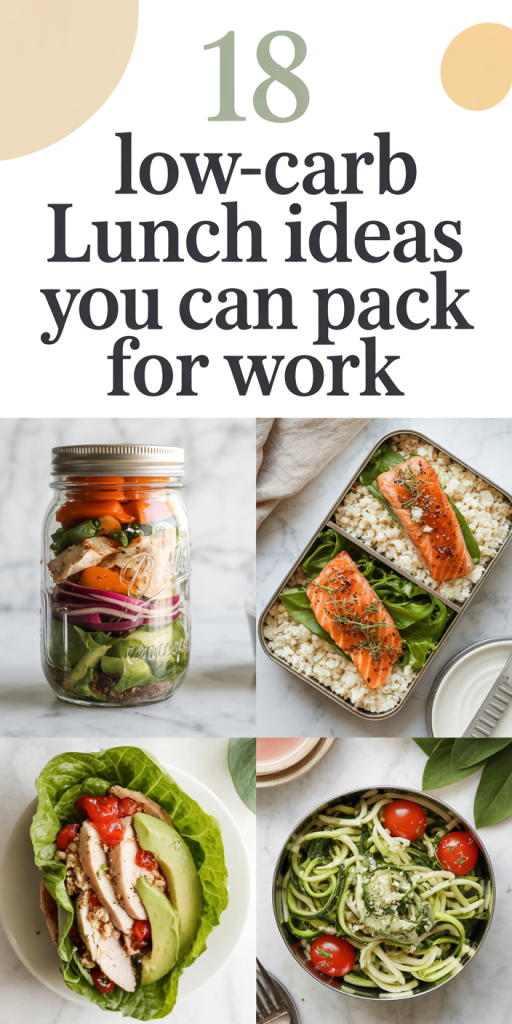
18 Low-Carb Lunch Ideas You Can Pack For Work
Packing lunch for work doesn’t have to mean soggy sandwiches, sad salads, or carb-heavy leftovers. When we choose low-carb lunch ideas that travel well, we get steady energy, clearer thinking, and more satisfying mid-day meals without a lot of fuss. In this guide we share 18 practical, tasty low-carb lunch ideas you can pack for work, plus packing principles, meal-prep strategies, and a one-week plan that makes sticking to low-carb simple and sustainable.
Why Choose Low-Carb Lunches For Work
Health And Energy Benefits
Low-carb lunches can reduce mid-afternoon energy slumps and curb cravings that lead to impulsive snacking. By focusing on protein, healthy fats, and fiber-rich vegetables, we stabilize blood sugar and keep ourselves fuller for longer. That means fewer trips to the vending machine and more consistent concentration during meetings.
Beyond immediate effects, repeatedly choosing lower-carb lunches supports weight management, improves triglyceride and HDL cholesterol profiles for many people, and can reduce inflammation for folks sensitive to refined carbs. For busy professionals, that translates into fewer sick days and better overall wellbeing, small changes with outsized returns.
How Low-Carb Lunches Improve Productivity
We’ve all experienced that post-lunch fog: a heavy, carbohydrate-rich meal followed by sluggishness and reduced alertness. Low-carb lunches tend to avoid rapid blood sugar spikes and crashes, so our cognitive performance remains steadier in the afternoon. In practice, swapping a white-bread sandwich for a protein-forward bowl or salad often yields clearer thinking and more sustained focus.
Low-carb meals often require a little more chewing (think crunchy vegetables, nuts, or dense proteins), which slows eating and promotes satiety. That mindful pace helps us avoid overeating and preserves energy for the rest of the workday. Finally, when lunches are prepared in advance, we spend less time figuring out what to eat and more time executing our tasks.
Packing Principles And Short Grocery List
Essential Containers, Tools, And Prep Gear
- Leak-proof mason jars (for layered salads), portable and stackable.
- Bento-style containers with compartments, keep wet ingredients separate.
- Insulated lunch bag and ice packs, crucial if you don’t have reliable fridge access.
- Small condiment containers and silicone cups, for dressings, nuts, and dips.
- Reusable cutlery and a small napkin or wet wipe.
- Sharp chef’s knife and cutting board, plus a good storage bag system (zip-top or glass meal prep containers).
Staples To Keep On Hand For Quick Low-Carb Meals
- Proteins: canned tuna/salmon, boneless chicken breast/thighs, turkey slices, eggs, shrimp, halloumi, and lean steak.
- Veggies: mixed salad greens, spinach, cucumber, cherry tomatoes, bell peppers, cauliflower, zucchini, broccoli.
- Healthy fats: avocados, olive oil, nuts (almonds, walnuts), seeds (pumpkin, sunflower), cream cheese.
- Dairy & alternatives: feta, halloumi, parmesan, Greek yogurt (full fat), mozzarella.
- Low-carb bases: cauliflower rice, zucchini noodles, spaghetti squash.
- Flavor builders: olives, capers, pickles, pesto, chimichurri, soy sauce/tamari, sriracha, apple cider vinegar.
- Pantry: mustard, mayonnaise, coconut aminos, beef/chicken broth, spices (garlic powder, paprika, oregano), low-carb tortillas/wraps (optional).
With these tools and staples on hand we can assemble lunches in minutes and keep variety without a long grocery list.
18 Low-Carb Lunch Ideas (Easy To Pack And Eat)
Below are 18 low-carb lunch ideas that travel well and taste great. For each entry we include quick packing tips and simple swaps so you can adapt them to what’s in your fridge.
1. Chicken Caesar Salad In A Jar
Layer romaine, shredded rotisserie or grilled chicken, grated parmesan, and Caesar dressing at the bottom (dressing first). Add crunchy toppings like Parmesan crisps or almonds just before eating. Tip: pack croutons-free, replace with roasted chickpeas if you want crunch but keep carbs lower.
2. Mediterranean Tuna Salad With Olives And Feta
Mix canned tuna with olive oil, lemon, chopped Kalamata olives, crumbled feta, diced cucumber, and parsley. Serve over mixed greens or in lettuce cups. Swap Greek yogurt for part of the oil if you want creaminess with slightly fewer calories.
3. Mason Jar Cobb Salad With Avocado
Layer dressing, cherry tomatoes, hard-boiled eggs, bacon bits, blue cheese, diced turkey or chicken, and finally greens. Bring avocado halves separately or add just before eating to prevent browning. We love this for its protein variety and satisfying texture.
4. Turkey And Cheese Roll‑Ups With Veggie Sticks
Roll slices of turkey around slices of cheese and add a smear of mustard or pesto. Pack with carrot, celery, and cucumber sticks and a small container of hummus or ranch. Fast, no-heat option for days we forget to meal-prep.
5. Greek Chicken Bowl With Cauliflower Rice
Combine grilled chicken, cauliflower rice tossed with lemon and olive oil, olives, feta, cucumber, and tzatziki on the side. Cauliflower rice reheats quickly in a microwave-safe container or can be eaten cold.
6. Shrimp And Avocado Lettuce Cups
Toss chilled cooked shrimp with lime, cilantro, diced avocado, and a pinch of chili flakes. Spoon into butter or romaine lettuce leaves. These are light, refreshing, and ready in ten minutes if shrimp are pre-cooked.
7. Egg Salad With Pickles And Celery
Classic egg salad with a twist: add diced pickles, celery, a spoonful of mustard, and chives. Serve over greens or scoop into half an avocado for an extra dose of healthy fat. Keeps well for a couple of days in the fridge.
8. Bunless Burger Bowl With Roasted Veggies
Grill a burger patty, slice it, and place over arugula with roasted Brussels sprouts, bell peppers, and a dollop of mustard or mayo. Swap beef for turkey or lamb depending on taste.
9. Asian Beef And Broccoli Meal Prep Bowl
Stir-fry thinly sliced beef and broccoli with garlic and a low-carb sauce (coconut aminos, sesame oil, chili). Serve over cauliflower rice and top with sesame seeds. This one reheats well and satisfies savory cravings.
10. Smoked Salmon Plate With Cream Cheese And Cucumbers
Arrange smoked salmon, cream cheese, sliced cucumbers, capers, and red onion. Add a lemon wedge and dill. It’s essentially a portable brunch and needs zero heating.
11. Caprese Salad With Pesto And Grilled Chicken
Tomato, fresh mozzarella, basil, grilled chicken, and a drizzle of pesto or olive oil. Use thicker-cut tomatoes and wrap gently to avoid juice leaks. Swap tomatoes for roasted red peppers in stricter low-carb phases.
12. Zucchini Noodle Salad With Pesto And Cherry Tomatoes
Toss spiralized zucchini with pesto, halved cherry tomatoes, and grated parmesan. Add grilled shrimp or chicken on top. Zoodles are best eaten cold or at room temperature to avoid sogginess.
13. Buffalo Chicken Celery Boats With Blue Cheese
Shred rotisserie chicken, mix with hot sauce and a touch of butter, then spoon into celery sticks. Pack blue cheese or ranch dip on the side. This snack-style lunch is crunchy, tangy, and protein forward.
14. Steak Salad With Chimichurri
Thinly sliced steak over mixed greens with roasted cherry tomatoes, red onion, and a spoonful of chimichurri. Steak can be pre-cooked and served cold, makes for a hearty mid-day meal.
15. Tuna-Stuffed Avocado
Halve an avocado and fill it with tuna salad (mayo, dijon, lemon, celery). It’s visually appealing, portable if wrapped tightly, and offers a perfect fat-protein balance.
16. Roasted Vegetable And Halloumi Skewers
Thread halloumi, cherry tomatoes, zucchini, and bell pepper onto skewers and roast. Pack with a yogurt dip or pesto. These maintain texture and are fun to eat with minimal utensils.
17. Cold Chicken Alfredo Spaghetti Squash
Roast spaghetti squash and toss the strands with a light Alfredo (cream, parmesan, garlic). Add shredded chicken and broccoli for a pasta-like experience without the starch.
18. Mediterranean Antipasto Box (Meats, Cheeses, Veggies)
Assemble sliced salami or prosciutto, marinated artichokes, olives, cherry tomatoes, various cheeses, and raw veggies. Add a small container of olive oil and vinegar for dipping. Think of it as a portable charcuterie that’s perfectly low-carb.
Each of these ideas is built to be packable, flavorful, and adaptable. We recommend rotating them to avoid boredom and mixing in different dressings and spices to keep lunches exciting.
Meal Prep Strategies To Save Time
Batch Cooking Proteins And Veggies
We save hours by batch-cooking proteins on the weekend: roast a sheet pan of chicken thighs, grill a batch of shrimp, or sear multiple steak strips. Likewise, roast a tray of mixed vegetables and portion into containers. Proteins freeze well for longer storage, while most roasted vegetables keep 4–5 days refrigerated.
Simple schedule: Sunday, cook proteins (2–3 kinds), roast veggies, and prep salad greens. Chop crunchy veggies into sticks for snacks and store dressings separately. That way we just assemble bowls or jars in the morning.
Assembly-Line Packing And Portion Control
Set up an assembly line: containers first, then greens/bases, proteins, cheeses/nuts, and finally dressings. Use portion control cups for sauces and a kitchen scale if you’re tracking macros. Label containers with date and contents so nothing gets mystery-aged in the back of the fridge.
We also recommend investing in multi-compartment meal prep boxes for days with multiple components. They help keep textures separate and limit soggy salads. Over time a 60–90 minute prep session on the weekend translates into stress-free lunches all week.
Storage, Reheating, And Food Safety
How To Keep Packed Lunches Fresh
- Cool hot foods before sealing to avoid condensation and bacteria growth. Rapid cooling in an ice bath then refrigeration is ideal.
- Keep dressings separate if possible. Adding acidic dressings (lemon, vinegar) just before eating helps keep greens crisp.
- Use airtight containers and keep lunches refrigerated until it’s time to eat. If fridge access is unreliable, bring an insulated bag with an ice pack.
- Label with date and use within recommended windows: cooked proteins 3–4 days, seafood 1–2 days, fresh-cut veggies 3–5 days.
Safe Reheating And Transport Tips
- Reheat foods to at least 165°F (74°C) if you’re warming them. Microwave-safe containers are convenient but transfer to a microwave-safe plate to heat evenly.
- If reheating in the office microwave, stir halfway through and use a lid or microwave-safe cover.
- For transport, we recommend stacking heavy items at the bottom and delicate greens on top. Use leak-proof containers for any oily dressings or sauces.
- When in doubt, sniff and check texture, if something smells off or looks slimy, don’t risk it. Food safety is non-negotiable.
Sample 1-Week Low-Carb Lunch Plan For Workdays
Five-Day Rotation With Prep Notes
- Monday: Mason Jar Cobb Salad with Avocado. Prep eggs and bacon on Sunday: assembly in morning.
- Tuesday: Asian Beef and Broccoli Bowl over cauliflower rice. Batch-cook beef and rice Sunday.
- Wednesday: Shrimp and Avocado Lettuce Cups. Use leftover shrimp or prep fresh on Tuesday night.
- Thursday: Steak Salad with Chimichurri. Grill steak Sunday or Monday: chimichurri lasts several days refrigerated.
- Friday: Mediterranean Antipasto Box. Quick to assemble, great for a low-effort end to the week.
This rotation mixes fresh, cold lunches with reheatable bowls so we don’t rely on the microwave every day. It also makes use of batch-cooked proteins across multiple meals.
Grocery List For The Week
- Proteins: 3–4 chicken thighs or equivalent, 1 lb flank or skirt steak, 1 lb cooked shrimp, 2–3 cans tuna, 6–8 eggs.
- Vegetables: romaine, mixed greens, cauliflower (or pre-riced), broccoli, cherry tomatoes, cucumbers, bell peppers, avocados, celery.
- Dairy & cheese: feta, parmesan, blue cheese (small amount), mozzarella or halloumi.
- Pantry & extras: olives, pickles, olive oil, pesto, chimichurri ingredients (parsley, cilantro, garlic), nuts/seeds, mayonnaise, mustard.
This list covers the essentials for the five-day plan and leaves room for snacks or breakfast crossover items.
Tips For Eating Low-Carb On A Budget And At Work
Smart Substitutions And Low-Cost Protein Options
Eating low-carb doesn’t have to be expensive. We rely on budget-friendly proteins like eggs, canned tuna, and chicken thighs. Frozen vegetables are often cheaper and just as nutritious as fresh, and they reduce waste because we can use only what we need.
Bulk buys: buy nuts, seeds, and cheeses in larger packages and portion them into single-serve containers. Look for sales on proteins and freeze extras. Swap fresh salmon for canned salmon or mackerel to keep costs down without sacrificing omega-3s.
How To Navigate Workplace Fridge And Microwave Constraints
If your office fridge is small or unreliable, use high-quality insulated lunch bags with ice packs. We also keep some lunches intentionally non-perishable for a day or two (antipasto boxes, smoked salmon plates) to avoid the fridge problem.
When microwaves are limited, choose meals that taste great cold or at room temperature, salads, lettuce wraps, and antipasto-style boxes. If reheating is unavoidable, heat in short bursts and stir to ensure even warming. Label your containers clearly with your name and date to reduce mix-ups and lost lunches.
Conclusion
Low-carb lunch ideas that travel well are mostly about planning, smart packing, and a small set of versatile staples. When we build lunches around proteins, healthy fats, and crisp vegetables, and use simple prep strategies, we eat better, feel better, and get more out of our workdays. Try a few of the 18 ideas this week, rotate them, and adapt recipes to what’s on sale or in your fridge. With a little practice, packing a satisfying low-carb lunch becomes second nature: our afternoons stay productive, and we actually enjoy what we eat.