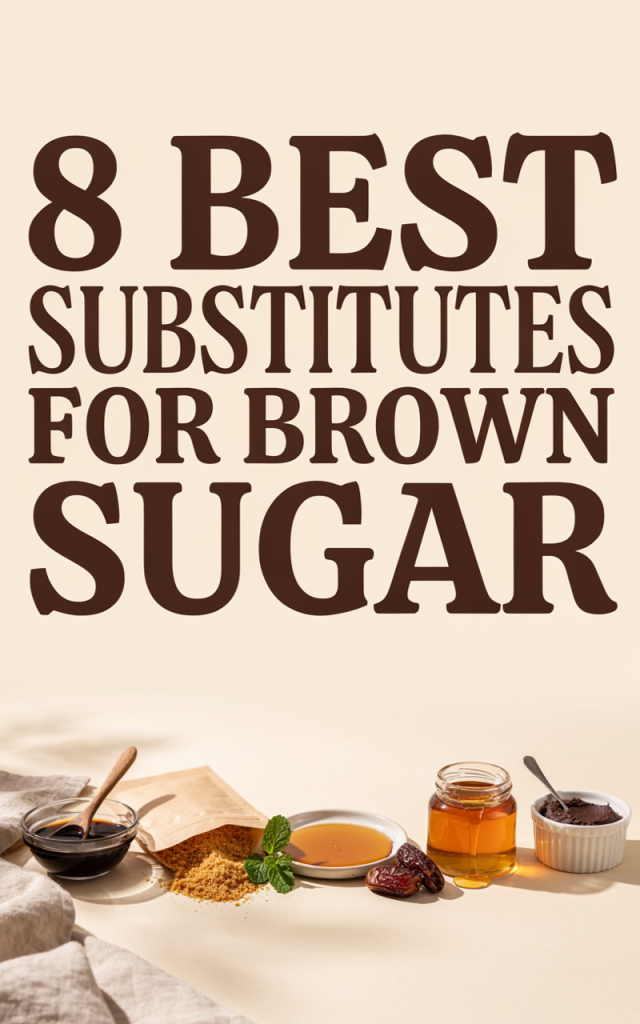
8 Best Substitutes for Brown Sugar
Brown sugar is a baking staple: it brings moisture, a rich caramel note, and a soft chew to cookies, cakes, sauces, and glazes. But what if you’re out of brown sugar—or want a swap for dietary, flavor, or pantry reasons? In this guide I’ll walk you through eight reliable substitutes, explain how each affects texture and taste, give clear conversion tips, and offer practical recipes and ideas so you can swap with confidence. Whether you bake weekly or just want to fix a last-minute dessert, these options will keep your kitchen running smoothly.
Why substitute brown sugar?
Brown sugar is simply white sugar coated with molasses (light or dark), which adds moisture, acidity, and complex flavor. When you substitute, you’re trading sweetness and structure—and sometimes moisture and acidity—so it helps to understand how each alternative behaves in baking, cooking, and finishing.
Common reasons to substitute:
– You’re out of brown sugar.
– You prefer a less-processed or lower-glycemic option.
– You need a liquid sweetener for glazing or sauces.
– You want a different flavor profile (maple, coconut, date).
– You’re accommodating dietary preferences (less refined sugar, vegan, allergy constraints).
Below are eight practical substitutes, with conversion guidance, pros and cons, best uses, storage tips, and (for some) recipe ideas so you can try them right away.
Quick conversion & practical rules
- When replacing granulated-style brown sugar with another dry sugar (coconut sugar, muscovado, turbinado, date sugar): start 1:1 by volume, but expect small flavor/texture differences.
- When replacing with a liquid sweetener (honey, maple syrup, golden syrup): use about 3/4 cup liquid per 1 cup brown sugar, reduce other liquids in the recipe by ~1/4 cup, and lower oven temp by 25°F (about 15°C) to avoid over-browning. Watch texture and baking time.
- When using intensely flavored or very dry alternatives (muscovado, date sugar): flavor intensity may be stronger and moisture lower—add a tablespoon or two of molasses, butter, or oil if you need extra chew.
Now, the list — exactly eight dependable substitutes.
1) White Granulated Sugar + Molasses (Make your own brown sugar)
If you have white sugar and molasses, you can recreate brown sugar perfectly.
Why it works
– Brown sugar is simply white sugar + molasses. This gives you full control over light vs. dark brown sugar and is the most authentic substitute.
How to mix
– Light brown sugar: 1 cup white granulated sugar + 1 tablespoon molasses
– Dark brown sugar: 1 cup white granulated sugar + 2 tablespoons molasses
How to use
– Use 1:1 for brown sugar in any recipe.
– For best results, mix in a bowl or pulse in a food processor until evenly distributed.
Pros
– Authentic flavor and moisture.
– Fast and cheap if you have both ingredients.
– Customizable sweetness and depth.
Cons
– Requires molasses on hand.
– Molasses can clump if not mixed well—break up with a fork.
Best uses
– Cookies, cakes, sauces, glazes, marinades.
Storage
– Store in an airtight container; it behaves just like regular brown sugar. If it hardens, microwave in a sealed bowl for 10–15 seconds with a damp paper towel, or add a slice of bread to soften over a day.
Recipe: Homemade Brown Sugar (simple method)
– Ingredients:
– 1 cup white granulated sugar
– 1 tablespoon (light) or 2 tablespoons (dark) molasses
– Instructions:
1. Place sugar in a medium bowl.
2. Drizzle molasses over sugar.
3. Use a fork or whisk to mix until evenly colored and no clumps remain.
4. Store in an airtight container; use as a 1:1 brown sugar replacement.
2) Coconut Sugar
Coconut sugar is made from the sap of coconut palms. It’s granular, brown-hued, and has subtle caramel notes.
Conversion
– Use 1:1 by volume for brown sugar.
Behavior & flavor
– Less moist than soft brown sugar; similar caramel flavor but milder and with a hint of toasted sugar.
– Browning and flavor development in baking will be similar, but crumb may be slightly drier.
Pros
– Lower on the glycemic index than white sugar (though still sugar).
– Minimally processed and has a pleasant flavor.
Cons
– Slightly different moisture profile—may need a touch more liquid/fat for chewy cookies.
– Not as deep or complex as dark brown sugar.
Best uses
– Quick breads, muffins, breakfast bars, coffee, yogurt toppings.
Storage
– Store in a cool, dry place in an airtight container.
Recipe: Coconut-Sugar Banana Bread
– Ingredients:
– 1 3/4 cups all-purpose flour
– 1 cup coconut sugar
– 2 large ripe bananas, mashed
– 2 large eggs
– 1/2 cup melted butter or coconut oil
– 1 tsp baking soda
– 1/2 tsp salt
– 1 tsp vanilla extract
– Instructions:
1. Preheat oven to 350°F (175°C). Grease a loaf pan.
2. In a bowl, whisk flour, baking soda, and salt.
3. In a separate bowl, mix mashed bananas, coconut sugar, eggs, melted butter, and vanilla.
4. Fold dry ingredients into wet until just combined.
5. Pour batter into pan and bake 50–60 minutes until a toothpick comes out clean.
6. Cool in pan 10 minutes, then transfer to a rack to cool completely.
3) Maple Syrup
Pure maple syrup brings warm, woodsy sweetness and is a great liquid alternative with a distinct flavor.
Conversion
– Use about 3/4 cup maple syrup for 1 cup brown sugar.
– Reduce other liquids in the recipe by about 3 tablespoons to 1/4 cup.
– Reduce oven temperature by 25°F (15°C) to prevent over-browning.
Behavior & flavor
– Adds moisture and distinct maple flavor.
– Baked goods may be denser and more golden; watch baking time.
Pros
– Great flavor complement for oats, pancakes, glazes, and quick breads.
– Natural sweetener with antioxidants.
Cons
– Strong maple flavor may not suit all recipes.
– Liquid form changes texture—best for recipes that tolerate extra moisture.
Best uses
– Oat-based breakfasts, granola, glazes, marinades, pancakes, quick breads.
Storage
– Store in refrigerator after opening (pure maple) to retain flavor.
Recipe: Maple-Sweetened Oat Cookies
– Ingredients:
– 1 1/2 cups rolled oats
– 3/4 cup whole wheat or all-purpose flour
– 1/2 tsp baking soda
– 1/4 tsp salt
– 1/2 cup maple syrup
– 1/4 cup melted butter or coconut oil
– 1 egg
– 1 tsp vanilla
– Optional: 1/2 cup raisins or chopped nuts
– Instructions:
1. Preheat oven to 325°F (165°C). Line a baking sheet with parchment.
2. Mix oats, flour, baking soda, and salt.
3. Whisk maple syrup, melted butter, egg, and vanilla in a separate bowl.
4. Combine wet and dry ingredients; fold in raisins/nuts if using.
5. Drop tablespoonfuls onto baking sheet and bake 10–12 minutes until edges are golden.
6. Cool on sheet for 5 minutes before transferring to a rack.
4) Honey
Honey is a classic liquid sweetener with floral notes and humectant properties (it attracts and retains moisture).
Conversion
– Use about 3/4 cup honey for 1 cup brown sugar.
– Reduce other liquids by about 1/4 cup.
– Lower oven temperature by 25°F (15°C).
– Add 1/4 teaspoon baking soda per cup of honey in some recipes to neutralize acidity and help leaven.
Behavior & flavor
– Brings moistness and a distinctive flavor. Promotes browning due to fructose content.
– Denser texture and deeper color are common.
Pros
– Natural and unrefined; adds complexity.
– Great for glazes, dressings, marinades, and certain baked goods.
Cons
– Distinct flavor not always desired.
– Can make recipes sticky or overly browned if not adjusted.
Best uses
– Glazes, roasted vegetables, marinades, quick breads, some cookies.
Storage
– Store at room temperature in a sealed jar. Honey doesn’t spoil but can crystallize; warm jar briefly to de-crystallize.
Recipe: Honey-Glazed Carrots
– Ingredients:
– 1 lb carrots, peeled and cut into 1-inch pieces
– 2 tbsp honey
– 1 tbsp butter or olive oil
– 1/2 tsp salt
– Freshly ground black pepper
– Optional: chopped parsley or thyme for garnish
– Instructions:
1. Preheat oven to 400°F (200°C). Toss carrots with oil/butter, honey, salt, and pepper.
2. Spread on a baking sheet in a single layer.
3. Roast 20–25 minutes, tossing halfway, until tender and lightly caramelized.
4. Garnish and serve warm.
5) Muscovado Sugar
Muscovado is an unrefined sugar with high molasses content and a moist, sticky texture. It’s closer to dark brown sugar in flavor and intensity.
Conversion
– Use 1:1 by volume for brown sugar.
Behavior & flavor
– Very rich, smoky, and complex molasses flavor. Moist texture can make baked goods extra chewy.
– Can be stronger than standard brown sugar—adjust to taste.
Pros
– Deep flavor ideal for rich desserts and sauces.
– Excellent in recipes where molasses flavor is desirable.
Cons
– Stronger flavor may overpower delicate recipes.
– Can be more expensive and harder to find.
Best uses
– Gingerbread, chocolate cakes, caramel sauces, barbecue sauces, rich cookies.
Storage
– Store in an airtight container; keep it slightly soft with a slice of bread or a damp terra cotta brown-sugar saver.
6) Date Sugar
Date sugar is made from dried, ground dates. It’s whole-food-based and retains fiber and nutrients.
Conversion
– Use 1:1 by volume as a starting point.
Behavior & flavor
– Dense, grainy, and doesn’t melt or dissolve well—won’t give the same moisture or chew as brown sugar.
– Offers rich, raisin-like sweetness with fiber and fruit notes.
Pros
– Less refined, contains nutrients from dates.
– Great natural flavor for whole-grain baking, cereals, and spice cakes.
Cons
– Doesn’t dissolve—can lead to gritty texture in some batters and beverages.
– Less ideal for sauces or smooth caramels.
Best uses
– Muffins, granola, streusels, oatmeal toppings, spice cakes.
Storage
– Store in a cool, dry place in an airtight container. It may clump; break up before use.
Quick idea: Use date sugar as a topping for baked apples or yogurt, rather than as a one-to-one replacement in a smooth caramel sauce.
7) Demerara or Turbinado Sugar
Demerara and turbinado sugars are minimally refined cane sugars with large, amber crystals and a light molasses flavor.
Conversion
– Use 1:1 by volume.
Behavior & flavor
– Crystalline and slightly crunchy; they don’t dissolve as fully as brown sugar in batters.
– Great for sprinkling on baked goods to add crunch and sparkle.
Pros
– Nice texture contrast as a topping.
– Mild caramel flavor.
Cons
– Not ideal if you need the moisture and chew that soft brown sugar provides.
– Can remain grainy in delicate cakes or sauces.
Best uses
– Brushing on muffins, scones, coffee cakes, or finishing crumbles and cobblers.
Storage
– Keep in an airtight container in a cool, dry place.
8) Brown Rice Syrup
Brown rice syrup is a sticky, amber liquid made from fermented cooked rice. It’s milder and less sweet than brown sugar, with a subtle toasted flavor.
Conversion
– Use about 3/4 to 1 cup brown rice syrup for 1 cup brown sugar, but taste and adjust—it’s less sweet so you may need slightly more.
– Reduce other liquids by 1/4 cup and lower oven temperature by 25°F (15°C).
– Consider adding a tablespoon of molasses for more depth if you want a brown-sugar-like flavor.
Behavior & flavor
– Very sticky and viscous. Adds chew but less sweetness.
– Good for energy bars, granolas, and some baked goods that need binding.
Pros
– Less sweet, lower on the glycemic scale than some syrups.
– Excellent binding agent.
Cons
– Distinct texture and flavor; not a drop-in for tender cakes.
– Can make baked goods denser and chewier.
Best uses
– Granola bars, energy bites, chewy cookies, some glazes.
Storage
– Store in a cool, dry place in an airtight jar. Keep refrigerated if recommended by the manufacturer.
Tips for successful substitutions
- Flavor matching: For caramel/complex flavor, prefer muscovado, coconut sugar, or make your own with molasses. For a neutral substitute, coconut sugar or demerara are safe.
- Moisture adjustments: Liquid sweeteners add moisture—reduce other liquids. Dry, dense substitutions may require a touch of oil or butter to maintain chew.
- Color and browning: Liquid sweeteners and honey promote faster browning. Lower oven temperature slightly and watch bake times.
- Taste as you go: If possible, taste batters where safe (no raw eggs) and adjust sweetness.
- Start with small experiments: For treasured family recipes, run a small test batch to assess texture and flavor before scaling up.
Conclusion
Running out of brown sugar or wanting a different flavor doesn’t have to derail your recipe. These eight substitutes—ranging from homemade brown sugar (white sugar + molasses), coconut sugar, maple syrup, honey, muscovado, date sugar, demerara/turbinado, to brown rice syrup—cover a wide range of flavor profiles, textures, and dietary needs. Use the conversion tips and recipe ideas here as a starting point, and don’t be afraid to experiment: slight adjustments to liquid, oven temp, or fat can make a substitute sing in your favorite recipes.
Baking and cooking are both science and art: know the functional role of brown sugar in your recipe (moisture, acidity, flavor, browning), pick the substitute that matches those needs best, and tweak as necessary. You’ll find many of these alternatives open up delicious new flavor possibilities—happy swapping and baking!