
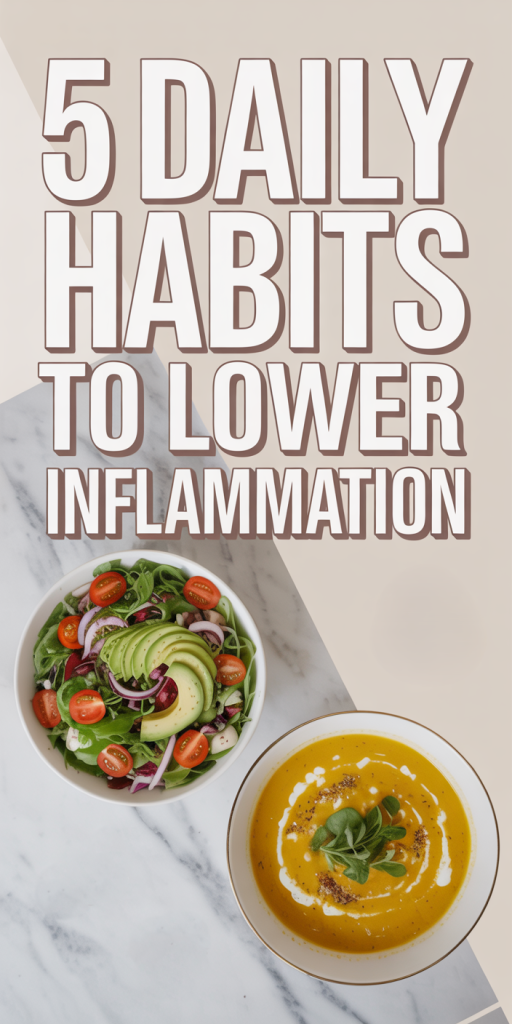
5 Daily Habits To Lower Inflammation
We live in a world that constantly pushes our bodies toward inflammation—processed foods, poor sleep, high stress, and hours spent sitting in front of screens. While short-term inflammation helps you heal, chronic inflammation quietly does the opposite. It contributes to fatigue, bloating, joint pain, weight gain, and long-term diseases like diabetes, arthritis, and heart disease. The solution isn’t found in a pill—it’s built through daily habits that help your body naturally calm down. Here are five simple habits to lower inflammation and feel better from the inside out.
1. Start Your Morning With an Anti-Inflammatory Drink
Before your coffee, try something that soothes your system instead of spiking it. A simple mix of warm water, lemon, and turmeric works wonders. The lemon helps balance pH and supports digestion, while turmeric’s active compound, curcumin, has powerful anti-inflammatory properties. Adding a pinch of black pepper boosts absorption, and a drizzle of honey makes it easier to drink. Other great options include green tea (rich in antioxidants called catechins), matcha lattes, ginger tea with lemon, or a greens powder mixed with water. This small change sets the tone for your day—less inflammation, better digestion, and more energy.
2. Eat Whole Foods, Not Processed Ones
If there’s one rule to live by for lowering inflammation, it’s this: eat food as close to its natural state as possible. That means fresh vegetables and fruits, wild-caught fish and lean proteins, nuts, seeds, olive oil, and whole grains (if your body tolerates them). On the flip side, avoid refined oils, sugar, and ultra-processed foods. These trigger your immune system, increase blood sugar spikes, and fuel chronic inflammation. To make it easy: cook most of your meals at home, use olive or avocado oil instead of vegetable oil, replace sugary snacks with fruit or dark chocolate, and choose wild salmon or sardines a few times a week for omega-3s. Your gut, skin, and joints will thank you.
3. Move Every Day—Even Just 20 Minutes
You don’t have to run marathons to fight inflammation. In fact, too much intense exercise can have the opposite effect. What your body needs is consistent, moderate movement that keeps your blood flowing and stress hormones balanced. Try 20–30 minutes of brisk walking, yoga, light strength training, or a bike ride. Movement improves circulation, reduces inflammatory markers, and helps regulate blood sugar. If you sit all day for work, make it a point to get up and move every hour. Little bursts of activity add up fast.
4. Prioritize Quality Sleep
Sleep is when your body repairs itself. When you cut it short, inflammation builds up and your hormones—especially cortisol and insulin—fall out of balance. Most adults need 7–9 hours of high-quality sleep per night. Here’s how to get it: go to bed and wake up at the same time each day, keep your room cool and dark, avoid screens 60 minutes before bed, and try magnesium glycinate or chamomile tea if you struggle to unwind. Good sleep isn’t a luxury—it’s one of the most powerful anti-inflammatory habits there is.
5. Manage Stress Before It Manages You
Chronic stress keeps your body in “fight or flight” mode, flooding it with cortisol and inflammatory chemicals. You might not feel it at first, but over time, it wears down your immune system, digestion, and mood. To calm inflammation at the source, build daily stress management rituals like deep breathing or meditation (even 5 minutes helps), journaling, spending time outdoors, listening to calming music, or saying “no” to things that drain you. Think of stress reduction as inflammation reduction. The calmer your nervous system, the healthier every cell in your body becomes.
Final Thoughts
You don’t need a complicated plan to lower inflammation—just consistency. Start small. Swap one habit at a time until these become part of your normal rhythm. Drink something healing in the morning. Eat real food. Move your body. Get your sleep. Protect your peace. These habits may sound simple, but they’re the foundation of a body that heals faster, feels lighter, and stays younger longer.

