What Does 30 Grams Of Protein Actually Look Like? A Practical Visual Guide For Everyday Meals (2026)
We’ve all heard the recommendation to include adequate protein at each meal, but “adequate” can feel vague. When someone tells us to eat 30 grams of protein, what does that actually look like on our plate? This guide translates that number into real, everyday portions you can see, cook, and serve, no food scale required. We’ll explain why 30 grams is a useful target for many people, show common whole-food examples (animal and plant), list dairy and powder options for quick hits, and give practical plate-building tips. Along the way we’ll offer visual cues and household equivalents so you can estimate portions on the fly, cover who benefits most from this approach, and point out common mistakes to avoid. By the end, you’ll be able to eyeball a balanced, satisfying meal that reliably delivers roughly 30 grams of protein.
Why 30 Grams Of Protein Matters: Benefits And Context
Protein is unique among macronutrients: it supports muscle repair and growth, helps regulate appetite, supports immune function, and plays a role in hormone production. That’s why many nutrition experts recommend spreading protein intake across meals rather than concentrating most protein in a single meal. A 30-gram target per meal is practical for several reasons.
First, 30 grams is a ballpark that stimulates muscle protein synthesis in most adults after a bout of resistance exercise. We don’t need to memorize exact thresholds for every age and body size, but aiming for about 20–40 grams per meal ensures we’re in the effective range to preserve and build lean mass. Second, 30 grams helps with satiety: meals with this amount of protein keep blood sugar and appetite more stable, which supports weight management.
Context matters: 30 grams per meal is a useful anchor for an average adult aiming for 90–150 grams per day (depending on body size and activity). For sedentary smaller adults it may be more than necessary: for athletes or larger individuals it may be a minimum. Still, this target simplifies meal planning: think “one palm-sized portion of dense protein + supporting foods,” and you’re usually close.
Finally, protein quality and distribution matter. The same grams from high-quality animal sources or complementary plant sources are more effective than scattered tiny amounts across many snacks. We’ll show visual portions that make hitting 30 grams straightforward whether you prefer meat, plants, dairy, or powders.
Visual Guide: Common Whole Foods That Equal 30 Grams
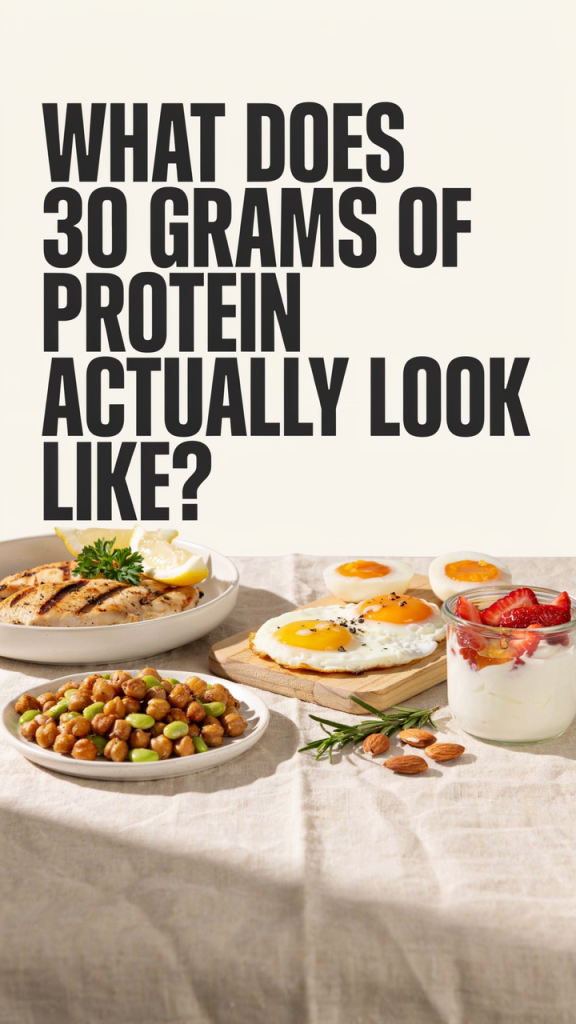
Translating grams into food portions is where most people get stuck. Below are common whole-food examples that each provide roughly 30 grams of protein. Portions are practical serving sizes you can prepare at home.
- Chicken breast: ~4 to 5 ounces cooked (about the size of a deck of cards to the width of your palm). A cooked 4.5-ounce chicken breast typically contains ~30 g protein. Roast, grill, or pan-sear and slice over salads or with vegetables.
- Lean beef: ~4 ounces cooked (about a palm-sized piece). A skirt or flank steak trimmed of fat, cooked and sliced, will hit roughly 28–32 g depending on cut and cooking loss.
- Pork loin or tenderloin: ~4 ounces cooked. Lean pork is similar to beef and chicken for protein density.
- Salmon: ~4.5 ounces cooked (roughly the size of a checkbook). Fatty fish gives high-quality protein plus omega-3s, a nutrient bonus.
- Tuna (canned in water): ~1.5 cans (5–6 ounces drained) equals ~30 g. One standard 5-ounce can contains about 25–28 g: combine with a tablespoon of mayo or olive oil for a quick meal.
- Shrimp: ~5–6 ounces cooked (roughly a handful or a heaping cup) provides ~30 g.
- Tempeh: ~6 ounces cooked (about three-quarters of a standard 8-ounce block) gives ~30 g. Tempeh is a dense, soy-based option with complete amino acids.
- Lentils: ~1.5 cups cooked (about 300 g cooked) yields ~30 g protein. Great in soups, stews, or salads but bulkier than animal proteins.
- Chickpeas: ~2 cups cooked (or a large can plus some) will provide around 30 g. Use roasted chickpeas or hummus with pita for variety.
- Tofu (firm): ~12 ounces (about 1.5 standard blocks) yields ~30 g. Extra-firm packs more protein per volume and is versatile for stir-fries or baking.
These serve as visual anchors: a palm-sized piece of cooked animal protein, a heaping cup of legumes, or multiple servings of denser plant proteins like tempeh or tofu. We’ll combine these examples into meal ideas later.
Dairy, Eggs, And Protein Powders: Quick Ways To Hit 30 Grams
When we need a fast, predictable 30-gram hit, for breakfast or post-workout, dairy, eggs, and powders are lifesavers because their protein content is concentrated and consistent.
- Greek yogurt: A typical 7–8 ounce (200–230 g) container of plain, nonfat Greek yogurt provides about 18–20 g. Pair it with 3–4 tablespoons of whey or collagen powder, or top with 1/3 cup of chopped nuts and seeds to reach ~30 g. Alternatively, choose a larger 12-ounce tub (about 30–34 g protein for higher-protein varieties).
- Cottage cheese: One cup (about 225 g) of 2% cottage cheese contains ~25–28 g protein. Add a tablespoon of chia seeds or a small scoop of powder, or pair with a hard-boiled egg to reach 30 g.
- Milk: 3 cups of 2% milk = roughly 24 g protein, so combine 2 cups of milk (~16 g) with a 1-scoop whey shake (~14 g) for about 30 g. If you’re lactose-intolerant, fortified soy milk has similar protein density.
- Eggs: One large egg has ~6–7 g protein. Five eggs get us to ~30–35 g, but mixing whole eggs with egg whites (e.g., 3 whole eggs + 4 egg whites) keeps calories lower while reaching ~30 g.
- Protein powders: A standard scoop of whey concentrate is about 20–25 g of protein: concentrated isolates or specialized blends can be 25–30 g per scoop. A single scoop of a 25–30 g protein powder mixed with water or milk is an easy way to hit the target quickly. For plant-based powders, choose blends (pea + rice) to ensure a complete amino acid profile.
- Cheese: Hard cheeses are protein-dense but also calorie-dense. Four ounces (about 115 g) of cheddar provides ~28–30 g but contains substantial fat and sodium, so use it as part of a balanced meal rather than the sole source.
Combining dairy and eggs gives both predictable protein and useful texture: yogurt parfaits with powder or cottage cheese with fruits and seeds are portable, simple, and versatile. For athletes needing immediate post-exercise protein, a 20–30 g whey shake within 30–60 minutes of training is practical and evidence-backed.
Building A Balanced 30-Gram Protein Meal: Macronutrients And Plate Ideas
Hitting 30 grams of protein is one thing: building a balanced meal around it is another. We want to pair protein with fiber-rich carbs, healthy fats, and a variety of produce for vitamins and minerals. Here are practical plate ideas that deliver roughly 30 g of protein while staying balanced and satisfying.
- Plate: Grilled chicken (~4.5 oz), quinoa (1/2 cup cooked), roasted broccoli, and a drizzle of olive oil. Protein: ~30 g from chicken: carbs and fiber from quinoa and broccoli: healthy fat from the oil. This is a classic balanced meal that works for lunch or dinner.
- Bowl: Tofu stir-fry (12 oz firm tofu ~30 g protein) with mixed vegetables and 3/4 cup brown rice. Add a handful of chopped peanuts or a tablespoon of sesame oil. Tofu provides complete protein while the rice and veg supply fiber and micronutrients.
- Seafood option: Salmon fillet ~4.5 oz, sweet potato mash (1 medium), and steamed asparagus. Salmon gives protein plus long-chain omega-3s, which are anti-inflammatory and heart-healthy.
- Plant-forward: Tempeh grain bowl (6 oz tempeh ~30 g), mixed greens, roasted chickpeas, avocado, and lemon-tahini dressing. This is fiber-rich and nutrient-dense while offering a solid protein anchor.
- Breakfast: Omelet made with 3 whole eggs + 3 egg whites (~30 g protein) with spinach, mushrooms, and a slice of whole-grain toast. This balances protein with complex carbs and veggies for a filling start.
- Quick lunch: Tuna salad (1.5 cans tuna ~30 g) mixed with yogurt or light mayo, served over greens with whole-grain crackers.
In each example we’re mindful of portion balance: protein (palm-sized or dense plant portion), 1/2–1 cup of whole grains or starchy veg, 1–2 cups of vegetables, and a small serving of healthy fat. That framework makes it easy to assemble meals that meet macronutrient needs and keep us satisfied for longer.
Measuring Without A Scale: Simple Household Equivalents And Visual Cues
Not everyone owns a kitchen scale, and that’s fine. We can estimate protein using reliable visual cues and everyday objects. Here are the simplest ways to judge portions without weighing food.
- Palm method: For most adults, a cooked palm-sized and -thick piece of meat (chicken, pork, beef) roughly equals 3–5 ounces and often supplies 20–30 g protein. Two palms equal closer to 40–50 g. Use this especially for unprocessed cuts.
- Deck of cards / checkbook: A 3–4 ounce piece of meat is about the size of a deck of cards or a checkbook. A slightly larger portion (close to your palm length) gets us toward 30 g.
- Fist and cupped hand: A tightly cupped hand (for denser foods like beans or tuna) is about 3/4 to 1 cup cooked. Since a cup of lentils yields roughly 18 g, a cupped-hand-and-a-half (1.5 cups) is near 30 g.
- Egg count: Count them. One large egg = ~6–7 g. Four to five eggs (or a mix of whole eggs and whites) will get you to ~30 g.
- Spoon/scoop: A standard protein powder scoop is usually designed to provide 20–30 g protein, check the label. A heaping tablespoon of peanut butter is not enough (it’s ~4 g protein) but two tablespoons + a cup of Greek yogurt can reach the target.
- Visual volumes for dairy: A typical 7–8 oz Greek yogurt container gives ~18–20 g. Two such containers or one larger tub hits ~30 g. One cup of cottage cheese is roughly 25–28 g, add a small side to bridge the gap.
- Seafood: A fillet the size of your palm or a folded tuna steak (about the size of a smartphone to checkbook) is usually in the 4–6 ounce range, delivering ~25–35 g.
These rules aren’t perfect, but they’re practical. If you’re counting macros precisely, a scale and nutrition labels are ideal. But for day-to-day meal planning, palm-sized portions, cups, and counts give consistently useful estimates.
Who Should Aim For 30 Grams Per Meal? Age, Activity Level, And Goals
A 30-gram-per-meal strategy isn’t a one-size-fits-all prescription, but it’s a practical starting point for many groups. Here’s who is likely to benefit most:
- Older adults: As we age, our muscles become less responsive to protein, a phenomenon called anabolic resistance. Older adults often need higher protein per meal (closer to 30–40 g) to stimulate muscle protein synthesis and reduce sarcopenia risk. Spreading protein evenly across meals is especially helpful.
- Resistance-training athletes: Those building muscle should aim for 20–40 g per meal, depending on body size and workout intensity. For many lifters, 30 g per meal (spread across 3–4 meals) supports recovery and hypertrophy.
- Weight-management seekers: Higher-protein meals improve satiety and help preserve lean mass during weight loss. Aiming for ~30 g at main meals can reduce snacking and support adherence to calorie goals.
- Physically active individuals: Endurance athletes and regular exercisers can benefit from 20–30 g post-exercise to support repair, especially after long or intense sessions.
- Clinical populations: Recovery from surgery, illness, or chronic conditions often raises protein needs. Healthcare providers frequently recommend higher per-meal protein for healing and immune support.
Who might not need 30 g per meal? Sedentary smaller adults with low caloric needs may find that 20 g per meal is adequate. Pregnant and breastfeeding people have increased needs overall but should consult a clinician for personalized targets.
Eventually, total daily protein and distribution matter. If our goal is 90–150 g/day depending on body composition and activity, structuring meals around ~30 g is an easy way to reach daily targets without overloading any single meal.
Common Mistakes And How To Avoid Them (Undershooting, Overreliance On Supplements)
When people try to carry out a per-meal protein goal, a few predictable mistakes show up. We’ll highlight them and offer simple fixes so hitting 30 grams becomes reliable rather than stressful.
- Mistake: Undershooting with small protein bites. Many snacks contain just 5–10 g of protein (a granola bar, a small yogurt, a slice of cheese). If we rely on those and skip a protein-rich core at meals, daily totals fall short. Fix: Prioritize a protein anchor at main meals, a palm-sized protein portion or a full serving of tofu, tempeh, fish, or poultry.
- Mistake: Overreliance on supplements as sole protein source. Powders are convenient but lack other nutrients found in whole foods. Fix: Use powders as supplements (post-workout or convenience), not as the foundation of every meal. Combine a scoop with real food, milk, yogurt, fruit, or oats.
- Mistake: Ignoring protein quality when plant-based. Many plant proteins are lower in certain amino acids. Fix: Combine complementary sources (legumes + grains, or soy products) and include higher-protein plants like tempeh, seitan, and soy milk.
- Mistake: Focusing only on protein grams and neglecting calories or fat balance. Eating 30 g of protein via fatty processed meats or large amounts of cheese can push calories and saturated fat high. Fix: Choose leaner cuts, incorporate vegetables, and use healthy fats in moderation.
- Mistake: Expecting perfection every meal. Life happens, travel, dining out, busy days. Fix: Aim for consistency over perfection. If lunch is light, plan a protein-rich snack or boost dinner.
- Mistake: Not adjusting for body size or goals. A small, sedentary person doesn’t need the same absolute grams as a large athlete. Fix: Use 0.25–0.4 g/kg per meal as a rough individualized guide, or consult a registered dietitian for tailored targets.
Avoiding these mistakes is mostly about planning and habits: keep high-protein staples on hand, think in palm-sized portions, and use powders strategically rather than exclusively.
Conclusion
Thirty grams of protein per meal is a practical, flexible target that helps many of us preserve muscle, control appetite, and support recovery. Whether we prefer animal meals, plant-based bowls, dairy-rich breakfasts, or a quick scoop of powder, the key is a visible protein anchor on the plate paired with vegetables, whole grains, and healthy fats. Use palm-sized portions, cups, and simple counts (eggs or scoops) to estimate servings without a scale. Finally, tailor the approach to your age, activity level, and goals, and remember that consistency beats perfection. With a few visual cues and a handful of go-to recipes, hitting 30 grams becomes second nature.