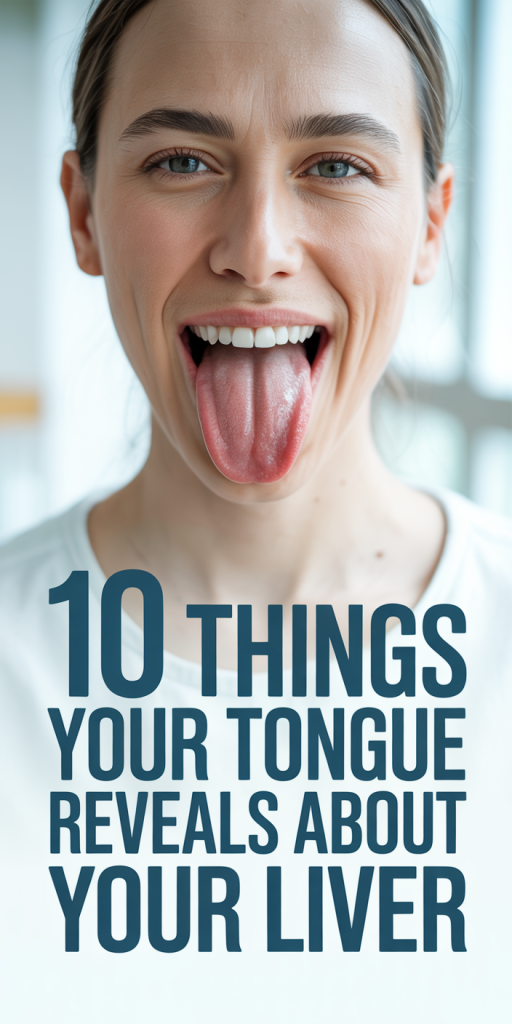
10 Tongue Clues That Reveal Your Liver Health
Our tongues are more than taste organs, they’re living indicators of internal health. In traditional medicine systems, clinicians have long examined the tongue to gather clues about organ function: today, modern research supports many of these observations, especially when it comes to the liver. In this text we’ll walk through ten tongue signs that can point to liver stress, inflammation, or impaired detoxification. We’ll explain what each change typically means, why the liver could be involved, and when a finding warrants prompt medical evaluation. This is not a substitute for clinical assessment, but by the time you finish reading you’ll have a practical, evidence-informed checklist to watch for, so you can act earlier and talk to your clinician with specifics.
How The Tongue Reflects Liver Function And Overall Health
The tongue gives us a visible snapshot of blood flow, hydration, microbial balance, and metabolic status, factors the liver directly influences. The liver helps metabolize hormones, clear bilirubin, regulate glucose, synthesize proteins, and maintain immune balance. When these processes shift, the tongue can change color, coating, texture, or mobility.
Why the liver shows up on the tongue:
- Bilirubin and pigment changes: The liver processes bilirubin: when it backs up, tissues (including mucous membranes) can take on a yellowish hue. The tongue is an easily observed mucosal surface.
- Blood flow and inflammation: Liver inflammation alters systemic cytokines and microcirculation. That can make the tongue redder, paler, or patchy depending on which layers are affected.
- Microbiome and coating: The oral microbiome interplays with immune function and metabolism. Liver dysfunction affects bile acids and gut motility, shifting oral flora and tongue coating thickness.
- Edema and protein status: Low albumin (from chronic liver disease) allows fluid to leak into tissues: the tongue may swell and show indentations from the teeth.
We should emphasize context. Single tongue changes aren’t diagnostic on their own, medications, hydration, recent foods, mouth breathing, oral infections, smoking, and dental hygiene all alter appearance. Still, patterns, like persistent yellowing with fatigue and dark urine, raise the probability of liver-related causes and merit evaluation.
How to examine your tongue properly:
- Look in natural daylight without food or strong mouthwash for a few hours.
- Observe the color, coating (thin, thick, patchy), surface texture, size/shape, and movement.
- Note symptoms: pain, numbness, metallic taste, burning, or tremor.
With that baseline, let’s review the specific tongue clues that most often correlate with liver health, and what each one should prompt us to do next.
Color Changes To Watch: Pale, Yellow, Dusky, Or Bright Red
Color shifts are often the first thing people notice. We’ll break down the main hues and what they commonly suggest about liver status and systemic health.
Pale tongue
- What we see: A uniformly pale, whitish-pink tongue.
- What it may mean: Low red blood cell mass (anemia), poor circulation, or nutritional deficiencies (iron, B12, folate). Chronic liver disease can cause anemia of chronic disease and impaired nutrient storage, so pallor may be indirectly related.
- When to act: If pale tongue accompanies fatigue, shortness of breath, or pallor of skin/gums, check complete blood count and iron studies.
Yellow tongue (sallow or jaundiced hue)
- What we see: Yellowing of the dorsal tongue and possibly the sclera (eyes).
- What it may mean: Elevated bilirubin from hepatic dysfunction, bile duct obstruction, or hemolysis. A strictly yellow coating limited to the surface may instead reflect oral bacterial overgrowth, smoking, or certain supplements (eg, carotenoids).
- When to act: Yellowing of the tongue plus yellow eyes, dark urine, pale stools, or abdominal pain requires urgent evaluation, liver panel, bilirubin, and imaging as directed.
Dusky or brownish tongue
- What we see: A grayish or brown discoloration, sometimes patchy.
- What it may mean: Chronic smoking, poor oral hygiene, or buildup of pigmented bacteria. In some metabolic disorders or with long-term cholestasis (bile buildup), mucosal pigmentation can appear darker.
- When to act: If new, persistent, and not explained by external factors, discuss with a clinician for targeted testing.
Bright red or crimson tongue
- What we see: Deeply red, sometimes glossy, especially on the tip and sides.
- What it may mean: Inflammation, heat signs in traditional medicine, or B vitamin deficiencies (especially B2/riboflavin or B3/niacin). In liver disease, inflammation and altered microcirculation can produce a redder mucosa.
- When to act: If bright redness is accompanied by fever, mouth pain, sore throat, or systemic symptoms, seek medical input. Check nutritional status if persistent without infection.
Color clues are easiest to interpret when combined with symptoms and history (alcohol use, medication, travel, family history of liver disease). Persistent or progressive color changes should never be ignored.
Coating, Texture, And Moisture: What Thick, Furry, Or Dry Tongues Mean
Coating and texture reveal microbial balance, hydration, and epithelial turnover, systems influenced by liver health.
Thick white coating (furry tongue)
- Typical appearance: Uniform, dense white film that scrapes off partially.
- Likely causes: Oral candidiasis (yeast), bacterial overgrowth, poor oral hygiene, or reduced saliva. In liver disease, immune dysfunction (reduced complement, altered neutrophil function) and changes in bile acids can increase vulnerability to Candida and bacterial shifts.
- Clinical clues: Bad breath, altered taste, burning sensation. If the coating persists even though good oral care, consider immunosuppression or systemic illness.
Yellow or brown coating
- Typical appearance: Pigmented coating that may localize to the posterior tongue.
- Likely causes: Tobacco, coffee, or certain medications: also, a shift in oral microbiota. When seen with jaundice-like symptoms and systemic signs, it may correlate with hepatic cholestasis.
Fissured or geographic tongue
- Typical appearance: Deep grooves or map-like red patches with pale borders.
- Likely causes: Benign geographic tongue can be idiopathic or linked to stress, nutritional deficiencies (B vitamins, zinc), and autoimmune conditions. Some chronic liver conditions that impair nutrient absorption can exacerbate these patterns.
- Clinical clues: Often painless but can be sensitive to spicy foods.
Dry, cracked tongue
- Typical appearance: Loss of normal moisture, vertical fissures, glossy mucosa.
- Likely causes: Dehydration, mouth breathing, Sjögren’s syndrome, or medications with anticholinergic effects. Chronic liver disease can cause altered fluid balance and low saliva indirectly: advanced disease with hypoalbuminemia may predispose to tissue dryness.
Slimy or mucous-covered tongue
- Typical appearance: Thick mucous film that may be difficult to clear.
- Likely causes: Post-nasal drip, GERD, or impaired clearance. Liver dysfunction that affects gastric motility and gut flora can contribute indirectly.
Interpreting coatings practically
- Scrape test: Gentle scraping with a spoon can help differentiate superficial coatings (yeast, food debris) from intrinsic mucosal discoloration.
- Response to hygiene: If improved by brushing/scraping, the cause is likely local. If persistent, systemic causes are more probable.
Because coatings can reflect both local and systemic processes, we recommend checking oral hygiene, reviewing medications (antibiotics, steroids), and assessing hydration before assuming a primary liver problem, but keep liver testing on the differential when coatings are chronic or accompanied by other liver-associated signs.
Shape, Movement, And Sensation: Swelling, Teeth Marks, Tremor, And Soreness
Beyond color and coating, the tongue’s form and function offer crucial clues about nutrition, circulation, and neurologic status, areas tightly linked to liver health.
Tongue swelling (macroglossia) and teeth marks
- What we see: Enlarged tongue that bumps into teeth, leaving scalloped edges.
- Possible causes: Fluid retention from low albumin in advanced liver disease, hypothyroidism, allergic reactions, or amyloidosis. In chronic liver disease, hypoalbuminemia often leads to peripheral edema: the tongue can be involved as tissues retain fluid.
- When to act: If swelling happens rapidly with breathing difficulty, seek emergency care. For chronic, progressive swelling with other signs of liver disease (ascites, easy bruising), evaluate liver synthetic function (albumin, INR) and consider imaging.
Tremor or involuntary movements (flapping tremor)
- What we see: Fine tremor or asterixis when the tongue is held out or during certain movements.
- Possible causes: Asterixis, classically a “flapping” tremor, is a sign of hepatic encephalopathy, a serious complication of advanced liver failure where toxins (like ammonia) affect the brain. Other neurologic conditions can mimic tremor.
- When to act: Asterixis, confusion, sleepiness, or personality changes require urgent medical assessment. Hepatic encephalopathy is treatable when identified early.
Soreness, burning, or metallic taste
- What we feel/see: Painful, tender tongue: burning mouth syndrome: or persistent metallic taste.
- Possible causes: Nutrient deficiencies (iron, B12, folate), fungal infection, medication side effects, or neuropathic changes. Liver disease that impairs nutrient storage or causes malabsorption can indirectly lead to glossitis (inflamed tongue).
- When to act: Persistent soreness with swelling, ulcers, or rapid onset pain should prompt evaluation for infection and nutritional screening.
Reduced mobility or numbness
- What we see/feel: Difficulty protruding or moving the tongue, or numb patches.
- Possible causes: Local nerve injury, systemic neuropathy (seen in alcohol-related liver disease or diabetes), or severe swelling.
- When to act: Persistent motor or sensory changes need neurologic and systemic workup.
Interpreting these signs together
- Swelling with scalloped edges + low albumin points us toward compromised liver synthetic function.
- Tremor or asterixis paired with altered consciousness strongly points to hepatic encephalopathy.
- Painful or burning sensations alongside a pale or smooth tongue suggest nutritional deficiencies that may be linked to chronic liver disease.
If we notice changes in movement or sensation, documenting onset, accompanying symptoms (confusion, weakness, edema), medication history, and alcohol intake will guide appropriate testing.
When To See A Doctor, Common Tests, And Red Flags
Not every tongue change needs urgent care, but some patterns demand prompt evaluation. Here’s a practical guide to when we should seek medical attention, which tests are commonly used, and which red flags mean immediate action.
When to see a clinician sooner rather than later
- Yellow tongue with yellowing of eyes, dark urine, or pale stools.
- New, persistent tongue swelling that affects breathing or swallowing.
- Tongue tremor/asterixis with confusion, drowsiness, or personality change.
- Persistent thick white coating that doesn’t respond to oral hygiene, especially in immunocompromised people.
- Rapid onset of pain, ulcers, or severe burning.
Red flags requiring emergency care
- Rapid tongue swelling with breathing difficulty (possible angioedema or severe allergic reaction).
- Asterixis with declining consciousness (possible hepatic encephalopathy).
- Jaundice with fever and abdominal pain, could indicate ascending cholangitis, which can be life-threatening.
Common tests our clinicians will order
- Basic liver panel
- AST, ALT: Enzymes indicating hepatocellular injury.
- Alkaline phosphatase (ALP) and GGT: Markers of cholestasis (bile flow obstruction).
- Bilirubin (total and direct): Elevated in jaundice: high direct bilirubin suggests cholestasis.
- Synthetic function tests
- Albumin: Low in chronic liver disease.
- INR/PT: Prolonged clotting times point to impaired liver protein synthesis.
- Complete blood count (CBC)
- To assess anemia, infection, or thrombocytopenia common in portal hypertension.
- Nutritional and metabolic tests
- Iron studies, B12, folate, zinc, vitamin D, deficiencies that can cause tongue changes.
- Ammonia level
- Helpful when we suspect hepatic encephalopathy (but interpret alongside clinical signs).
- Imaging
- Right upper quadrant ultrasound is often the first imaging step to evaluate for biliary obstruction, fatty liver, or masses.
- CT or MRI as indicated.
- Specialized tests
- Viral hepatitis serologies (HBV, HCV), autoimmune markers, and metabolic screens (alpha-1 antitrypsin, ferritin for hemochromatosis) when initial labs suggest chronic liver disease.
Practical approach in primary care
- Start with a focused history: alcohol and drug use, medication review (acetaminophen, isoniazid, statins, herbal supplements), travel, sexual history, and family history of liver disease.
- Perform basic labs (liver panel, CBC, albumin) and consider urgent referral if red flags exist.
- Treat reversible causes first: correct dehydration, improve oral hygiene, adjust offending medications, and address nutritional deficiencies.
Follow-up and monitoring
- For mild abnormalities without red flags, repeat testing in 2–12 weeks while addressing modifiable factors.
- For progressive or significant lab abnormalities, refer to hepatology for further workup and potential biopsy.
We can’t overstate this: tongue findings are cues, not definitive diagnoses. They should be integrated into a broader clinical assessment that includes symptoms, labs, and imaging.
Conclusion
Our tongues offer accessible, everyday clues about liver-related processes, from bile accumulation and inflammation to nutritional deficiencies and encephalopathy. By learning to observe color, coating, texture, shape, and movement, we give ourselves an early warning system that can prompt timely testing and treatment.
If you notice persistent or worrying changes, especially yellowing, swelling that affects breathing, tremor with mental changes, or chronic thick coatings, reach out to a clinician promptly. With targeted history, simple labs, and sometimes imaging, we can often identify treatable liver issues early. Watching our tongues isn’t a replacement for medical care, but it’s a smart, low-effort habit that helps us protect liver health in 2026 and beyond.