10 Simple Ways To Get More Fiber In Your Diet
Dietary fiber is an essential nutrient that plays a crucial role in maintaining good health. It is a type of carbohydrate that the body cannot digest, and it is found in plant-based foods such as fruits, vegetables, whole grains, and legumes. While most carbohydrates are broken down into sugar molecules, fiber passes through the body undigested, helping to regulate the body’s use of sugars, keeping hunger and blood sugar in check [1]. Despite its numerous health benefits, most Americans consume only about 15 grams of fiber per day, which is significantly less than the recommended daily intake of 25 to 38 grams [1, 2].
Increasing your fiber intake doesn’t have to be complicated. Here are 10 simple and practical ways to incorporate more fiber into your daily diet.
1. Start Your Day with a High-Fiber Breakfast
Beginning your day with a fiber-rich breakfast is an excellent way to set yourself up for success. Choose a breakfast cereal that contains 5 or more grams of fiber per serving. Cereals with “whole grain,” “bran,” or “fiber” in their names are often good choices. You can also boost the fiber content of your favorite cereal by adding a few tablespoons of unprocessed wheat bran. Topping your cereal or oatmeal with fruits like bananas or berries can add even more fiber and flavor.
2. Choose Whole Grains Over Refined Grains
Making the switch from refined grains to whole grains is a simple yet effective way to increase your fiber intake. Whole grains contain the entire grain kernel — the bran, germ, and endosperm — which provides more fiber, vitamins, and minerals than refined grains, which have had the bran and germ removed. Make it a goal to have at least half of your daily grain intake be whole grains. Look for breads with at least 2 grams of fiber per serving and where a whole grain is listed as the first ingredient. Experiment with a variety of whole grains such as brown rice, wild rice, barley, quinoa, and whole-wheat pasta.
3. Load Up on Legumes
Beans, peas, and lentils, collectively known as legumes, are nutritional powerhouses and some of the best sources of dietary fiber. For example, a single cup of boiled split peas contains a remarkable 16 grams of fiber, while a cup of boiled lentils provides 15.5 grams [3]. You can easily add legumes to your diet by incorporating them into soups, stews, salads, and side dishes. Try adding kidney beans to a canned soup or a green salad, or make nachos with a topping of black beans, fresh vegetables, and salsa.
4. Eat More Fruits and Vegetables (with the skin on!)
Fruits and vegetables are not only rich in vitamins and minerals but are also excellent sources of fiber. Aim to eat five or more servings of fruits and vegetables each day. Whenever possible, eat the skins of fruits and vegetables, as the skin often contains a significant amount of fiber. For instance, a small apple with the skin on has about 4.5 grams of fiber, but if you peel it, the fiber content drops to less than 2 grams [3, 4].
5. Snack Smart with Nuts and Seeds
When hunger strikes between meals, reach for a handful of nuts or seeds instead of processed snacks. Almonds, for example, provide nearly 4 grams of fiber per ounce [4]. Chia seeds are another excellent choice, with a whopping 10 grams of fiber per ounce [3]. Nuts and seeds are not only high in fiber but also provide healthy fats and protein, making them a satisfying and nutritious snack.
6. Make Popcorn Your Go-To Healthy Snack
Many people are surprised to learn that popcorn is a whole grain and a good source of fiber. Three cups of air-popped popcorn contain about 3.5 grams of fiber [3]. For the healthiest option, choose air-popped popcorn and avoid the pre-packaged microwave varieties that are often loaded with butter, salt, and unhealthy fats.
7. Bake with High-Fiber Flours
If you enjoy baking, you can easily boost the fiber content of your homemade goods by swapping out traditional white flour for higher-fiber alternatives. Whole-wheat flour has more than five times the fiber of white flour [4]. You can also experiment with other high-fiber flours like coconut flour or soy flour. Try substituting half or all of the white flour with a higher-fiber option in your recipes for muffins, cookies, and cakes.
8. Incorporate Chia and Flax Seeds
Chia seeds and flax seeds are small but mighty when it comes to fiber. As mentioned earlier, chia seeds are packed with fiber, and flax seeds are another great source, providing 2 grams of fiber per half-ounce [4]. You can easily add these seeds to your diet by sprinkling them on yogurt, oatmeal, or salads, or by blending them into smoothies.
9. Choose Whole Foods Over Juices
While fruit and vegetable juices can be a source of vitamins, they lack the fiber found in their whole-food counterparts. The juicing process removes the fiber, so you miss out on many of the health benefits. Whenever possible, choose to eat the whole fruit or vegetable instead of drinking its juice.
10. Read Food Labels
When buying packaged foods, get into the habit of reading the Nutrition Facts label to check the fiber content. This can help you make more informed choices and select products that are higher in fiber. Some foods, like yogurt and granola bars, may have functional fibers like inulin or polydextrose added to them to boost their fiber content.
The Bottom Line
Increasing your fiber intake is a simple yet powerful way to improve your overall health. By making a few small changes to your diet, such as starting your day with a high-fiber breakfast, choosing whole grains, and eating more fruits, vegetables, and legumes, you can easily reach your daily fiber goals. Remember to increase your fiber intake gradually and drink plenty of water to allow your digestive system to adjust. A diet rich in fiber can lead to a healthier and more vibrant you.
References
[1] “Fiber – The Nutrition Source.” Harvard T.H. Chan School of Public Health, https://nutritionsource.hsph.harvard.edu/carbohydrates/fiber/.
[2] “Dietary fiber: Essential for a healthy diet.” Mayo Clinic, https://www.mayoclinic.org/healthy-lifestyle/nutrition-and-healthy-eating/in-depth/fiber/art-20043983.
[3] “Chart of high-fiber foods.” Mayo Clinic, https://www.mayoclinic.org/healthy-lifestyle/nutrition-and-healthy-eating/in-depth/high-fiber-foods/art-20050948.
[4] “16 Easy Ways to Eat More Fiber.” Healthline, https://www.healthline.com/nutrition/16-ways-to-eat-more-fiber.
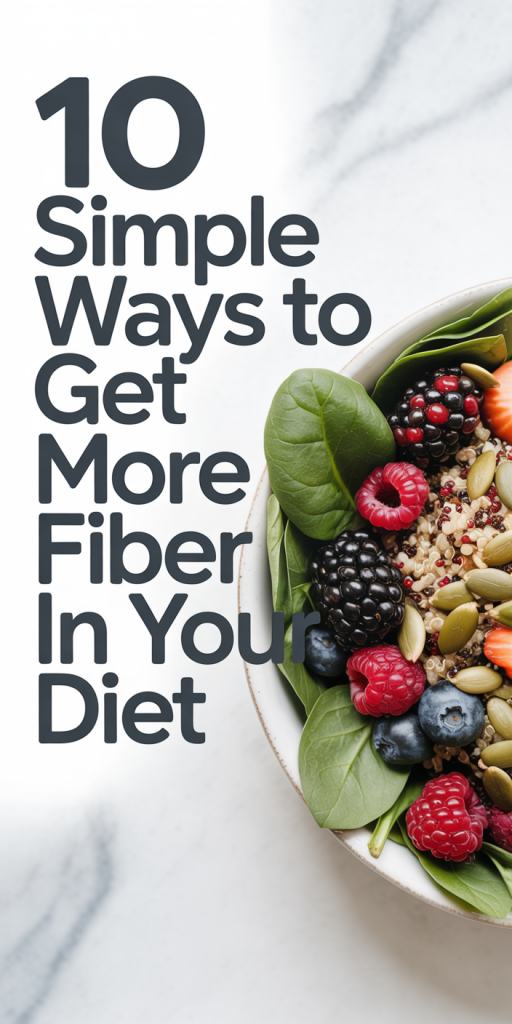
10 High-Fiber, Gluten-Free Recipes
To help you put these principles into practice, here are 10 delicious and easy-to-make high-fiber, gluten-free recipes for any time of day.
1. Quinoa Breakfast Bowl
A warm and satisfying breakfast to start your day right.
- Ingredients: 1 cup cooked quinoa, 1/2 cup mixed berries, 1 tablespoon chia seeds, 1 tablespoon chopped almonds, 1/2 cup unsweetened almond milk, drizzle of maple syrup (optional).
- Instructions: In a bowl, combine the cooked quinoa, almond milk, and chia seeds. Microwave for 1-2 minutes until warm. Top with mixed berries, chopped almonds, and a drizzle of maple syrup if desired.
2. Creamy White Bean and Chicken Chili
A hearty and flavorful chili that’s perfect for a cool evening.
- Ingredients: 1 lb boneless, skinless chicken thighs, cut into bite-sized pieces; 2 cans (15 ounces each) cannellini beans, rinsed and drained; 1 onion, chopped; 2 cloves garlic, minced; 4 cups low-sodium chicken broth; 1 teaspoon cumin; 1/2 teaspoon oregano; 4 ounces cream cheese, softened; chopped cilantro and avocado for garnish.
- Instructions: In a large pot, cook the chicken until browned. Add the onion and garlic and cook until softened. Stir in the chicken broth, cumin, and oregano. Mash one can of beans and add both the mashed and whole beans to the pot. Bring to a simmer and cook for 15 minutes. Stir in the cream cheese until melted and creamy. Garnish with cilantro and avocado.
3. Chickpea Curry (Chhole)
A quick and easy Indian curry that’s packed with flavor and fiber.
- Ingredients: 2 cans (15 ounces each) chickpeas, rinsed and drained; 1 onion, chopped; 2 cloves garlic, minced; 1 tablespoon grated ginger; 1 can (14.5 ounces) diced tomatoes; 1 tablespoon curry powder; 1 teaspoon turmeric; 1/2 teaspoon cayenne pepper (optional); 1 cup vegetable broth; fresh cilantro for garnish.
- Instructions: In a large skillet, sauté the onion, garlic, and ginger until fragrant. Add the curry powder, turmeric, and cayenne pepper and cook for 1 minute more. Stir in the diced tomatoes, chickpeas, and vegetable broth. Bring to a simmer and cook for 10-15 minutes, until the sauce has thickened slightly. Garnish with fresh cilantro and serve with brown rice or quinoa.
4. Black Bean and Cauliflower Rice Bowl
A light yet satisfying lunch that’s full of flavor and nutrients.
- Ingredients: 1 bag (12 ounces) frozen riced cauliflower; 1 can (15 ounces) black beans, rinsed and drained; 1/2 cup corn (frozen or canned); 1/2 red onion, chopped; 1 avocado, diced; 1/4 cup chopped cilantro; lime wedges for serving.
- Instructions: Cook the riced cauliflower according to package directions. In a bowl, combine the cooked cauliflower rice, black beans, corn, and red onion. Top with diced avocado and cilantro. Serve with a squeeze of fresh lime juice.
5. Chipotle Chicken and Quinoa Burrito Bowl
A healthier, gluten-free take on a burrito bowl.
- Ingredients: 1 lb boneless, skinless chicken breast, grilled and sliced; 2 cups cooked quinoa; 1 can (15 ounces) black beans, rinsed and drained; 1 cup corn; 1 cup salsa; 1 avocado, sliced; chopped lettuce and cilantro for garnish.
- Instructions: Divide the cooked quinoa among four bowls. Top with grilled chicken, black beans, corn, and salsa. Garnish with sliced avocado, lettuce, and cilantro.
6. Smoky Shrimp with Cheesy Grits and Collard Greens
A Southern-inspired dish with a healthy twist.
- Ingredients: 1 lb large shrimp, peeled and deveined; 1 bunch collard greens, thinly sliced; 1 cup gluten-free grits; 4 cups water or broth; 1/2 cup shredded cheddar cheese; 2 cloves garlic, minced; 1/4 teaspoon smoked paprika; salt and pepper to taste.
- Instructions: Cook the grits according to package directions, stirring in the cheese at the end. While the grits are cooking, sauté the garlic in a large skillet. Add the collard greens and cook until wilted. Remove the greens from the skillet. Add the shrimp to the skillet and cook until pink, seasoning with smoked paprika, salt, and pepper. Serve the shrimp and collard greens over the cheesy grits.
7. Greek Salad with Edamame
A refreshing and protein-packed salad.
- Ingredients: 1 head of romaine lettuce, chopped; 1 cup shelled edamame, cooked; 1 cucumber, diced; 1 pint cherry tomatoes, halved; 1/2 red onion, thinly sliced; 1/2 cup crumbled feta cheese; 1/4 cup Kalamata olives; your favorite gluten-free Greek dressing.
- Instructions: In a large bowl, combine the romaine lettuce, edamame, cucumber, cherry tomatoes, and red onion. Top with feta cheese and Kalamata olives. Drizzle with Greek dressing and toss to combine.
8. High-Fiber Chia Seed Pudding
A simple and delicious make-ahead breakfast or snack.
- Ingredients: 3 tablespoons chia seeds, 1 cup unsweetened almond milk, 1/2 teaspoon vanilla extract, 1 tablespoon maple syrup (optional), fresh berries for topping.
- Instructions: In a jar or bowl, whisk together the chia seeds, almond milk, vanilla extract, and maple syrup (if using). Let it sit for 5 minutes, then whisk again to break up any clumps. Cover and refrigerate for at least 2 hours, or overnight. Top with fresh berries before serving.
9. Lentil and Quinoa Chili
A hearty and satisfying vegan chili.
- Ingredients: 1 cup brown or green lentils, rinsed; 1/2 cup quinoa, rinsed; 1 onion, chopped; 2 carrots, chopped; 2 celery stalks, chopped; 1 can (28 ounces) crushed tomatoes; 4 cups vegetable broth; 2 tablespoons chili powder; 1 teaspoon cumin.
- Instructions: In a large pot, combine all ingredients. Bring to a boil, then reduce heat and simmer for 45-60 minutes, or until the lentils and quinoa are tender. Season with salt and pepper to taste.
10. Roasted Chickpea Snack
A crunchy, savory, and high-fiber snack.
- Ingredients: 1 can (15 ounces) chickpeas, rinsed and drained; 1 tablespoon olive oil; 1/2 teaspoon smoked paprika; 1/4 teaspoon garlic powder; salt and pepper to taste.
- Instructions: Preheat oven to 400°F (200°C). Pat the chickpeas dry with a paper towel. In a bowl, toss the chickpeas with olive oil and seasonings. Spread on a baking sheet in a single layer. Roast for 20-30 minutes, or until crispy. Let cool before eating.