
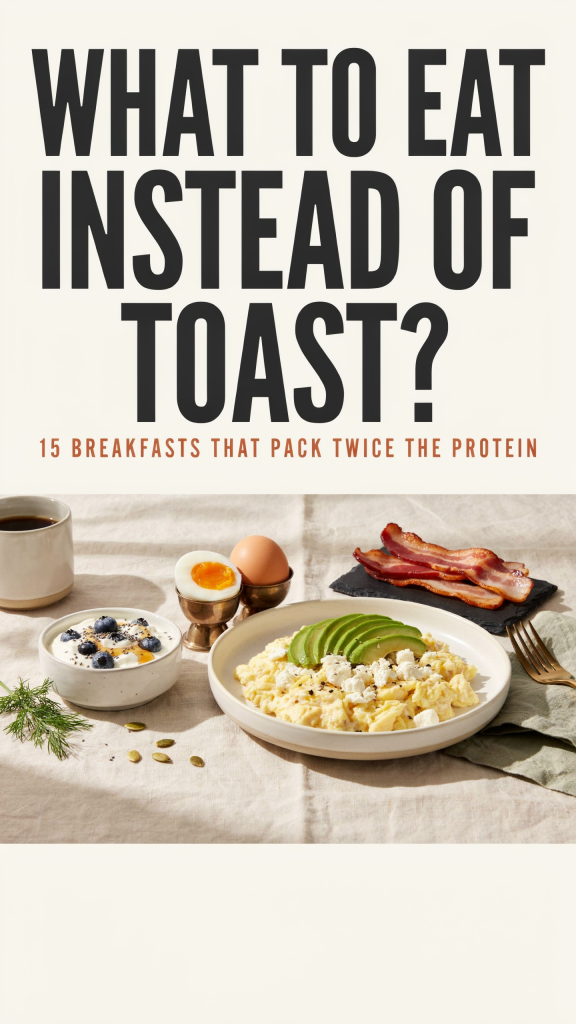
What Should I Eat Instead of Toast? 15 Breakfasts That Pack Twice the Protein
Breakfast is often the first decision you make about nutrition for the day. If you’re used to having toast and want a simple swap that delivers at least twice the protein (and better satiety, nutrients, and energy), you’re in the right place. Below are 15 creative, easy-to-make breakfasts that replace toast and pack considerably more protein — most in the 15–30 g range per serving — plus practical recipes and tips so you can start tomorrow morning stronger.
Why swap toast for higher-protein breakfasts?
Toast is convenient and comforting, but a typical slice of white or whole-grain toast contains roughly 3–6 grams of protein. Swap it for a breakfast with 12–30 grams of protein and you’ll:
– Keep blood sugar steadier
– Reduce mid-morning snacking
– Build or preserve lean mass
– Feel fuller and more energized
High-protein breakfasts also tend to be more nutrient-dense, supplying vitamins, minerals, fiber, and healthy fats in addition to protein.
How much protein do you need for breakfast?
There’s no one-size-fits-all number, but a good target for many adults is 20–30 grams of protein at breakfast. That amount supports muscle protein synthesis, appetite control, and cognitive function. Below are 15 options that meet or exceed twice the protein of a typical piece of toast.
1. Greek Yogurt Bowl with Nuts, Seeds & Berries
Approx. protein: 20–30 g
Ingredients:
– 1 cup plain Greek yogurt (2% or full-fat)
– 2 tbsp mixed nuts (almonds, walnuts), chopped
– 1 tbsp chia seeds or hemp seeds
– 1/2 cup mixed berries (fresh or thawed)
– 1 tsp honey or maple syrup (optional)
Instructions:
1. Spoon the Greek yogurt into a bowl.
2. Top with chopped nuts and seeds.
3. Add berries and drizzle honey if desired.
4. Stir a little or eat layered. Enjoy immediately.
Why it works: Greek yogurt has 15–20 g protein per cup. Nuts and seeds add healthy fats and an extra 4–10 g depending on portion.
2. High-Protein Overnight Oats with Cottage Cheese
Approx. protein: 25–30 g
Ingredients:
– 1/2 cup rolled oats
– 1/2 cup low-fat cottage cheese
– 1/2 cup milk (dairy or fortified plant milk)
– 1 scoop vanilla protein powder (optional)
– 1 tbsp peanut butter
– 1/4 cup sliced banana or berries
Instructions:
1. Combine oats, cottage cheese, milk, and protein powder in a jar.
2. Stir until mixed and press peanut butter on top.
3. Refrigerate overnight (6+ hours).
4. In the morning, top with fruit and a splash of milk if needed. Eat chilled.
Why it works: Cottage cheese and protein powder boost protein beyond plain oats, producing a creamy, filling breakfast.
3. Veggie & Turkey Omelette
Approx. protein: 25–30 g
Ingredients:
– 3 large eggs (or 2 eggs + 2 egg whites)
– 2–3 oz sliced turkey breast (deli or cooked)
– 1/2 cup diced bell peppers and spinach
– 2 tbsp shredded cheddar or feta
– 1 tsp olive oil or cooking spray
– Salt and pepper to taste
Instructions:
1. Whisk eggs and season with salt and pepper.
2. Heat oil in a non-stick skillet over medium heat; sauté vegetables until soft.
3. Add turkey slices to warm through.
4. Pour eggs into the pan and cook until set on the bottom.
5. Sprinkle cheese, fold omelette, and cook until cheese melts. Serve hot.
Why it works: Eggs + turkey provide a complete protein hit; vegetables add fiber for balance.
4. Cottage Cheese & Fruit Bowl with Hemp Seeds
Approx. protein: 20–25 g
Ingredients:
– 1 cup cottage cheese (full-fat or low-fat)
– 1/2 cup pineapple chunks or peach slices
– 2 tbsp hemp seeds
– 1 tbsp sliced almonds
– A pinch of cinnamon
Instructions:
1. Scoop cottage cheese into a bowl.
2. Top with fruit, hemp seeds, and almonds.
3. Sprinkle cinnamon and enjoy.
Why it works: Cottage cheese is a protein-rich base while hemp seeds add healthy fats and an extra 4–6 g protein.
5. Smoked Salmon & Avocado Cucumber Bites
Approx. protein: 15–20 g (can be doubled by adding a second cucumber round layer)
Ingredients:
– 4–6 large cucumber slices (thick)
– 3 oz smoked salmon, torn into pieces
– 1/2 avocado, mashed
– 1 tbsp plain Greek yogurt or crème fraîche
– Fresh dill, lemon juice, salt and pepper
Instructions:
1. Mash avocado with Greek yogurt, lemon juice, salt, and pepper.
2. Spread a thin layer on each cucumber slice.
3. Top with smoked salmon and a sprinkle of dill.
4. Serve as finger-food or light breakfast.
Why it works: Smoked salmon is high in protein and omega-3s. These bites are low-carb and refreshing.
6. Protein Pancakes (Oat + Cottage Cheese)
Approx. protein: 25–30 g for two pancakes
Ingredients:
– 1/2 cup rolled oats
– 1/2 cup cottage cheese
– 2 eggs
– 1/2 tsp baking powder
– 1/2 tsp vanilla extract
– Cooking spray or oil
Instructions:
1. Blend oats, cottage cheese, eggs, baking powder, and vanilla until smooth.
2. Heat a non-stick pan over medium heat and lightly grease.
3. Pour batter for medium pancakes and cook until bubbles form; flip and cook until golden.
4. Serve with fresh berries and a little maple syrup if desired.
Why it works: Cottage cheese and eggs make a batter that’s dense in protein but still pancake-like.
7. Tofu Scramble with Spinach & Turmeric
Approx. protein: 16–22 g (depending on tofu firmness)
Ingredients:
– 7–8 oz firm tofu, drained and crumbled
– 1 cup fresh spinach
– 1/4 cup diced onion and tomato
– 1/2 tsp turmeric, salt, and pepper
– 1 tbsp nutritional yeast (optional)
– 1 tsp olive oil
Instructions:
1. Heat oil in a skillet and sauté onion and tomato.
2. Add crumbled tofu, turmeric, salt, and pepper. Stir to combine.
3. Add spinach and cook until wilted.
4. Stir in nutritional yeast for a cheesy flavor. Serve hot.
Why it works: Firm tofu provides 12–16 g protein per 3.5 oz; using 7–8 oz brings breakfast into the high-protein zone.
8. Quinoa Breakfast Bowl with Fried Egg & Greens
Approx. protein: 18–25 g
Ingredients:
– 1/2 cup cooked quinoa
– 1 large egg, fried or poached
– 1/2 cup steamed kale or spinach
– 1–2 tbsp crumbled feta or goat cheese
– 1 tsp olive oil, lemon juice, salt and pepper
Instructions:
1. Warm cooked quinoa in a bowl.
2. Sauté greens briefly with olive oil, salt, and pepper.
3. Top quinoa with greens, a fried egg, and crumbled cheese.
4. Drizzle with lemon juice and serve.
Why it works: Quinoa is a complete plant protein and combining it with egg boosts total protein and richness.
9. Chocolate Peanut Butter Protein Chia Pudding
Approx. protein: 20–30 g
Ingredients:
– 3 tbsp chia seeds
– 1 cup milk of choice
– 1 scoop chocolate protein powder
– 1 tbsp peanut butter
– 1/2 banana for topping
Instructions:
1. Whisk chia seeds, milk, and protein powder until well combined.
2. Stir in peanut butter, then refrigerate at least 4 hours or overnight.
3. Top with sliced banana and serve chilled.
Why it works: Protein powder and chia seeds provide sustained protein and fiber; peanut butter adds healthy fats and more protein.
10. Black Bean & Egg Breakfast Bowl with Salsa
Approx. protein: 18–25 g
Ingredients:
– 1/2 cup black beans, rinsed and warmed
– 2 eggs, fried or scrambled
– 1/4 cup diced tomato, red onion, cilantro (salsa)
– 1/4 avocado, sliced
– 1 tbsp Greek yogurt or sour cream (optional)
Instructions:
1. Warm the black beans in a small pan.
2. Prepare eggs to your liking.
3. Assemble beans and eggs in a bowl, top with salsa and avocado.
4. Add Greek yogurt if desired and serve.
Why it works: Beans + eggs create a filling combo of plant and animal protein plus fiber.
11. Savory Egg Muffins (Cheese, Veggies & Ham)
Approx. protein: 12–18 g per muffin (2 muffins = ~25–30 g)
Ingredients:
– 6 large eggs
– 1/2 cup diced cooked ham or turkey
– 1/2 cup shredded cheese
– 1/2 cup diced bell pepper and spinach
– Salt, pepper, and optional herbs
Instructions:
1. Preheat oven to 350°F (175°C) and grease a muffin tin.
2. Whisk eggs and season.
3. Stir in ham, cheese, and vegetables.
4. Pour mixture evenly into muffin cups and bake 18–22 minutes until set.
5. Cool slightly and enjoy; refrigerate leftovers for grab-and-go mornings.
Why it works: Make a batch ahead — two muffins usually equal or exceed the protein in toast.
12. Green Protein Smoothie (Greek Yogurt + Protein Powder)
Approx. protein: 25–35 g
Ingredients:
– 1 cup spinach or kale
– 1 cup plain Greek yogurt
– 1 scoop unflavored or vanilla protein powder
– 1/2 banana or 1/2 cup frozen fruit
– 1 cup water or milk of choice
– 1 tbsp chia or flax seed (optional)
Instructions:
1. Combine all ingredients in a blender.
2. Blend until smooth and creamy.
3. Taste and adjust sweetness with a little honey if needed. Serve immediately.
Why it works: Greek yogurt + protein powder deliver a concentrated protein punch with quick digestion and greens for vitamins.
13. Sardine & Avocado Rice Cakes with Pickled Onion
Approx. protein: 15–20 g
Ingredients:
– 2 plain rice cakes
– 1 small avocado, mashed
– 1 can sardines in water or olive oil (3.75 oz)
– 2 tbsp quick-pickled red onion (or plain)
– Lemon juice, salt and pepper
Instructions:
1. Mash avocado and season with lemon, salt, and pepper.
2. Spread avocado on rice cakes.
3. Top with sardines and pickled onion.
4. Serve immediately.
Why it works: Sardines are surprisingly high in protein and rich in omega-3s; this makes a savory, portable breakfast.
14. Warm Lentil & Feta Breakfast Salad with Poached Egg
Approx. protein: 20–25 g
Ingredients:
– 3/4 cup cooked green or brown lentils
– 1 cup mixed greens (arugula, spinach)
– 1/4 cup crumbled feta
– 1 poached egg
– 1 tsp olive oil, lemon juice, salt and pepper
Instructions:
1. Warm lentils gently with a splash of water or stock.
2. Toss lentils with greens, olive oil, lemon, salt, and pepper.
3. Top with crumbled feta and a poached egg.
4. Break egg over the salad and enjoy warm.
Why it works: Lentils provide plant-based protein and fiber; combining with egg and cheese balances amino acids.
15. Smoked Turkey, Hummus & Veggie Roll-Ups
Approx. protein: 20–25 g (3–4 roll-ups)
Ingredients:
– 6–8 slices smoked turkey breast
– 1/3 cup hummus
– 1/2 cup cucumber and carrot matchsticks
– 1/4 cup baby spinach
– Lemon juice, paprika for garnish
Instructions:
1. Lay out turkey slices and spread a thin layer of hummus on each.
2. Add spinach and vegetable matchsticks near one edge.
3. Roll tightly and secure with toothpicks if needed.
4. Cut in half and sprinkle a little paprika and lemon juice over the roll-ups.
Why it works: Lean turkey and hummus combine for a portable, high-protein breakfast that’s easy to prep.
Tips to Make High-Protein Breakfasts Stick
- Meal prep: Make egg muffins, overnight oats, or chia pudding in batches so you have protein-rich options ready.
- Mix proteins: Combine plant and animal proteins (e.g., beans + eggs) to boost total protein and nutrient diversity.
- Keep portable protein stashes: Greek yogurt, cottage cheese cups, single-serve tuna or sardine cans are quick wins.
- Mind portions: If you’re aiming for 25–30 g protein, combine items like a smoothie + boiled egg or yogurt + nuts.
- Flavor counts: Herbs, spices, and citrus can elevate simple high-protein foods without extra calories.
Nutrient balance: beyond protein
Protein is important, but aim for balanced breakfasts that include:
– Fiber (vegetables, fruit, whole grains, legumes)
– Healthy fats (avocado, nuts, olive oil)
– Vitamins and minerals (leafy greens, fruit, dairy)
This balance helps energy, digestion, and overall health.
Sample 7-day swap plan (quick)
- Monday: Greek yogurt bowl
- Tuesday: Veggie & turkey omelette
- Wednesday: Overnight oats with cottage cheese
- Thursday: Tofu scramble
- Friday: Protein pancakes
- Saturday: Quinoa bowl with fried egg
- Sunday: Egg muffins (make extra for next week)
Rotate to avoid boredom and to cover more nutrients.
Conclusion
Switching from toast to a higher-protein breakfast doesn’t have to be complicated or take a lot of time. The 15 breakfasts above give you a wide range of flavors, textures, and nutrient profiles — from quick smoothies and bowls to make-ahead egg muffins and warm, savory bowls. Each recipe is designed to deliver at least twice the protein of a slice of toast, helping you stay full, focused, and energized until your next meal. Start with one or two swaps this week, and you’ll likely notice steadier appetite and better energy within days. Enjoy experimenting, and remember: small, consistent changes are what build long-term habits.

