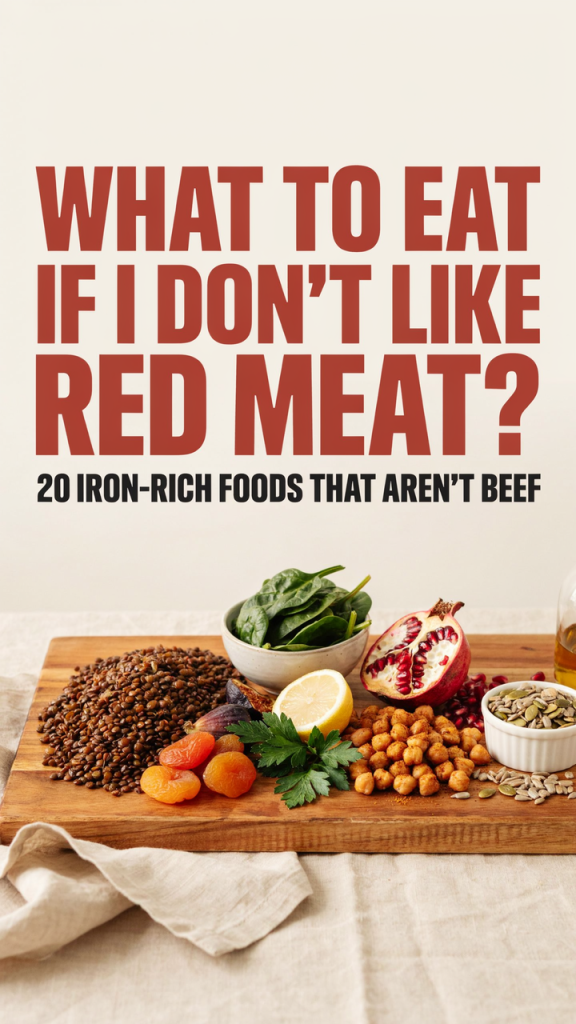
What Should I Eat If I Don’t Like Red Meat? 20 Iron-Rich Foods That Aren’t Beef
If red meat isn’t your thing—or you’re avoiding it for health, ethical, or taste reasons—you can still meet your iron needs without sacrificing flavor, variety, or nutrition. This guide walks through 20 iron-rich foods that aren’t beef, explains how iron works in your body, and gives practical tips and recipes so you can start boosting iron intake confidently and deliciously.
Why iron matters (and how much you need)
Iron is essential for making hemoglobin (the protein that carries oxygen in blood), supporting energy production, and maintaining immune and cognitive function. Recommended daily iron varies by age, sex, and life stage: adult men typically need about 8 mg/day, adult women (premenopausal) about 18 mg/day, and pregnant people more (about 27 mg/day). Your healthcare provider can advise if you need testing or supplements.
There are two forms of dietary iron:
– Heme iron — found in animal foods (like poultry and seafood). It’s absorbed more efficiently.
– Non-heme iron — found in plant-based foods and fortified products. Absorption is more variable but can be improved with the right habits.
Common signs of low iron
- Fatigue or low energy
- Pale skin or gums
- Shortness of breath during activity
- Cold hands and feet
- Brain fog, poor concentration
If you suspect deficiency, get a blood test (ferritin, hemoglobin, and iron studies) and consult your provider.
How to maximize iron absorption
- Pair non-heme iron with vitamin C (citrus, bell peppers, strawberries) to boost absorption.
- Avoid drinking tea or coffee with iron-rich meals (they contain polyphenols that inhibit absorption).
- Calcium can reduce iron absorption when taken at the same time—separate supplements or dairy by a couple of hours if needed.
- Use cast-iron cookware for some dishes (it can increase iron content).
- Soak, sprout, ferment, or cook legumes/grains to reduce phytates that block iron uptake.
Top 20 Iron-Rich Foods That Aren’t Beef
Below are 20 iron-rich foods (not beef), each with a quick note on iron content, type (heme vs non-heme), and practical tips for eating them.
1. Clams
- Iron: ~24 mg per 100 g (cooked) — very high
- Type: Heme iron (seafood)
- Tip: Steam clams and toss with lemon and parsley. Clams are one of the most iron-dense non-beef options.
2. Oysters
- Iron: ~7–10 mg per 100 g (varies by species)
- Type: Heme iron
- Tip: Enjoy raw on the half shell or lightly grilled; squeeze lemon (vitamin C) for better absorption.
3. Mussels
- Iron: ~6–7 mg per 100 g (cooked)
- Type: Heme iron
- Tip: Cook with tomatoes and bell peppers (vitamin C) to boost non-heme absorption in mixed dishes.
4. Sardines (canned)
- Iron: ~2.9 mg per 100 g (canned in oil)
- Type: Heme iron
- Tip: Use on toast, in salads, or mixed into pasta. Canned sardines are shelf-stable and nutrient-dense.
5. Canned Tuna
- Iron: ~1.3–1.5 mg per 100 g (light tuna)
- Type: Heme iron (fish)
- Tip: Make a tuna-stuffed pepper with lemon and chopped red pepper for vitamin C.
6. Salmon
- Iron: ~0.5–1.0 mg per 100 g (varies by species)
- Type: Heme iron
- Tip: Salmon also supplies B12 and omega-3s. Pair fillets with steamed broccoli or a citrus salad.
7. Chicken (dark meat)
- Iron: ~1.3 mg per 100 g (thigh meat)
- Type: Heme iron
- Tip: Dark meat contains more iron than white. Make a chicken thigh stew with tomatoes and bell peppers.
8. Turkey (dark meat)
- Iron: ~1.1–1.4 mg per 100 g
- Type: Heme iron
- Tip: Ground turkey or thigh pieces work well in chili or casseroles—add beans and peppers for extra iron and vitamin C.
9. Tofu (firm)
- Iron: ~5.4 mg per 100 g (varies by brand/fortification)
- Type: Non-heme
- Tip: Press and pan-sear or marinate for stir-fries. Pair with citrus or bell peppers to improve absorption.
10. Tempeh
- Iron: ~2.7 mg per 100 g
- Type: Non-heme (fermented soy)
- Tip: Tempeh’s fermentation reduces phytates and improves mineral availability. Slice, marinate, and grill.
11. Lentils
- Iron: ~3.3 mg per 100 g (cooked)
- Type: Non-heme
- Tip: Lentils are versatile—use in soups, stews, salads, and Indian dals. Add lemon juice or tomatoes to meals for vitamin C.
12. Chickpeas
- Iron: ~2.9 mg per 100 g (cooked)
- Type: Non-heme
- Tip: Roast as snacks, make hummus (serve with bell pepper slices), or add to curries.
13. Black Beans
- Iron: ~2.1 mg per 100 g (cooked)
- Type: Non-heme
- Tip: Black beans plus salsa (tomato, lime) is an easy way to pair iron with vitamin C.
14. Kidney Beans
- Iron: ~2.9 mg per 100 g (cooked)
- Type: Non-heme
- Tip: Great in chilis and salads. Soaking and cooking thoroughly improves digestibility and iron availability.
15. Spinach (cooked)
- Iron: ~3.6 mg per 100 g (cooked)
- Type: Non-heme
- Tip: Cooked spinach is more iron-dense by weight than raw; pair with vitamin C-rich lemon or orange slices.
16. Swiss Chard
- Iron: ~1.8 mg per 100 g (cooked)
- Type: Non-heme
- Tip: Sauté Swiss chard with garlic and red pepper flakes; finish with a squeeze of lemon.
17. Quinoa
- Iron: ~1.5–2.8 mg per 100 g (cooked; varies)
- Type: Non-heme
- Tip: Use as a base for salads and bowls. Rinsing and toasting quinoa before cooking improves texture.
18. Oats (rolled)
- Iron: ~4.3 mg per 100 g (dry oats)
- Type: Non-heme
- Tip: Make iron-boosting oatmeal: add blackstrap molasses and berries (vitamin C).
19. Pumpkin Seeds (pepitas)
- Iron: ~8.8 mg per 100 g
- Type: Non-heme
- Tip: Toasted seeds are a concentrated source—sprinkle on salads, yogurt, or oatmeal.
20. Blackstrap Molasses
- Iron: ~4.7 mg per tablespoon (varies by brand)
- Type: Non-heme
- Tip: Stir into oatmeal, smoothies, or vinaigrettes for a sweet, iron-rich boost (strong flavor—start with 1 teaspoon).
Practical meal and snack ideas (quick list)
- Sardine & quinoa salad (recipe below)
- Lentil and spinach curry (recipe below)
- Tofu-tempeh stir-fry with Swiss chard and pumpkin seeds (recipe below)
- Iron-boosting oatmeal bowl with blackstrap molasses and berries (recipe below)
- Chickpea and black bean tacos with lime salsa
- Oysters or mussels cooked in tomato-garlic broth (serve with citrus)
- Overnight oats with molasses and pumpkin seeds
- Roasted chickpeas spiced snack
- Warm quinoa bowl with roasted veggies and sardines
- Grilled chicken thigh skewers with bell pepper and lemon
All recipes listed above are provided in full below so you can try them at home.
Recipes: Easy, Iron-Boosting Meals
Each recipe includes ingredients and step-by-step instructions.
Sardine & Quinoa Power Salad
Ingredients:
– 1 cup cooked quinoa (cooled)
– 1 can sardines (in olive oil), drained and flaked
– 1 cup cherry tomatoes, halved
– 1 small cucumber, diced
– 1/4 cup red onion, thinly sliced
– 1/4 cup chopped parsley
– Juice of 1 lemon
– 2 tbsp olive oil
– Salt and pepper to taste
– Optional: handful of baby spinach or arugula
Instructions:
1. In a large bowl, combine cooked quinoa, cherry tomatoes, cucumber, red onion, and parsley.
2. Add flaked sardines and gently fold to combine.
3. Whisk lemon juice, olive oil, salt, and pepper; pour over salad and toss.
4. Taste and adjust seasoning. Serve over baby spinach or arugula for extra greens.
Why it works: Sardines provide heme iron and healthy fats; quinoa adds plant-based iron and protein; lemon gives vitamin C for absorption.
Lentil & Spinach Curry
Ingredients:
– 1 cup dried brown or green lentils (or 2 cups cooked lentils)
– 1 tbsp olive oil
– 1 onion, chopped
– 2 garlic cloves, minced
– 1 tbsp grated ginger
– 1 can (14 oz) diced tomatoes
– 1 tsp ground cumin
– 1 tsp ground coriander
– 1/2 tsp turmeric
– 1/2–1 tsp chili flakes (optional)
– 4 cups fresh spinach (or 2 cups cooked)
– Salt and pepper to taste
– Juice of 1/2 lemon
– Fresh cilantro for garnish
– Cooked rice or naan to serve
Instructions:
1. Rinse lentils and cook in boiling water according to package instructions until tender; drain and set aside.
2. Heat oil in a large saucepan over medium heat. Sauté onion until translucent (~5 minutes).
3. Add garlic and ginger; cook 1 minute until fragrant.
4. Stir in cumin, coriander, turmeric, and chili flakes; toast spices for ~30 seconds.
5. Add diced tomatoes and simmer 5 minutes, then add cooked lentils and 1/2 cup water if needed.
6. Stir in fresh spinach in batches, allowing it to wilt into the curry.
7. Season with salt, pepper, and lemon juice. Garnish with cilantro and serve with rice or naan.
Why it works: Lentils and spinach are iron-rich plant sources. Tomatoes and lemon supply vitamin C to boost iron absorption.
Tofu & Tempeh Stir-Fry with Swiss Chard and Pumpkin Seeds
Ingredients:
– 200 g firm tofu, pressed and cubed
– 150 g tempeh, sliced thin
– 2 tbsp soy sauce or tamari
– 1 tbsp sesame oil (plus 1 tsp for finishing)
– 1 tbsp rice vinegar
– 1 tbsp honey or maple syrup
– 3 garlic cloves, minced
– 1-inch ginger, grated
– 4 cups Swiss chard, chopped (stems and leaves separated)
– 1 bell pepper, sliced
– 2 tbsp toasted pumpkin seeds
– Cooked brown rice or noodles to serve
Instructions:
1. Whisk soy sauce, rice vinegar, honey, garlic, and ginger in a small bowl; set sauce aside.
2. Heat sesame oil in a large skillet or wok over medium-high heat. Add tofu and tempeh, cook until golden on all sides (~6–8 minutes). Remove and set aside.
3. In the same pan, add bell pepper and Swiss chard stems; sauté 3–4 minutes until starting to soften.
4. Add chard leaves and cook until wilted. Return tofu and tempeh to the pan.
5. Pour sauce over the mixture, toss to coat, and cook 1–2 minutes to heat through.
6. Finish with a drizzle of sesame oil, top with toasted pumpkin seeds, and serve over brown rice or noodles.
Why it works: Tofu and tempeh supply non-heme iron and protein; chard and pumpkin seeds add extra iron. The sesame oil and toasting enhance flavor.
Iron-Boosting Oat Breakfast Bowl (with Blackstrap Molasses)
Ingredients:
– 1 cup rolled oats
– 2 cups water or milk (dairy or plant)
– 1–2 tsp blackstrap molasses (start small)
– 1/4 cup pumpkin seeds (pepitas), toasted
– 1/2 cup fresh berries (strawberries or oranges for vitamin C)
– Optional: 1 tbsp chia seeds or nut butter
Instructions:
1. Cook oats with water or milk according to package directions.
2. Once cooked, stir in blackstrap molasses until well combined.
3. Top with toasted pumpkin seeds, berries, and optional chia seeds or nut butter.
4. Serve warm and enjoy.
Why it works: Oats and pumpkin seeds provide non-heme iron; blackstrap molasses adds concentrated iron and depth of flavor; berries supply vitamin C for absorption.
Shopping and cooking tips for success
- Rotate sources: combine seafood, poultry, legumes, and whole grains across the week to diversify iron sources and nutrients.
- Fortified foods: many cereals and plant milks are fortified with iron—check labels if you rely on them.
- Prep legumes: soak beans overnight, rinse canned beans well, and cook thoroughly to reduce inhibitors and improve iron availability.
- Eat vitamin C-rich snacks with meals (or add chopped peppers, citrus, or strawberries to dishes).
- If you’re vegetarian/vegan, spacing iron-rich meals and using vitamin C strategically is especially important.
- Track symptoms and blood tests: diet helps, but supplementation may be necessary for some—talk to your clinician.
When to consider supplements or testing
If you have persistent symptoms of iron deficiency (fatigue, breathlessness, dizziness), heavy menstrual bleeding, a restricted diet, or a medical condition that affects absorption (like celiac disease), ask your provider for testing. Iron supplements should be used under medical supervision—excess iron can be harmful.
Conclusion
Not liking red meat doesn’t mean you have to compromise your iron status. With a mix of seafood, poultry, legumes, soy products, leafy greens, seeds, and smart cooking strategies, you can meet your iron needs deliciously and sustainably. Start by adding a few of the 20 foods above into weekly meal plans, pair plant sources with vitamin C-rich foods, and try the recipes provided for easy, iron-rich meals you can make right away. If you’re concerned about deficiency, get lab-tested and work with a healthcare provider to create a plan tailored to you. You’ve got this—small changes add up to big improvements in energy and health.