What Should I Eat for Low Potassium? 18 Potassium-Rich Foods to Add to Your Plate
If you’re wondering “What should I eat for low potassium?” you may actually be dealing with one of two situations: either you need to follow a low-potassium diet (common with advanced kidney disease) and must avoid high-potassium foods, or you need to increase your potassium intake because your levels are low (hypokalemia) or you want heart-healthy, potassium-rich foods in your diet. This article focuses on 18 potassium-rich foods you can add to your plate if your clinician has told you to boost potassium. I’ll also explain when to avoid these foods, how to handle them safely, and offer practical recipes and meal ideas that use these ingredients.
Important safety note: If you have kidney disease, are on dialysis, take certain blood-pressure medicines (ACE inhibitors, ARBs), or have been advised to follow a low-potassium diet, many items below may be contraindicated. Always check with your healthcare provider or registered dietitian before making changes.
Table of contents
– Why potassium matters
– Who might need to increase potassium — and who should not
– 18 potassium-rich foods (with practical tips)
– Recipes and meal ideas
– Tips for managing potassium intake
– Conclusion
Why potassium matters
Potassium is an essential mineral and electrolyte that helps regulate:
– Heart rhythm and blood pressure
– Fluid balance and nerve function
– Muscle contraction and recovery
Most people in developed countries meet or exceed potassium recommendations, but some individuals — athletes with heavy sweat losses, people on certain diuretics, or those with gastrointestinal losses — may need to increase potassium intake. Conversely, impaired kidney function reduces the body’s ability to excrete potassium, so potassium can build up and become harmful.
Recommended intake varies by age and condition, but the general adult guidance for adequate intake is around 2,600–3,400 mg/day depending on sex and country guidelines. Many of the foods below contain several hundred milligrams per serving.
Who should add these foods — and who should avoid them
Add these potassium-rich foods if:
– You have low potassium confirmed by blood tests (hypokalemia) and your clinician recommends dietary changes.
– You’re looking to support blood pressure control and overall heart health (in context of a balanced diet).
– You’re physically active and losing potassium through sweat.
Avoid or limit these foods if:
– You have chronic kidney disease (CKD) or are on dialysis and have been advised to follow a low-potassium diet.
– Your clinician has told you to restrict potassium due to medications or lab results.
Now, here are 18 potassium-rich foods you can add to your plate — each with a snapshot of potassium content, benefits, and practical tips.
18 Potassium-Rich Foods to Add to Your Plate
1. Bananas
Potassium: ~400–450 mg per medium banana
Why add them: Bananas are portable, convenient, and quickly raise potassium with carbohydrates for energy. They’re great for pre- or post-exercise.
Tips: Slice onto oatmeal, blend into smoothies, or mash into baked goods.
2. White (Russet) Potatoes
Potassium: ~900–1,200 mg per large baked potato (with skin)
Why add them: Potatoes are one of the richest common vegetable sources of potassium, also supplying fiber, vitamin C, and carbohydrates.
Tips: Keep the skin for more potassium and fiber. Roast, bake, or mash; boiling and discarding water lowers potassium if needed.
3. Sweet Potatoes
Potassium: ~500–900 mg per medium sweet potato (with skin)
Why add them: Sweet potatoes bring potassium plus beta-carotene, fiber, and vitamins. They’re versatile and nutrient-dense.
Tips: Bake whole, cube and roast, or mash with herbs and a small amount of yogurt.
4. Avocado
Potassium: ~700–900 mg per medium avocado
Why add them: Avocados deliver healthy monounsaturated fats along with a substantial potassium boost and fiber.
Tips: Spread on toast, add to salads, or make guacamole.
5. Spinach (cooked)
Potassium: ~800–840 mg per cup (cooked)
Why add them: Cooked spinach concentrates mineral content, including potassium, iron, and magnesium.
Tips: Sauté as a side, add to soups, or mix into casseroles. Raw spinach has lower potassium per cup because of larger volume.
6. Tomatoes and Tomato Products
Potassium: ~300–500 mg per medium tomato; tomato sauce or paste is more concentrated
Why add them: Fresh tomatoes and tomato sauces are flavorful potassium sources and are rich in lycopene, an antioxidant.
Tips: Use canned or reduced-sodium tomato products for convenience; be mindful that concentrated sauces have higher potassium per serving.
7. White Beans (navy, cannellini)
Potassium: ~600–1,000 mg per cup cooked
Why add them: Beans provide potassium plus plant-based protein and fiber. They’re filling and heart-healthy.
Tips: Rinse canned beans to reduce sodium; incorporate into salads, stews, or purees.
8. Lentils
Potassium: ~700–900 mg per cup cooked
Why add them: Lentils are a versatile legume offering potassium, protein, and fiber, and they cook relatively quickly.
Tips: Make lentil soups, stews, or cold lentil salads with vegetables and vinaigrette.
9. Yogurt (plain, low-fat)
Potassium: ~350–550 mg per cup
Why add them: Yogurt brings potassium plus calcium and probiotics for gut health. It’s a convenient snack or breakfast base.
Tips: Top with fruit and nuts; use in smoothies or as a creamy base for sauces.
10. Milk (cow’s milk)
Potassium: ~350–400 mg per cup
Why add them: Milk is a consistent, well-absorbed source of potassium and protein.
Tips: Use in smoothies, cereal, or as a cooking liquid for soups and sauces.
11. Salmon (wild or farmed)
Potassium: ~400–500 mg per 3-ounce cooked fillet
Why add them: Salmon supplies potassium and heart-healthy omega-3 fats, plus high-quality protein.
Tips: Grill, bake, or pan-sear with citrus and herbs for a nutritious main dish.
12. Oranges and Orange Juice
Potassium: ~240 mg per medium orange; ~470 mg per cup of orange juice
Why add them: Oranges are hydrating and vitamin C–rich. Orange juice concentrates potassium per cup.
Tips: Prefer whole fruit for fiber; juice adds potassium quickly but also more sugar and fewer fibers.
13. Cantaloupe
Potassium: ~430 mg per cup (cubed)
Why add them: Cantaloupe is hydrating, sweet, and a refreshing potassium-rich fruit.
Tips: Serve fresh, in fruit salads, or as a chilled side with cottage cheese or yogurt.
14. Dried Apricots
Potassium: ~1,100–1,200 mg per cup (dried)
Why add them: Dried apricots are calorie-dense and pack a lot of potassium in a small serving — handy for travel or high-energy needs.
Tips: Watch portion sizes; pair with nuts for balanced snacks.
15. Raisins
Potassium: ~300–600 mg per small handful (1/4–1/2 cup)
Why add them: Raisins are an easy portable snack and can sweeten oatmeal or salads while increasing potassium.
Tips: Sprinkle on yogurt or salads, or chew as a quick energy boost.
16. Coconut Water
Potassium: ~400–600 mg per cup (varies by brand)
Why add them: Coconut water is a natural electrolyte beverage that delivers potassium and lightweight carbohydrates — useful post-workout.
Tips: Check labels for added sugars; use as a hydration beverage rather than a staple.
17. Mushrooms (cooked, white or cremini)
Potassium: ~300–400 mg per cup cooked
Why add them: Cooked mushrooms concentrate potassium and add umami flavor to dishes without many calories.
Tips: Sauté for tacos, stir-fries, omelets, or grain bowls.
18. Swiss Chard
Potassium: ~900–970 mg per cup cooked
Why add them: Swiss chard is a leafy green powerhouse for potassium, magnesium, and vitamins A and K.
Tips: Sauté with garlic and olive oil, or add chopped to soups and stews near the end of cooking.
Recipes and meal ideas
Below are three practical recipes that incorporate several of the potassium-rich foods above. Each recipe includes ingredients as a bulleted list and instructions in numbered steps.
Recipe 1 — Salmon & Sweet Potato Bowl (serves 2)
Ingredients:
– 2 salmon fillets (about 3–4 oz each)
– 2 medium sweet potatoes, scrubbed and cubed
– 4 cups baby spinach (or 2 cups cooked)
– 1 avocado, sliced
– 1 tablespoon olive oil
– 1 teaspoon smoked paprika
– Salt and pepper to taste
– Optional: lemon wedges and chopped fresh parsley
Instructions:
1. Preheat oven to 425°F (220°C). Toss cubed sweet potatoes with 1/2 tablespoon olive oil, smoked paprika, salt, and pepper. Spread on a baking sheet and roast for 20–25 minutes until tender and caramelized.
2. While potatoes roast, heat a skillet over medium heat with remaining olive oil. Season salmon with salt and pepper and sear skin-side down for 4–5 minutes, then flip and cook 3–4 minutes until done to your liking.
3. If using fresh spinach, briefly sauté for 1–2 minutes until wilted. Alternatively, use steamed/cooked spinach.
4. Divide spinach between two bowls. Top with roasted sweet potatoes, salmon, avocado slices, and a squeeze of lemon. Garnish with parsley and serve.
Recipe 2 — White Bean & Tomato Salad (serves 4)
Ingredients:
– 2 cups cooked (or canned, rinsed) white beans (cannellini or navy)
– 1½ cups cherry tomatoes, halved
– 1 small red onion, finely diced
– 2 cups baby spinach, chopped
– 1/4 cup fresh basil, chopped
– 3 tablespoons extra virgin olive oil
– 1½ tablespoons red wine vinegar
– Salt and pepper to taste
– Optional: 2 tablespoons crumbled feta
Instructions:
1. In a large bowl, combine white beans, cherry tomatoes, red onion, chopped spinach, and basil.
2. In a small bowl, whisk together olive oil, red wine vinegar, salt, and pepper.
3. Pour dressing over the salad and toss gently to combine.
4. If using, sprinkle feta on top and serve chilled or at room temperature. This salad pairs well with grilled protein or whole-grain bread.
Recipe 3 — Yogurt, Banana & Dried Apricot Smoothie (serves 1–2)
Ingredients:
– 1 cup plain yogurt (or plant-based yogurt fortified with potassium if desired)
– 1 medium banana, sliced and frozen
– 1/4 cup dried apricots (soaked for 10 minutes if very dry)
– 1/2 cup milk or water (adjust for desired thickness)
– 1 tablespoon honey or maple syrup (optional)
– Ice cubes (optional)
Instructions:
1. Place yogurt, banana, dried apricots, and milk/water into a blender.
2. Blend until smooth, adding ice cubes or more liquid to reach preferred consistency.
3. Taste and sweeten with honey or maple syrup if needed. Pour into a glass and enjoy immediately.
Tips for managing potassium intake safely
- Talk to your healthcare team: Before increasing or decreasing potassium intake, check blood tests and discuss medication interactions with your doctor or registered dietitian.
- Portion matters: Many potassium-rich foods are healthy, but portion sizes determine total intake. A single baked potato can have as much potassium as several servings of fruit.
- Use cooking methods to adjust potassium: For people who need a lower potassium intake, leaching vegetables (peeling, cubing, and boiling in a large water volume, then discarding the water) can reduce potassium content by 30–60%.
- Choose whole foods: Potassium in whole foods comes with fiber, vitamins, and minerals that benefit health more than supplements in most cases. Supplements should only be used under medical advice.
- Balance with sodium and fluids: Electrolyte balance matters; treat potassium changes in the context of overall diet and fluid recommendations from your clinician.
- Track intake if necessary: If you need to manage potassium tightly, keeping a food diary for a few days and calculating estimated potassium can help you and your dietitian plan meals.
Quick low-potassium swaps (if you were actually looking for low-potassium options)
If your question was truly about eating low potassium, here are some lower-potassium alternatives you can choose instead of the foods above:
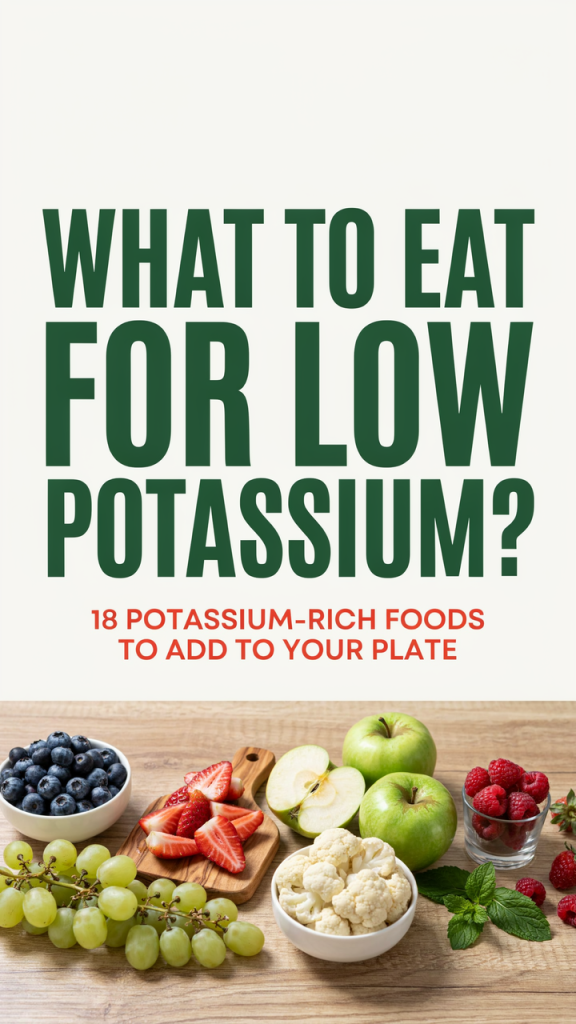
– Apples, berries, grapes, and pineapple instead of banana and dried fruit
– White rice or pasta instead of potatoes
– Cucumber, iceberg lettuce, and bell peppers as lower-potassium vegetables
– Egg whites instead of whole eggs or higher-potassium dairy if directed
Always follow the specific guidance from your healthcare provider.
Conclusion
Potassium is a key nutrient for heart, nerve, and muscle health. The 18 foods listed above — from bananas and potatoes to avocados, spinach, white beans, salmon, and dried apricots — are excellent choices if your healthcare team has advised you to increase potassium. They can be combined into balanced meals and snacks that are both delicious and nutrient-dense. However, if you have kidney disease or have been instructed to follow a low-potassium diet, many of these foods should be limited or avoided — and there are strategies (like portion control and certain cooking methods) to manage intake.
If you’re unsure which side of the potassium line you fall on, book an appointment with your clinician or a registered dietitian. They can check your labs, review medications, and provide personalized meal plans so you can eat safely and confidently. Whatever your situation, small, practical changes — guided by reliable advice — can make a big difference in how you feel and how well your body functions.