
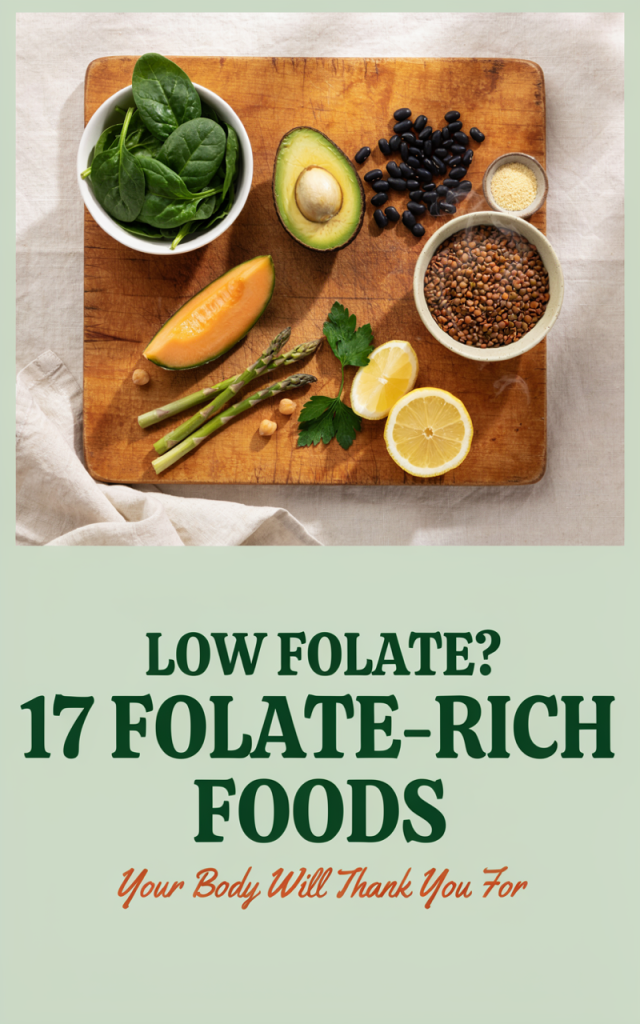
What Should I Eat for Low Folate? 17 Folate-Rich Foods Your Body Will Thank You For
Folate (vitamin B9) is an essential nutrient that plays a starring role in cell growth, DNA synthesis, red blood cell formation, and fetal development. If your folate levels are low, you might feel unusually tired, notice pale skin, experience shortness of breath, or — in pregnant people — increase the risk of neural tube defects in the developing baby. The good news: many delicious, everyday foods provide folate, and small changes to your meals can make a big difference.
In this guide you’ll find 17 folate-rich foods to add to your shopping list, practical tips for maximizing folate intake, and simple recipes and meal ideas that combine these ingredients into flavorful, nourishing dishes. Whether you’re recovering from a deficiency, planning a pregnancy, or simply aiming for a healthier diet, this post gives you science-backed, practical guidance and tasty ways to eat more folate.
How to use this guide
- Scroll to the “17 Folate-Rich Foods” section for quick ideas and ways to enjoy each food.
- Try one or two of the recipe ideas to make folate intake easy and enjoyable.
- Read the practical tips to learn how cooking, storage, and pairing with other nutrients affect folate absorption.
- If you suspect a deficiency or are pregnant/planning pregnancy, consult your healthcare provider for personalized advice and possible supplementation.
17 Folate-Rich Foods to Add to Your Plate
Below are 17 foods known for their folate content. Each entry explains why it’s helpful, how to eat it, and practical tips for including it in meals. This list contains exactly 17 items.
1. Lentils
Why they help: Lentils are a legumes powerhouse — highly nutritious and very folate-dense. They’re also rich in protein and fiber, which keeps blood sugar steady and supports digestive health.
How to enjoy them: Make soups, stews, or a simple lentil salad with fresh herbs, lemon, and olive oil. Cooked lentils are versatile and freeze well.
Cooking tip: Rinse and sort before cooking. Simmer until tender and season at the end to avoid toughening.
2. Spinach (especially cooked)
Why they help: Dark leafy greens like spinach are classic sources of folate. Cooking spinach increases the volume you can eat and concentrates the nutrients per spoonful.
How to enjoy it: Sauté with garlic, add to omelets, blend into smoothies, or use as a base for warm grain bowls.
Cooking tip: Lightly steaming or quickly sautéing preserves most nutrients while improving digestibility.
3. Asparagus
Why they help: Asparagus is a seasonal vegetable with a pleasant flavor and a good folate punch. It pairs well with proteins and grains.
How to enjoy it: Roast, grill, or steam asparagus and serve as a side or toss into pastas and salads.
Cooking tip: Roast at high heat with a drizzle of olive oil and sprinkle of lemon zest for extra flavor.
4. Chickpeas
Why they help: Chickpeas (garbanzo beans) supply folate plus fiber and plant-based protein. They’re convenient — canned chickpeas make healthy eating simple.
How to enjoy them: Mash into hummus, add to salads, roast as a crunchy snack, or use in curries and stews.
Cooking tip: Rinse canned chickpeas to reduce sodium; roast with spices for a nutritious snack.
5. Black Beans
Why they help: Black beans are another folate-rich legume option. They add body, texture, and nutrition to many Latin American and Caribbean dishes.
How to enjoy them: Use in burritos, soups, salads, or mixed with rice for a balanced meal.
Cooking tip: Cook from dried for best texture and lower sodium, or choose low-sodium canned beans.
6. Broccoli
Why they help: Broccoli provides folate along with vitamin C, fiber, and phytochemicals that support overall health.
How to enjoy it: Steam, roast, or stir-fry broccoli; add to casseroles or blend into creamy soups.
Cooking tip: Steam briefly to keep broccoli bright and slightly crisp, preserving more nutrients.
7. Avocado
Why they help: Avocado contains folate and healthy monounsaturated fats that support heart health and help your body absorb fat-soluble nutrients.
How to enjoy it: Spread on whole-grain toast, add to salads, or blend into smoothies for creaminess.
Cooking tip: Serve avocado fresh; add lemon or lime juice to slow browning.
8. Brussels Sprouts
Why they help: Brussels sprouts are a cruciferous vegetable rich in folate and fiber and a tasty side when roasted to caramelized perfection.
How to enjoy them: Halve and roast with olive oil and sea salt, or shred raw into slaws.
Cooking tip: Roast at high heat to bring out natural sweetness and reduce bitterness.
9. Green Peas
Why they help: Sweet green peas are convenient and folate-rich; they work well fresh or frozen.
How to enjoy them: Stir into risottos, soups, pastas, or mix into a spring salad.
Cooking tip: Frozen peas are nutritionally comparable to fresh and are quick to prepare.
10. Beef or Chicken Liver
Why they help: Organ meats, particularly liver, are among the most concentrated natural sources of folate. They’re nutrient-dense but should be eaten in moderation.
How to enjoy it: Pan-seared liver with onions, or blended into pâté and served in small portions.
Cooking tip: Choose high-quality, well-sourced organ meat and cook until tender but not overcooked to preserve texture.
11. Eggs
Why they help: Eggs provide folate as well as choline and high-quality protein, making them a convenient folate-containing food for many diets.
How to enjoy them: Boiled, poached, scrambled, in omelets with spinach, or added to salads.
Cooking tip: Combine eggs with folate-rich greens like spinach to boost intake in one meal.
12. Sunflower Seeds
Why they help: Sunflower seeds offer folate plus healthy fats and can be sprinkled on salads, yogurts, or oatmeal for a crunchy nutrient boost.
How to enjoy them: Toast lightly and use as a topping, or blend into seed butters.
Cooking tip: Store seeds in the fridge to preserve freshness and prevent rancidity.
13. Oranges (and citrus fruits)
Why they help: Oranges and other citrus fruits contain folate and vitamin C, which helps overall nutrient absorption and immune function.
How to enjoy them: Eat whole as a snack, add segments to salads, or squeeze fresh orange juice in moderation.
Cooking tip: Whole fruit gives fiber along with folate; prefer whole fruit over juice when possible to avoid excess sugar.
14. Fortified Breakfast Cereals
Why they help: Many breakfast cereals are fortified with folic acid (the synthetic, stable form of folate) and can be an easy way to increase intake, especially for people with higher needs.
How to enjoy them: Pair fortified cereal with milk or a plant-based alternative and top with berries or sliced banana.
Cooking tip: Check labels for iron and folate fortification and aim for lower-sugar options.
15. Strawberries
Why they help: Strawberries are not just delicious — they also provide folate and antioxidants. They’re a simple and versatile fruit to add to meals.
How to enjoy them: Add to yogurt, cereal, salads, or eat them fresh as a snack.
Cooking tip: Wash just before eating to preserve flavor and texture.
16. Beets
Why they help: Beets contain folate as well as nitrate compounds that support circulation. Their earthy flavor complements many dishes.
How to enjoy them: Roast or steam beets, add to salads, or blend into smoothies.
Cooking tip: Roast beets wrapped in foil for concentrated sweetness; peel after roasting for easy handling.
17. Quinoa
Why they help: Quinoa is a folate-containing whole grain that also brings protein and essential minerals. It’s a great base for salads and bowls.
How to enjoy it: Use as a side instead of rice, make warm salads, or serve with beans and roasted vegetables.
Cooking tip: Rinse quinoa before cooking to reduce bitterness and use a 2:1 water-to-quinoa ratio for fluffy results.
Quick Folate-Friendly Recipes & Meal Ideas
Below are simple, tasty recipes that explicitly incorporate folate-rich foods. Each recipe includes ingredients as a bulleted list and step-by-step instructions in numbered format.
Lentil & Spinach Soup (serves 4)
Ingredients:
– 1 cup dried lentils, rinsed
– 1 tablespoon olive oil
– 1 medium onion, diced
– 2 garlic cloves, minced
– 2 carrots, diced
– 4 cups low-sodium vegetable or chicken broth
– 4 cups fresh spinach, roughly chopped
– 1 bay leaf (optional)
– Salt and pepper to taste
– Fresh lemon juice (optional)
Instructions:
1. Heat olive oil in a large pot over medium heat. Add onion and carrots and sauté until softened, about 5 minutes.
2. Add garlic and cook for 30 seconds until fragrant.
3. Add lentils, broth, and bay leaf. Bring to a boil, then reduce heat and simmer covered for 20–25 minutes, until lentils are tender.
4. Stir in chopped spinach and simmer for 2–3 minutes until wilted.
5. Season with salt, pepper, and a squeeze of lemon juice. Remove bay leaf and serve warm.
Avocado & Egg Toast with Sunflower Seeds (serves 1)
Ingredients:
– 1 slice whole-grain bread, toasted
– 1/2 ripe avocado
– 1 large egg
– 1 tablespoon sunflower seeds
– Salt and pepper to taste
– Red pepper flakes (optional)
Instructions:
1. Toast the bread to your preference.
2. Mash the avocado and season with salt and pepper.
3. Cook the egg to your liking (poached, fried, or soft-boiled).
4. Spread mashed avocado on the toast, top with the cooked egg, and sprinkle with sunflower seeds and red pepper flakes if desired.
5. Serve immediately.
Quinoa Salad with Chickpeas & Beets (serves 4)
Ingredients:
– 1 cup quinoa, rinsed
– 2 cups water or broth
– 1 cup cooked chickpeas (canned, rinsed, or cooked from dry)
– 1 cup cooked beets, diced (roasted or steamed)
– 1/2 cup chopped parsley
– 1/4 cup crumbled feta (optional)
– 3 tablespoons olive oil
– 2 tablespoons lemon juice
– Salt and pepper to taste
Instructions:
1. Cook quinoa: combine rinsed quinoa and water or broth in a pot, bring to a boil, reduce heat, and simmer covered for 15 minutes. Fluff with a fork and let cool slightly.
2. In a large bowl, combine cooked quinoa, chickpeas, diced beets, and parsley.
3. Whisk olive oil and lemon juice together, season with salt and pepper.
4. Pour dressing over the salad and toss to combine.
5. Top with crumbled feta if using and serve warm or chilled.
Roasted Asparagus & Broccoli Bowl with Poached Egg (serves 2)
Ingredients:
– 1 bunch asparagus, trimmed
– 2 cups broccoli florets
– 2 tablespoons olive oil
– Salt and pepper
– 2 large eggs
– 1 cup cooked quinoa or brown rice (optional base)
– Lemon wedges for serving
Instructions:
1. Preheat oven to 425°F (220°C). Toss asparagus and broccoli with olive oil, salt, and pepper.
2. Spread vegetables on a baking sheet and roast for 12–15 minutes until tender and lightly charred.
3. While vegetables roast, poach eggs in simmering water until whites are set and yolks reach desired doneness.
4. Divide quinoa or rice between two bowls. Top with roasted vegetables and a poached egg.
5. Squeeze lemon over bowls and serve.
Strawberry-Orange Yogurt Parfait (serves 1)
Ingredients:
– 3/4 cup plain or Greek yogurt
– 1/2 cup sliced strawberries
– 1 small orange, segmented or 1/3 cup orange segments
– 2 tablespoons fortified cereal or granola (low sugar)
– 1 teaspoon honey (optional)
Instructions:
1. Layer half of the yogurt in a glass or bowl.
2. Add half the strawberries and orange segments.
3. Add the remaining yogurt and top with the rest of the fruit.
4. Sprinkle fortified cereal or granola on top and drizzle with honey if desired.
5. Serve immediately.
Practical Tips to Boost Folate Intake
- Favor whole foods: Legumes, leafy greens, and whole grains provide folate along with fiber, minerals, and other vitamins.
- Combine folate-rich foods: Make meals that pair two or more folate foods together (for example, spinach + eggs, or quinoa + chickpeas) to increase intake easily.
- Mind cooking losses: Folate is water-soluble and sensitive to heat. Steam or sauté quickly when possible, and avoid overboiling vegetables to preserve folate.
- Use frozen produce: Frozen vegetables and fruits are often frozen soon after harvest and can retain folate well — a practical option when fresh isn’t available.
- Consider fortified foods: Fortified cereals and breads can reliably increase folate intake. For people with higher needs (pregnancy, some medical conditions), fortified or supplemental folic acid might be recommended.
- Watch portion sizes: Organ meats are nutrient-dense but should be eaten in small amounts due to concentrated vitamins and minerals.
- Pair with vitamin B12: Folate and B12 work together in red blood cell production. If you have low folate symptoms, a clinician will often check B12 too.
- Be cautious with supplements: Don’t start high-dose folic acid without medical advice. Excessive folic acid can mask B12 deficiency and have other implications.
Who’s at Higher Risk for Low Folate?
- Pregnant people or those planning pregnancy (increased requirements)
- People with poor dietary intake (limited fruits, vegetables, legumes)
- Individuals with alcohol dependence
- People with malabsorption conditions (e.g., celiac disease)
- Those taking certain medications that interfere with folate metabolism (discuss with your healthcare provider)
If you fall into one of these groups, mention it to your clinician so they can assess whether diet alone is sufficient or whether supplementation is advised.
When to See a Healthcare Professional
If you suspect you have low folate — symptoms such as fatigue, weakness, pale skin, shortness of breath, unusual irritability, or numbness — schedule an appointment with your healthcare provider. They can check blood levels, review medications and diet, and recommend appropriate treatment. Pregnant people or those trying to conceive should consult their provider about folic acid supplementation as early as possible.
Conclusion
Boosting folate through food is both practical and delicious. From everyday favorites like spinach, lentils, and eggs to convenient staples like fortified cereals and quinoa, there are many ways to increase intake and support cell health, energy, and, for pregnant people, healthy fetal development. Start small: add a handful of spinach to smoothies, swap rice for quinoa occasionally, toss chickpeas into salads, or try a simple lentil soup. These changes are sustainable, nutrient-rich, and will leave your body — and taste buds — thanking you.
If you’re concerned about low folate or have special health needs, reach out to your healthcare provider for testing and personalized guidance. With a few intentional food choices and the tips above, you can build a folate-friendly eating pattern that supports long-term health.


