How To Make Zucchini Noodle Pad Thai
If you’re looking to shake up your dinner routine with a fresh, healthy twist on a classic favorite, we’ve got just the thing, zucchini noodle Pad Thai. This dish combines the delicious flavors of traditional Pad Thai with the lightness of zucchini noodles, making it not only a satisfying meal but also a nutritious option. Let’s jump into how to make this fantastic dish and explore the many benefits of incorporating zucchini noodles into our diets.
Understanding Zucchini Noodles
Benefits of Using Zucchini Noodles
Zucchini noodles, often referred to as zoodles, are an excellent alternative to traditional pasta. They are low in calories and carbohydrates while being rich in vitamins A and C, potassium, and antioxidants. By switching to zucchini noodles, we can indulge in a classic dish without the guilt, making it a perfect option for those on low-carb or gluten-free diets. Plus, they are hydrating and add a delightful crunch to our meals.
Choosing the Right Zucchini
When selecting zucchini for our Pad Thai, we want to look for firm, unblemished, and medium-sized zucchinis. Avoid larger zucchinis, as they tend to have more seeds and a watery texture, which can affect the overall dish. Also, if we can find organic zucchinis, that’s even better, as they often have richer flavors and fewer pesticides.
Preparing Zucchini Noodles
Tools for Spiralizing Zucchini
To make our zucchini noodles, we will need either a spiralizer or a vegetable peeler. A spiralizer is the best choice for producing long, thin noodles. There are various types available, from handheld models to countertop appliances. If we don’t have a spiralizer, a simple vegetable peeler can also create ribbon-like strips. Whichever tool we choose, the goal is to achieve that beautiful noodle shape that will hold onto our sauce.
Methods for Preparing Zucchini Noodles
Once we have our zucchini, the preparation begins. Start by washing and drying the zucchini. Using our chosen tool, spiralize or peel the zucchini into noodles. After making our zoodles, it’s important to remove excess moisture to prevent our Pad Thai from becoming watery. A quick trick is to sprinkle the noodles with salt and let them sit for about 10 minutes: this draws out the moisture. Afterward, we can pat them dry with a paper towel.
Key Ingredients for Pad Thai
Essential Components of Traditional Pad Thai
To make an authentic Pad Thai, we typically need rice noodles, protein (like shrimp, chicken, or tofu), tamarind paste, fish sauce, peanuts, egg, bean sprouts, and green onions. In our zucchini version, we will replace the rice noodles with our tasty zoodles but keep all the delightful flavors intact with these original ingredients. The balance of sweet, salty, and sour in the sauce is what makes Pad Thai so beloved, and we’ll be sure to capture that essence.
Recommended Substitutes and Variations
For those looking to customize, there are plenty of substitutes we can use. For a vegan version, we can swap eggs for tofu, and tamarind can sometimes be skipped in favor of lime juice if unavailable. If we want to add a bit more color and nutrients, diced bell peppers or carrots can make great additions. The options are endless, and we encourage experimenting with what we have on hand.
Step-By-Step Recipe for Zucchini Noodle Pad Thai
Cooking the Zucchini Noodles
Now onto the fun part, cooking. Heat a large skillet or wok over medium heat and add a splash of oil. Once the oil is hot, throw in our prepared zucchini noodles. Stir-fry for about 1-2 minutes, just until they soften slightly but still retain some crunch. We want them to be perfectly tender without turning mushy. Remove them from the skillet and set them aside while we get the rest ready.
Making the Pad Thai Sauce
For the sauce, we can whisk together 3 tablespoons of tamarind paste, 2 tablespoons of fish sauce, 2 tablespoons of sugar, and 1 tablespoon of lime juice in a small bowl. This mixture captures the classic Pad Thai flavor profile. Feel free to adjust sweetness and tang based on our preference. If we like a bit of heat, a dash of chili powder can be included as well.
Combining Ingredients and Serving
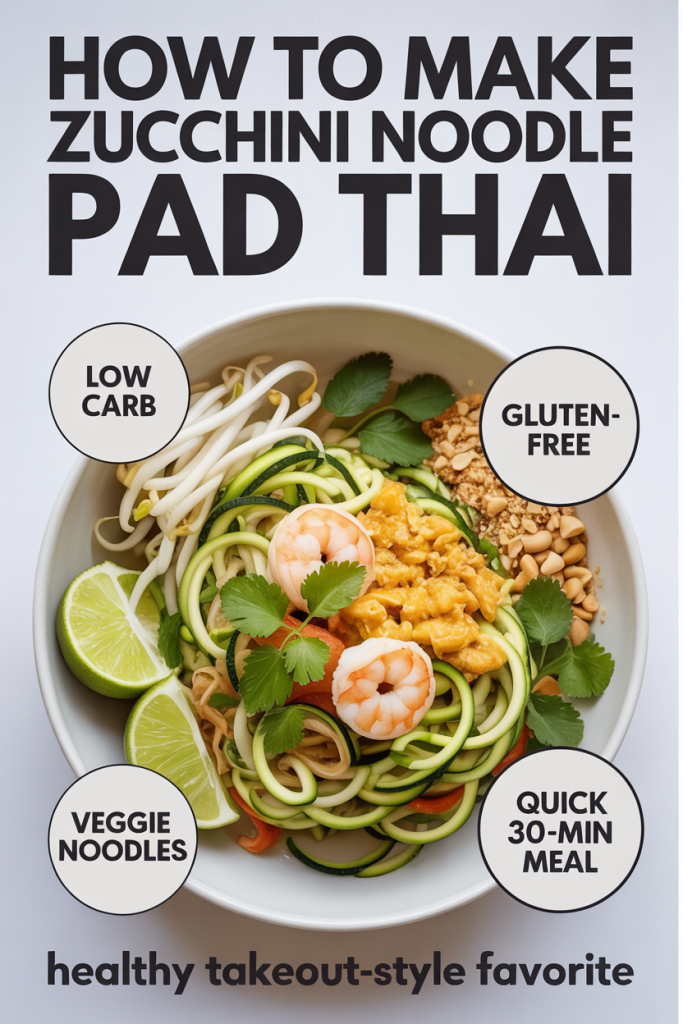
In the same skillet, add a bit more oil if needed and scramble our eggs until fully cooked. Next, toss in our protein of choice, shrimp, chicken, or tofu. Add the cooked zoodles back into the skillet along with the sauce we prepared. Gently fold everything together to ensure the noodles are evenly coated. Finally, add bean sprouts and chopped green onions right before serving for a fresh crunch. Serve hot, garnished with crushed peanuts and lime wedges.
Tips for the Perfect Pad Thai
Cooking Techniques for Optimal Flavor
To really elevate our Pad Thai, we should focus on the cooking techniques. Stir-frying over a high heat renders quick cooking and prevents our noodles from becoming soggy. Also, adding ingredients in stages, like cooking the eggs and protein before adding the zoodles, allows each ingredient to shine without overcrowding the pan. Also, don’t forget to taste and adjust seasoning as we go: sometimes, a little extra lime juice or fish sauce can take it to the next level.
Presentation and Serving Suggestions
When it comes to presentation, we eat with our eyes first, don’t we? To serve, we can plate the Pad Thai beautifully in a bowl, topped with a generous sprinkle of crushed peanuts, lime wedges, and a few extra bean sprouts on top. Fresh cilantro or basil can also brighten the dish significantly. If we’re feeling adventurous, a side of chili flakes allows our guests to adjust the spice to their liking.
Nutritional Information
Our zucchini noodle Pad Thai is not just delicious: it’s nutritious too. A standard serving provides a low-calorie, high-fiber meal, perfect for maintaining a balanced diet. Each serving is packed with vitamins and minerals, offering significant amounts of vitamins A and C, potassium, and protein, especially when made with shrimp or tofu. It’s a fantastic way to enjoy a favorite dish while sticking to healthy eating habits.
Conclusion
Making zucchini noodle Pad Thai is not only simple but also an enjoyable way to bring a beloved dish into our healthy cooking repertoire. With a little prep and some creativity, we can transform this classic meal into a nutritious and light version that everyone will love. So, gather those zucchinis, fire up that skillet, and let’s enjoy a delicious homemade meal together.