How To Make Garlic Lemon Salmon Bowls (Gluten-Free)
We all love a meal that’s not only delicious but also nutritious, and garlic lemon salmon bowls fit the bill perfectly. This dish combines the rich flavors of salmon with the zesty brightness of lemon and the aromatic depth of garlic. Gluten-free yet satisfying, it’s a meal that can cater to various dietary needs while still being incredibly easy to prepare. Join us as we jump into the creation of these flavorful bowls, ensuring each component is both delicious and nourishing.
Ingredients for Garlic Lemon Salmon Bowls
To create our garlic lemon salmon bowls, we’ll need a few essential ingredients, each contributing to the dish’s vibrant flavors. Here’s what we’ll gather:
For the Salmon
- Salmon fillets (preferably skinless)
- Fresh garlic (about 4 cloves, minced)
- Lemon juice (1-2 lemons)
- Olive oil (extra virgin for the best flavor)
- Salt and pepper (to taste)
- Fresh parsley or cilantro (for garnish)
For the Rice or Grain Base
- Rice (white or brown, or gluten-free alternatives like quinoa or cauliflower rice)
- Vegetable broth (to cook the rice for added flavor)
- Salt (if needed)
For the Additional Toppings
- Avocado (sliced, for creaminess)
- Cherry tomatoes (halved, for sweetness)
- Cucumbers (sliced, for crunch)
- Radishes (thinly sliced, for a spicy kick)
- Optional: sesame seeds or nuts (for added crunch)
Gathering these fresh ingredients ensures a delightful outcome that’s as healthy as it is tasty.
Step-by-Step Preparation
Now that we have our ingredients, it’s time to prepare the garlic lemon salmon bowls. Here’s how we can do it step by step:
Step 1: Marinate the Salmon
- In a bowl, combine minced garlic, lemon juice, a tablespoon of olive oil, salt, and pepper to create a marinade.
- Add the salmon fillets to this mixture, making sure they’re well-coated. Let them marinate for at least 15-30 minutes. This step infuses the salmon with flavor.
Step 2: Cook the Rice or Grain
- While the salmon marinates, rinse 1 cup of rice or your chosen grain. This removes excess starch and helps achieve a fluffier texture.
- In a saucepan, combine the rinsed rice with 2 cups of vegetable broth and a pinch of salt. Bring to a boil.
- Once boiling, reduce the heat to low, cover, and simmer for about 15-20 minutes (for white rice) or until the grains are tender. If using brown rice, it may take longer, around 40-45 minutes.
Step 3: Prepare the Vegetables
- While the rice cooks, chop the vegetables we’ve chosen for our bowls: slice cucumbers, halve cherry tomatoes, and cut radishes.
- Prepare the avocado last to prevent browning: we can slice it right before serving.
Step 4: Cook the Salmon
- Preheat a non-stick skillet over medium-high heat. Add a tablespoon of olive oil.
- Once the skillet is hot, add the marinated salmon fillets, cooking for about 4-5 minutes on each side. We should aim for a nice golden crust without overcooking. The internal temperature should reach 145°F (63°C).
- Once cooked, remove the salmon and let it rest for a few minutes before flaking it into large pieces.
Cooking Techniques for Perfect Salmon
Achieving perfect salmon can be daunting, but with a few tips, we can elevate our dish:
Choosing Fresh Salmon
Opt for wild-caught salmon if possible. It’s generally more flavorful than farmed salmon. Check for bright, moist skin and a fresh ocean-like smell.
Avoid Overcooking
Salmon is best when it’s tender and moist, not dry. We should remove it from the heat once it’s slightly translucent in the center, it will continue cooking as it rests.
Experiment with Cooking Methods
Aside from pan-searing, we can grill, bake, or broil our salmon. Each method brings out different nuances in flavor. For instance, grilling adds a smoky flavor, while baking keeps it moist.
Use a Meat Thermometer
For precision, using a meat thermometer can be invaluable. The FDA recommends cooking salmon to an internal temperature of 145°F (63°C). A thermometer takes the guesswork out of cooking.
Choosing the Right Rice or Grain
Our choice of base greatly influences the overall taste and texture of the garlic lemon salmon bowl. Here are a few options to consider:
White or Brown Rice
White rice cooks quickly and has a soft texture, perfect for soaking up flavors. Brown rice, on the other hand, offers a nuttier flavor and more fiber, making it a healthier option but requires a longer cooking time.
Quinoa
Quinoa is a gluten-free alternative that’s high in protein and cooks in about 15 minutes. It has a unique texture that adds a delightful crunch, making our bowls even more interesting.
Cauliflower Rice
For a low-carb option, cauliflower rice is an excellent choice. It cooks quickly and absorbs the flavors of our garlic lemon marinade beautifully. To prepare, we can simply pulse cauliflower florets in a food processor until they resemble rice and sauté them lightly before serving.
Other Grains
Grains like farro or millet can also serve as a hearty base, offering their own distinct flavors and textures. Experimenting with different bases allows us to tailor each bowl to our taste preferences.
Serving Suggestions and Variations
Now that our garlic lemon salmon bowls are assembled, it’s time to get creative with the presentation and toppings:
Arrangement
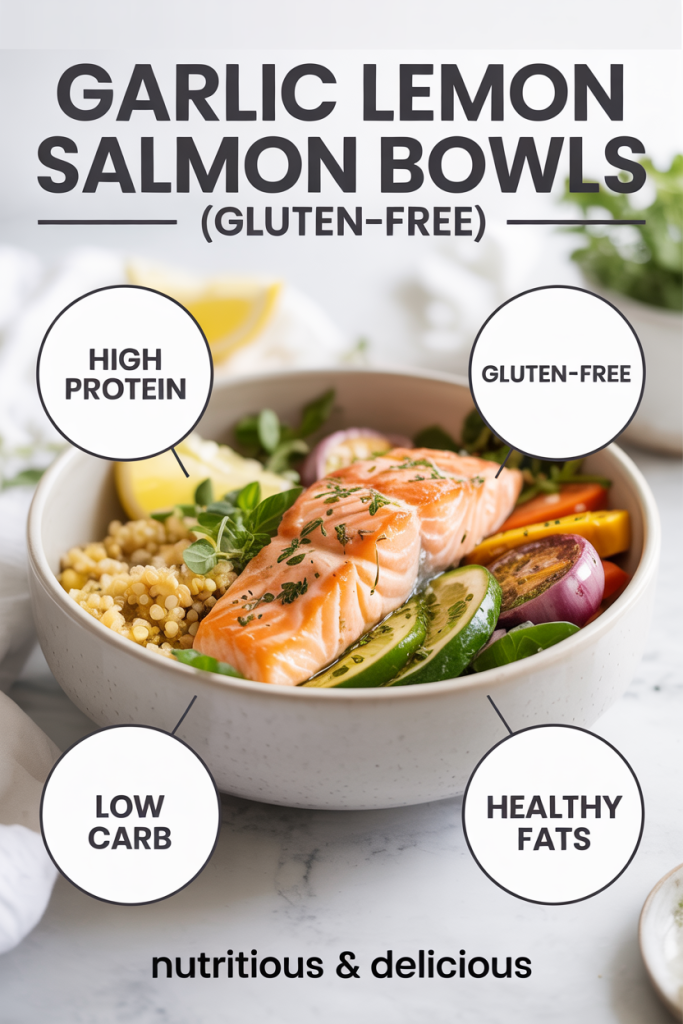
Start with a generous scoop of our cooked rice or grain at the base of the bowl. Next, add the flaked salmon on top, arranging it elegantly.
Fresh Vegetables
Scatter chopped vegetables around the salmon. This not only makes our bowl vibrant but also enhances the crunch with every bite. Consider layering avocado slices and radishes for added texture.
Dressings and Sauces
To elevate the flavors, we can drizzle a light dressing, such as a tahini-based sauce or a yogurt dressing, over the top. A sprinkle of sesame seeds can also impart a lovely nutty flavor.
Add Protein Variations
If we’re looking to customize further, adding other proteins like shrimp, grilled chicken, or tofu can create a diverse meal. Likewise, using different fish, like trout or tilapia, can change the entire flavor profile.
Seasonal Variations
Using seasonal vegetables not only enhances taste but also ensures freshness. Consider incorporating asparagus in spring, corn during summer, or roasted sweet potatoes in the fall.
The possibilities are endless, and this flexibility allows us to make each bowl unique and tailored to our current cravings.
Nutritional Benefits of Garlic Lemon Salmon Bowls
Garlic lemon salmon bowls not only taste fantastic, but they’re also packed with nutritional benefits:
Salmon
Rich in omega-3 fatty acids, salmon is known for its heart-healthy benefits. It’s also a great source of protein, vitamin D, and B vitamins, supporting overall health.
Garlic
The star ingredient in our marinade, garlic is celebrated for its immune-boosting properties. Studies show that consuming garlic may help reduce blood pressure and improve cholesterol levels.
Vegetables
The colorful vegetables we include contribute vitamins, minerals, and antioxidants that help protect our bodies from chronic diseases. They promote healthy digestion and can aid in weight management.
Whole Grains
Choosing whole grains, like brown rice or quinoa, introduces fiber into our meals, supporting digestive health and keeping us full longer. This balanced combination makes our garlic lemon salmon bowls a satisfying and nourishing dish.
Conclusion
To conclude, making garlic lemon salmon bowls is not only a simple process but also a rewarding one. With each element working together to create a flavorful and healthy meal, we can easily adapt this recipe to our preferences and dietary needs. Whether for a weekday dinner or a meal prep option, these bowls are bound to impress. So, let’s take our culinary skills to new heights and enjoy the zesty, rich flavors of garlic lemon salmon bowls together.