How To Make Turkey Meatballs (Gluten-Free)
If you’re on the hunt for a delicious and versatile dinner option, look no further than turkey meatballs. Not only are they a healthier alternative, but they can also easily fit into a gluten-free diet. In this guide, we’re excited to share our recipe for making gluten-free turkey meatballs that are packed with flavor and nutrition. Let’s jump into the world of turkey meatballs and discover how they can become a staple in our cooking repertoire.
Why Choose Turkey Meatballs?
Turkey meatballs are not just a tasty meal choice: they bring along a host of benefits that make them an excellent dish for any occasion.
Health Benefits of Turkey
Turkey is an excellent source of lean protein, which helps to keep us feeling fuller for longer. It’s lower in calories compared to beef and pork, making it an ideal option for those watching their weight. Also, turkey is packed with essential nutrients such as B vitamins, selenium, and phosphorus, while also being low in saturated fat.
Advantages of Gluten-Free Meatballs
Going gluten-free has become increasingly popular, not only for those with gluten intolerances or celiac disease but also for those looking to improve their overall health. Gluten-free turkey meatballs allow everyone to enjoy a satisfying meal without the worry of gluten-related issues. By using gluten-free binders and fillers, we can create meatballs that are equally delicious and nutritious.
Essential Ingredients for Gluten-Free Turkey Meatballs
When it comes to making turkey meatballs, having the right ingredients is crucial to achieving the perfect texture and flavor.
Ground Turkey Selection
Choosing the right ground turkey is key. We recommend using lean ground turkey for a healthier alternative, which still provides plenty of flavor. Look for ground turkey that contains at least 7-10% fat for moisture and richness.
Gluten-Free Binders and Fillers
Traditional meatball recipes often rely on breadcrumbs as a binder, we can swap these for gluten-free alternatives. Options like almond flour, gluten-free oats, or crushed gluten-free crackers provide the necessary binding without compromising on texture.
Flavor Enhancers and Seasonings
To take our turkey meatballs to the next level, we can’t overlook the importance of seasonings. A mix of herbs and spices will elevate the flavor profile significantly. Consider using garlic powder, onion powder, Italian seasoning, salt, and pepper. Adding fresh herbs like parsley or basil also infuses an extra layer of freshness into the meatballs. Don’t forget a splash of Worcestershire sauce or a dollop of mustard for added depth.
Preparing the Turkey Meatball Mixture
Now that we have our ingredients ready, let’s get into the fun part, making the meatball mixture.
Forming the Meatballs
In a large bowl, combine the ground turkey with our gluten-free binder, seasonings, and any additional ingredients we desire (e.g., diced vegetables or cheese). Mixing by hand is the best method: this allows us to feel the consistency. Once combined, we can form the mixture into small balls, about 1 to 1.5 inches in diameter, ensuring they are uniform for even cooking.
Cooking Methods for Turkey Meatballs
We have several options for cooking our turkey meatballs, each yielding delicious results.
Baking Vs. Frying
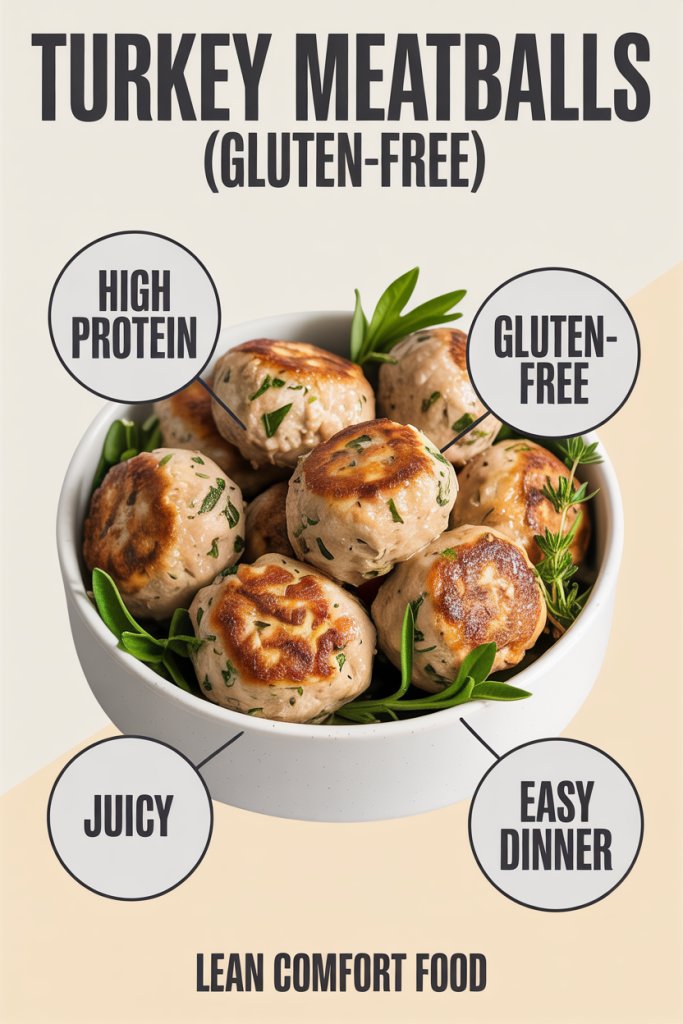
Baking turkey meatballs in a preheated oven at 400°F for about 25 minutes is a great choice for a healthier option. This method also allows excess fat to drip away. Alternatively, frying them in a skillet with a bit of olive oil gives a crispy exterior while keeping the inside moist. It eventually depends on our preference for texture and flavor.
Slow Cooking and Sauces
If we want to go the slow cooking route, turkey meatballs work beautifully in a crockpot. Not only does this method cook them gently, but it also allows them to absorb the flavors of whatever sauce we’re using.
Serving Suggestions and Variations
We can serve our turkey meatballs with a variety of sauces, marinara, teriyaki, or BBQ to name a few. They pair perfectly with gluten-free pasta, quinoa, or even on a bed of zucchini noodles for a lighter option.
Pairing with Sauces and Sides
Need ideas for sides? Roasted vegetables, a fresh salad, or gluten-free garlic bread can complete our meal nicely, bringing balance and flavor.
Storage and Reheating Tips
Now that we have our delicious turkey meatballs cooked and ready to enjoy, we want to ensure they stay fresh for future meals.
Freezing Turkey Meatballs for Meal Prep
We can freeze our turkey meatballs for quick meals later on. Once cooled, place them in an airtight container or freezer bag: they can last up to three months in the freezer. Just remember to separate layers with parchment paper to prevent sticking.
Reheating Instructions
When it’s time to warm up our frozen meatballs, we can either bake them in the oven at 350°F for about 20 minutes or simmer them in sauce on the stovetop until heated through. This second method not only reheats but also adds more flavor to the meatballs.
Conclusion
Gluten-free turkey meatballs are a delicious and nutritious option that can easily fit into our meal planning. With the right ingredients, seasoning, and cooking techniques, we can enjoy flavorful meatballs that satisfy our cravings while adhering to our dietary preferences. So, gather your ingredients and get ready to savor each bite of these hearty meatballs.