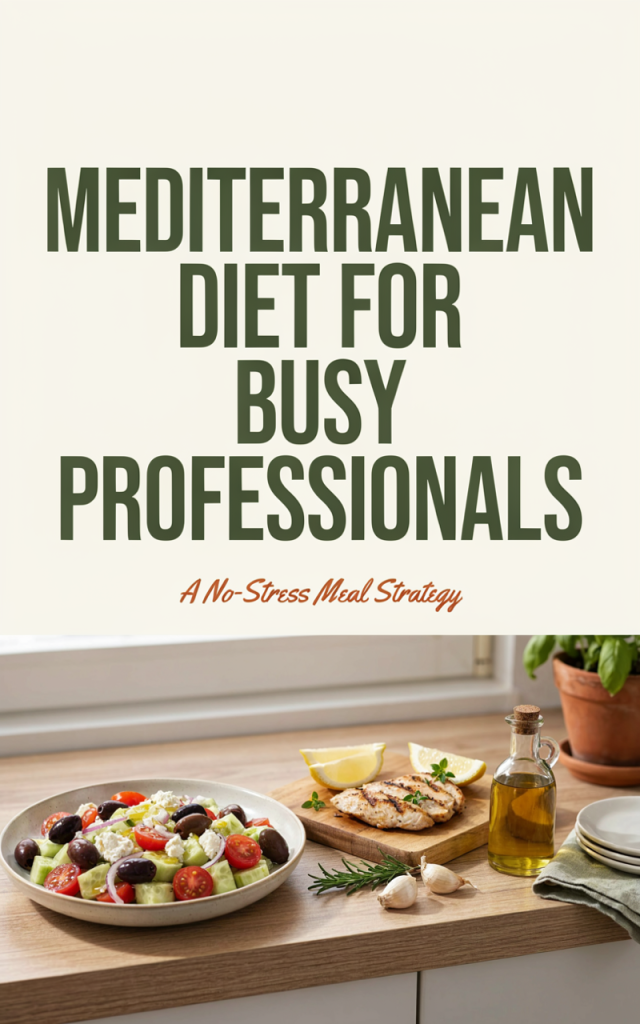
Mediterranean Diet for Busy Professionals: A No-Stress Meal Strategy
The demands of a busy workday don’t have to mean bland takeout, skipped meals, or a fridge full of ingredients going to waste. The Mediterranean eating pattern offers a flexible, flavorful approach that fits well into hectic schedules: think quick assemblies, robust staples, and meals built around vegetables, whole grains, legumes, healthy fats, and simple proteins. This guide gives practical, no-nonsense tactics and ready-to-use recipes so you can eat better without adding stress to your calendar.
Ready to make Mediterranean eating easier? Get the 30-Day Mediterranean Meal Plan System with a complete 30-day calendar, 53 recipes, grocery lists, preparation guidance, and three bonus guides. You can also add the 30-page Quick-Meal Vault for fast, practical meal ideas.
Read on for easy meal-prep strategies, a compact pantry list, time-saving kitchen tricks, and several fast Mediterranean-style recipes you can assemble or reheat during the busiest week. Everything here is designed for real life—short prep times, minimal cleanup, and lots of make-ahead potential.
Why the Mediterranean eating pattern works for busy people
The Mediterranean pattern is adaptable rather than prescriptive: it emphasizes whole foods you can batch-cook (grains, beans), long-shelf or freezer ingredients (canned tomatoes, frozen vegetables, fish), and simple flavor boosters (olive oil, lemon, garlic, herbs). Those features make it ideal for time-crunched routines:
- Many staples store well and transform easily across meals.
- Meals often assemble rather than require long active cooking.
- A few cooked components can yield many different meals across the week.
Below are specific strategies to make it practical, followed by recipes and a sample work-week meal plan.
Core no-stress meal strategies
H2 style headings must be descriptive—this one outlines the framework you can apply immediately.
1. Build a flexible fridge-and-freezer foundation
Keep a small set of cooked or ready-to-use components that combine into fast meals:
– Cooked whole grains (brown rice, farro, quinoa)
– A few roasted or sheet-pan vegetables
– Canned beans and tuna
– Pre-washed salad greens and chopped vegetables
– Cooked proteins (roasted chicken, baked salmon) or frozen fish fillets
– A jarred or homemade vinaigrette and plain yogurt for sauces
These items mix and match into bowls, wraps, and quick salads all week.
2. Batch-cook with purpose, not volume
Instead of cooking a huge pot of something you won’t finish, batch what you’ll reuse:
– 2–3 cups cooked grain (enough for 3–4 meals)
– One roasting tray of mixed vegetables (enough for lunches and dinners)
– One large pan of a protein (chicken thighs, baked salmon) portioned for three meals
The goal is 30–90 minutes on a weekend or an evening to create 5–7 ready-to-eat components.
3. Embrace “assemble, don’t cook” meals
Assemble is the fastest cooking method. Combine a cooked grain, a handful of salad greens, a scoop of beans, a protein, and a spoonful of dressing. Variations keep it interesting.
4. Use smart convenience items
Not all convenience options are equal—choose ones that save time and stay true to the pattern:
– Canned beans (low sodium if possible)
– Jarred roasted red peppers, olives, and artichokes
– Pre-cooked whole grain pouches
– Rotisserie chicken or pre-cooked frozen fish fillets
– Pre-washed salad mixes and chopped vegetables
5. Make sauces and dressings in one jar
A jarred vinaigrette or yogurt-herb sauce can turn basic foods into appealing meals. Make 1–2 dressings per week to add flavor quickly.
6. Keep a “launch pad” recipe list
Have 6–8 quick recipes you can make without hunting for ingredients. Put them where you’ll see them (fridge door or a note in the phone) so you skip decision fatigue.
Kitchen tools worth the countertop space
You don’t need a full professional setup—these simple tools speed up prep:
– Sharp chef’s knife and cutting board
– Sheet pans (for one-pan roasting)
– Rice cooker or pot with lid (for unattended grains)
– Large mixing bowl for salads and bowls
– Airtight containers for batch storage
– Blender or jar and whisk for sauces
Pantry and shopping list for a busy Mediterranean kitchen
Keep these on hand for fast meals. Buy quantities depending on household size.
- Olive oil (extra virgin for dressings, a bit for cooking)
- Canned chickpeas, cannellini beans, and lentils
- Canned tuna (in olive oil or water) and anchovies (optional for flavor)
- Whole grains: quinoa, brown rice, farro, or bulgur
- Whole-grain pasta
- Nuts and seeds: almonds, walnuts, sunflower seeds
- Jarred roasted peppers, artichokes, capers, olives
- Canned tomatoes (crushed and whole)
- Plain Greek yogurt
- Fresh lemons and garlic
- Onions and shallots
- Extra-firm tofu or tempeh (optional)
- Frozen vegetables (peas, broccoli, spinach)
- Fresh vegetables: cherry tomatoes, cucumbers, bell peppers, leafy greens
- Fresh fruit: apples, oranges, bananas
- Cheese: feta or aged cheese (small amounts add flavor)
- Spices and dried herbs: oregano, thyme, cumin, red pepper flakes
- Whole-grain wraps or pita
Time-saving fridge and freezer habits
- Portion cooked proteins and grains into 2–3 meal portions and label with date.
- Freeze individual servings of soups and stews in freezer-safe containers.
- Keep a ready-to-eat snack box (cut veggies, hummus, nuts, cheese) in one shelf for quick grabs.
- Use the freezer for vacuum-packed fish, frozen shrimp, and frozen vegetables that cook quickly.
Quick Mediterranean recipes for busy schedules
All recipes below are quick to prepare or make-ahead friendly. Ingredients are bulleted and instructions numbered.
Greek Yogurt and Berry Parfait (ready in 3–5 minutes)
Ingredients
– 1 cup plain Greek yogurt
– 1/2 cup mixed berries (fresh or thawed frozen berries)
– 2 tbsp granola or toasted oats
– 1 tsp honey or a drizzle of olive oil and lemon zest (optional)
– 1 tbsp chopped nuts (almonds or walnuts)
Instructions
1. Spoon Greek yogurt into a bowl or portable container.
2. Top with berries, granola, and nuts.
3. Drizzle honey or add a small amount of olive oil and lemon zest for a savory twist. Close container and take on the go.
This is a fast breakfast or mid-morning snack that combines protein, fruit, and healthy fats.
Mediterranean Chickpea Salad (10 minutes; makes 2–3 servings)
Ingredients
– 1 can (15 oz) chickpeas, drained and rinsed
– 1 cup cherry tomatoes, halved
– 1/2 cucumber, diced
– 1/4 red onion, thinly sliced
– 1/4 cup chopped parsley
– 2 tbsp crumbled feta (optional)
– 2 tbsp olive oil
– Juice of 1/2 lemon
– Salt and black pepper to taste
Instructions
1. In a large bowl, combine chickpeas, tomatoes, cucumber, red onion, and parsley.
2. Whisk olive oil and lemon juice in a small jar or bowl; season with salt and pepper.
3. Pour the dressing over the salad and toss. Sprinkle feta on top if using.
4. Portion into containers for lunch or enjoy immediately with whole-grain pita.
This salad can be made in the morning or the night before—flavors meld as it sits.
Sheet-Pan Salmon and Vegetables (30–40 minutes; serves 3–4)
Ingredients
– 3 salmon fillets (4–6 oz each)
– 1 lb small potatoes or baby potatoes, halved
– 1 red bell pepper, sliced
– 1 small red onion, quartered
– 3 tbsp olive oil, divided
– 2 tsp dried oregano or za’atar
– 1 lemon, sliced
– Salt and black pepper
Instructions
1. Preheat oven to 425°F (220°C). Toss potatoes with 2 tbsp olive oil, salt, and pepper; spread on one side of a rimmed sheet pan. Roast 15 minutes.
2. Meanwhile, toss bell pepper and onion with remaining olive oil and oregano.
3. After potatoes roast 15 minutes, push them to one side. Add vegetables to the pan and nestle salmon fillets (seasoned with salt, pepper, and a drizzle of olive oil) on the pan. Place lemon slices on salmon.
4. Roast 12–15 more minutes until salmon is cooked through and potatoes are tender.
5. Serve immediately or portion into containers. Lemon added just before eating brightens the dish.
Make extra vegetables for salads and wraps during the week.
5-Minute Tuna and White Bean Wrap (assembly only)
Ingredients
– 1 can tuna in olive oil, drained
– 1/2 cup canned cannellini or navy beans, drained and rinsed
– 1 tbsp plain Greek yogurt or mayonnaise
– 1 tbsp chopped parsley
– Juice of 1/2 lemon
– Salt and pepper
– Whole-grain wrap or pita
– Handful of mixed greens
Instructions
1. In a bowl, gently mash tuna and beans together. Stir in yogurt, parsley, and lemon juice; season to taste.
2. Lay the wrap flat, add mixed greens, and spoon the tuna-bean mix down the center.
3. Roll or fold and eat immediately or wrap for a portable lunch.
20-Minute One-Pot Pasta with Cherry Tomatoes and Olives
Ingredients
– 8 oz whole-grain pasta
– 2 cups cherry tomatoes, halved
– 1/2 cup pitted olives, halved
– 3 cloves garlic, minced
– 3 tbsp olive oil
– 1/4 cup chopped fresh basil or parsley
– Salt and black pepper
– Grated Parmesan or crumbled feta (optional)
Instructions
1. Bring a large pot of salted water to a boil and cook pasta according to package directions. Reserve 1/2 cup pasta water before draining.
2. While pasta cooks, heat olive oil in a skillet over medium heat. Add garlic and sauté 1 minute. Add cherry tomatoes and olives and cook until tomatoes soften, 3–4 minutes.
3. Toss drained pasta into the skillet with tomatoes; add reserved pasta water a splash at a time to create a light sauce. Stir in herbs and adjust seasoning.
4. Serve with a sprinkle of cheese if desired.
This recipe reheats well, and leftovers make a quick lunch.
Ready to make Mediterranean eating easier? Get the 30-Day Mediterranean Meal Plan System with a complete 30-day calendar, 53 recipes, grocery lists, preparation guidance, and three bonus guides. You can also add the 30-page Quick-Meal Vault for fast, practical meal ideas.
Sample 5-day low-stress meal plan for busy professionals
Below is a compact, realistic plan you can adapt. Portions depend on appetite and activity level.
Day 1
– Breakfast: Greek yogurt and berry parfait
– Lunch: Mediterranean chickpea salad with whole-grain pita
– Snack: Apple and a handful of almonds
– Dinner: Sheet-pan salmon with roasted veggies
Day 2
– Breakfast: Overnight oats with a spoonful of Greek yogurt and walnuts
– Lunch: Tuna and white bean wrap
– Snack: Hummus with carrot sticks
– Dinner: One-pot pasta with cherry tomatoes and olives
Day 3
– Breakfast: Toast with mashed avocado, lemon, and cherry tomatoes
– Lunch: Leftover salmon over grain bowl (farro or quinoa) with greens and vinaigrette
– Snack: Orange and a small piece of cheese
– Dinner: Stir-fry of frozen spinach, chickpeas, garlic, and lemon over brown rice
Day 4
– Breakfast: Smoothie (Greek yogurt, frozen fruit, spinach, a spoonful of oats)
– Lunch: Mezze plate: hummus, sliced cucumbers, olives, roasted peppers, whole-grain crackers
– Snack: Mixed nuts and dried apricots
– Dinner: Baked chicken thighs with roasted root vegetables
Day 5
– Breakfast: Greek yogurt parfait or leftover overnight oats
– Lunch: Leftover chickpea salad or a quick grain bowl
– Snack: Pear and a handful of pistachios
– Dinner: Quick shrimp sauté with garlic, lemon, and whole-grain pasta or couscous
Adjust as needed—rotate different proteins and vegetables to keep variety.
Office-friendly packing and reheating tips
- Use insulated lunch bags and ice packs for items that need to stay cool.
- Store dressings separately in small containers or jars to keep salads crisp.
- Microwave reheat tip: cover bowls loosely with a damp paper towel to prevent drying.
- For salads that include cooked grains, leave dressing off until ready to eat or use heartier greens (kale, cabbage) that tolerate dressing.
- Cold-protein bowls (tuna, bean salads, grilled chicken) are fine without reheating.
Snack and drink ideas that are quick and satisfying
- Fresh fruit and raw nuts
- Veggie sticks with hummus or tzatziki (Greek yogurt-based)
- Whole-grain crackers with a smear of olive oil and tomato
- Olives and a small piece of cheese
- Herbal tea or sparkling water with a squeeze of lemon
Flavor boosters and small investments that pay off
A few small items can transform simple meals and reduce time to full flavors:
– A good bottle of extra virgin olive oil (for dressings and finishing)
– A small jar of high-quality olives or capers
– Fresh lemons and extra garlic on hand
– A small jar of pesto or tapenade for quick sauce
– Dried herbs and spice mixes like za’atar for instant Mediterranean character
Common mistakes to avoid
- Overcooking all vegetables at once—roast some and leave some raw for crunchy salads.
- Skipping portioning—store individual portions for grab-and-go convenience.
- Neglecting variety—rotate grains and proteins so week-to-week meals don’t repeat.
- Buying too many perishable items you can’t use—start small and build staples over time.
A simple weekend meal-prep checklist (60–90 minutes)
- Cook 3 cups of whole grain (quinoa or brown rice).
- Roast a sheet pan of vegetables (bell peppers, zucchini, eggplant, onions).
- Bake or pan-sear 3 portions of a protein (salmon, chicken, or tofu).
- Make a large chickpea salad for lunches and snacks.
- Whisk up two jars of dressing: lemon-olive oil vinaigrette and a yogurt-herb sauce.
- Portion into containers for 3–4 days and label with dates.
This small investment of time reduces weekday decision-making and keeps meals varied.
Ready to make Mediterranean eating easier? Get the 30-Day Mediterranean Meal Plan System with a complete 30-day calendar, 53 recipes, grocery lists, preparation guidance, and three bonus guides. You can also add the 30-page Quick-Meal Vault for fast, practical meal ideas.
Conclusion
A no-stress Mediterranean meal strategy is about swapping complexity for consistency: keep flavorful staples on hand, batch a few components, master a handful of fast assemblies, and use simple dressings to make each meal feel new. Busy professionals can eat satisfying, Mediterranean-inspired meals without long nightly cooking sessions. Start with one weekend prep session, pick two or three recipes you enjoy, and build your pattern from there. Small routines—like packing lunch the night before, keeping a jarred dressing, and rotating a few reliable recipes—translate into big wins for both convenience and daily nourishment.