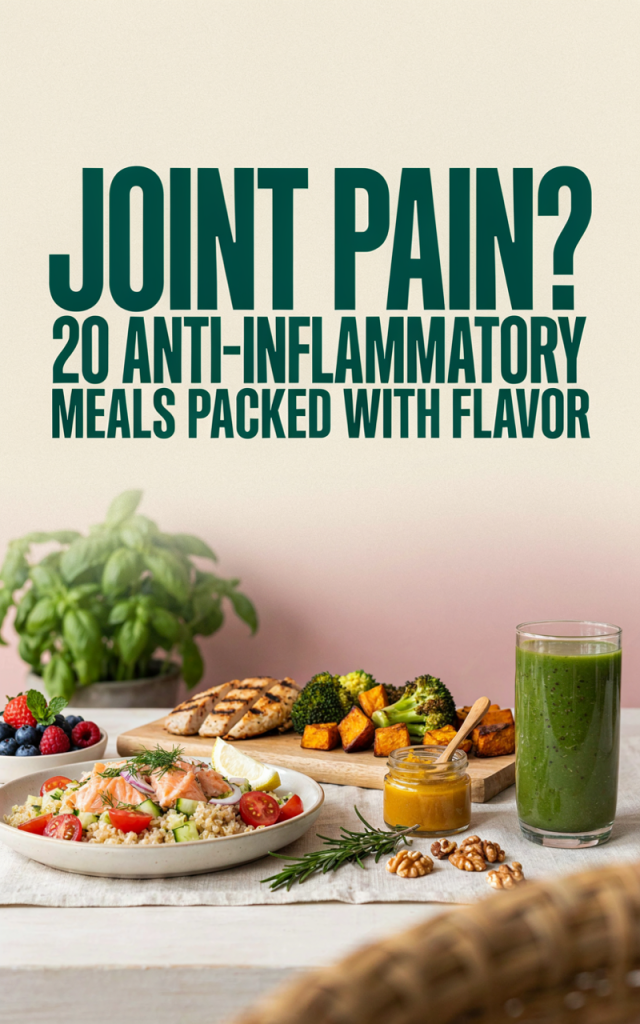
What Should I Eat for Joint Pain? 20 Anti-Inflammatory Meals Packed with Flavor
Joint pain can limit the things you love — walking the dog, playing with grandchildren, or simply getting through your day comfortably. What you eat can make a meaningful difference. This guide explains which nutrients help reduce inflammation and provides 20 delicious, anti-inflammatory meals designed to support joint health without sacrificing flavor.
Below you’ll find an overview of why diet matters for joint pain, key anti-inflammatory ingredients to prioritize, and 20 ready-to-make meals (with ingredients and step-by-step instructions) that are rich in nutrients shown to help reduce inflammation.
Why diet matters for joint pain
Chronic inflammation contributes to joint stiffness, swelling, and pain. While medications and physical therapy play central roles in managing joint conditions like osteoarthritis and inflammatory arthritis, diet is a powerful adjunct. Foods high in omega-3 fatty acids, polyphenols, antioxidants, fiber, and certain spices (like turmeric and ginger) have been shown to reduce inflammatory markers and may ease joint symptoms over time.
At the same time, reducing processed foods, added sugars, refined carbs, and excessive saturated fats can help minimize inflammatory triggers.
Key anti-inflammatory ingredients to keep on hand
- Fatty fish (salmon, mackerel, sardines)
- Olive oil (extra virgin)
- Leafy greens (kale, spinach, arugula)
- Berries (blueberries, strawberries)
- Turmeric and ginger
- Nuts and seeds (walnuts, flaxseed, chia)
- Legumes (lentils, chickpeas, beans)
- Whole grains (quinoa, farro, brown rice)
- Garlic and onions
- Green tea and dark chocolate (70%+)
Now, let’s get to the main attraction: 20 flavorful meals tailored to support joint health.
20 Anti-Inflammatory Meals
1. Turmeric-Ginger Baked Salmon with Quinoa & Broccoli
Why it helps: Salmon provides anti-inflammatory omega-3s; turmeric and ginger add potent anti-inflammatory compounds.
Ingredients
– 2 salmon fillets (4–6 oz each)
– 1 tsp ground turmeric
– 1 tsp freshly grated ginger
– 1 tbsp olive oil
– Salt and pepper to taste
– 1 cup quinoa, rinsed
– 2 cups broccoli florets
– 1 lemon, sliced
Instructions
1. Preheat oven to 400°F (200°C). Line a baking sheet with parchment.
2. Mix turmeric, ginger, olive oil, salt, and pepper; brush over salmon.
3. Place salmon and lemon slices on the sheet. Bake 12–15 minutes until flaky.
4. Meanwhile cook quinoa per package (about 15 minutes) and steam or roast broccoli.
5. Serve salmon over quinoa with broccoli on the side; squeeze fresh lemon.
2. Avocado-Sardine Whole-Grain Toast with Lemon & Chili
Why it helps: Sardines are an inexpensive source of omega-3s and vitamin D; avocado supplies healthy fats and fiber.
Ingredients
– 1 can sardines in olive oil, drained
– 1 ripe avocado
– 2 slices whole-grain bread, toasted
– 1 tbsp lemon juice
– Pinch red pepper flakes
– Salt and pepper to taste
Instructions
1. Mash avocado with lemon juice, salt, and pepper.
2. Spread avocado on toasted bread.
3. Top each slice with sardines and sprinkle red pepper flakes.
4. Serve immediately with a side salad if desired.
3. Turmeric Lentil & Sweet Potato Soup
Why it helps: Lentils provide fiber and plant protein; sweet potatoes add beta-carotene and potassium; turmeric reduces inflammation.
Ingredients
– 1 cup red lentils, rinsed
– 1 medium sweet potato, peeled and diced
– 1 onion, chopped
– 2 cloves garlic, minced
– 1 tbsp grated fresh turmeric (or 1 tsp ground)
– 1 tsp ground cumin
– 4 cups vegetable broth
– 1 tbsp olive oil
– Salt and pepper to taste
– Fresh cilantro (optional)
Instructions
1. Heat olive oil in a pot; sauté onion and garlic until translucent.
2. Add turmeric, cumin, and sweet potato; cook 2 minutes.
3. Stir in lentils and broth; bring to a boil, then simmer 20–25 minutes until lentils and sweet potato are tender.
4. Season with salt and pepper; garnish with cilantro and serve.
4. Mediterranean Chickpea Salad with Olives and Feta
Why it helps: Chickpeas offer fiber and magnesium; olive oil and olives supply monounsaturated fats and polyphenols.
Ingredients
– 1 can chickpeas, drained and rinsed
– 1 cup cherry tomatoes, halved
– 1 cucumber, diced
– 1/4 cup Kalamata olives, pitted and sliced
– 1/4 cup crumbled feta (optional)
– 2 tbsp extra-virgin olive oil
– 1 tbsp red wine vinegar
– 1 clove garlic, minced
– Salt and pepper to taste
– Fresh parsley
Instructions
1. Combine chickpeas, tomatoes, cucumber, olives, and feta in a bowl.
2. Whisk olive oil, vinegar, garlic, salt, and pepper; pour over salad.
3. Toss with parsley and chill 10–15 minutes before serving.
5. Kale & Wild Rice Salad with Walnuts and Cranberries
Why it helps: Kale and walnuts are rich in omega-3 precursors and antioxidants; wild rice is a whole-grain anti-inflammatory carb.
Ingredients
– 4 cups chopped kale, stems removed
– 1 cup cooked wild rice
– 1/3 cup toasted walnuts, chopped
– 1/4 cup dried cranberries (unsweetened if possible)
– 2 tbsp olive oil
– 1 tbsp apple cider vinegar
– 1 tsp Dijon mustard
– Salt and pepper to taste
Instructions
1. Massage kale with a pinch of salt until slightly wilted.
2. In a bowl, whisk olive oil, vinegar, mustard, salt, and pepper.
3. Toss kale, wild rice, walnuts, and cranberries with dressing.
4. Serve at room temperature or chilled.
6. Grilled Mackerel with Roasted Vegetables & Farro
Why it helps: Mackerel is another oily fish rich in EPA/DHA; farro provides fiber and minerals.
Ingredients
– 2 mackerel fillets
– 1 cup farro, cooked
– 2 cups mixed vegetables (carrots, zucchini, bell pepper), chopped
– 2 tbsp olive oil
– 1 lemon, halved
– Salt and pepper to taste
Instructions
1. Preheat oven to 425°F (220°C). Toss vegetables with 1 tbsp olive oil, salt, and pepper; roast 20–25 minutes.
2. Season mackerel with salt, pepper, and remaining olive oil.
3. Grill or pan-sear mackerel 3–4 minutes per side until cooked.
4. Serve mackerel over cooked farro with roasted vegetables and lemon.
7. Spicy Tofu Stir-Fry with Broccoli, Bell Peppers, and Ginger
Why it helps: Tofu offers plant protein and is low in saturated fat; ginger reduces inflammation and eases discomfort.
Ingredients
– 14 oz firm tofu, pressed and cubed
– 2 cups broccoli florets
– 1 red bell pepper, sliced
– 1 tbsp grated fresh ginger
– 2 tbsp low-sodium soy sauce or tamari
– 1 tbsp sesame oil
– 1 tsp chili paste (optional)
– 1 tbsp sesame seeds (optional)
Instructions
1. Heat sesame oil in a skillet; add tofu and brown on all sides. Remove and set aside.
2. In the same pan, sauté ginger, broccoli, and bell pepper until crisp-tender.
3. Return tofu to pan; add soy sauce and chili paste, toss to coat and heat through.
4. Sprinkle sesame seeds and serve with brown rice or quinoa.
8. Blueberry-Oat Anti-Inflammatory Smoothie
Why it helps: Blueberries are high in anthocyanins that reduce inflammation; oats and flax add fiber and omega-3 ALA.
Ingredients
– 1 cup unsweetened almond milk (or preferred milk)
– 1/2 cup frozen blueberries
– 1/2 banana
– 1/4 cup rolled oats
– 1 tbsp ground flaxseed
– 1/2 tsp cinnamon
– 1 tsp honey or maple syrup (optional)
Instructions
1. Combine all ingredients in a blender.
2. Blend until smooth and creamy.
3. Pour into a glass and enjoy immediately.
9. Chia Seed Pudding with Berries and Flax
Why it helps: Chia and flax are rich in ALA; berries add antioxidants and vitamin C.
Ingredients
– 3 tbsp chia seeds
– 1 cup unsweetened almond milk
– 1 tsp vanilla extract
– 1 tsp maple syrup or honey (optional)
– 1/2 cup mixed berries
– 1 tbsp ground flaxseed
Instructions
1. Whisk chia seeds, almond milk, vanilla, and sweetener in a jar.
2. Refrigerate at least 2 hours or overnight, stirring after 30 minutes to prevent clumps.
3. Top with berries and ground flaxseed before serving.
10. Roasted Turmeric Cauliflower & Chickpeas with Brown Rice
Why it helps: Cauliflower and chickpeas are fiber-rich and turmeric adds curcumin, which dampens inflammation.
Ingredients
– 1 head cauliflower, cut into florets
– 1 can chickpeas, drained and rinsed
– 1 tbsp ground turmeric
– 2 tbsp olive oil
– 1 cup cooked brown rice
– Salt and pepper to taste
– Fresh lemon juice (optional)
Instructions
1. Preheat oven to 425°F (220°C). Toss cauliflower and chickpeas with turmeric, olive oil, salt, and pepper.
2. Spread on a sheet and roast 25–30 minutes until golden.
3. Serve over cooked brown rice with a squeeze of lemon.
11. Salmon & Spinach Whole-Wheat Wrap with Yogurt-Dill Sauce
Why it helps: Combines omega-3-rich salmon and iron/antioxidant-rich spinach; yogurt provides probiotics for gut health, linked to inflammation control.
Ingredients
– 1 cooked salmon fillet, flaked
– 2 cups baby spinach
– 1 whole-wheat wrap
– 1/4 cup Greek yogurt
– 1 tbsp chopped fresh dill
– 1 tsp lemon juice
– Salt and pepper to taste
Instructions
1. Mix Greek yogurt, dill, lemon juice, salt, and pepper for the sauce.
2. Lay wrap flat; layer spinach and flaked salmon.
3. Drizzle yogurt-dill sauce, roll up, and slice in half.
12. Garlic-Ginger Shrimp with Zucchini Noodles
Why it helps: Shrimp provides lean protein; zucchini noodles reduce refined-carb load and garlic/ginger have anti-inflammatory properties.
Ingredients
– 8 oz shrimp, peeled and deveined
– 2 medium zucchinis, spiralized
– 2 cloves garlic, minced
– 1 tbsp grated ginger
– 1 tbsp olive oil
– 1 tbsp soy sauce or tamari
– Lemon wedges to serve
Instructions
1. Heat oil in a pan; sauté garlic and ginger until fragrant.
2. Add shrimp, cook 2–3 minutes per side until pink; add soy sauce.
3. Remove shrimp and set aside. Toss zucchini noodles in pan 1–2 minutes until just warm.
4. Return shrimp to pan, combine and serve with lemon.
13. Chicken and Vegetable Stew with Turmeric & Rosemary
Why it helps: Lean chicken plus antioxidant vegetables and turmeric create a comforting anti-inflammatory bowl.
Ingredients
– 1 lb boneless chicken breast, cubed
– 2 carrots, sliced
– 2 celery stalks, sliced
– 1 onion, chopped
– 1 tsp ground turmeric
– 1 tsp fresh rosemary, chopped (or 1/2 tsp dried)
– 4 cups low-sodium chicken broth
– 1 tbsp olive oil
– Salt and pepper to taste
Instructions
1. Heat oil in a pot; brown chicken pieces and set aside.
2. Sauté onion, carrots, and celery until softened.
3. Add turmeric, rosemary, chicken, and broth. Bring to a simmer for 20–25 minutes.
4. Season to taste and serve warm.
14. Beet, Walnut & Goat Cheese Salad with Arugula
Why it helps: Beets have betalains (anti-inflammatory), walnuts supply omega-3 ALA, and arugula provides leafy green nutrients.
Ingredients
– 3 medium beets, roasted and sliced
– 4 cups arugula
– 1/3 cup toasted walnuts, chopped
– 2 tbsp crumbled goat cheese (optional)
– 2 tbsp olive oil
– 1 tbsp balsamic vinegar
– Salt and pepper to taste
Instructions
1. Toss arugula with olive oil and balsamic vinegar.
2. Arrange beets on top, sprinkle walnuts and goat cheese.
3. Season and serve immediately.
15. Miso Soup with Tofu, Seaweed, and Mushrooms
Why it helps: Fermented miso supports gut health (which can affect inflammation); mushrooms and seaweed offer unique anti-inflammatory compounds.
Ingredients
– 4 cups water
– 2 tbsp miso paste
– 4 oz soft tofu, cubed
– 1/4 cup dried wakame seaweed, rehydrated
– 1 cup sliced mushrooms (shiitake or cremini)
– 1 green onion, sliced
Instructions
1. Bring water and mushrooms to a simmer; cook 5 minutes.
2. Reduce heat. Dissolve miso paste in a small amount of hot broth, then stir into pot (do not boil miso).
3. Add tofu and wakame; heat gently 2–3 minutes.
4. Garnish with green onion and serve.
16. Lentil & Spinach Curry (Dal) with Tomatoes and Turmeric
Why it helps: Dal is rich in fiber, protein, and anti-inflammatory spices like turmeric and cumin.
Ingredients
– 1 cup brown or green lentils, rinsed
– 4 cups water or broth
– 1 onion, chopped
– 2 cloves garlic, minced
– 1 tbsp grated ginger
– 1 tsp turmeric
– 1 cup chopped tomatoes (canned or fresh)
– 2 cups fresh spinach
– 1 tbsp olive oil
– Salt and pepper to taste
Instructions
1. Sauté onion, garlic, and ginger in oil until soft.
2. Add turmeric, lentils, tomatoes, and water/broth; simmer 25–30 minutes until lentils are tender.
3. Stir in spinach until wilted. Season and serve with brown rice or naan.
17. Quinoa, Black Bean & Sweet Potato Bowl with Avocado
Why it helps: Combo of whole grains, legumes, and healthy fats creates a balanced, anti-inflammatory plate.
Ingredients
– 1 cup cooked quinoa
– 1 cup black beans, drained and rinsed
– 1 small sweet potato, roasted and cubed
– 1 avocado, sliced
– 1 tbsp olive oil
– 1/2 tsp cumin
– Lime wedges and cilantro to serve
Instructions
1. Toss sweet potato with olive oil, cumin, salt, and roast at 400°F (200°C) for 20–25 minutes.
2. Assemble quinoa, black beans, roasted sweet potato, and avocado in a bowl.
3. Squeeze lime and sprinkle cilantro before serving.
18. Grilled Eggplant, Tomato & Basil Sandwich on Whole-Grain
Why it helps: Eggplant and tomatoes provide antioxidants like nasunin and lycopene; whole-grain bread reduces inflammation compared to refined bread.
Ingredients
– 1 small eggplant, sliced into rounds
– 1 tomato, sliced
– Fresh basil leaves
– 2 slices whole-grain bread
– 1 tbsp olive oil
– 1 clove garlic, halved (for rubbing)
– Salt and pepper to taste
Instructions
1. Brush eggplant with olive oil, salt, and pepper; grill or roast until tender.
2. Rub toasted bread with garlic halves.
3. Layer grilled eggplant, tomato slices, and basil on bread and serve as an open sandwich or closed.
19. Sardine & White Bean Salad with Lemon and Parsley
Why it helps: White beans and sardines together provide fiber and omega-3s; lemon, garlic, and parsley add flavor and antioxidants.
Ingredients
– 1 can sardines in olive oil, drained
– 1 can cannellini beans, drained and rinsed
– 2 tbsp chopped parsley
– 1 tbsp lemon juice
– 1 tbsp olive oil
– Salt and pepper to taste
Instructions
1. Combine beans, parsley, lemon juice, and olive oil in a bowl.
2. Top with sardines and season to taste.
3. Serve on its own or over mixed greens.
20. Dark Chocolate–Walnut Energy Bites
Why it helps: Dark chocolate (70%+) contains flavonoids; walnuts provide omega-3 ALA; these bites are a healthy sweet treat that avoids refined sugar highs.
Ingredients
– 1 cup rolled oats
– 1/2 cup pitted dates
– 1/3 cup walnuts
– 2 tbsp unsweetened cocoa powder (or dark chocolate chips)
– 1 tbsp ground flaxseed
– 1–2 tbsp water (if needed)
Instructions
1. Pulse oats, dates, walnuts, cocoa, and flaxseed in a food processor until combined; add water a little at a time if mixture is dry.
2. Roll into 10–12 bite-sized balls and refrigerate to set.
3. Store in refrigerator and enjoy as a snack.
How to use these meals in a daily plan
Aim to include:
– At least two servings of fatty fish or plant-based omega-3s per week.
– Daily servings of leafy greens and berries.
– Whole grains and legumes regularly for fiber.
– Use cooking oils like extra-virgin olive oil and include nuts/seeds for healthy fats.
– Add turmeric and ginger to soups, stews, and marinades whenever possible.
Swap out ingredients to match your preferences and allergies (e.g., use tempeh instead of fish for vegetarian options) and keep meals colorful — a simple hack for ensuring a variety of antioxidants.
Practical tips for sustaining an anti-inflammatory eating pattern
- Plan meals: Batch-cook lentils, quinoa, and roasted vegetables to assemble quick bowls.
- Spice intentionally: Add turmeric and black pepper together (piperine increases curcumin absorption).
- Reduce processed foods: Limit sugary drinks, pastries, and fried fast foods that promote inflammation.
- Hydrate with intention: Green tea and water support overall health; avoid excess alcohol.
- Listen to your body: If a food seems to worsen symptoms, try eliminating it for a few weeks and reintroducing.
Conclusion
Eating with joint health in mind doesn’t mean giving up flavor — it means choosing ingredients that soothe inflammation and nourish your body. The 20 meals above provide a range of breakfasts, lunches, dinners, soups, and snacks that emphasize omega-3s, fiber, antioxidants, and anti-inflammatory spices. Use them as a foundation for a sustainable, tasty eating pattern that complements your medical care and physical therapy.
Start by incorporating one or two of these meals each week, build variety, and notice how your energy and joint comfort evolve. Small, consistent dietary changes can have a meaningful impact — and delicious meals make it easier to stick with them. If you have a specific medical condition or are taking medications, consult your healthcare provider or a registered dietitian for personalized advice.