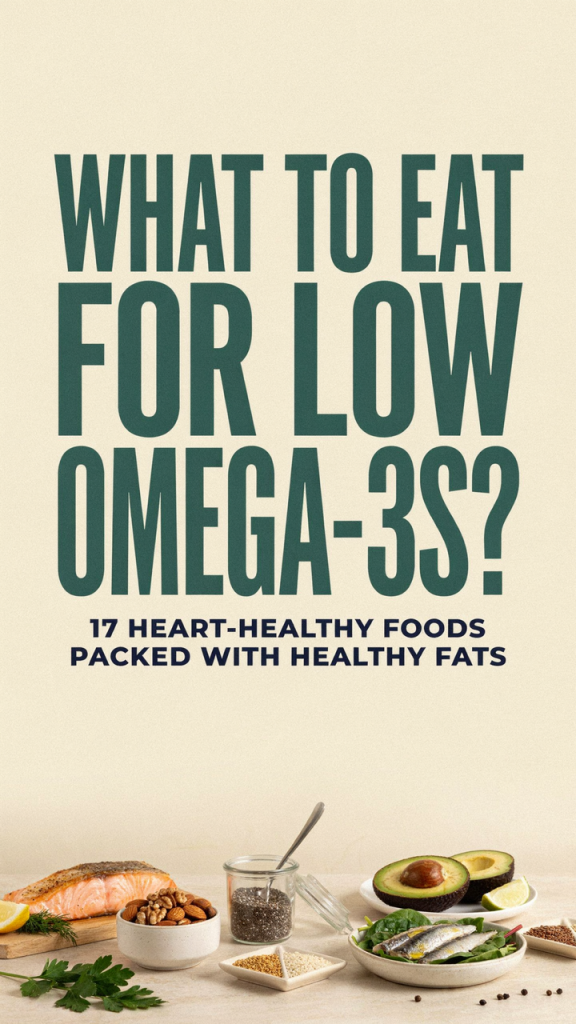
What Should I Eat for Low Omega-3s? 17 Heart-Healthy Foods Packed with Healthy Fats
If your diet is low in omega-3s, your body is missing out on fats that play a central role in heart health, brain function, inflammation control, and overall cellular communication. The good news: you can repair that imbalance with regular meals that focus on natural, nutrient-dense sources of healthy fats — both marine (EPA/DHA) and plant-based (ALA). This guide breaks down 17 heart-healthy foods to prioritize, practical serving tips, and simple recipes so you can start adding omega-3s back into your life today.
Why omega-3s matter for heart and overall health
Omega-3 fatty acids — primarily EPA, DHA (from marine sources) and ALA (from plants) — contribute to:
– Lowering triglycerides and supporting healthy blood lipid profiles.
– Reducing inflammation, which lowers cardiovascular risk.
– Improving blood vessel function and decreasing blood-clot risk.
– Supporting cognitive health and mood regulation.
Most Western diets are high in omega-6 fats and low in omega-3s. That imbalance can promote inflammation over time. Rebalancing includes choosing omega-3-rich foods and making small, sustainable swaps in daily cooking.
Signs you might be low in omega-3s
Common hints (not a diagnosis) include:
– Dry, flaky skin or brittle nails
– Persistent joint stiffness or generalized inflammation
– Mood swings, low mood, or trouble concentrating
– High triglyceride levels on a lipid panel
If you suspect a deficiency or have a medical condition, check with your healthcare provider. Some clinicians can measure the Omega-3 Index via blood testing.
How to increase your omega-3 intake (practical rules)
- Aim for at least two servings of fatty fish per week (about 250–500 mg/day of EPA+DHA average targets).
- Use plant sources daily (ground flax, chia, walnuts) to boost ALA.
- Consider algae-based EPA/DHA supplements if you’re vegan or don’t eat fish.
- Limit processed seed oils high in omega-6 (e.g., corn, sunflower) and favor oils higher in ALA or monounsaturated fats.
- Focus on whole foods: canned fish, seeds, nuts, and legumes are inexpensive and shelf-stable.
17 Heart-Healthy Foods Packed with Healthy Fats
Below are 17 foods to prioritize when you’re low in omega-3s. Each entry highlights the type of omega-3, why it’s heart-healthy, and quick serving ideas.
- Wild-caught salmon
- Type: EPA & DHA
- Why: One of the richest natural sources of long-chain omega-3s; also provides vitamin D and high-quality protein.
- Serving idea: Roast or grill a 3–4 oz fillet, add lemon and herbs.
- Atlantic mackerel
- Type: EPA & DHA
- Why: Exceptionally high in omega-3s per serving and very affordable in many markets.
- Serving idea: Pan-sear with garlic and parsley for a fast weeknight meal.
- Sardines (canned in water or olive oil)
- Type: EPA & DHA
- Why: Convenient, low-cost, high in omega-3s and calcium if you eat the bones.
- Serving idea: Mash with avocado for toast or mix into salads.
- Herring (including pickled or smoked)
- Type: EPA & DHA
- Why: Rich in long-chain omega-3s and often available pickled or smoked for variety.
- Serving idea: Serve with rye bread, pickles, and dill for a Nordic-inspired snack.
- Rainbow trout
- Type: EPA & DHA
- Why: Mild-flavored, nutrient-dense fish that’s high in omega-3s and easy to prepare.
- Serving idea: Bake with lemon slices and thyme.
- Anchovies
- Type: EPA & DHA
- Why: Small but mighty — anchovies are concentrated in omega-3s and umami flavor.
- Serving idea: Toss into pasta, Caesar dressing, or roasted vegetables.
- Light (skipjack) tuna — choose low-mercury options
- Type: EPA & DHA
- Why: A practical staple; choose smaller species or canned light tuna to limit mercury exposure.
- Serving idea: Make a niçoise-style salad or tuna-stuffed peppers.
- Oysters
- Type: EPA & DHA (and trace ALA)
- Why: Shellfish that supply omega-3s, zinc, and other minerals supportive of heart health.
- Serving idea: Grill, steam, or enjoy raw (if safe and preferred).
- Mussels
- Type: EPA & DHA
- Why: Sustainable and omega-3-rich, mussels are an economical seafood choice.
- Serving idea: Steamed with white wine, garlic, and parsley; serve with whole-grain bread.
- Algae oil (food or supplement)
- Type: EPA & DHA (direct, vegan source)
- Why: Produces preformed EPA/DHA — ideal for vegans or people avoiding fish; available as cooking oil or capsules.
- Serving idea: Use algae oil dressings or take as a supplement per label.
- Flaxseeds (ground) and flaxseed oil
- Type: ALA
- Why: One of the highest plant sources of omega-3 ALA. Ground flax is more bioavailable than whole seeds.
- Serving idea: Add 1–2 tablespoons of ground flax to smoothies, yogurt, or oatmeal.
- Chia seeds
- Type: ALA
- Why: Versatile, rich in fiber and ALA; they gel and add texture to puddings and baked goods.
- Serving idea: Make chia pudding or sprinkle on salads and cereals.
- Walnuts
- Type: ALA
- Why: Snackable, heart-healthy nuts that support LDL reduction and inflammation control.
- Serving idea: Snack handfuls, chop into oatmeal, or add to salads.
- Hemp seeds
- Type: ALA (with a favorable omega-6:omega-3 ratio)
- Why: Good source of plant protein and essential fatty acids with high digestibility.
- Serving idea: Sprinkle over smoothie bowls, stir into yogurt, or blend into dressings.
- Soy foods (edamame, tofu, tempeh)
- Type: ALA
- Why: Plant-based protein sources that supply ALA along with fiber and isoflavones.
- Serving idea: Lightly sauté edamame, or grill marinated tofu for a protein-packed meal.
- Omega-3 enriched eggs
- Type: ALA, plus some DHA (depending on the hen’s feed)
- Why: Hens fed flax or algae produce eggs with higher omega-3 content — an easy way to add DHA to breakfasts.
- Serving idea: Make an omelet with spinach and tomatoes.
- Canola oil (cold-pressed or high-oleic varieties)
- Type: ALA (and high monounsaturated fat)
- Why: Readily available, neutral-flavored, and better omega-6:omega-3 balance compared with many seed oils. Use for cooking and dressings.
- Serving idea: Use in vinaigrettes, for pan-frying, or roast vegetables with canola oil.
How to use the list: practical serving frequency
- Seafood: Aim for 2–3 servings of fatty fish or shellfish per week (salmon, mackerel, sardines, trout, herring, anchovies, mussels, oysters).
- Plant sources: Add small servings daily — 1–2 tablespoons flax or chia, a handful of walnuts, or 1–2 tablespoons hemp seeds.
- Oils & eggs: Use omega-3 eggs for breakfasts several times a week; use canola or algae oil for cooking and dressings.
Small consistent choices yield the best long-term improvements in blood lipid profiles and inflammation markers.
When to consider supplements
Supplements can help if you don’t eat fish or have proven low levels. Options:
– Fish oil capsules (check EPA/DHA per serving and choose molecularly distilled products if concern for contaminants).
– Algae-based EPA/DHA supplements (vegan-friendly and direct sources of DHA/EPA).
– Flaxseed oil or ground flaxseed for ALA, though conversion to EPA/DHA in the body is limited.
Always discuss supplements with your healthcare provider, especially if you take blood thinners or are pregnant.
Simple recipes & meal ideas (explicitly listed)
Below are three easy recipes that incorporate multiple omega-3-rich ingredients. Each recipe includes ingredients (bulleted) and step-by-step instructions (numbered).
Recipe 1: Omega-3 Breakfast Bowl (Chia + Ground Flax + Walnuts)
Ingredients:
– 3 tablespoons chia seeds
– 1 tablespoon ground flaxseed
– 1 cup unsweetened almond milk or milk of choice
– 1 small banana, sliced
– 2 tablespoons chopped walnuts
– 1 teaspoon honey or maple syrup (optional)
– 1/4 teaspoon cinnamon (optional)
Instructions:
1. In a bowl or jar, whisk chia seeds, ground flaxseed, and almond milk until combined.
2. Let sit for 10 minutes, then stir to break up any clumps; refrigerate 30 minutes or overnight for best texture.
3. Before serving, top with sliced banana, chopped walnuts, a drizzle of honey or maple syrup, and a sprinkle of cinnamon.
4. Eat within 24–48 hours; stir before serving if the mixture thickens.
Why it helps: This bowl provides ALA from chia, flax, and walnuts plus fiber and protein to keep you satisfied through the morning.
Recipe 2: Sardine & Avocado Toast (Quick Heart-Healthy Lunch)
Ingredients:
– 1 can sardines (in water or olive oil), drained
– 1 ripe avocado
– 2 slices whole-grain or sourdough bread, toasted
– 1 tablespoon lemon juice
– Pinch of salt and black pepper
– Optional: red pepper flakes, chopped parsley, or sliced cherry tomatoes
Instructions:
1. Mash the avocado in a small bowl with lemon juice, salt, and pepper.
2. Spread mashed avocado evenly over toasted bread slices.
3. Top each slice with sardines (whole or flaked), add cherry tomatoes or parsley if using, and sprinkle red pepper flakes for heat.
4. Serve immediately with a side salad for a balanced lunch.
Why it helps: Sardines are an abundant source of EPA/DHA; avocado adds monounsaturated fat and fiber for heart support.
Recipe 3: Salmon & Quinoa Bowl with Hemp Seeds
Ingredients:
– 4 oz salmon fillet (wild if available)
– 1/2 cup cooked quinoa
– 1 cup mixed greens (spinach, arugula)
– 1/4 cup roasted or steamed broccoli
– 1 tablespoon hemp seeds
– 1 tablespoon olive oil or canola oil
– 1 tablespoon lemon juice
– Salt and pepper to taste
Instructions:
1. Preheat oven to 400°F (200°C). Season salmon with salt and pepper and drizzle with 1 teaspoon oil. Bake 10–12 minutes or until cooked through.
2. While salmon cooks, assemble the bowl: place cooked quinoa and mixed greens in a bowl, top with broccoli.
3. Flake cooked salmon into large pieces and add to the bowl.
4. Drizzle remaining oil and lemon juice over the bowl, sprinkle hemp seeds, and toss gently before serving.
Why it helps: This bowl combines EPA/DHA from salmon with ALA from hemp seeds and fiber-rich quinoa for a heart-supportive meal.
Tips to make these foods work in your daily life
- Keep canned fatty fish (sardines, tuna, mackerel) in your pantry for quick meals.
- Grind flaxseed in a coffee grinder and store it in the fridge for a fresher nutrient profile.
- Add a handful of walnuts or hemp seeds to your lunch salad to boost healthy fats.
- Rotate seafood choices to reduce contaminant exposure — small fish (sardines, anchovies, mussels) are often more sustainable and lower in mercury.
- Use algae oil or omega-3 enriched eggs in recipes if you’re vegetarian or reducing fish intake.
Safety and sustainability considerations
- Mercury: Limit high-mercury fish (shark, swordfish, king mackerel) and favor smaller species or varieties known to be low in mercury (sardines, wild salmon, trout, light canned tuna).
- Sustainability: Choose sustainably sourced fish (look for MSC, ASC, or local advisories). Mussels and farmed trout are often low-impact options.
- Allergies: Shellfish are common allergens — substitute plant sources (flax, chia, walnuts, algae oil) if needed.
Final thoughts — build a small, sustainable plan
If your diet is low in omega-3s, you don’t need to overhaul everything overnight. Start with two practical swaps:
1. Add one fatty fish meal per week (salmon, sardines, mackerel) and gradually increase to two.
2. Add a tablespoon or two of ground flax or chia to breakfast daily and snack on walnuts.
These small, sustainable changes will improve your omega-3 intake, support heart health, and lower inflammation over time. If you’re considering supplements or have chronic health issues, talk with a healthcare professional for personalized recommendations. Eat mindfully, choose whole foods often, and remember that consistent small steps lead to big health gains.
Conclusion
Low omega-3 intake is common, but easy to correct with smart food choices. The 17 heart-healthy foods listed here — from fatty fish and shellfish to seeds, nuts, and oils — give you a range of options whether you eat fish, follow a plant-based diet, or need quick pantry-friendly choices. Combine these foods with balanced meals, rotate your choices for safety and sustainability, and use the simple recipes above to make omega-3-rich meals a regular, delicious habit. Your heart, brain, and whole body will thank you.