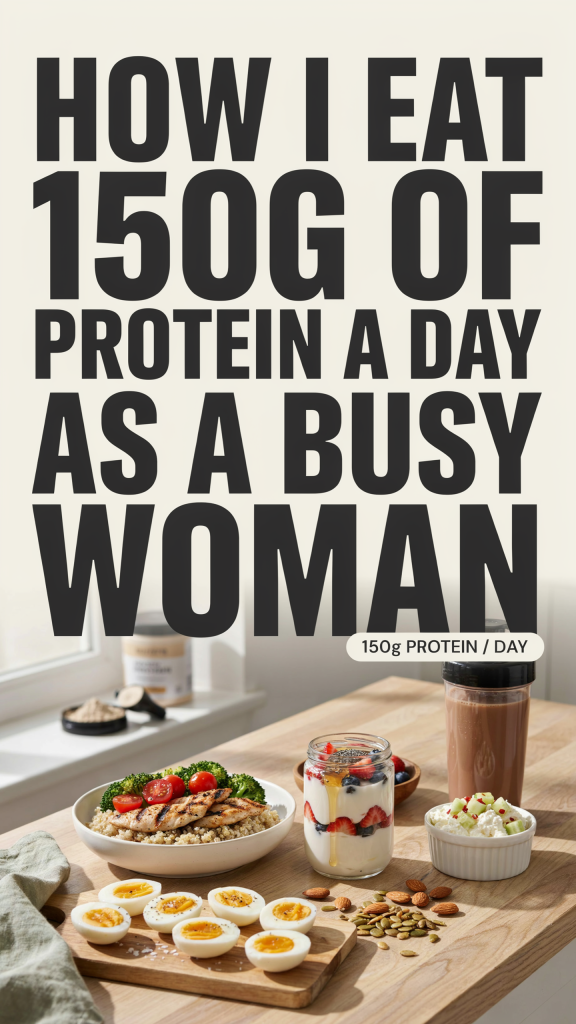
How I Eat 150g of Protein a Day as a Busy Woman
Eating 150 grams of protein a day might sound intimidating—especially when your life is full of meetings, kids, workouts, and late-night to-do lists. But with a few smart strategies, simple recipes, and realistic habits, hitting a high-protein target becomes doable, sustainable, and even enjoyable. In this post I’ll walk you through why I aim for 150g, how I structure my day, practical meal and snack ideas (all with ingredients and step-by-step instructions), and time-saving tips to keep protein easy when life gets busy.
Whether you’re building muscle, maintaining lean mass while dieting, recovering from workouts, or simply aiming for better appetite control, this guide gives you the exact tools and meals I use to reliably get 150g of protein per day.
Why 150g of protein? (And is it right for you?)
Protein needs vary based on weight, activity, and goals. For many women who are active, strength training, or trying to preserve muscle mass while losing fat, 150 g/day is a practical target that supports recovery, satiety, and metabolism.
H3: Benefits of a higher protein intake
– Preserves lean muscle during calorie deficits.
– Increases satiety and helps control cravings.
– Supports workout recovery and strength gains.
– Improves thermogenesis (slightly increases calories burned during digestion).
H3: Quick rule of thumb
– If you weigh around 70–85 kg (155–187 lb) and are active or strength training, 150 g protein roughly equals 1.8–2.2 g/kg—reasonable for muscle-building or maintenance phases.
– Adjust based on personal goals, appetite, and dietary preferences.
How I fit 150g into a busy schedule: principles that work
- Prioritize protein at every meal: Aim for 25–40 g per main meal and 10–25 g per snack.
- Use protein-dense staples: Greek yogurt, eggs, chicken, tuna, protein powder, cottage cheese, lean beef, tofu, tempeh.
- Combine whole-food proteins with quick protein powders when needed.
- Batch cook once or twice per week: grilled chicken, turkey meatballs, hard-boiled eggs, and cooked lentils store well.
- Carry portable snacks: single-serve cottage cheese, beef jerky, roasted edamame, or a protein bar you trust.
- Use “double-up” strategies: add Greek yogurt to smoothies, top salads with hemp seeds, use cottage cheese in savory bowls.
Daily protein math — how it adds up
Example target breakdown to reach ~150g:
– Breakfast: 35g
– Morning snack: 15g
– Lunch: 40g
– Afternoon snack: 15–20g
– Dinner: 35g
– Evening snack (optional): 5–10g
I use this framework and aim to include at least one 30–40g meal each day (usually breakfast or lunch) and several 15–20g snacks. Below are recipes and meal ideas that make hitting these numbers easy.
My Busy-Day Sample Meal Plan (each recipe includes ingredients and step-by-step instructions)
This sample day totals ~150g of protein. I include estimated protein per serving under each recipe for clarity.
Breakfast — High-Protein Overnight Oats with Whey (≈35 g protein)
Ingredients:
– 1/2 cup rolled oats
– 1 scoop (25 g) whey protein powder (vanilla)
– 3/4 cup unsweetened almond milk (or milk of choice)
– 1/2 cup plain Greek yogurt (about 12–15 g protein)
– 1 tbsp chia seeds
– 1/4 cup berries (optional)
– Pinch of cinnamon and a drizzle of honey (optional)
Instructions:
1. In a jar or bowl, combine oats, protein powder, chia seeds, and cinnamon.
2. Stir in almond milk and Greek yogurt until well mixed.
3. Add berries on top, cover, and refrigerate overnight (or at least 2–3 hours).
4. Stir before eating. Add more milk for desired consistency and top with a few nuts if desired.
Estimated protein: 33–38 g (depends on protein powder and exact yogurt)
Morning Snack — Cottage Cheese & Berry Jar (≈15 g protein)
Ingredients:
– 1 cup low-fat cottage cheese (about 14–16 g protein)
– 1/4 cup sliced strawberries or blueberries
– 1 tbsp chopped walnuts (optional)
– Pinch of cinnamon or a drizzle of honey (optional)
Instructions:
1. Spoon cottage cheese into a container.
2. Top with berries and walnuts.
3. Sprinkle cinnamon or drizzle honey if desired and enjoy immediately.
Estimated protein: 14–16 g
Lunch — Chicken, Quinoa & Veggie Power Bowl (≈40 g protein)
Ingredients:
– 5 oz (140 g) cooked chicken breast (approx. 35 g protein)
– 1/2 cup cooked quinoa (about 4 g protein)
– 1 cup mixed greens or spinach
– 1/4 cup chopped cucumber, bell pepper, and cherry tomatoes
– 1–2 tbsp hummus or tzatziki
– 1 tbsp olive oil and lemon juice for dressing
– Salt, pepper, and herbs to taste
Instructions:
1. Warm or chop cooked chicken breast into bite-sized pieces.
2. Combine quinoa and mixed greens in a bowl.
3. Add chicken and chopped veggies on top.
4. Dollop hummus or tzatziki, drizzle oil and lemon, season with salt, pepper, and herbs.
5. Toss and eat.
Estimated protein: 38–42 g
Afternoon Snack — Protein Smoothie (≈20 g protein)
Ingredients:
– 1 scoop (20–25 g) protein powder (plant or whey)
– 1 cup unsweetened almond milk
– 1/2 banana
– 1 tbsp peanut butter
– A handful of spinach (optional)
– Ice cubes as needed
Instructions:
1. Add all ingredients to a blender.
2. Blend on high until smooth and creamy.
3. Pour into a cup and enjoy immediately.
Estimated protein: 20–25 g
Dinner — Pan-Seared Salmon with Lentil Salad (≈35 g protein)
Ingredients:
– 5–6 oz (140–170 g) salmon fillet (approx. 30–34 g protein)
– 1/2 cup cooked green or brown lentils (about 9 g protein)
– 1 cup mixed greens
– 1/4 cup chopped red onion and parsley
– 1 tbsp olive oil, 1 tbsp balsamic vinegar or lemon juice
– Salt and pepper
Instructions:
1. Season salmon with salt and pepper. Heat a non-stick skillet and add a small amount of oil; cook salmon skin-side down for 4–5 minutes, then flip and cook 3–4 minutes until done.
2. Warm cooked lentils in the microwave or on the stove; season with salt and pepper.
3. Combine lentils, greens, onion, and parsley in a bowl. Dress with olive oil and vinegar.
4. Serve salmon on top of lentil salad.
Estimated protein: 35–43 g (depending on salmon portion and lentils)
Evening Snack (optional) — Greek Yogurt & Nuts (≈10 g protein)
Ingredients:
– 1/2 cup plain Greek yogurt (about 10–12 g protein)
– 1 tbsp chopped almonds or walnuts
– Cinnamon or cocoa powder for topping
Instructions:
1. Spoon Greek yogurt into a small bowl.
2. Top with nuts and sprinkle with cinnamon or cocoa.
3. Eat as a light, protein-rich snack.
Estimated protein: 10–12 g
Total estimated protein for the day: ~151–170 g (depends on portions and exact product protein contents)
Quick recipes and grab-and-go meal ideas (all explicitly listed)
Below are additional compact recipes and ideas I use when I’m rushed. Each is quick to assemble and protein-rich.
Egg and Turkey Breakfast Muffins (make-ahead; 6 muffins — ≈12 g per muffin)
Ingredients:
– 6 large eggs
– 6 oz lean ground turkey or cooked turkey sausage (approx. 20–25 g protein total)
– 1/2 cup chopped spinach
– 1/4 cup diced bell pepper
– Salt and pepper to taste
– Non-stick spray or olive oil for muffin tin
Instructions:
1. Preheat oven to 375°F (190°C). Spray a 6-cup muffin tin with non-stick spray.
2. Cook ground turkey in a skillet until browned and fully cooked. Set aside.
3. In a bowl, whisk eggs and season with salt and pepper.
4. Add cooked turkey, spinach, and bell pepper to the egg mixture.
5. Pour mixture into muffin cups and bake 18–22 minutes until set.
6. Store in the fridge and reheat as needed.
Protein per muffin: ~11–13 g (depending on turkey amount)
Tuna & Avocado Wrap (≈25–30 g protein)
Ingredients:
– 1 pouch or can (4–5 oz) tuna in water (approx. 20–25 g protein)
– 1 whole-grain wrap or large lettuce leaf
– 1/4 avocado, mashed
– 1 tbsp plain Greek yogurt or light mayo
– Salt, pepper, and lemon juice
Instructions:
1. Drain tuna and mix with mashed avocado and Greek yogurt.
2. Season with salt, pepper, and a squeeze of lemon.
3. Spoon mixture onto wrap or lettuce leaf, roll, and eat.
Estimated protein: 22–28 g
High-Protein Pancakes (single serving — ≈30 g protein)
Ingredients:
– 1/2 cup cottage cheese (14 g protein)
– 2 eggs (12–14 g protein)
– 1/2 cup rolled oats
– 1/2 tsp baking powder
– 1/2 tsp vanilla extract
– Cooking spray or oil
Instructions:
1. Blend cottage cheese, eggs, oats, baking powder, and vanilla until smooth.
2. Heat a non-stick skillet and coat lightly with oil.
3. Pour batter into skillet to form pancakes; cook 2–3 minutes per side until golden.
4. Serve with berries or a small drizzle of maple syrup.
Estimated protein: ~30 g
Beef Jerky & Edamame Snack Box (≈20 g protein)
Ingredients:
– 1 oz beef jerky (approx. 9–10 g protein)
– 1/2 cup shelled edamame (approx. 8–9 g protein)
– 6–8 whole-grain crackers (optional)
Instructions:
1. Pack jerky and edamame into a container.
2. Add crackers if desired.
3. Eat cold or reheat edamame briefly.
Estimated protein: ~18–20 g
Tempeh Stir-Fry (≈25–30 g protein)
Ingredients:
– 4 oz tempeh (approx. 21 g protein)
– 2 cups mixed vegetables (broccoli, bell pepper, snap peas)
– 1 tbsp soy sauce or tamari
– 1 tsp sesame oil and 1 tsp olive oil
– 1 clove garlic, minced
Instructions:
1. Cube tempeh and heat oil in a skillet. Sauté tempeh until golden.
2. Add garlic and vegetables; stir-fry until tender-crisp.
3. Add soy sauce and toss to coat. Serve hot.
Estimated protein: 22–28 g
Supplements and powders: when they help
- Protein powder: Whey, casein, or plant-based powders are convenient for smoothies, overnight oats, or quick shakes. One scoop typically adds 20–25 g protein.
- Collagen peptides: Good for joints and skin but low in muscle-building amino acids compared to complete proteins—use in addition to whole foods.
- Creatine: If training, creatine helps increase strength and muscle gains when paired with adequate protein.
Use powders as a gap-filler—not the only strategy. Whole foods also provide fiber, micronutrients, and satiety.
Time-saving meal prep tips for busy women
- Batch cook 2–3 protein staples: grilled chicken breasts, baked salmon, turkey meatballs, or hard-boiled eggs.
- Portion into single-serving containers for quick grab-and-go meals.
- Keep canned tuna, single-serve cottage cheese, and Greek yogurt stocked.
- Use versatile staples: quinoa, lentils, and beans can be cooked once and used in multiple meals.
- Freeze individual portions of soups, stews, and casseroles for reheating.
- Assemble snack packs (jerky, almonds, cheese sticks) at the start of the week.
Eating out and travel: staying on track
- Look for grilled chicken, salmon, steak, or tofu as protein bases.
- Order extra protein (double chicken, side of eggs, or add cottage cheese) when possible.
- Choose salads with beans, chickpeas, or quinoa for added protein.
- Pack a small protein powder sachet and shaker bottle—blend with water or milk in a pinch.
Troubleshooting: common obstacles and solutions
- “I don’t like protein powder.” Use Greek yogurt, cottage cheese, eggs, and legumes. Layer protein across the day.
- “I’m low on time.” Use ready-to-eat items like rotisserie chicken, canned tuna, or pre-cooked lentils.
- “I get full fast.” Distribute protein across 5–6 smaller meals/snacks instead of 3 huge meals.
- “I’m vegetarian/vegan.” Emphasize tofu, tempeh, seitan, legumes, whole grains, and concentrated plant protein powders. Consider combining protein sources for complete amino acid profiles.
Monitoring progress and adjusting
- Track protein intake for a week to ensure consistency.
- If energy or recovery is low, increase protein at dinner or post-workout.
- Adjust calorie totals depending on weight goals—protein needs remain relatively stable while calories fluctuate.
Conclusion
Hitting 150 grams of protein a day as a busy woman is completely achievable with planning, smart food choices, and a few easy recipes. My approach centers on packing every meal with meaningful protein, using batch-cooked staples, and keeping portable options on hand. The recipes and snack ideas in this post show that high-protein eating can be fast, flavorful, and flexible—even on your busiest days.
Start by choosing two favorite recipes from above to fit into your weekly routine, stock a few portable protein snacks, and commit to spreading protein across meals. With these habits, you’ll notice better recovery, steadier hunger, and more consistent energy—without sacrificing time or sanity. You’ve got this.
If you want, I can customize a 7-day meal plan based on your calorie needs, dietary preferences (vegetarian, vegan, dairy-free), and workout schedule—tell me your goals and I’ll build it.