
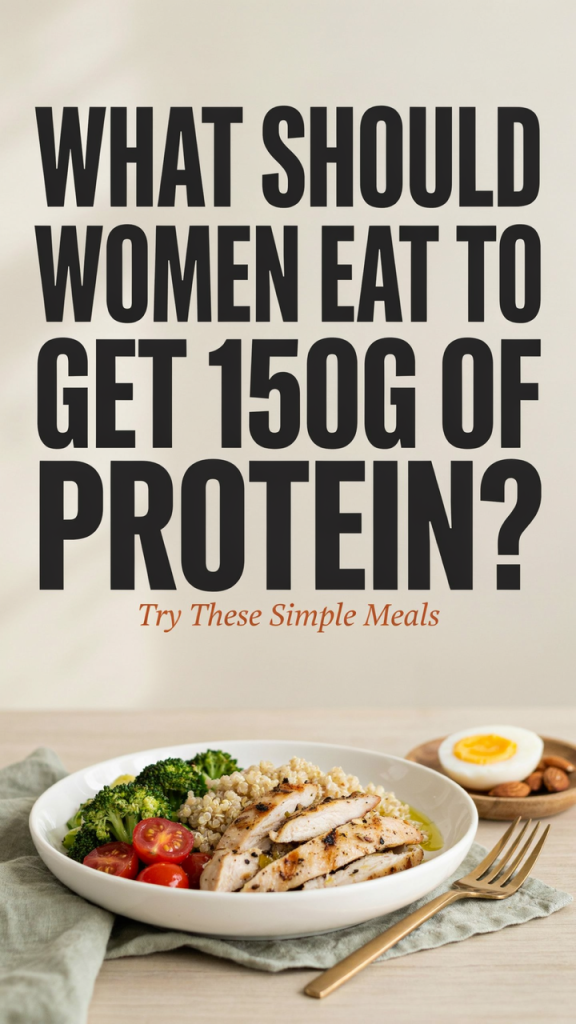
What Should Women Eat to Get 150g of Protein? Try These Simple Meals
Introduction
Hitting 150 grams of protein in a day is a common target for active women, strength athletes, or anyone aiming to build or preserve lean muscle while losing fat. It may sound like a lot, but with a plan and simple, tasty meals you can reach that number without feeling like you’re living on chicken breast and egg whites. This guide explains why 150 g might be appropriate for some women, how to spread that protein across a day, and gives 10 practical, easy recipes you can mix and match to hit or fine-tune to 150 g. Each meal includes ingredients and step-by-step instructions so you can start cooking right away.
Who should aim for 150 g of protein?
- Women who are strength training regularly (3+ sessions per week) and want to maximize muscle growth or retention.
- Women in a calorie deficit who want to preserve lean muscle mass while losing fat.
- Larger women or those with higher lean body mass may need higher absolute protein targets.
- Athletes or people following performance goals that require higher protein intake.
Note: 150 g is not necessary for every woman. A common guideline is 1.6–2.2 g/kg of body weight for muscle gain and preservation. If you’re unsure, talk to a registered dietitian or your healthcare provider.
Why protein distribution and timing matter
- Spreading protein across 3–6 meals helps stimulate muscle protein synthesis multiple times per day.
- Aim for roughly 25–40 g per meal as a practical target; larger doses yield diminishing returns at a single meal.
- Include a higher-protein snack or slow-digesting protein (casein) before bed to support overnight recovery.
How to structure a day to reach 150 g
- Breakfast: 30–45 g
- Mid-morning snack: 15–35 g
- Lunch: 30–45 g
- Afternoon snack: 15–35 g
- Dinner: 30–45 g
- Optional before-bed snack: 20–30 g
Below are 10 simple, flexible meals (breakfasts, lunches, dinners, and snacks) you can use to assemble days that total ~150 g of protein. Each recipe lists estimated protein per serving so you can track totals.
10 Simple High-Protein Meals (with recipes)
Greek Yogurt + Whey Protein Parfait — ~43 g protein
Ingredients
– 1 cup (245 g) plain nonfat Greek yogurt (≈23 g protein)
– 1 scoop (25 g) whey protein isolate (≈20 g protein)
– 1/3 cup fresh berries
– 2 tbsp chopped walnuts or granola (optional)
– 1 tsp honey or cinnamon (optional)
Instructions
1. Scoop Greek yogurt into a bowl.
2. Add whey protein powder and stir until smooth and well incorporated.
3. Top with berries and walnuts or granola for texture.
4. Add honey or cinnamon if you want extra sweetness.
5. Serve chilled.
Egg White Omelet with Turkey & Spinach — ~38 g protein
Ingredients
– 6 large egg whites (≈20 g protein) or 3 whole eggs + 3 egg whites if you prefer yolks
– 3 oz (85 g) sliced turkey breast or turkey sausage (≈18 g protein)
– 1 cup fresh spinach
– 1/4 cup diced bell pepper
– 1 tsp olive oil or cooking spray
– Salt and pepper to taste
Instructions
1. Heat oil in a nonstick skillet over medium heat; sauté bell pepper ~2 minutes.
2. Add spinach and cook until wilted, ~1 minute.
3. Pour in egg whites and swirl to cover vegetables.
4. Add turkey slices across the omelet.
5. Cook until set (~3–4 minutes), fold in half, and slide onto a plate.
6. Season with salt and pepper and serve hot.
Grilled Chicken + Quinoa Bowl — ~39 g protein
Ingredients
– 5 oz (140 g) grilled chicken breast (≈35 g protein)
– 1/2 cup cooked quinoa (≈4 g protein)
– 1 cup mixed greens or roasted veggies
– 1–2 tbsp olive oil or vinaigrette
– Lemon wedge, salt, pepper, and herbs
Instructions
1. Grill or pan-sear chicken breast seasoned with salt, pepper, and herbs until internal temp = 165°F (about 6–8 minutes per side depending on thickness). Let rest.
2. Prepare quinoa according to package instructions.
3. Assemble bowl: greens or roasted veggies, quinoa, and sliced chicken.
4. Drizzle with olive oil or vinaigrette and a squeeze of lemon.
5. Serve warm or packed for lunch.
Tuna & Chickpea Salad — ~39 g protein
Ingredients
– 1 can (5 oz/140 g) tuna in water, drained (≈32 g protein)
– 1/2 cup canned chickpeas, rinsed (≈7 g protein)
– 1/4 cup diced cucumber and tomatoes
– 1 tbsp olive oil, 1 tsp Dijon mustard, lemon juice
– Fresh parsley, salt, pepper
Instructions
1. Combine tuna and chickpeas in a bowl; flake tuna with a fork.
2. Add diced veggies and parsley.
3. Whisk olive oil, mustard, lemon juice, salt, and pepper; toss with the salad.
4. Serve over greens or in a whole-grain wrap.
Cottage Cheese with Berries & Almonds — ~34 g protein
Ingredients
– 1 cup (226 g) low-fat cottage cheese (≈28 g protein)
– 1/2 cup mixed berries
– 1 oz (28 g) almonds, chopped (≈6 g protein)
– Optional: cinnamon or a drizzle of maple syrup
Instructions
1. Spoon cottage cheese into a bowl.
2. Top with berries and chopped almonds.
3. Sprinkle with cinnamon or add a small drizzle of maple syrup if desired.
4. Mix and enjoy as snack or light meal.
Protein Smoothie: Whey + Peanut Butter + Oats — ~31 g protein
Ingredients
– 1 scoop whey protein powder (≈20 g protein)
– 1 cup unsweetened almond or low-fat milk (≈1–8 g protein depending on milk—use 1% milk for ~8 g)
– 2 tbsp peanut butter (≈8 g protein)
– 1/4 cup oats (≈3 g protein)
– 1/2 banana or handful of spinach
– Ice as desired
Instructions
1. Add all ingredients to a blender.
2. Blend until smooth, adding ice to reach desired consistency.
3. Pour into a glass and drink within an hour for best texture.
Baked Salmon with Sweet Potato & Broccoli — ~39 g protein
Ingredients
– 6 oz (170 g) salmon fillet (≈34 g protein)
– 1 medium sweet potato, roasted (≈2 g protein)
– 1 cup broccoli, steamed (≈3 g protein)
– 1 tsp olive oil, salt, pepper, lemon
Instructions
1. Preheat oven to 400°F (200°C).
2. Toss cubed sweet potato with a little oil, salt, and pepper; roast 25–30 minutes until tender.
3. Season salmon with salt, pepper and lemon; bake 12–15 minutes until cooked through.
4. Steam or roast broccoli until bright green and tender.
5. Plate salmon with sweet potato and broccoli; squeeze lemon over fish and serve.
Turkey Burger with Whole Grain Bun & Greens — ~42 g protein
Ingredients
– 6 oz (170 g) ground turkey patty (≈36 g protein)
– 1 whole grain bun (≈6 g protein)
– Lettuce, tomato, red onion, mustard or avocado as topping
Instructions
1. Form ground turkey into a patty and season with salt, pepper, and garlic powder.
2. Cook on a grill or skillet over medium-high heat ~6–8 minutes per side until internal temp 165°F.
3. Toast the bun if desired.
4. Assemble burger with toppings and enjoy with a side salad.
Lentil & Tempeh Stir-Fry (Vegetarian) — ~38 g protein
Ingredients
– 1 cup cooked lentils (≈18 g protein)
– 4 oz (113 g) tempeh, diced (≈20 g protein)
– 1 cup mixed vegetables (peppers, snap peas, broccoli)
– 1 tbsp soy sauce or tamari, 1 tsp sesame oil
– 1 clove garlic, ginger, green onion
Instructions
1. Pan-fry tempeh in a little oil until golden brown on all sides; remove and set aside.
2. In the same pan, sauté garlic and ginger ~30 seconds, add vegetables and cook until crisp-tender.
3. Add lentils and tempeh back to the pan; drizzle with soy sauce and sesame oil and toss to combine.
4. Cook for another 2 minutes, garnish with green onion and serve over greens or cauliflower rice.
Casein Pudding (Before-bed slow protein) — ~28 g protein
Ingredients
– 1 scoop casein protein powder (≈24 g protein)
– 1/2 cup low-fat milk or milk alternative with protein (≈4 g)
– 1 tbsp chia seeds (optional)
– Cinnamon or cocoa powder to taste
Instructions
1. Mix casein powder with milk until smooth; stir in chia seeds if using.
2. Refrigerate 15–30 minutes to thicken (or make the night before).
3. Top with a sprinkle of cinnamon or cocoa and enjoy as a slow-digesting bedtime snack.
Two practical sample day plans (each ~150 g protein)
Sample Day 1 — Balanced Strength Day — ~150 g
– Breakfast: Greek Yogurt + Whey Parfait — 43 g
– Mid-morning snack: Cottage Cheese with Berries & Almonds — 34 g
– Lunch: Grilled Chicken + Quinoa Bowl (smaller portion of chicken: 4 oz instead of 5 oz) — ~29 g
– Dinner: Baked Salmon with Sweet Potato & Broccoli — 39 g
Total protein: 43 + 34 + 29 + 39 = 145 g — add a 1/2 scoop of whey or a hard-boiled egg (~6 g) to reach ~151 g.
How to tweak: reduce or increase chicken/salmon portion by 1 oz (≈7–8 g protein) or add a small protein shake to hit exactly 150 g as needed.
Sample Day 2 — High-Protein, Lower-Carb Day — ~152 g
– Breakfast: Egg White Omelet with Turkey & Spinach — 38 g
– Snack: Protein Smoothie (use low-fat milk for extra protein) — 31 g
– Lunch: Tuna & Chickpea Salad — 39 g
– Afternoon snack: Casein Pudding (half portion) — 22 g
– Dinner: Turkey Burger (5 oz patty instead of 6 oz) — ~36 g
Total protein: 38 + 31 + 39 + 22 + 36 = 166 g — adjust turkey patty down to 4 oz or reduce whey by half to land closer to 150 g. With a 4 oz turkey patty (~24 g), total ≈154 g; reduce a little more if desired.
Practical tips to hit 150 g consistently
- Use protein powders strategically: 1 scoop of whey adds ~20–25 g easily for breakfast or as a snack.
- Choose higher-protein dairy: Greek yogurt and cottage cheese are easy protein wins.
- Increase portion size of lean meats or fish in one meal rather than adding many small snacks.
- Combine plant and animal proteins for variety and micronutrients—lentils + tempeh is an excellent vegetarian option.
- Plan meals the night before: cook extra chicken or quinoa for batch meals.
- Read labels: protein varies widely between brands and products.
- Balance total calories: hitting 150 g of protein can increase calorie intake; adjust fats/carbs to fit your energy goals.
Frequently asked questions (FAQ)
Is 150 g of protein safe for women?
For most healthy women, 150 g per day is safe if within overall caloric and kidney-healthy guidelines. Those with kidney disease or other health conditions should consult a clinician. Hydration and balance of electrolytes are important when increasing protein.
Will I gain weight if I eat 150 g protein?
Protein itself doesn’t cause weight gain; excess calories do. Protein is satiating and can support lean mass. If you eat 150 g protein within a calorie surplus, you may gain weight—so tie intake to your goals (muscle gain vs. fat loss).
Are plant-based sources enough to reach 150 g?
Yes—plant-based eaters can reach 150 g using combinations like lentils, tempeh, tofu, seitan, pea protein powders, and high-protein grains and nuts. You may need slightly larger volumes or more concentrated protein sources (e.g., seitan or pea isolates).
How soon will I see results from increasing protein?
Fitness and body composition changes depend on training, calorie balance, sleep, and consistency. Increased protein helps preserve or grow muscle when paired with resistance training; changes usually become noticeable over weeks to months.
Shopping and prep guide
- Buy a tub of whey or plant protein you like to simplify hitting targets.
- Keep Greek yogurt and cottage cheese on hand for high-protein snacks.
- Cook chicken, salmon, or tempeh in batches for quick meals.
- Freeze single-serving portions of cooked proteins for convenience.
- Stock pantry staples: canned tuna, chickpeas, oats, quinoa, and nuts.
Conclusion
Hitting 150 grams of protein in a day is absolutely doable for women with a bit of planning and smart meal choices. Focus on spreading protein across meals, use concentrated sources like Greek yogurt, cottage cheese, and powders when needed, and choose enjoyable recipes so you stick with it. The 10 recipes above are simple, flexible, and designed to help you reach high-protein goals without complexity. Mix and match them into daily plans and tweak portions to reach the exact 150 g target that fits your body, activity level, and goals. Stay persistent, track your intake for a few days, and adjust gradually—your strength and recovery will thank you.

