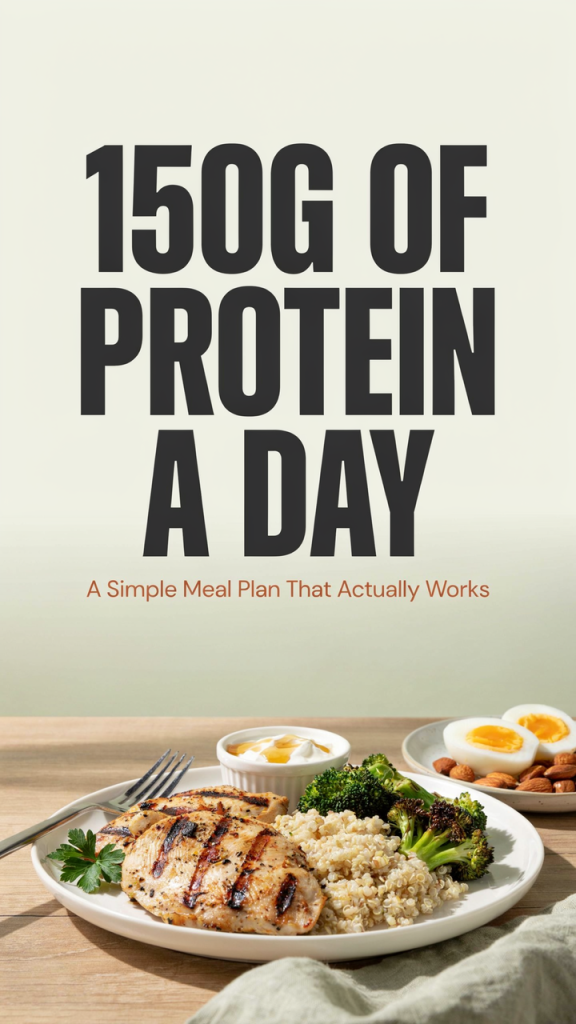
150g of Protein a Day: A Simple Meal Plan That Actually Works
Hitting 150 grams of protein per day can feel like a tall order — especially if you’re busy, gluten- or dairy-free, vegetarian, or simply tired of eating chicken breasts every evening. The good news: with a little planning and smart combos, 150 g can be delivered easily, deliciously, and sustainably. This guide walks you through why 150 g may be the right target for you, how to structure your day, and a full, practical meal plan with recipes that add up to roughly 150 g of protein — plus swaps, meal-prep tips, and grocery notes.
Whether your goal is muscle gain, fat loss while preserving lean mass, recovery from training, or simply satiety and stable blood sugar, this plan is flexible, science-friendly, and realistic. Read on and you’ll have a complete day of meals you can cook and repeat.
Why aim for 150 g of protein a day?
Protein is the most satiating macronutrient, supports muscle repair and growth, helps maintain metabolic rate during calorie loss, and plays a role in immune and hormonal function. For many adults who are active or aiming to maintain or build muscle, 150 g is a practical target:
- For a 75–100 kg (165–220 lb) person, 1.6–2.0 g/kg/day is often recommended for strength training and recovery — that range lands around 120–200 g depending on bodyweight, so 150 g is a solid middle ground.
- It’s high enough to drive muscle protein synthesis when spread across meals, yet low enough to remain manageable for most people with balanced meals.
This plan is built around whole foods: lean meats, seafood, dairy, eggs, legumes, and protein powder when convenient. It emphasizes distribution (protein at every meal), variety, and protein quality.
Who should consider this target?
- Strength athletes or regular gym-goers who want to build or preserve muscle.
- People in a calorie deficit aiming to retain lean mass.
- Those who respond well to higher-protein diets for appetite control.
- Anyone who enjoys higher protein and can meet this target without medical contraindications.
If you have kidney disease, specific metabolic disorders, or complex medical needs, check with your clinician before dramatically raising protein intake.
How this simple meal plan works
- Distribute protein across 4–6 feedings to maximize muscle protein synthesis and steady satiety.
- Combine fast- and slow-digesting protein sources: eggs and dairy in the morning, poultry and fish mid-day, and a light dairy or plant-based protein before bed if desired.
- Include a scoop of whey (or your preferred protein powder) for convenience without relying on processed bars.
- Use small, frequent servings to make the number feel less intimidating than “big single meals.”
Below is a full day sample that totals roughly 150 g of protein. All numbers are approximate and depend on brand and cooking methods; read labels when possible.
Daily Overview: Quick Breakdown
- Breakfast: Protein Pancakes + Greek yogurt — ~51 g protein
- Mid-morning snack: Cottage cheese bowl — ~14 g protein
- Lunch: Grilled chicken salad — ~35 g protein
- Afternoon snack: Tuna salad on whole-grain crackers — ~25 g protein
- Dinner: Baked salmon with quinoa and greens — ~29 g protein
- Estimated total: ~154 g protein (rounds to ~150 g)
Now, full recipes and step-by-step instructions for each meal so you can actually cook this.
Breakfast — Protein Pancakes with Greek Yogurt (approx. 51 g protein)
Ingredients:
– 1 scoop whey protein powder (about 24 g protein)
– 2 large eggs (about 12 g protein)
– 1/2 cup rolled oats (about 5 g protein)
– 1/4 cup milk or unsweetened plant milk (optional; for texture)
– 1/2 tsp baking powder
– Pinch of salt and cinnamon
– 1/2 cup nonfat Greek yogurt (about 10 g protein)
– 1/2 cup berries (strawberries/blueberries) for topping
– 1 tsp olive oil or cooking spray for the pan
Instructions:
1. Blend or mix the oats into a flour-like texture (or use oat flour) and combine in a bowl with protein powder, baking powder, salt, and cinnamon.
2. Whisk in eggs and milk until a batter forms; let rest 2–3 minutes to thicken.
3. Heat a non-stick skillet over medium heat and add oil or spray.
4. Pour 1/4 cup servings of batter into the pan, cook until bubbles form on top, then flip and cook 1–2 more minutes until golden.
5. Stack pancakes, top with Greek yogurt and berries, and enjoy.
Why it works: combining whey, eggs, oats, and Greek yogurt gives you a mix of fast and slower proteins and a filling breakfast that keeps you full until your next snack.
Mid-Morning Snack — Cottage Cheese & Fruit Bowl (approx. 14 g protein)
Ingredients:
– 1/2 cup low-fat cottage cheese (about 14 g protein)
– 1/2 cup chopped pineapple or peach (or berries)
– 1 tbsp chopped walnuts or almonds (optional)
– Dash of cinnamon or a drizzle of honey (optional)
Instructions:
1. Spoon cottage cheese into a small bowl.
2. Top with fruit and nuts, sprinkle cinnamon or honey if desired.
3. Stir and eat immediately.
Why it works: cottage cheese is a casein-rich dairy that digests slowly, offering steady amino acids between meals.
Lunch — Grilled Chicken Salad (approx. 35 g protein)
Ingredients:
– 4 oz (about 115 g) grilled chicken breast, sliced (about 35 g protein)
– 3 cups mixed salad greens
– 1/2 cup cherry tomatoes, halved
– 1/4 cup cucumber slices
– 1/4 avocado, sliced
– 1 tbsp olive oil + 1 tbsp balsamic vinegar (or your favorite dressing)
– Salt and pepper to taste
Instructions:
1. If chicken isn’t cooked, season chicken with salt and pepper and grill or pan-sear until internal temperature reaches 165°F (about 6–7 minutes per side depending on thickness). Let rest 5 minutes and slice.
2. Assemble greens, tomatoes, cucumber, and avocado in a bowl.
3. Top the salad with sliced chicken and drizzle with olive oil and balsamic vinegar.
4. Toss lightly and serve.
Why it works: lean protein with fiber and healthy fats gives satiety and steady energy for the afternoon.
Batch-cook tip: Grill 2–3 extra chicken breasts on Sunday to use in salads, wraps, or bowls for the week.
Afternoon Snack — Tuna Salad on Whole-Grain Crackers (approx. 25 g protein)
Ingredients:
– 1 can (4 oz drained) tuna in water (about 25 g protein)
– 1 tbsp plain Greek yogurt or light mayo
– 1 tsp Dijon mustard
– 1 tbsp chopped red onion or celery
– Salt, pepper, lemon juice to taste
– 6–8 whole-grain crackers or slices of cucumber/carrot for lower carb option
Instructions:
1. Drain tuna and place in a bowl.
2. Mix in Greek yogurt (or mayo), mustard, chopped onion, lemon juice, salt, and pepper.
3. Taste and adjust seasoning.
4. Spoon tuna salad onto crackers or veggie slices and enjoy.
Why it works: canned tuna is convenient, shelf-stable, and protein-dense — a quick 25 g boost without a full meal.
Dinner — Baked Salmon with Quinoa and Greens (approx. 29 g protein)
Ingredients:
– 4 oz (about 115 g) salmon fillet (about 25 g protein)
– 1/2 cup cooked quinoa (about 4 g protein)
– 2 cups sautéed or steamed greens (spinach, kale, or broccoli)
– 1 tbsp olive oil
– 1 clove garlic, minced
– Lemon wedges, salt, and pepper
Instructions:
1. Preheat oven to 400°F (200°C). Place salmon on a lined baking sheet, drizzle with olive oil, season with salt and pepper and lemon juice.
2. Bake salmon for 10–12 minutes (depending on thickness) until flaky and opaque.
3. Meanwhile, cook quinoa according to package instructions (typically 1/4 cup dry per 1/2 cup cooked).
4. In a skillet, heat a small amount of olive oil and sauté garlic for 30 seconds, add greens and cook until wilted/tender. Season with salt and pepper.
5. Plate salmon atop quinoa and greens, add a lemon wedge, and serve.
Why it works: salmon supplies high-quality protein plus omega-3 fats; paired with quinoa for a small extra protein and fiber boost.
Optional Evening Snack — Greek Yogurt + Seeds (if you want to top up proteins)
Ingredients:
– 1/2 cup nonfat Greek yogurt (about 10 g protein)
– 1 tbsp chia or hemp seeds (2–3 g protein)
– A few berries or a sprinkle of cinnamon
Instructions:
1. Spoon Greek yogurt into a bowl.
2. Top with chia/hemp seeds and berries.
3. Stir and eat.
Note: if the day already hit ~150 g, this snack can be reduced or skipped. It’s useful on heavier training days or in colder seasons when extra calories don’t hurt.
Variations and substitutions
- Vegetarian swap: Replace chicken and tuna with tempeh (15–20 g per 4 oz) and edamame (1 cup shelled ~17 g). Add a scoop of soy or pea protein if needed.
- Dairy-free: Use plant-based yogurt and protein powders (pea, soy, rice) that have comparable protein per scoop.
- Egg-free: Increase portions of poultry, fish, or add another powdered protein serving.
- Lower-carb: Skip crackers and quinoa; add extra greens or a small side of roasted sweet potato for carbs if desired.
- Budget-friendly: Canned tuna, frozen chicken thighs, dried lentils, and eggs deliver proteins for less cost.
Meal prep tips to make 150 g sustainable
- Cook proteins in bulk: Roast 4–6 chicken breasts or 6–8 salmon fillets at once. Portion into individual meals.
- Use protein powder strategically: One scoop in a pancake or shake is an easy 20–25 g boost and cuts down cooking time.
- Pack snacks the night before: cottage cheese cups, tuna packets, and pre-portioned Greek yogurt cups are grab-and-go.
- Double recipes and freeze: Soups, chilis, and baked casseroles freeze well — they’re easy to reheat for a high-protein dinner.
- Keep staples on hand: eggs, canned tuna/salmon, Greek yogurt, cottage cheese, and protein powder make it easier to hit your goal without complex planning.
Shopping list (basics for this plan)
- Whey or plant protein powder
- Eggs
- Rolled oats
- Nonfat Greek yogurt
- Low-fat cottage cheese
- Chicken breasts
- Canned tuna
- Salmon fillets (fresh or frozen)
- Quinoa
- Mixed salad greens, spinach, kale
- Fresh fruit: berries, banana, apples
- Vegetables: tomatoes, cucumber, carrots
- Nuts & seeds: almonds, walnuts, chia/hemp seeds
- Olive oil, vinegars, basic spices
Frequently asked questions
H3: Is 150 g of protein safe?
For most healthy adults, 150 g/day is safe and beneficial, especially if you’re active. If you have kidney disease or other medical conditions, consult a healthcare provider.
H3: Do I need supplements to hit 150 g?
No — whole foods can provide all that protein. Supplements like whey make it easier and are convenient, not mandatory.
H3: Will eating this much protein make me gain fat?
Protein itself doesn’t cause fat gain; overall calorie balance does. A higher-protein diet can actually help with fat loss by preserving lean mass and increasing satiety.
Final tips for success
- Spread protein across meals — aim for ~25–40 g per main meal and 10–25 g per snack.
- Track for a few days to learn portion sizes and what works; you don’t need to track forever.
- Prioritize protein quality (complete proteins) but mix plant and animal sources for variety and micronutrients.
- Don’t be afraid of healthy fats — they help keep you full and support nutrient absorption.
- Listen to your hunger and adjust the plan to your activity level and goals.
Conclusion
Reaching 150 g of protein a day doesn’t require weird foods, extreme portioning, or a buffet of supplements. With a few foundation foods — eggs, Greek yogurt, lean poultry, fish, cottage cheese, and a scoop of protein powder — you can create satisfying, varied meals that add up to about 150 grams of protein and taste great. Use the sample meal plan and recipes above to get started: meal prep once or twice a week, mix and match the swaps, and adjust portion sizes to meet your exact needs.
Start with one day of the plan, see how it feels, and iterate. You’ll likely find improved recovery, better appetite control, and the confidence that your diet is supporting your goals. Keep it simple, consistent, and enjoyable — and the results will follow.