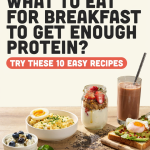
What Should I Eat for Breakfast to Get Enough Protein? Try These 10 Easy Recipes
Eating a protein-rich breakfast is one of the simplest ways to support steady energy, preserve muscle mass, manage appetite, and set a healthy tone for the rest of the day. If you’ve ever wondered “What should I eat for breakfast to get enough protein?” — this guide gives you 10 easy, delicious, and practical recipes that deliver solid protein at the most important meal. Each recipe includes ingredient lists and step-by-step instructions so you can start cooking right away.
Below you’ll find an overview of why breakfast protein matters, how much to aim for, practical tips to boost protein, and 10 varied breakfast recipes (from 5-minute smoothies to savory egg-forward bowls) suited to different diets and schedules.
Why protein at breakfast matters
Protein:
– Slows digestion, helping you feel full longer.
– Provides amino acids necessary for repairing tissues and maintaining muscle, especially important if you exercise.
– Supports blood sugar stability when combined with healthy carbs and fats, reducing mid-morning energy crashes.
– Can help control overall calorie intake by reducing snacking and overeating later in the day.
Starting your day with a protein-rich meal is especially helpful if you’re active, trying to lose or maintain weight, or simply wanting more consistent energy.
How much protein should you aim for at breakfast?
A common, practical goal is 20–30 grams of protein at breakfast for most adults. This range supports muscle protein synthesis and satiety. Depending on your body size, activity level, and overall daily protein target (often 0.6–1.0 grams per pound of body weight, or higher for strength athletes), you might want slightly more or less—split your daily protein into 2–4 protein-rich meals.
Quick tips to boost breakfast protein
- Add a scoop of protein powder (whey, pea, soy, or blended) to smoothies, yogurt, or batter.
- Use Greek yogurt or skyr instead of regular yogurt.
- Mix cottage cheese into pancakes or serve it with fruit.
- Add seeds (hemp, chia) and nuts for an additional protein and healthy fat boost.
- Use whole eggs plus extra egg whites if you want more protein with lower fat.
- Include legumes (black beans, chickpeas) or tofu for plant-based options.
Now, here are 10 easy, high-protein breakfast recipes you can rotate through the week.
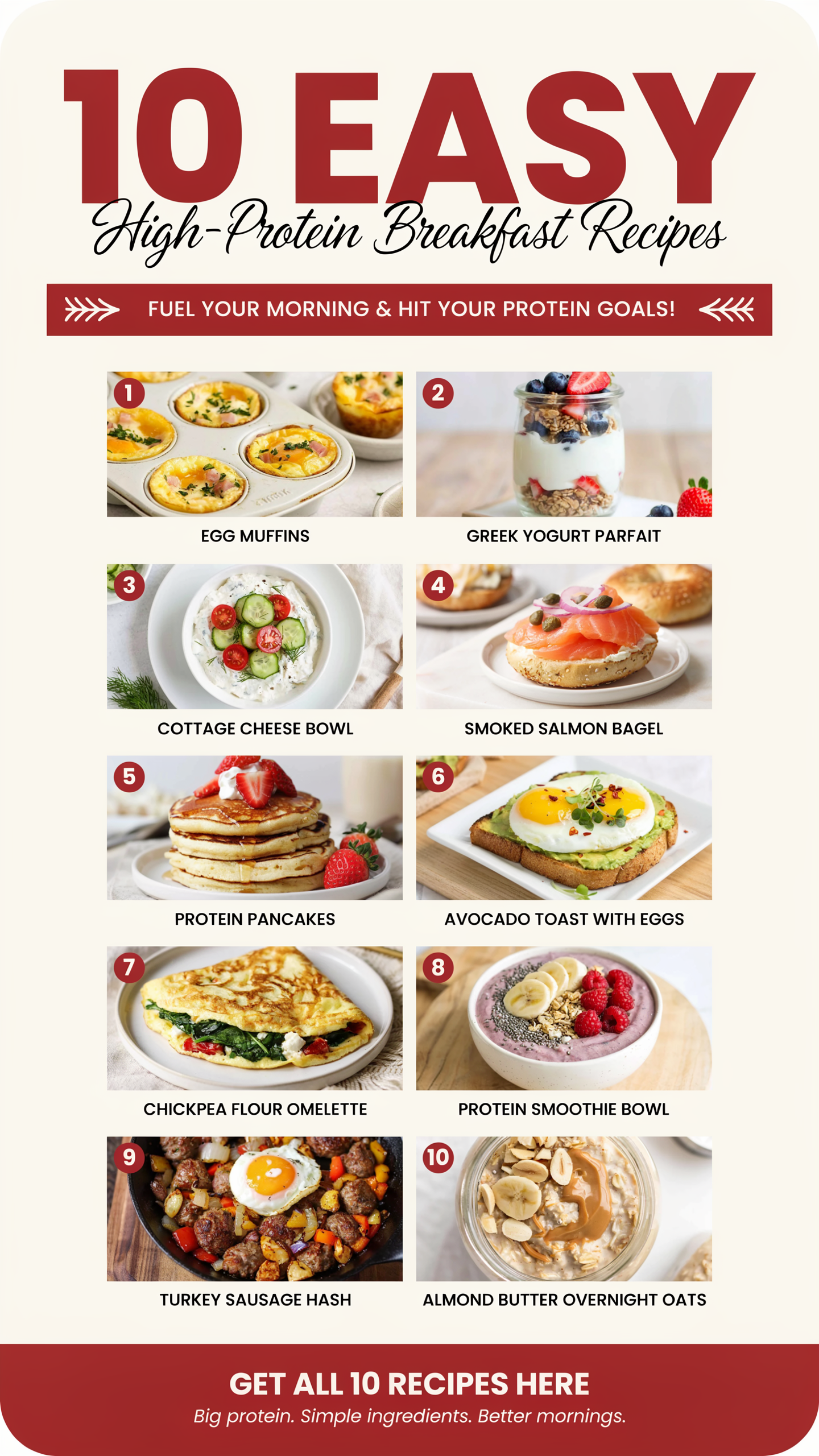
10 Easy High-Protein Breakfast Recipes
1. Greek Yogurt & Berry Protein Parfait
A quick, portable breakfast that layers creamy Greek yogurt, berries, and crunchy nuts — plus an optional scoop of protein powder for a big protein punch. Protein per serving: ~25–35 g (with protein powder).
Ingredients
– 1 cup plain Greek yogurt (nonfat or low-fat)
– 1/2 cup mixed berries (fresh or frozen, thawed)
– 2 tbsp granola or chopped nuts (almonds/walnuts)
– 1 tbsp chia seeds or hemp seeds
– 1 scoop (25–30 g) vanilla protein powder (optional)
– 1 tsp honey or maple syrup (optional)
Instructions
1. If using protein powder, mix the scoop into the Greek yogurt until smooth.
2. Spoon half the yogurt into a bowl or jar.
3. Add half the berries, sprinkle half the chia/hemp seeds, and add a layer of granola or nuts.
4. Repeat the layers with the remaining yogurt, berries, seeds, and nuts.
5. Drizzle honey or maple syrup if desired and enjoy immediately or refrigerate for later.
2. Smoked Salmon & Scrambled Eggs on Whole-Grain Toast
A savory, omega-3–rich breakfast that pairs soft scrambled eggs with smoked salmon and whole-grain toast. Protein per serving: ~25–30 g.
Ingredients
– 2 large eggs
– 2 egg whites (optional for extra protein)
– 2 slices whole-grain bread, toasted
– 2–3 oz smoked salmon
– 1 tbsp olive oil or butter
– 1–2 tbsp chopped fresh chives or dill
– Salt and pepper, to taste
– Lemon wedge (optional)
Instructions
1. Whisk eggs (and egg whites if using) with a pinch of salt and pepper.
2. Heat olive oil or butter in a nonstick skillet over medium-low heat.
3. Pour in eggs and gently scramble, stirring slowly until just set and creamy.
4. Place toast on plates, divide scrambled eggs between slices.
5. Top with smoked salmon and sprinkle chives or dill.
6. Squeeze a bit of lemon over the salmon if desired and serve.
3. Cottage Cheese Fruit Bowl with Seeds & Almonds
Cottage cheese is an underappreciated protein powerhouse. This bowl combines it with fruit, nuts, and seeds for texture and flavor. Protein per serving: ~20–28 g.
Ingredients
– 1 cup low-fat or full-fat cottage cheese
– 1/2 cup fresh fruit (pineapple, berries, or sliced peach)
– 2 tbsp sliced almonds or chopped walnuts
– 1 tbsp chia seeds or hemp seeds
– 1 tsp cinnamon or a drizzle of honey (optional)
Instructions
1. Spoon cottage cheese into a bowl.
2. Top with fresh fruit evenly.
3. Sprinkle nuts and seeds over the top.
4. Add a pinch of cinnamon or drizzle honey if you want extra sweetness.
5. Stir lightly and enjoy chilled.
4. Protein Power Smoothie (Peanut Butter, Oats & Spinach)
A nutrient-dense smoothie you can drink on the go — filling, protein-packed, and adjustable. Protein per serving: ~30–40 g (depending on protein powder).
Ingredients
– 1 scoop protein powder (whey or plant-based)
– 1 cup milk (cow’s, soy, or pea milk) or water
– 2 tbsp natural peanut butter (or almond butter)
– 1/4 cup rolled oats
– 1 cup fresh spinach
– 1/2 frozen banana (for sweetness)
– 4–6 ice cubes (optional)
Instructions
1. Add milk, protein powder, peanut butter, oats, spinach, banana, and ice to a blender.
2. Blend on high until smooth and creamy, about 30–60 seconds.
3. Taste and adjust thickness with more milk or ice.
4. Pour into a glass and enjoy immediately or take with you in a travel bottle.
5. Overnight Oats with Greek Yogurt & Chia
Prep this the night before for a ready-to-eat, satisfying breakfast with both oats and Greek yogurt for double protein. Protein per serving: ~20–28 g.
Ingredients
– 1/2 cup rolled oats
– 1/2 cup plain Greek yogurt
– 1/2 cup milk (cow’s or plant-based)
– 1 tbsp chia seeds
– 1/2 tsp vanilla extract
– 1/2 cup mixed berries or sliced banana
– 1–2 tsp maple syrup or honey (optional)
Instructions
1. In a jar or container, combine oats, Greek yogurt, milk, chia seeds, and vanilla extract.
2. Stir well until fully mixed, pressing the chia seeds to avoid clumps.
3. Top with fruit and sweetener if using.
4. Seal and refrigerate overnight (or at least 4 hours).
5. Stir before eating and add extra milk if you prefer a looser texture.
6. Tofu Veggie Scramble (Plant-Based High Protein)
A tofu scramble is a great plant-based alternative to eggs that’s rich in protein and fiber. Protein per serving: ~20–25 g.
Ingredients
– 14 oz (400 g) firm tofu, drained and crumbled
– 1 tbsp olive oil
– 1/2 cup diced bell peppers
– 1/2 cup chopped spinach or kale
– 1/4 cup chopped onion
– 1/2 tsp ground turmeric (for color) and 1/2 tsp garlic powder
– Salt and pepper, to taste
– 2 tbsp nutritional yeast (optional, for cheesy flavor)
– Fresh herbs (chives, parsley) for garnish
Instructions
1. Heat olive oil in a skillet over medium heat and sauté onion and bell peppers until softened, about 4–5 minutes.
2. Add crumbled tofu, turmeric, garlic powder, salt, and pepper. Stir to combine and cook 5–7 minutes until heated through.
3. Stir in spinach or kale and cook until wilted.
4. Mix in nutritional yeast if using for savory depth.
5. Taste and adjust seasoning, garnish with fresh herbs, and serve with whole-grain toast or in a wrap.
7. Chickpea Flour Pancakes (Besan) with Tomato & Herbs
Chickpea flour (besan) creates savory pancakes that are naturally high in protein and gluten-free. Protein per serving: ~15–20 g depending on serving size.
Ingredients
– 1 cup chickpea (besan) flour
– 1 cup water (adjust for batter consistency)
– 1/4 cup finely chopped tomatoes
– 1/4 cup chopped onion or scallions
– 1 tbsp chopped cilantro
– 1/2 tsp ground cumin
– Salt and pepper, to taste
– 1 tbsp olive oil for cooking
Instructions
1. In a bowl, whisk chickpea flour, water, cumin, salt, and pepper to make a smooth batter (like pancake batter).
2. Stir in chopped tomatoes, onion, and cilantro.
3. Heat olive oil in a nonstick skillet over medium heat.
4. Pour ladlefuls of batter to form small pancakes; cook 2–3 minutes until bubbles form and edges set.
5. Flip and cook another 2 minutes until golden and cooked through.
6. Serve warm with yogurt or chutney.
8. Black Bean & Egg Breakfast Burrito
A filling, fiber- and protein-rich burrito perfect for meal prep or a breakfast on the run. Protein per serving: ~25–30 g.
Ingredients
– 2 large eggs
– 1/2 cup black beans, rinsed and drained
– 1 whole-wheat or high-protein tortilla (8–10 inch)
– 1/4 cup shredded cheddar or pepper jack cheese
– 1/4 cup salsa
– 1 tbsp olive oil or cooking spray
– Salt and pepper, to taste
– Optional: avocado slices, cilantro, hot sauce
Instructions
1. Warm black beans in a small saucepan or microwave until heated; season lightly.
2. In a skillet, heat olive oil and scramble eggs until just set; season with salt and pepper.
3. Warm tortilla in a dry skillet or microwave for better pliability.
4. Layer eggs, black beans, cheese, salsa, and avocado (if using) in the center of the tortilla.
5. Fold and roll into a burrito, tucking in the sides as you roll.
6. Optionally toast the burrito seam-side down in a skillet for 1–2 minutes to seal and crisp.
9. Quinoa Breakfast Bowl with Egg & Avocado
Quinoa provides a complete plant protein and pairs beautifully with eggs and healthy fats. Protein per serving: ~20–25 g.
Ingredients
– 1/2 cup cooked quinoa (cooked in water or broth)
– 1 large egg (poached, fried, or soft-boiled)
– 1/4 avocado, sliced
– 1–2 tbsp crumbled feta or goat cheese (optional)
– 1 cup baby spinach or mixed greens
– Salt, pepper, and red pepper flakes (optional)
– 1 tsp olive oil or lemon juice for dressing
Instructions
1. If quinoa isn’t cooked, cook 1/4 cup dry quinoa to yield about 1/2 cup cooked (simmer 15 minutes).
2. Prepare egg to your preferred style (poached, fried, or soft-boiled).
3. In a bowl, combine warm quinoa and greens; toss lightly with olive oil or lemon juice.
4. Top with the egg, avocado slices, and crumbled cheese.
5. Season with salt, pepper, and red pepper flakes, and serve immediately.
10. High-Protein Cottage Cheese Pancakes (No Protein Powder)
These pancakes use cottage cheese and oats for a naturally high-protein batter that’s fluffy and satisfying. Protein per serving (3–4 pancakes): ~30 g.
Ingredients
– 1 cup cottage cheese (small curd)
– 2 large eggs
– 1/2 cup rolled oats (or oat flour)
– 1/2 tsp baking powder
– 1/2 tsp vanilla extract
– 1 tbsp coconut oil or butter for cooking
– Optional toppings: Greek yogurt, fresh berries, nut butter, a small drizzle of maple syrup
Instructions
1. Add cottage cheese, eggs, oats, baking powder, and vanilla to a blender; blend until mostly smooth (small bits of cottage cheese are fine).
2. Heat a nonstick skillet over medium heat and add coconut oil or butter.
3. Pour 1/4-cup portions of batter into the skillet and cook 2–3 minutes per side until golden and set.
4. Repeat with remaining batter.
5. Serve warm topped with Greek yogurt, berries, and a touch of maple syrup or nut butter.
Meal-prep and swap tips (quick)
- Cook a double batch of quinoa, oats, or chickpea pancakes on weekend mornings to reheat during the week.
- Freeze burritos individually and microwave for 90–120 seconds for a fast, protein-rich morning.
- Use cottage cheese, Greek yogurt, or protein powder as quick add-ins to many recipes to boost protein without changing flavor dramatically.
- For vegan swaps: replace eggs with tofu or chickpea-based recipes, and use plant-based protein powders or soy/pea dairy alternatives.
Final thoughts (conclusion)
If you want to know “What should I eat for breakfast to get enough protein?” the answer is simple: choose whole-food protein sources you enjoy, aim for roughly 20–30 grams per meal, and combine protein with fiber and healthy fats for the best energy and satiety. The 10 recipes above offer a practical mix of quick options and slightly more hands-on meals, covering omnivore, vegetarian, and plant-based preferences. Try rotating several of these through your week — you’ll likely notice steadier energy, less mid-morning hunger, and better overall nutrition.
Start with one recipe that fits your morning routine and taste, then build on it. With a little planning, a protein-packed breakfast can be tasty, easy, and sustainable for long-term habits. Enjoy your cooking — and enjoy the boost that a protein-focused breakfast brings to your day.