What Are the Benefits of Strength Training?
Strength training—also called resistance training or weightlifting—is one of the most effective, evidence-backed tools for improving health, fitness, and quality of life at any age. Whether your goals are to build muscle, lose fat, improve bone density, reduce injury risk, boost mood, or maintain independence as you age, strength training delivers broad and lasting benefits. This article walks through the major advantages, explains the science simply, and gives practical guidance on how to get started safely. You’ll also find strength-supporting meal ideas and three easy, nutritious recipes to fuel your workouts.
Introduction
Too often people think “strength training” only means large muscles and heavy barbells. While those are part of the picture, the true value of strength training is far broader: it enhances metabolism, preserves bone, improves posture and balance, reduces chronic disease risk, and supports mental health. It is adaptable to beginners, busy professionals, older adults, and athletes alike. Read on to learn what strength training can do for you, how it works, and how to integrate it into a balanced lifestyle.
How Strength Training Works (The Basics)
Strength training involves applying resistance to muscles to elicit adaptation. This resistance can come from free weights, machines, resistance bands, bodyweight, or everyday objects. The primary physiological responses include:
- Muscle hypertrophy: enlargement of muscle fibers with repeated overload.
- Neural adaptations: improved motor unit recruitment and coordination, which make movements stronger and more efficient.
- Metabolic changes: increased resting metabolic rate and improved insulin sensitivity.
- Skeletal responses: increased bone mineral density from mechanical loading.
- Connective tissue strengthening: tendons and ligaments become more resilient with appropriate stimulus.
Understanding these mechanisms helps explain the range of benefits described below.
The Physical Benefits of Strength Training
Strength training produces many tangible physical improvements that affect day-to-day life and long-term health.
Build and Preserve Muscle Mass
- Muscle mass peaks in early adulthood and tends to decline with age (sarcopenia). Strength training is the most effective way to reverse or slow this decline.
- More muscle improves strength for everyday tasks—lifting groceries, climbing stairs, carrying children, and maintaining independence.
Increase Functional Strength and Mobility
- Training compound movements (squats, deadlifts, presses, rows) improves the ability to perform real-world activities.
- Better joint stability and mobility reduce the risk of strains and sprains and improve movement quality.
Improve Body Composition
- Building muscle increases resting energy expenditure. This helps with fat loss or maintenance when combined with appropriate nutrition.
- Strength training preserves lean mass during calorie deficits, preventing the typical muscle loss associated with dieting.
Boost Bone Density and Reduce Osteoporosis Risk
- Mechanical loading of bones during resistance training stimulates bone remodeling and increases bone mineral density.
- Regular strength training reduces fracture risk and is particularly important for postmenopausal women and older adults.
Improve Posture and Reduce Back Pain
- Strengthening the posterior chain (hips, back, glutes) and core muscles helps correct rounded shoulders and forward head posture.
- A stronger core and improved movement patterns can alleviate chronic low-back pain for many people.
The Metabolic and Weight Management Benefits
Strength training affects metabolism, blood sugar regulation, and long-term weight control.
Raise Resting Metabolic Rate
- Muscle tissue is metabolically active. More muscle means slightly higher calories burned at rest, which compounds over time.
- Strength training increases total daily energy expenditure through both immediate workout calories and elevated post-exercise metabolism.
Improve Insulin Sensitivity and Blood Sugar Control
- Resistance training improves glucose uptake in muscle cells and reduces insulin resistance.
- This lowers risk for type 2 diabetes and can be an important part of diabetes management.
Support Sustainable Fat Loss
- Combining strength training with cardio and appropriate nutrition helps preserve lean mass while losing fat, producing better body composition results than cardio alone.
Health, Disease Prevention, and Longevity
Strength training is a powerful preventive and therapeutic tool for many chronic conditions.
Reduce Cardiometabolic Risk
- Strength training lowers blood pressure, improves lipid profiles, reduces visceral fat, and improves glycemic control—all contributors to cardiovascular health.
Support Mental Health and Cognitive Function
- Regular resistance training is linked to reduced symptoms of depression and anxiety, better self-esteem, and improved cognitive function, including memory and executive processing.
- Exercise increases neurotrophic factors (like BDNF) that support brain health.
Improve Immune Function and Inflammation Markers
- Moderate, regular strength training reduces chronic inflammation and may enhance immune resilience. Excessive, unplanned volume without recovery can temporarily suppress immunity—so program thoughtfully.
Increase Longevity and Independence
- Stronger muscle, better balance, and higher bone density translate into fewer falls, fractures, and disabilities—key determinants of healthy aging and independence.
Performance, Sport, and Daily Life Benefits
Strength training isn’t just for bodybuilders; athletes and active people see measurable advantages.
Improve Athletic Performance
- Increases force production, power, and speed. Even sport-specific skills improve when built on a foundation of strength.
- Reduces injury risk through improved connective tissue resilience and movement quality.
Increase Work Capacity and Energy
- People who regularly strength-train often report better stamina for daily activities and less fatigue during routine tasks.
Better Sleep and Stress Resilience
- Resistance training can improve sleep quality and duration, helping recovery and daily functioning.
- Exercise acts as a stress buffer, improving mood and coping ability.
Common Myths and Misconceptions
Addressing misconceptions helps more people adopt strength training.
- Myth: “Strength training will make me bulky.” Reality: Gaining large amounts of muscle requires targeted programming, calories, and often years; for most people, resistance training creates a lean, toned look and improves function.
- Myth: “Cardio is enough.” Reality: While cardiovascular exercise is important, it can’t replace the bone, strength, metabolic, and functional benefits of resistance training.
- Myth: “You need a gym and heavy weights.” Reality: Bodyweight exercises, bands, kettlebells, or household items can provide sufficient stimulus, especially for beginners.
How to Start Strength Training Safely
A safe, progressive plan maximizes benefits and minimizes injury risk.
Guidelines for Beginners
- Frequency: Aim for 2–4 full-body sessions per week.
- Volume: Start with 1–3 sets per exercise, 8–15 repetitions for general fitness.
- Intensity: Use a weight/resistance that makes the last 2–3 reps challenging but doable with good form.
- Progressive overload: Gradually increase weight, sets, reps, or exercise difficulty every 2–4 weeks.
- Rest and recovery: Allow 48 hours of recovery for major muscle groups between intense sessions.
Essential Movement Patterns
Include these basic movements in a balanced program:
- Squat (lower-body push)
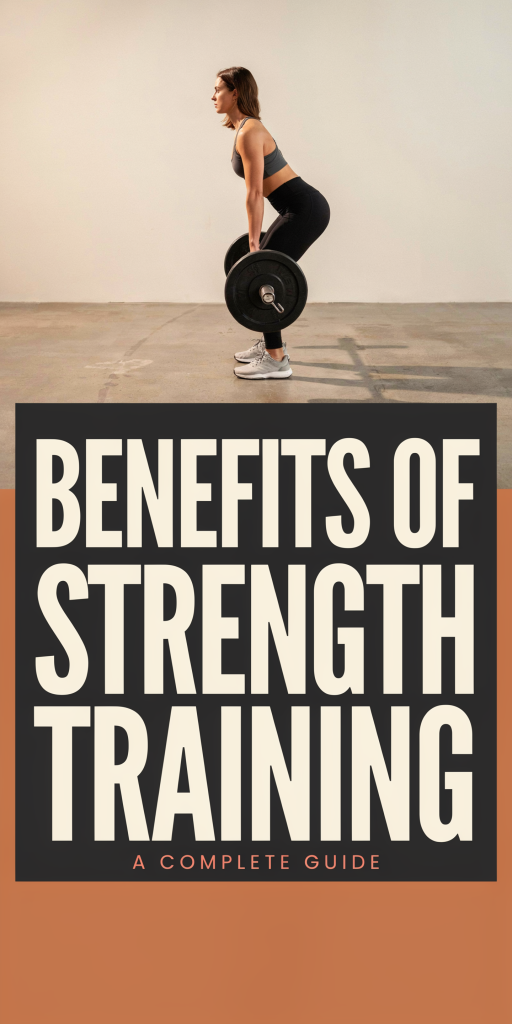
- Hinge (deadlift pattern)
- Horizontal push (push-up/bench press)
- Horizontal pull (row)
- Vertical push (overhead press)
- Vertical pull (pull-up/lat pulldown)
- Core stabilization (plank, dead bug)
Safety Tips
- Prioritize form over load. Quality repetition is key to long-term progress.
- Warm up with dynamic movements and light sets before heavy work.
- Consider a coach or certified trainer for technique coaching, especially for complex lifts.
- Adjust for injuries and limitations—most movements have regressions and alternatives.
- Track progress, but be patient—consistency matters more than occasional intensity.
Nutrition and Recovery to Support Strength Gains
Strength training and nutrition work together—feed and rest the body to get the most from your training.
Protein and Calories
- Protein: Aim for roughly 1.2–2.0 g/kg body weight daily, depending on training volume and goals. Spreading protein intake across meals supports muscle protein synthesis.
- Calories: To gain muscle, a modest calorie surplus is helpful; to lose fat, maintain a moderate deficit while prioritizing protein and resistance training to preserve muscle.
Hydration, Sleep, and Micronutrients
- Hydration supports performance and recovery.
- Sleep (7–9 hours) is crucial for muscle repair, hormonal balance, and cognitive function.
- Ensure sufficient intake of calcium, vitamin D, magnesium, and other micronutrients that support bone and muscular health.
Sample Strength-Focused Meals and Recipes
Below are three balanced meal ideas/recipes designed to support strength training performance, recovery, and muscle growth. Each includes protein, carbohydrates, and healthy fats.
High-Protein Breakfast Smoothie
Ingredients:
– 1 scoop (20–30 g) whey or plant-based protein powder
– 1 cup (240 ml) unsweetened almond milk or milk of choice
– 1/2 banana (fresh or frozen)
– 1/2 cup (75 g) frozen berries
– 1 tablespoon natural peanut butter or almond butter
– 1 tablespoon rolled oats (optional for carbs)
– Handful of spinach (optional, mild flavor)
– Ice as needed
Instructions:
1. Add all ingredients to a blender in the order listed.
2. Blend on high until smooth, about 30–60 seconds.
3. Taste and adjust thickness by adding more liquid or ice.
4. Serve immediately for a quick, protein-rich meal before or after training.
Chicken Quinoa Power Bowl
Ingredients:
– 4 oz (115 g) cooked chicken breast (can substitute tofu or tempeh)
– 1/2 cup (90 g) cooked quinoa
– 1 cup (100 g) mixed leafy greens (spinach, arugula)
– 1/2 cup (75 g) roasted sweet potato cubes
– 1/4 cup (40 g) canned chickpeas, drained and rinsed
– 1/4 avocado, sliced
– 1–2 tablespoons tahini-lemon dressing (or vinaigrette)
– Salt, pepper, and paprika to taste
Instructions:
1. Cook quinoa and sweet potato ahead of time or use leftovers; season sweet potato with a pinch of salt and paprika.
2. Warm the cooked chicken (or plant protein) if desired and season lightly.
3. In a bowl, layer the greens, quinoa, sweet potato, chickpeas, and chicken.
4. Top with avocado and drizzle with dressing.
5. Mix gently and enjoy as a post-workout or lunch option.
Lentil and Sweet Potato Stew (Vegan)
Ingredients:
– 1 cup (200 g) dried brown or green lentils, rinsed
– 1 medium sweet potato, peeled and diced (about 2 cups)
– 1 small onion, chopped
– 2 cloves garlic, minced
– 1 can (14 oz/400 g) diced tomatoes
– 4 cups (950 ml) low-sodium vegetable broth
– 1 teaspoon ground cumin
– 1 teaspoon smoked paprika
– 1 tablespoon olive oil
– Salt and pepper to taste
– Optional garnish: chopped cilantro or parsley, a squeeze of lemon
Instructions:
1. Heat olive oil in a large pot over medium heat. Add onion and cook until translucent, about 3–4 minutes.
2. Add garlic, cumin, and smoked paprika; cook 30 seconds until fragrant.
3. Add diced sweet potato, lentils, tomatoes, and vegetable broth. Stir to combine.
4. Bring to a boil, then reduce heat and simmer uncovered for 25–30 minutes, until lentils and sweet potato are tender.
5. Season with salt, pepper, and a squeeze of lemon; garnish if desired and serve warm.
Progressing Your Training
To keep gaining benefits, you must gradually increase the challenge.
- Increase weight: Add 2–10% more load when sets feel manageable.
- Modify reps and sets: Shift between strength-focused (3–6 reps), hypertrophy (6–12 reps), and endurance (12–20+ reps) phases.
- Add volume or frequency: More sets per muscle group or extra training days, respecting recovery needs.
- Introduce advanced techniques: Slow eccentrics, tempo work, paused reps, or unilateral variations.
When to Seek Professional Guidance
Consult a qualified trainer or health professional if you:
- Are new to exercise and need programming or technique coaching.
- Have a history of cardiovascular disease, uncontrolled hypertension, or other major health issues.
- Experience sharp pain during exercise or worsening symptoms.
- Want tailored programming for sport-specific goals or rehabilitation.
Final Tips and Practical Takeaways
- Start small and be consistent—results compound over months and years.
- Focus on compound movements for the best return on time.
- Prioritize sleep, protein, and progressive overload.
- Mix strength training with mobility work and aerobic conditioning for balanced fitness.
- Celebrate non-scale victories: increased energy, easier daily tasks, better posture, and improved mood.
Conclusion
Strength training is far more than a way to look fit—it’s one of the most powerful, evidence-backed strategies for improving health across the lifespan. It builds and preserves muscle, increases bone density, improves metabolic health, and supports mental well-being. With adaptable programming, accessible equipment options, and scalable intensity, strength training is suitable for nearly everyone. Start with simple, consistent sessions, focus on good form, and pair your training with adequate nutrition and recovery. Over time you’ll notice improvements in strength, confidence, energy, and resilience—benefits that ripple into every area of life. Lace up, pick up a weight (or a water bottle), and begin—your stronger self awaits.