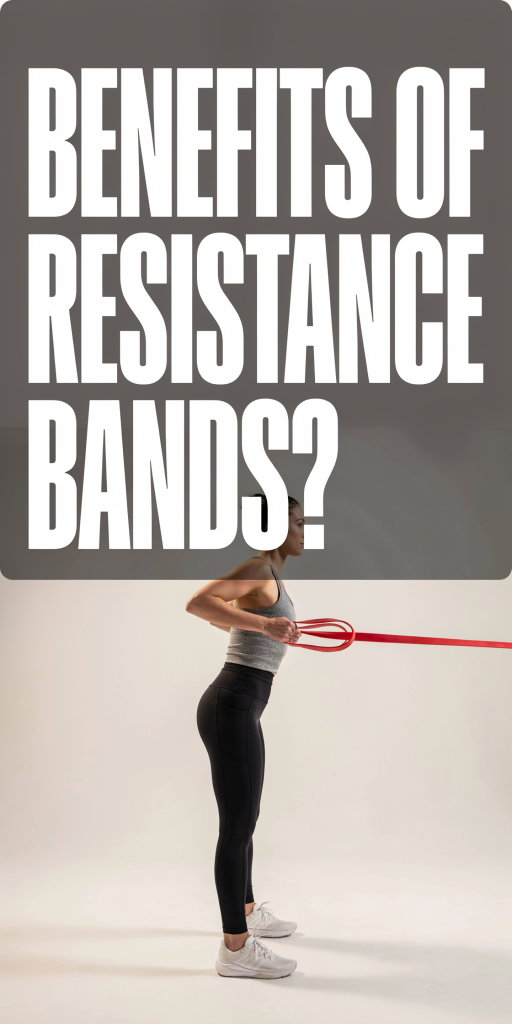
What Are the Benefits of Resistance Bands?
Resistance bands have quietly become a cornerstone of modern fitness—from home workouts to physical therapy clinics and professional athletic training. They’re small, inexpensive, and surprisingly powerful tools for building strength, improving mobility, rehabbing injuries, and keeping training fresh and effective. If you’ve ever wondered why so many coaches and fitness enthusiasts keep bands in their bag, this guide will walk you through the science-backed benefits, practical uses, how to choose and use them, sample workouts, safety tips, and a simple post-workout smoothie recipe to help recovery.
Introduction
Resistance bands are elastic straps that provide tension and variable load as you stretch them. Unlike free weights, the resistance increases as the band stretches, producing a different strength curve and recruiting stabilizing muscles in unique ways. Because they’re adaptable, they work for beginners learning basic movement patterns and elite athletes refining their speed and power.
This article explores the many benefits of resistance bands and gives you practical guidance to get the most from them. Whether you want portable equipment for travel, a gentle tool for rehab, or a way to add variety to your strength training, resistance bands are one of the most efficient pieces of equipment you can own.
Why resistance bands are so popular
Resistance bands offer a blend of convenience, versatility, and effective loading that few other tools match. They fit in a drawer or travel bag, cost a fraction of the price of gym machines, and can be used virtually anywhere—living room, hotel room, park, or gym. Importantly, they also provide functional resistance that better mimics real-world movement by requiring stability through ranges of motion.
Below, you’ll find a detailed breakdown of the key benefits, how to apply them, practical workout ideas, and safety tips so you can safely incorporate bands into your routine.
Top benefits of resistance bands
Here are the most important benefits explained in practical terms. Each section can help you decide how and when to use bands in your training.
1. Portability and convenience
Resistance bands are extremely lightweight and compact. They fold into a small pouch or even a pocket, making them ideal for travel or for people with limited space. You can perform full workouts without bulky equipment.
2. Affordability
Compared with dumbbells, kettlebells, or gym memberships, good-quality resistance bands are inexpensive. A set of bands with varied resistances provides a lot of training options for a modest cost.
3. Versatility across fitness goals
Bands can be used for strength training, mobility work, stretching, activation drills, plyometrics, and rehabilitation. They serve multiple purposes—warm-up, main sets, or accessory work—so you get more utility per dollar.
4. Progressive resistance that challenges muscles differently
As you stretch a band, resistance increases. This “variable resistance” changes the load through the range of motion, which can be especially effective for movements like squats, presses, and rows where you might be stronger at certain joint angles.
5. Safer, low-impact training for joints
Bands provide smooth, continuous tension without the sudden pendulum forces sometimes created by free weights. This makes them gentler on joints and an excellent option during recovery or for people with joint sensitivity.
6. Great for rehabilitation and injury prevention
Physical therapists commonly use bands to rebuild strength after injury because they allow controlled dosing of resistance and can isolate weak movements. Bands are also excellent for prehab—strengthening stabilizing muscles to prevent future issues.
7. All fitness levels can use them
From absolute beginners to advanced lifters, resistance can be scaled by changing band thickness, altering the band’s length (shorter = harder), or combining bands. This makes bands accessible and progressive.
8. Stimulates stabilizer muscles and improves balance
Because bands create an unstable line of force, they force your body to recruit smaller stabilizer muscles. This improves joint stability, posture, and balance—qualities that translate to everyday activities and athletic performance.
9. Excellent for functional and sport-specific training
Bands allow you to train rotational strength, lateral movement, and single-leg balance in ways that mimic sports and daily life more closely than some machines. This kind of training enhances real-world performance.
10. Enhances mobility and flexibility
Bands are useful for dynamic stretching, active isolated stretching, and PNF-style routines. They can assist deeper, more controlled stretches and help you achieve better range of motion.
11. Helps break training plateaus
Switching to bands or adding band-resisted sets can alter the stimulus and force muscles to adapt differently, helping you overcome stalls in strength or hypertrophy progress.
12. Easily combine with other equipment
Bands pair well with dumbbells, barbells, kettlebells, and bodyweight exercises. For example, banded squats or bench presses add accommodating resistance, while banded pull-aparts and face pulls refine scapular control.
13. Quick setup and time-efficient
A band workout can be set up in seconds, and many effective routines are short but intense (20–30 minutes). This makes bands ideal for busy schedules.
14. Safe for home and small spaces
Because bands don’t require much room or heavy weights, they’re safer for home use and less likely to cause damage or injury from dropped equipment.
Types of resistance bands and how they differ
Understanding the main types helps you pick the right tool for your goals.
- Loop bands (mini bands): Small loops used around the legs, knees, or wrists for activation and glute work.
- Long tube bands with handles: Good for chest presses, rows, and overhead movements—mimic cable machines.
- Flat bands (therapy bands): Wide, flat bands used widely in rehab and mobility work; flexible and affordable.
- Figure-8 bands and fabric bands: Specialized options for certain movements or comfort.
Each has specific uses; a basic starter kit commonly includes a set of loop bands and a few tube bands with handles.
How to choose the right band resistance
- Beginners: Start with light to medium bands to learn movement patterns and prioritize form.
- Intermediate: Use medium to heavy bands; increase tension by shortening the band or double-banding.
- Advanced: Use the heaviest bands, combine bands, or use bands to add variable resistance to free weight lifts.
Don’t pick a band solely based on color; manufacturers vary. Test the band through full movement and pick one that allows 6–15 controlled reps depending on your goal.
How to use resistance bands effectively
Practical tips:
- Focus on tension: Keep the band under constant tension—don’t let it go slack.
- Control the tempo: Slow eccentric (lengthening) phases increase muscle time under tension.
- Anchor safely: Use a secure anchor point or door anchor; inspect bands for nicks and wear.
- Pair with compound movements: Use bands for both single-joint and multi-joint movements for balanced development.
- Use them for activation: Do banded glute bridges or pull-aparts as part of your warm-up to turn on target muscles.
Sample resistance band exercises
Below are a variety of exercises that cover major movement patterns. Perform 8–15 reps per set depending on your goal.
- Banded Squat (loop or long band)
- Banded Deadlift (long band)
- Banded Glute Bridge / Hip Thrust (loop band)
- Banded Lateral Walk (mini loop band)
- Banded Standing Row (long band with handles or anchor)
- Banded Chest Press (band anchored behind you)
- Banded Overhead Press (step on band)
- Banded Pull-Apart (flat or long band)
- Banded Face Pull (anchor at head height)
- Banded Pallof Press (anti-rotation hold)
- Banded Push-Up (band across upper back)
- Banded Leg Extension (attachment around ankle)
Each exercise can be progressed by increasing resistance, adding reps, slowing tempo, or manipulating range of motion.
Sample resistance band workouts
Pick a workout based on your time and goals. Warm up 5–10 minutes with dynamic mobility and light band work before starting.
Beginner full-body (20–25 minutes)
- Banded Squats — 3 sets x 12 reps
- Banded Standing Row — 3 sets x 10–12 reps
- Banded Glute Bridge (mini band above knees) — 3 sets x 12–15 reps
- Banded Overhead Press — 3 sets x 10–12 reps
- Banded Pallof Press — 2 sets x 30 seconds per side
Lower-body strength (hypertrophy focus)
- Banded Deadlifts — 4 sets x 8–10 reps
- Banded Bulgarian Split Squat — 3 sets x 8–10 reps per leg
- Banded Lateral Walks — 3 sets x 20 steps total
- Banded Glute Bridge — 3 sets x 12–15 reps
- Standing Calf Raise (band under ball of foot) — 3 sets x 15–20 reps
Upper-body & posture (pull focus)
- Banded Pull-Aparts — 4 sets x 12–15 reps
- Banded Face Pulls — 3 sets x 12–15 reps
- Banded Push-Ups (band across back) — 3 sets x 8–12 reps
- Banded Rows — 3 sets x 10–12 reps
- Banded Triceps Pressdown (anchor overhead) — 3 sets x 12–15 reps
Adjust rest periods: 30–60 seconds for hypertrophy, 60–90 seconds for strength.
Safety, care, and maintenance
- Inspect bands before each use for tears, cracks, or discoloration.
- Avoid stretching bands over rough or sharp edges.
- Store bands away from direct sunlight, heat, and ozone sources to prolong life.
- Replace bands that show visible wear or lose elasticity.
- Use a door anchor or secure anchor point; do not wrap bands around unstable objects.
- If you’re rehabbing from a serious injury, use bands under the guidance of a physical therapist.
Post-workout smoothie recipe (Recovery Boost Smoothie)
This simple smoothie idea helps replenish carbs and protein after a band workout. It’s included so you can fuel recovery quickly with minimal prep.
Ingredients:
– 1 cup unsweetened almond milk (or milk of choice)
– 1 medium banana (fresh or frozen)
– 1 scoop whey or plant-based protein powder (vanilla recommended)
– 1/2 cup plain Greek yogurt (or dairy-free alternative)
– 1 tablespoon natural peanut butter (or almond butter)
– 1/2 cup frozen mixed berries
– 1 teaspoon honey or maple syrup (optional)
– 4–6 ice cubes (optional, for thickness)
Instructions:
1. Add the almond milk and yogurt to a blender first to create a liquid base.
2. Add the banana, protein powder, peanut butter, and frozen berries.
3. Add honey or maple syrup if desired for extra sweetness.
4. Blend on high until smooth and creamy. Add ice cubes and blend again if you prefer a thicker texture.
5. Pour into a glass and consume within 30–60 minutes post-workout for optimal recovery.
Frequently asked questions
Are resistance bands as effective as weights?
They’re effective in different ways. Bands provide variable resistance and excellent muscle activation through full ranges of motion. For maximal absolute strength (1RM of barbell lifts), heavy weights are still necessary, but bands are highly effective for hypertrophy, endurance, mobility, and functional strength.
Can resistance bands build muscle?
Yes. By creating progressive tension and time under tension, bands stimulate muscle fibers similarly to weights. Combining bands with a balanced diet and progressive overload will produce hypertrophy.
Are resistance bands safe?
When used properly, bands are safe and joint-friendly. Ensure proper anchoring, inspect bands regularly, and start with appropriate resistance. Avoid overstretching bands or using damaged bands.
How many bands do I need to start?
A set of 3–5 bands covering light, medium, and heavy resistance will cover most training needs. Adding mini loop bands for lower-body activation is also a smart choice.
Can I use bands for cardio?
Yes—high-rep circuits, banded sprint drills, and plyometric exercises with band assistance or resistance can raise heart rate and provide cardio benefits.
How long do bands last?
With proper care, high-quality bands can last many months to several years. Replace bands if you notice cracks, thinning, or unexpected snapping.
Conclusion
Resistance bands are one of the most practical, versatile, and cost-effective pieces of fitness equipment available. They offer unique benefits—variable resistance, portability, joint-friendly loading, and applicability across all fitness levels. Whether your goal is rehabilitation, building muscle, improving mobility, or adding variety to your training, bands are a tool that complements nearly every program.
Start with a basic set, learn core movements, and progressively challenge yourself by adjusting tension, tempo, and exercise variety. With thoughtful programming and consistent effort, resistance bands can unlock strength, resilience, and movement quality that translate to better performance and daily life. Pick up a few bands, try the sample workouts, sip the recovery smoothie, and discover how a small piece of equipment can deliver big results. Keep going—the resistance is worth the reward.