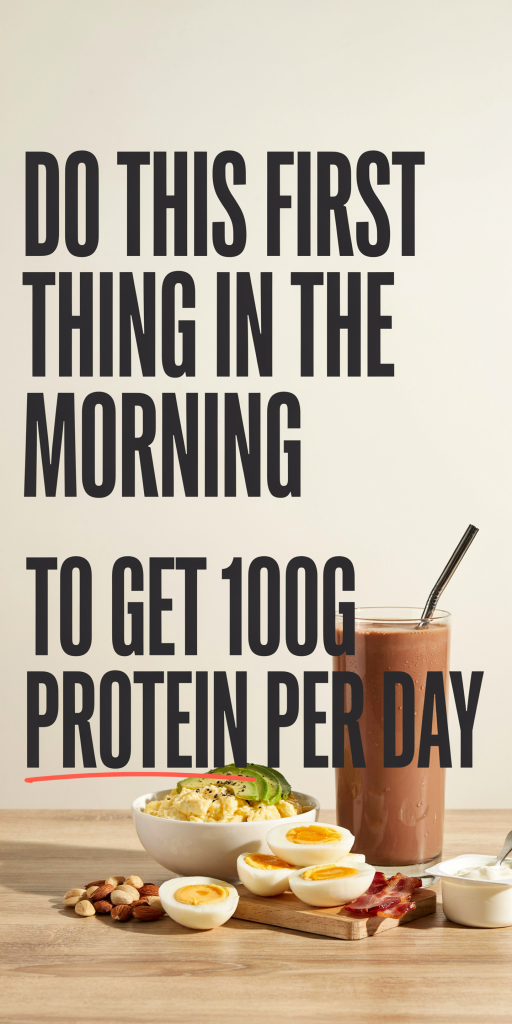
Do This First Thing In The Morning To Get 100G Protein Per Day
Most people who struggle to hit 100 grams of protein per day aren’t failing at dinner. They’re failing at breakfast.
The typical American breakfast — cereal, toast, a piece of fruit, maybe a yogurt — delivers somewhere between 5 and 15 grams of protein. By 8am, you’re already 20 grams behind where you should be, and you’re facing the rest of the day trying to make up that gap across lunch, snacks, and dinner. The math rarely works out. People who consistently reach 100 grams daily almost always have one thing in common: a breakfast that delivers 30 to 40 grams of protein before 9am.
This isn’t about eating more food. It’s about changing what kind of food the first meal of the day contains. A breakfast that hits 35 grams of protein doesn’t need to be larger than your current breakfast. It just needs to be built around different ingredients.
The other reason morning protein matters beyond hitting the daily number: it sets the hormonal tone for hunger and energy for the rest of the day. High-protein breakfasts reduce levels of ghrelin (the hunger hormone) for longer than high-carbohydrate breakfasts at the same calorie level. People who eat 30 to 40 grams of protein at breakfast consistently report less mid-morning hunger, less afternoon energy dip, and less total food consumed by the end of the day — not because they’re trying to restrict, but because the morning protein keeps them genuinely satiated longer.
What follows is the complete system: why morning protein works, what the numbers look like, and exactly what to eat and prepare to make high-protein mornings automatic.
The Morning Protein Strategy
Before specific foods and recipes: the structural approach.
Target: 35 to 40 grams of protein at breakfast. This leaves 60 to 65 grams to distribute across lunch, snacks, and dinner — an achievable number without extraordinary effort. If breakfast only delivers 15 grams, you need 85 grams from the rest of the day, which requires either unusually careful eating at every subsequent meal or protein supplements at multiple points. Front-loading protein at breakfast removes that pressure.
The two-component approach. Trying to hit 35 grams from a single food source typically means eating a large portion of one thing. A better approach: two protein sources in the same meal, each delivering 15 to 20 grams. Three eggs (18g) plus a cup of Greek yogurt (20g) together reach 38g with more variety than either alone.
Preparation is the deciding factor. The primary reason people eat low-protein breakfasts isn’t preference — it’s convenience. Toast is fast. Cereal requires no preparation. Eggs and cottage cheese take 5 minutes, which feels longer at 6:45am than it actually is. The solution is reducing the preparation to the point where the high-protein option is as convenient as the low-protein one — through batch cooking, pre-assembled components, or foods that require no cooking at all.
Your Morning Protein Baseline: Where You Are Now
Before optimizing, understand the protein content of what you’re currently eating in the morning.
Common breakfast protein content:
- 1 cup cereal with milk: 8 to 10g
- 2 pieces of toast: 4 to 6g
- 1 banana: 1g
- 1 cup regular yogurt: 5 to 6g
- 1 glass of orange juice: 2g
- 1 cup oatmeal (plain, water): 5g
- 1 cup oatmeal with milk: 10g
- 1 large egg: 6 to 7g
- 1 granola bar: 3 to 5g
- 1 cup coffee with whole milk: 3g
A typical American breakfast of cereal, toast, and juice delivers approximately 14 to 18 grams of protein. The gap between that and the 35-gram target is real, but it’s closed by changing two or three ingredients — not by overhauling the entire meal.
The Fastest High-Protein Breakfasts (Under 5 Minutes)
These require almost no cooking and can be assembled while coffee brews.
Option 1: The Greek Yogurt and Egg Combination
Protein: 38 to 44 grams | Time: 4 minutes
The most reliable high-protein breakfast because both components are already high in protein, require minimal preparation, and complement each other in flavor and texture.
What you need:
- 200g plain full-fat or 2% Greek yogurt (Fage or Chobani 2%): 20g protein
- 3 large eggs, scrambled: 18g protein
- 1 tbsp olive oil or butter for the eggs
- Salt, pepper, and optional hot sauce
What to do:
- Heat olive oil or butter in a small nonstick pan over medium.
- Beat 3 eggs with a pinch of salt. Pour into the pan. Stir slowly with a spatula until just set — 2 to 3 minutes. Remove from heat while still slightly underdone. The carry-over heat finishes them.
- Eat the Greek yogurt from the container alongside or before the eggs.
Total protein: 38g. Total time: 4 minutes. No recipe required.
Add 2 tablespoons of hemp seeds to the Greek yogurt: 48g total protein.
Option 2: The Cottage Cheese Bowl
Protein: 30 to 45 grams depending on additions | Time: 2 minutes
No cooking required. Cottage cheese is the most protein-dense food available in most grocery stores at a mainstream price point — 28 grams of protein per cup, with a mild flavor that accepts both sweet and savory additions.
Sweet version (morning bowl):
- 1 cup (225g) 2% cottage cheese: 28g protein
- 1/2 cup mixed berries: 1g protein
- 1 tbsp honey or maple syrup
- 2 tbsp hemp seeds: 7g protein
- 1 tsp vanilla extract (optional)
- Total protein: 36g
Savory version:
- 1 cup cottage cheese: 28g protein
- Sliced cucumber, cherry tomatoes, and fresh dill
- Drizzle of olive oil and everything bagel seasoning
- 2 hard-boiled eggs alongside: 14g protein
- Total protein: 42g
Option 3: The Two-Minute Protein Bowl (No Cooking)
Protein: 40 to 55 grams | Time: 2 minutes
Built entirely from refrigerator components that require zero cooking.
Ingredients:
- 1 cup cottage cheese: 28g protein
- 1 cup plain Greek yogurt: 20g protein
- 2 tbsp hemp seeds: 7g protein
- 1 tbsp peanut or almond butter: 4g protein
- 1/2 cup frozen berries (thawed overnight in the fridge or microwaved 60 seconds)
- Optional: 1 scoop vanilla protein powder blended in for additional 25g
Assembly: Combine all in a bowl. Eat. Total protein: 59g without protein powder, 84g with. This is the highest-protein breakfast in the list with the least cooking.
Option 4: The Smoked Salmon and Cream Cheese Toast (or Rice Cake)
Protein: 32 to 38 grams | Time: 3 minutes
A complete, satisfying breakfast that delivers significant protein from two sources — smoked salmon and eggs — with a small starch component.
Ingredients:
- 3 oz smoked salmon: 16g protein
- 2 hard-boiled eggs (prepared in advance): 14g protein
- 2 tbsp cream cheese or cottage cheese: 3 to 4g protein
- GF toast or rice cakes
- Capers, fresh dill, thinly sliced red onion, and lemon juice
Assembly: Spread cream cheese on toast. Layer smoked salmon. Top with sliced hard-boiled egg, capers, dill, and red onion. Squeeze lemon over. Total protein: 33 to 38g depending on exact portions.
Option 5: The Deli Meat and Egg Roll-Up
Protein: 38 grams | Time: 5 minutes
No bread required. Turkey or chicken deli meat wrapped around scrambled eggs and cheese — a protein delivery system with minimal carbohydrate and maximum speed.
Ingredients:
- 6 slices turkey or chicken breast deli meat (GF verified): 18g protein
- 3 large eggs, scrambled: 18g protein
- 2 slices cheese (cheddar or Swiss): 10g protein
- Dijon mustard and hot sauce
Assembly: Scramble eggs. Lay deli meat slices flat, slightly overlapping. Add scrambled eggs and cheese. Roll up. Eat. Total protein: 46g.
Five-Minute Cooked High-Protein Breakfasts
For mornings when 5 minutes is available.
Option 6: The High-Protein Scramble
Protein: 40 to 52 grams | Time: 7 minutes
The foundational high-protein cooked breakfast. Four eggs and an additional protein component produce the most flexible, customizable, and reliably satisfying version.
Base recipe:
- 4 large eggs: 24g protein
- 1/2 cup cottage cheese stirred in at the very end of cooking: 14g protein
- 1/2 cup shredded cheddar: 7g protein
- 1 tbsp butter
- Salt, pepper, chives or green onion
Method: Beat eggs with salt. Melt butter in a nonstick pan over medium-low — lower heat than most people use. Add eggs. Stir slowly and continuously with a spatula. Remove from heat when still slightly wet-looking. Stir in cottage cheese and cheddar off-heat. The residual heat finishes cooking while the cottage cheese melts in.
Total protein: 45g. Tastes nothing like diet food.
Add-ins that increase protein further:
- 2 oz smoked salmon folded in at the end: +11g (total 56g)
- 3 slices Canadian bacon, diced: +12g (total 57g)
- 1/4 cup diced ham: +8g (total 53g)
Option 7: The Sheet Pan Eggs
Protein: 36g per serving | Active Time: 5 minutes | Total Time: 22 minutes
Eight to twelve eggs beaten with vegetables and cheese and baked on a sheet pan — produces 6 to 8 breakfast servings that keep in the refrigerator for 5 days. The entire week’s breakfasts prepared in one 22-minute session.
Ingredients (makes 6 servings):
- 12 large eggs: 72g total protein
- 1/2 cup whole milk
- 1.5 cups sharp cheddar, shredded
- 1 cup cherry tomatoes, halved
- 1 cup baby spinach, roughly chopped
- 1/2 cup roasted red peppers, diced
- 4 slices bacon or turkey bacon, cooked and crumbled
- 1 tsp garlic powder
- 1 tsp smoked paprika
- Salt and pepper
Instructions:
- Preheat oven to 375°F. Line a rimmed quarter-sheet pan or 9×13 baking dish with parchment. Spray with avocado oil.
- Distribute vegetables and bacon in the pan.
- Whisk eggs with milk, garlic powder, paprika, salt, and pepper. Pour over fillings. Top with cheddar.
- Bake 18 to 22 minutes until eggs are fully set and edges are golden.
- Cool and slice into 6 portions. Refrigerate in an airtight container.
To serve: Microwave one portion for 60 to 90 seconds. Total protein per portion: 36g. Total morning prep time after Sunday batch: 90 seconds.
Option 8: The Protein Pancakes (GF)
Protein: 38 grams per serving | Time: 10 minutes
Almond flour pancakes made with protein powder and cottage cheese — they taste like actual pancakes, they’re naturally GF, and they deliver 38 grams of protein per serving.
Ingredients (makes 6 to 8 small pancakes, 2 servings):
- 2 large eggs
- 1/2 cup cottage cheese
- 1/3 cup almond flour
- 1 scoop vanilla protein powder (whey or plant-based, GF)
- 1/2 tsp baking powder
- 1 tsp vanilla extract
- Pinch of cinnamon and salt
- Butter or coconut oil for cooking
Instructions:
- Blend all ingredients until smooth — a small blender or immersion blender works best.
- Heat butter in a nonstick pan over medium-low. Pour 3 to 4-inch circles of batter.
- Cook 2 to 3 minutes until bubbles form and edges look set. Flip carefully — these are more fragile than wheat pancakes. Cook 1 to 2 more minutes.
- Serve with maple syrup, fresh berries, or more Greek yogurt.
Protein per serving (3 to 4 pancakes): eggs (12g) + cottage cheese (14g) + protein powder (25g) = approximately 38g before toppings.
Batch-Prepared Morning Protein Systems
The most powerful approach to consistent high-protein mornings: prepare once per week, eat every day.
System 1: The Hard-Boiled Egg Bank
Preparation time: 14 minutes on Sunday | Usage: 30 seconds each morning
Boil one dozen eggs on Sunday. Refrigerate unpeeled — they keep 7 days in cold water in the fridge or 5 days peeled in an airtight container.
What this gives you: 7 to 12 grams of protein per egg, accessible in 30 seconds of morning effort. Pair with Greek yogurt (20g), cottage cheese (28g), or any of the no-cook options above and breakfast protein is solved for the week.
Hard-boiling method that works every time:
- Place eggs in a single layer in a saucepan. Cover with cold water by 1 inch.
- Bring to a full boil over high heat.
- Remove from heat. Cover with lid. Let sit 10 to 12 minutes for hard-boiled.
- Transfer immediately to an ice bath for 5 minutes. Peel or refrigerate unpeeled.
System 2: Overnight Protein Oats
Preparation time: 5 minutes the night before | Morning effort: 0 minutes**
Standard overnight oats made with oat milk deliver about 8 grams of protein. This version delivers 30 to 38 grams from the same bowl by changing the liquid and adding two protein components.
High-Protein Overnight Oats (serves 1):
- 1/2 cup certified GF rolled oats: 5g protein
- 1/2 cup plain Greek yogurt: 10g protein
- 1/2 cup 2% cottage cheese, blended smooth: 14g protein
- 1/2 cup whole milk or oat milk: 4 to 8g protein
- 1 tbsp chia seeds: 2g protein
- 1 tbsp hemp seeds: 3g protein
- 1 tsp honey
- 1/2 tsp vanilla extract
- 1/2 cup blueberries or sliced banana
Assembly: Combine all ingredients except fruit in a mason jar or container with a lid. Stir well. Add fruit. Refrigerate overnight. Eat cold in the morning directly from the jar.
Total protein: 38 to 44 grams. Preparation time: 4 minutes the night before. Morning time required: 0 minutes.
Prepare 5 jars Sunday evening: the entire week’s breakfasts are ready before you go to bed.
System 3: The Egg Muffin Batch
Preparation time: 30 minutes Sunday | Morning time: 90 seconds (microwave)
Twelve individual egg muffins baked in a muffin tin — each contains roughly 8 to 10 grams of protein, so eating 3 delivers 24 to 30 grams at breakfast. Add Greek yogurt alongside and reach 44 to 50 grams.
Base Recipe (makes 12):
- 10 large eggs: 60g total protein across 12 muffins
- 1/4 cup whole milk
- 1 cup sharp cheddar, shredded: 28g total protein across 12
- 1 cup baby spinach, finely chopped
- 1/2 cup roasted red peppers, diced
- 4 oz turkey sausage or diced ham, cooked: 24g total protein across 12
- 1/2 tsp garlic powder
- 1/2 tsp smoked paprika
- Salt and pepper
Instructions:
- Preheat oven to 375°F. Spray a 12-cup muffin tin generously with avocado oil. Use parchment liners for easier removal.
- Divide fillings (spinach, peppers, meat) among cups.
- Whisk eggs with milk and seasonings. Pour over fillings. Top with cheese.
- Bake 18 to 22 minutes until fully set and slightly golden.
- Cool completely before storing. Refrigerate 5 days.
Each muffin: approximately 9g protein. Three muffins: 27g. Three muffins plus 1 cup Greek yogurt: 47g.
System 4: The Protein Shake Prep
Preparation time: 3 minutes daily or the night before | Protein: 40 to 55 grams
For mornings when there’s genuinely no time, a well-designed protein shake delivers more protein per minute of preparation than any other option.
The High-Protein Morning Shake:
- 1.5 scoops whey or plant-based protein powder (GF): 36 to 45g protein
- 1 cup unsweetened almond or oat milk: 1 to 4g protein
- 1/2 cup plain Greek yogurt: 10g protein
- 1 tbsp peanut or almond butter: 4g protein
- 1 cup frozen berries
- 1 tbsp hemp seeds: 3g protein
- 1 tsp honey (optional)
- Water to thin
Blend 45 seconds. Total protein: 54 to 66 grams.
Prep the night before: Combine all dry and solid ingredients (powder, nut butter, hemp seeds) in the blender jar and refrigerate it. In the morning, add milk and frozen berries and blend. This removes the 1-minute measuring step and makes the shake genuinely faster than making toast.
The Morning Protein Habit: Making It Stick
Knowing what to eat and actually eating it consistently are two different things. The strategies that make high-protein breakfasts sustainable rather than an effortful experiment:
Habit stack with existing morning behavior. The most effective way to establish a new habit is attaching it to something you already do automatically. If you make coffee every morning, the trigger for protein preparation is the coffee brewing. While the coffee brews: assemble the Greek yogurt bowl, pull eggs from the refrigerator, or grab the overnight oats from the fridge. The 4-minute protein breakfast happens during the same time window that coffee would otherwise be sitting idle.
Remove preparation friction the night before. Put the Greek yogurt container, the cottage cheese, and a spoon on the counter before bed. Pull eggs from the refrigerator and set them out. Measure protein powder into the blender. Every small friction point that’s eliminated the night before removes a decision that would otherwise be made at 7am when willpower is lower and time is shorter.
Keep protein within arm’s reach in the refrigerator. The food you reach for first in the morning is whatever is at eye level in the refrigerator. If Greek yogurt, eggs, and cottage cheese are positioned at the front and center of the refrigerator and the cereal is in the back of a cabinet, the morning decision defaults to high protein without requiring active choice.
Eat the protein first, add the carbohydrate later if still hungry. A common morning pattern: eat the eggs and Greek yogurt, and then decide whether toast or oatmeal is necessary. Frequently after 35 to 40 grams of morning protein, the additional carbohydrate feels less necessary. This is not a rule but an observation about how satiety works when protein is sufficient.
What 35 Grams at Breakfast Does to the Rest of Your Day
The math becomes easier. After a 35-gram protein breakfast, only 65 grams remain for the day across lunch, one snack, and dinner. That’s roughly 25 grams per remaining eating occasion — a completely achievable number that doesn’t require unusual effort or specific foods.
Compare to a low-protein breakfast: After a 10-gram protein breakfast, 90 grams remain for the rest of the day. That requires 30 grams at lunch, 15 grams of snacks, and 45 grams at dinner. The dinner requirement in particular is where most people fall short — cooking a dinner that delivers 45 grams of protein is either a large quantity of food or requires specific high-protein preparation that most people don’t default to.
The hunger pattern changes. A 35-gram protein breakfast typically produces 4 to 5 hours of genuine satiety before hunger returns. A 10-gram protein breakfast produces 1.5 to 2 hours of satiety. The difference isn’t just about feeling full — it’s about the quality of the decisions made when hunger returns. People who aren’t hungry at 10am make better lunch choices than people who are ravenous by 10:30am.
Energy and focus. The blood sugar stability that comes from a protein-dominant breakfast — relative to a carbohydrate-dominant one — produces more sustained cognitive function through the morning. This is particularly relevant for anyone with back-to-back morning meetings, early creative work, or physical activity before noon.
The One-Week Morning Protein Plan
Use this for the first 7 days to establish the habit. Each morning requires 5 minutes or under of active preparation.
Monday: Greek yogurt (20g) + 3 scrambled eggs (18g) = 38g. Prep: 4 minutes.
Tuesday: Overnight oats prepared Sunday night (38 to 44g). Prep: 0 minutes.
Wednesday: Sheet pan eggs prepared Sunday, 3 muffins microwaved (27g) + 1 cup Greek yogurt (20g) = 47g. Prep: 90 seconds.
Thursday: Cottage cheese bowl with hemp seeds and berries (36g). Prep: 2 minutes.
Friday: Protein shake blended in 45 seconds (50g). Prep: 45 seconds.
Saturday: High-protein scramble with cottage cheese and cheddar (45g). Prep: 7 minutes. No rush — it’s the weekend.
Sunday: Batch cook sheet pan eggs, prepare 5 overnight oat jars, hard-boil 12 eggs. Total prep time: 60 minutes. Breakfast for the week is handled.
The first thing to do in the morning to hit 100 grams of protein by the end of the day is not complicated. It’s choosing one of the options above, preparing it in advance where possible, and eating 35 grams of protein before anything else. The rest of the day becomes significantly easier, hunger becomes more manageable, and the target that felt difficult becomes automatic. This is the sequence — not because mornings are magic, but because the math of 100 grams daily is considerably easier when 35 percent of the work is done before 9am.