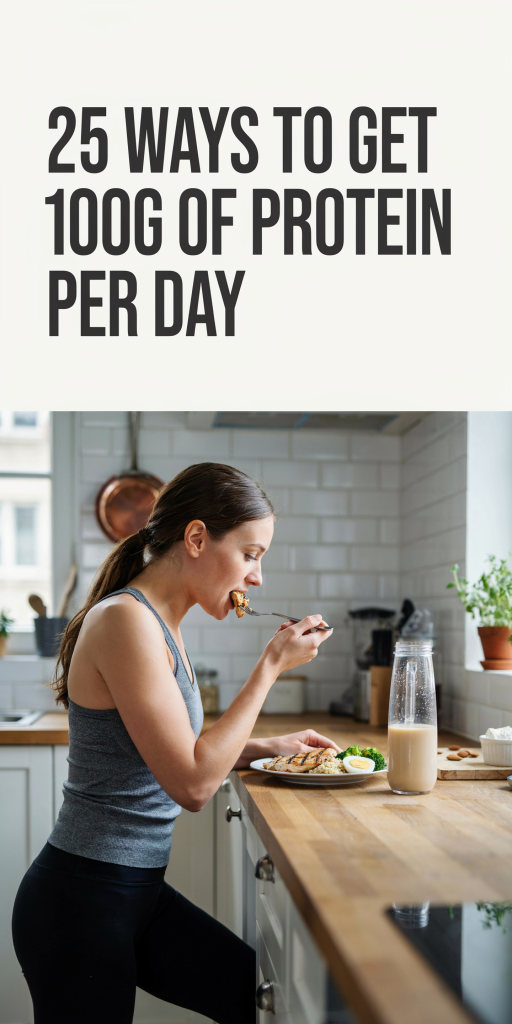
25 Ways To Get 100G Of Protein Per Day
A hundred grams of protein per day is the number that shows up most consistently in the research on muscle maintenance, body composition, satiety, and metabolic health. It’s roughly 0.7 to 0.8 grams per pound of bodyweight for most people, and it’s the threshold above which the research-backed benefits of adequate protein intake become most pronounced: preserved muscle mass during weight loss, reduced hunger, faster recovery from exercise, and better blood sugar stability after meals.
It’s also, for most people, significantly more than they’re currently eating. The average American adult consumes around 50 to 60 grams of protein daily. Getting from there to 100 grams requires either eating more protein-dense food at meals, or adding strategic protein sources between meals, or both.
The 25 strategies in this list are organized by approach: meal-level strategies, snack and between-meal strategies, food swaps that add protein without changing much else, and habit-level strategies that make hitting 100 grams easier over time. Every strategy includes the specific protein numbers so you can build toward your daily target with actual math.
Why 100 Grams Specifically
Before the strategies: why 100 grams rather than 80 or 120?
Eighty grams is achievable without much attention and doesn’t require significant dietary changes for most people who eat meat and dairy. Many people already hit 80 grams on a typical day without thinking about it.
One hundred grams is the threshold where people consistently report a meaningful difference in hunger control and fullness. At this level, protein’s effect on the satiety hormone PYY and the hunger hormone ghrelin becomes pronounced enough that most people naturally eat less overall without trying to restrict.
One-twenty grams and above is the territory for people with specific athletic or body composition goals who are actively training. It requires more intentional planning and often requires protein supplements regardless of food quality.
For the general population — particularly anyone over 35, when muscle loss accelerates meaningfully — 100 grams is the number worth targeting. It’s achievable from food alone without supplementation for most people who eat animal proteins, though supplements make it significantly easier.
Meal-Level Strategies
1. Build Every Meal Around a 30-Gram Protein Anchor
The simplest possible framework for hitting 100 grams: three meals per day, each containing at least 30 grams of protein. Add a 10-gram protein snack and you’re done.
What 30 grams of protein looks like at a meal:
- 4 oz cooked chicken breast: 35g
- 5 oz cooked salmon fillet: 35g
- 4 oz cooked ground beef (80/20): 26g (add a can of tuna alongside for 5 more minutes of work)
- 3 whole eggs plus 3 egg whites: 30g
- 5 oz cooked shrimp: 30g
- 1 cup 2% cottage cheese: 28g (add 2 eggs: 14g more)
- 1.5 cups cooked lentils: 27g (add 2 tbsp hemp seeds: 7g more)
The key insight: protein needs to be planned at the grocery store and at the stove, not improvised at the table. A meal without a planned protein anchor almost always delivers 10 to 15 grams of protein — not 30.
2. Make Breakfast the Highest-Protein Meal of the Day
Most people eat their lowest-protein meal at breakfast — toast, cereal, fruit, or a bar. This creates an uphill battle all day, requiring unusually high protein at lunch and dinner to compensate.
Shifting breakfast to 35 to 40 grams of protein produces a dramatically easier day. It also meaningfully reduces hunger throughout the morning, which most people report as one of the most significant behavior changes from increasing breakfast protein.
High-protein breakfast options by protein content:
- 4-egg omelet with cheese and turkey sausage: ~40g
- 3 eggs scrambled + 1 cup cottage cheese: ~42g
- Greek yogurt (2% Fage, 7 oz) + 2 eggs scrambled: ~36g
- Cottage cheese and smoked salmon bowl: ~38g
- Protein shake made with 1.5 scoops whey + 1 cup Greek yogurt blended: ~55g
- 3 eggs + 3 turkey bacon strips + 1 slice cheese: ~35g
The easiest high-protein breakfast that requires almost no preparation: Two eggs scrambled in 3 minutes plus one container of plain Greek yogurt (170 to 200 grams). Total protein: 26 to 30 grams. Add two slices of deli turkey or ham: 34 to 40 grams.
3. Eat Protein First at Every Meal
Protein eaten at the beginning of a meal has a disproportionate effect on satiety and blood sugar relative to protein eaten at the end of the same meal. This is not speculative — the research on meal sequencing is reasonably consistent that eating protein and vegetables before starches produces better satiety and lower post-meal glucose.
Practically, this means: eat the chicken, fish, or eggs before eating the rice, bread, or pasta. Not because carbohydrates are problematic but because starting with protein primes the satiety response early and prevents overeating the lower-protein foods at the end.
4. Double the Protein at Lunch
Lunch is where most people’s protein drops. A salad with light dressing, a bowl of soup, a sandwich with one deli meat slice — these are 10 to 20 gram lunches that make hitting 100 grams for the day nearly impossible without making dinner a 60-gram effort.
Doubling protein at lunch specifically means:
Instead of a Caesar salad with croutons: Caesar salad with 6 oz grilled chicken (no croutons). Goes from 12g to 46g protein.
Instead of a broth-based vegetable soup: the same soup with a can of tuna added and white beans stirred in. Goes from 8g to 36g protein.
Instead of a turkey sandwich with one slice of meat: a double-meat turkey and Swiss on GF bread. Goes from 18g to 32g protein.
Instead of pasta with marinara: the same pasta with 5 oz ground turkey in the sauce. Goes from 12g to 40g protein.
5. Use the Three-Protein-Component Dinner Formula
A dinner that reliably delivers 40 grams of protein has three protein components rather than one. Not three separate protein dishes — three protein sources woven into the same meal.
Examples:
- Chicken (35g) + white beans (8g) + Parmesan (4g) = 47g
- Salmon (35g) + lentils (9g) + Greek yogurt sauce (5g) = 49g
- Ground beef (26g) + black beans (8g) + cheddar (7g) = 41g
- Shrimp (30g) + edamame (8g) + sesame dressing with tahini (4g) = 42g
The legume or dairy addition is the simplest way to add 8 to 14 grams of protein to a dinner that already has a meat or fish anchor, without meaningfully changing what the meal looks like or tastes like.
6. Make Meal Prep Bowls Instead of Assembling Meals Day-Of
The single most effective behavioral strategy for consistently hitting high protein targets is having portioned, ready-to-eat protein already in containers in the refrigerator. When lunch is already assembled, the decision of what to eat disappears, and the protein content of that lunch is already decided and already counted.
The Sunday bowl prep for 100g days:
- Cook 5 lbs chicken thighs (seasoned, roasted, sliced)
- Cook 2 lbs ground beef or turkey (seasoned)
- Cook 4 cups rice or 2 cups quinoa
- Hard-boil 12 eggs
- Open and drain 4 cans of chickpeas or white beans
Assembled into bowls on Sunday: 5 days of lunches, each delivering 40 to 50 grams of protein. Add breakfast and dinner and 100 grams is nearly automatic.
Snack and Between-Meal Strategies
7. Add One Strategic Protein Snack at 3pm
Most people’s hunger peaks in the mid-afternoon. The strategic approach is a protein snack at this exact time rather than reaching for whatever is nearby. A 3pm protein snack of 20 to 25 grams converts a difficult protein day into an achievable one, closes the gap between a 75-gram lunch-and-breakfast day and a 100-gram target, and prevents the late-dinner overeating that typically follows an inadequate afternoon.
Twenty-gram protein snacks that take under 2 minutes to prepare:
- 1 cup 2% cottage cheese: 28g
- 200g plain Greek yogurt: 20g
- 4 slices deli turkey rolled around cheese: 20g
- Hard-boiled egg x3 + a small handful of almonds: 22g
- 1 can tuna in olive oil with mustard: 25g
- 1 string cheese + 2 oz deli meat: 21g
- 1/2 cup edamame + 1 hard-boiled egg: 18g
8. Keep Shelf-Stable Protein at Your Desk or Workspace
Protein snacking fails when the protein isn’t accessible. The simple fix: keep shelf-stable protein at your desk, in your car, or at your workplace so the convenient option is also the high-protein option.
Shelf-stable proteins with no refrigeration needed:
- Canned tuna or salmon pouches (Wild Planet makes single-serve pouches): 25g per pouch
- Chomps or Epic beef sticks (GF, no additives): 9 to 12g per stick
- Roasted chickpeas: 7g per oz
- Jerky (GF options available): 12 to 14g per oz
- Individual almond butter packets: 7g per 2 tbsp
- Protein bars (RXBAR, Larabar protein, or similar — check GF status): 10 to 20g depending on brand
The key principle: accessible protein beats no protein. Having a bag of beef jerky in your desk drawer removes the decision entirely.
9. Replace Afternoon Chips or Crackers with Protein
The afternoon snack swap is one of the highest-leverage changes for reaching 100 grams. Replacing 150 calories of crackers or chips (1 to 2 grams of protein) with any of the options above (15 to 25 grams of protein) adds up to 23 grams of daily protein with zero change to meal structure.
10. Drink a Protein Shake When You’re Behind
A protein shake is the most efficient calorie-to-protein ratio available. One scoop of whey protein powder (25g protein, 120 calories) blended with water takes 90 seconds to make and immediately adds 25 grams toward the daily target.
Shakes are a tool, not a replacement for food. Food-first protein is ideal for satiety, nutrient diversity, and gut health. But if it’s 4pm and you’ve had 50 grams of protein, a protein shake closes that gap without requiring another meal. Use it strategically.
The most protein-dense shake combinations:
- 1.5 scoops whey + water: ~37g protein
- 1 scoop whey + 1 cup Greek yogurt blended: ~45g protein
- 1 scoop whey + 1 cup cottage cheese + fruit: ~50g protein
- 1 scoop casein (slower digesting) before bed + milk: ~37g protein
Food Swaps That Add Protein
11. Swap Greek Yogurt for Regular Yogurt
Regular yogurt: 5 to 6 grams of protein per 170g serving. Plain 2% Greek yogurt (Fage, Chobani, or similar): 17 to 20 grams of protein per 170g serving.
Three times the protein for the same volume of food, similar cost, and better satiety. This single swap, if applied to a daily yogurt habit, adds 12 to 15 grams of protein per day.
12. Swap Cottage Cheese for Cream Cheese, Sour Cream, or Regular Cheese in Dips and Spreads
Cottage cheese has become one of the most versatile high-protein food swaps available, particularly after blended smooth. It has a mild enough flavor that it disappears into almost any context.
Cottage cheese swap applications:
- Blend 1 cup cottage cheese smooth: use as a pasta sauce base (28g protein vs. 2g for cream sauce)
- Use blended cottage cheese instead of sour cream on tacos: 28g per cup vs. 2g
- Mix into scrambled eggs to add volume and protein: adds 14g per 1/2 cup
- Use as a ricotta substitute in lasagna: similar protein, better texture when cold
- Blend with frozen berries and honey: high-protein “ice cream” at 28g per cup
13. Swap White Rice with a Protein-Boosted Alternative
White rice: 5g protein per cup cooked. Quinoa: 8g protein per cup cooked. Lentils: 18g protein per cup cooked. Chickpea rice (blend chickpeas and cook similarly): 15g protein per cup. Mixed rice and lentils (mujadara base): 14g protein per cup.
The difference between eating white rice and eating a rice-lentil blend as your starch base adds 9 to 13 grams of protein per meal with minimal flavor difference.
14. Add Eggs to Things
Eggs are one of the most efficient protein additions available. One large egg provides 6 to 7 grams of protein, and eggs can be added to almost any savory meal without significantly changing the character of the dish.
Practical egg additions:
- Stir a raw egg into hot soup at the end of cooking: it poaches in 2 minutes, adds 6g
- Add a fried egg on top of a grain bowl: 6g, dramatically improves the experience
- Add 2 hard-boiled eggs to a salad that would otherwise be egg-free: 14g
- Mix an extra egg into ground beef or turkey when making meatballs or burgers: 7g per patty or ball
- Scramble 2 eggs into leftover rice for an instant fried rice: 14g added
15. Swap Regular Pasta for Chickpea Pasta (Banza)
Regular pasta: 7g protein per 2 oz dry serving. Chickpea pasta (Banza): 14g protein per 2 oz dry serving.
Double the protein for the same volume and shape of pasta, with a slightly nuttier flavor that integrates well into most pasta sauces. For anyone who eats pasta regularly, this swap alone adds 7 grams of protein per pasta meal.
16. Add Hemp Seeds to Anything
Hemp seeds are the most overlooked high-protein food available. Three tablespoons provides 10 grams of complete protein (all nine essential amino acids), 3 grams of fiber, and significant omega-3 fatty acids — and they taste like almost nothing, with a very mild nutty flavor.
Where to add 3 tbsp hemp seeds:
- Stirred into oatmeal or yogurt: adds 10g protein, invisible
- Blended into a smoothie: adds 10g, no texture change
- Sprinkled over a salad: adds 10g, adds slight crunch
- Mixed into ground beef before cooking: adds 10g, completely invisible
- Added to any dip or spread: hummus, guacamole, tzatziki — 10g added, imperceptible
If you add 3 tablespoons of hemp seeds to a single daily food, you add 10 grams of complete protein to your day with essentially no effort and no recipe change.
17. Choose Higher-Protein Dairy at the Grocery Store
Most people don’t compare protein content when buying dairy. The difference is significant.
Dairy protein comparison per 1 cup (8 oz):
- Whole milk: 8g
- 2% milk: 8g
- Skim milk: 8g
- Kefir: 11g
- Cottage cheese (2%): 28g
- Greek yogurt: 17 to 20g
- Regular yogurt: 5 to 6g
- Ricotta (whole milk): 14g per 1/2 cup
- Parmesan: 10g per oz
Choosing cottage cheese and Greek yogurt over their lower-protein dairy counterparts, and using Parmesan rather than other lower-protein cheeses for grating, adds meaningful protein without changing eating patterns.
18. Add a Scoop of Collagen Peptides to Coffee or Any Hot Drink
Collagen peptides are not a complete protein — they’re missing the amino acid tryptophan — but they provide 9 to 11 grams of protein per tablespoon and dissolve completely in hot liquids without any taste or texture change.
If you drink one or two cups of coffee per day, adding a tablespoon of collagen peptides to each cup adds 10 to 20 grams of protein with zero change to your routine. It is the single most frictionless protein addition in this list.
Note on collagen limitations: Use collagen as a supplement to food-based complete proteins, not as a replacement. Pair with a meal that includes complete protein sources.
Habit-Level Strategies
19. Track Protein for Two Weeks, Then Stop
Tracking protein in a food app (Cronometer, MyFitnessPal, or Lose It) for two focused weeks produces a calibration that most people retain for years. After two weeks of logging, the average person has a reasonably accurate mental model of how much protein is in the foods they eat regularly.
Without ever tracking, estimating protein is nearly impossible — most people are off by 30 to 50% in either direction. After two weeks of consistent tracking, estimates become accurate enough to maintain 100 grams without ongoing logging.
The protocol: track every gram of protein consumed for 14 days. Don’t change anything else. Just observe. By day 14, you’ll know exactly where your protein gaps are, which meals are already high-protein, and which foods are providing most of your daily protein. That information persists without the habit of tracking needing to persist.
20. Plan Protein Before Planning Anything Else at the Grocery Store
The sequence of grocery shopping decisions determines what’s available to eat during the week. If protein sources are purchased first and the rest of the meal plan is built around them, hitting protein targets becomes structural rather than effortful.
The protein-first grocery list:
- Start with the meat and fish section: chicken thighs, salmon, ground beef or turkey, shrimp
- Move to dairy: eggs (2 dozen), Greek yogurt, cottage cheese, cheddar
- Canned proteins: 4 cans tuna, 2 cans salmon, 4 cans chickpeas or white beans
- Protein supplements if using: whey or plant-based protein powder
Once protein is purchased, the rest of the list (vegetables, grains, sauces, condiments) fills in around it. This ordering produces a refrigerator full of high-protein options rather than a refrigerator full of sides with protein as an afterthought.
21. Pre-Cook Protein Every Sunday
The gap between intention and action on protein targets is almost entirely a preparation gap. People know chicken and fish are high in protein. They don’t cook chicken and fish for lunch on Tuesday because they didn’t prepare it on Sunday.
The 60-minute Sunday protein prep:
- Oven: 4 lbs seasoned chicken thighs at 425°F (40 minutes, hands-off)
- Stove: 1.5 lbs ground turkey browned with seasoning (10 minutes)
- Pot: 12 eggs hard-boiled (14 minutes)
- Pan: 1 lb shrimp cooked with garlic and lemon (4 minutes)
This produces: 4 to 5 days of lunch protein, dinner protein for 2 to 3 nights, snack protein for the week. All of it in 60 minutes of kitchen time, most of which is hands-off.
22. Learn Five High-Protein Meals That Take Under 15 Minutes
When time is short, people fall back on whatever is fastest. If the fastest options in your cooking repertoire are low-protein — pasta with marinara, toast and eggs (limited), cereal — then high-protein eating evaporates under time pressure.
Five 15-minute high-protein meals to have memorized:
- Canned tuna tossed with olive oil, capers, and cherry tomatoes over salad greens: 35g, 8 minutes
- Ground beef with taco seasoning over rice with canned black beans and cheese: 48g, 12 minutes
- Scrambled eggs (4) with turkey sausage crumbled in: 40g, 8 minutes
- Shrimp stir-fried with garlic and tamari over microwaved cauliflower rice: 36g, 12 minutes
- Greek yogurt (2 cups) layered with protein powder, berries, and hemp seeds: 45g, 3 minutes
These are not aspirational meals to make when you have time. They are fall-back meals for time-constrained days. Knowing them by heart means protein targets survive even the most demanding schedule.
23. Use Protein Density as a Purchasing Criterion
Protein density — the ratio of protein grams to total calories — is the single most useful metric for building a high-protein diet without overshooting calorie targets.
High protein density foods (more than 25% of calories from protein):
- Canned tuna in water: 94% of calories from protein
- Chicken breast: 85% of calories from protein
- Cottage cheese (2%): 65% of calories from protein
- Greek yogurt (0%): 65% of calories from protein
- Shrimp: 82% of calories from protein
- Egg whites: 90% of calories from protein
- Ground turkey (99% lean): 80% of calories from protein
- White fish (cod, tilapia): 88% of calories from protein
Medium protein density (15 to 25% of calories from protein):
- Eggs: 32% (with the fat included)
- Salmon: 42%
- Chickpeas: 22%
- Lentils: 30%
- Greek yogurt (2%): 40%
Building the majority of your protein intake from high-density sources means you reach 100 grams of protein without consuming an excessive number of total calories.
24. Know Your Daily Protein Score Before Dinner
By 5pm or 6pm, before cooking dinner, the question “how much protein have I had today?” should have a reasonably accurate answer. If the answer is 45 grams at 5pm, dinner needs to deliver 55 grams. If the answer is 70 grams, dinner needs to deliver 30 grams.
Without checking in on cumulative protein before dinner, people frequently finish the day 30 to 40 grams short because dinner was planned without reference to earlier meals. A two-second mental audit before choosing dinner creates the feedback loop that closes the gap.
The check-in habit: Before starting dinner preparation, answer: how much protein have I had today? If the answer is under 65 grams, prioritize a high-protein protein anchor (at least 35 to 40 grams) at dinner. If it’s over 65 grams, any dinner protein combination will complete the day without stress.
25. Understand That 100 Grams Looks Different for Different Body Sizes
A 120-pound woman and a 200-pound man both aiming for “100 grams of protein per day” are working toward very different things. For the 200-pound man, 100 grams is about 0.5 grams per pound — below the research-backed optimal range for active people. For the 120-pound woman, 100 grams is 0.83 grams per pound — right in the optimal range.
The better target for most people: 0.7 to 1 gram of protein per pound of bodyweight. This means:
- 120 lbs: 84 to 120 grams per day (100 grams is a solid target)
- 150 lbs: 105 to 150 grams per day (100 grams is the floor)
- 180 lbs: 126 to 180 grams per day (100 grams is not enough)
- 200 lbs: 140 to 200 grams per day (100 grams is significantly below optimal)
Use 100 grams as the starting target and as the baseline to build from. For most people who are currently eating 50 to 60 grams per day, doubling protein intake to 100 grams produces meaningful improvements in how they feel, how they recover from exercise, and how well they manage hunger. Once that’s sustainable habit, adjusting toward the bodyweight-specific target is the natural next step.
Building to 100 Grams: A Sample Day
Here’s what 100 grams looks like when the strategies above are working together — no supplements required, three meals and one snack.
Breakfast (35g): 3 whole eggs scrambled with spinach and cheese (21g) + 1 cup plain Greek yogurt on the side (20g) = 41g
Lunch (35g): Large salad with 5 oz canned tuna (30g) + 1/2 cup chickpeas (7g) + 3 tbsp hemp seeds (10g) + lemon-olive oil dressing = 47g
Snack (10g): 1 string cheese (7g) + 10 almonds (3g) = 10g
Dinner (25g): 4 oz salmon fillet (28g) + roasted broccoli + olive oil = 28g
Day total: 126 grams
That’s without any protein powder, without eating unusually large portions, and without any single meal being a protein-focused production. It’s just three meals and a snack built around the principles above — each one with a protein anchor, a few protein companions, and nothing remarkable about the overall approach.
The difficulty in hitting 100 grams of protein daily is almost entirely a planning and awareness issue, not a food access issue. Once you know where your protein comes from, how much each food contains, and how to stack sources across the day, 100 grams becomes the floor rather than the goal.