10 Healthy Amazon Fresh Foods Worth Adding To Your Cart In 2026: Nutrient-Packed Picks For Busy Lives
We’re all juggling more than ever, work, family, exercise, and the persistent urge to eat well without spending hours shopping. Amazon Fresh can be a real time-saver, but with so many options it’s easy to grab convenient items that don’t help our health goals. In this guide we cut through the clutter and show which nutrient-dense staples are worth adding to your Amazon Fresh cart in 2026. You’ll get quick selection criteria, five paired grocery highlights that work together for easy meals, and practical tips for saving, comparing brands, and storing your purchases. By the end, we’ll have a simple blueprint for building a healthy, convenient grocery list that fits busy lives and supports long-term wellness.
How To Choose Healthy Groceries On Amazon Fresh (Quick Criteria And Shopping Tips)
Shopping healthfully online demands slightly different instincts than wandering a store aisle. Here are quick, practical criteria we use when picking groceries on Amazon Fresh, they keep decisions fast and outcomes reliable.
- Prioritize whole foods first
- Look for minimally processed items: single-ingredient packages (e.g., plain oats, canned beans, frozen vegetables). These give us maximum nutrients per calorie and fewer hidden additives.
- Use filters and search terms like “organic,” “no sugar added,” or “unsweetened” when appropriate, but always double-check labels.
- Check nutrition facts and ingredients before hitting Buy
- For packaged goods, scan for sodium, added sugars, and saturated fat. If sugar appears in the first three ingredients, it’s not what we want for everyday eating.
- Favor items with short ingredient lists and recognizable words.
- Favor sustainable, nutrient-dense proteins and omega-3 sources
- On Amazon Fresh we prioritize wild-caught or responsibly sourced seafood and lean proteins with clear origin labels. Seafood like wild salmon and sardines deliver omega-3s and vitamin D without extra processing.
- Balance fresh, frozen, and shelf-stable staples
- Fresh produce is ideal but perishable: frozen fruits and vegetables often retain equal or higher nutrient levels and let us reduce waste.
- Keep shelf-stable proteins (canned beans, lentils, canned fish) on hand for last-minute meals.
- Read seller ratings and delivery freshness notes
- Choose items fulfilled by Amazon or highly rated local vendors for better quality control. Review photos and customer comments about packaging and freshness, they’re telling.
- Lean on multi-use, versatile items
- We aim for foods that work across breakfasts, lunches, dinners, and snacks, plain Greek yogurt, frozen berries, and quinoa do a lot of heavy lifting.
- Take advantage of search and lists
- Create a reusable Amazon Fresh list with staples. When we’re low on time, reordering from that list prevents impulse buys and keeps meals consistent.
- Use unit price and compare brands
- Toggle the “compare” or sort-by-price-per-ounce options to identify value without sacrificing nutrition. Sometimes store-brand or bulk packages offer the same ingredient profile at a lower cost.
- Watch for certifications that matter to you
- Organic, Non-GMO Project Verified, MSC-certified seafood, and Fair Trade labels provide quick signals if those attributes matter to your values or health concerns.
With these filters in mind, we can move through Amazon Fresh faster, avoid gimmicky products, and build a cart that supports energy, recovery, and long-term health.
Top 10 Healthy Picks From Amazon Fresh — Five Paired Highlights
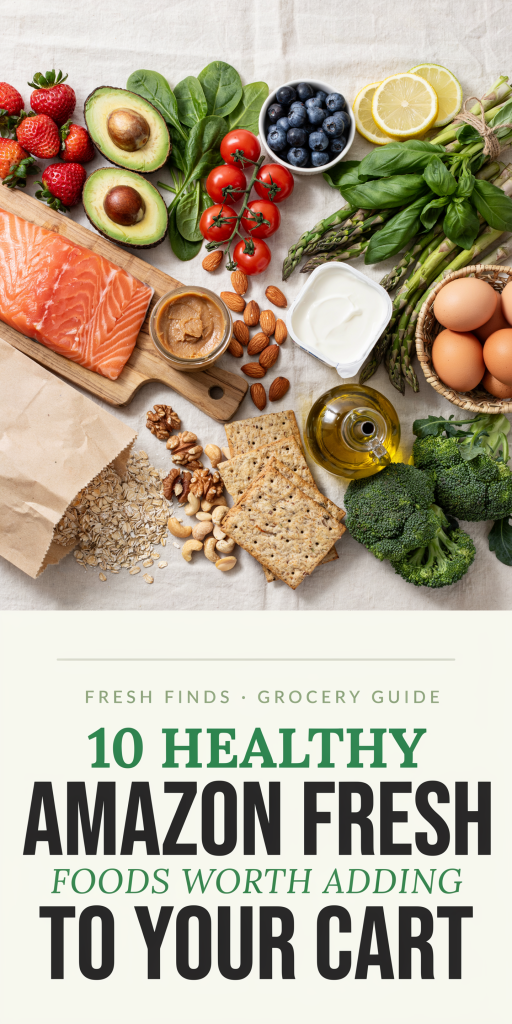
Here are ten specific, nutrient-packed foods, presented as five strategic pairs, that we regularly add to our Amazon Fresh carts. Each pair is chosen to complement one another for convenience, flavor, and balanced nutrition across meals.
These combinations make meal-building simpler: one item often plays the role of base or bulk while the other boosts protein, fiber, or healthy fats. We explain why each pair works and how to use them in real-life cooking.
Pair 1: Plain Greek Yogurt & Unsweetened Almond Milk
Why we pair them
Plain Greek yogurt and unsweetened almond milk are foundations for breakfasts and quick protein-rich snacks. Greek yogurt gives us concentrated protein (typically 15–20 g per cup for nonfat varieties) and probiotics that support gut health. Unsweetened almond milk provides a low-calorie, calcium-fortified dairy alternative that stretches yogurt into smoothies and overnight oats without added sugars.
How we use them
- Smoothies: Blend 1/2 cup plain Greek yogurt with 1 cup unsweetened almond milk, a handful of frozen berries, and a scoop of nut butter for a 10-minute meal that’s balanced in protein and healthy fats.
- Parfaits: Layer Greek yogurt with frozen berries (thawed), a spoonful of rolled oats or granola, and a sprinkle of seeds for texture.
- Baking and cooking: Use Greek yogurt to replace mayo in dressings or as a lower-fat stand-in for sour cream, and almond milk in pancakes and oatmeal to reduce saturated fat.
Shopping tips on Amazon Fresh
- Choose plain Greek yogurt labeled with live cultures and minimal additives. Look for lower-sugar flavored yogurts only when you need a treat.
- For almond milk, pick unsweetened varieties fortified with calcium and vitamin D. Compare brands by taste reviews, some have creamier textures which we prefer for smoothies.
Quick recipe idea (2 minutes to assemble)
- Yogurt Berry Jar: 1 cup Greek yogurt, 1/2 cup thawed frozen berries, 1 tbsp chia seeds. Stir and refrigerate for a grab-and-go breakfast.
Pair 2: Wild-Caught Salmon Fillets & Canned Sardines
Why we pair them
Both options deliver high-quality protein and omega-3 fatty acids (EPA and DHA), which are important for heart and brain health. Wild-caught salmon is great for dinners and batch-cooking, while canned sardines are an inexpensive, shelf-stable source of omega-3s, calcium, and vitamin D.
How we use them
- Weeknight dinners: Bake or pan-sear salmon fillets with lemon, olive oil, and herbs, it cooks in 10–12 minutes and makes excellent leftovers for salads.
- Quick lunches/snacks: Toss canned sardines on whole-grain toast, mix into salads, or add to pasta with lemon and capers for a speedy, nutrient-dense meal.
- Cost and convenience balance: Wild salmon often costs more: we buy it when on sale and freeze portions. Canned sardines fill in the gaps and are ideal for travel or pantry emergencies.
Sourcing and sustainability notes
- On Amazon Fresh, look for wild-caught labels and certifications like the Marine Stewardship Council (MSC) or clear sourcing information. For canned fish, check for BPA-free linings and minimal added oils or sauces.
Quick recipe idea (10 minutes)
- Sardine Salad: Mash canned sardines with Dijon, lemon, and chopped celery. Serve on whole-grain crackers or over mixed greens for a filling lunch.
Pair 3: Organic Mixed Greens & Baby Spinach Packs
Why we pair them
Leafy greens are low-calorie nutrient powerhouses, fiber, vitamins A, C, K, folate, and phytonutrients all in one package. Mixed greens offer variety of flavors and textures for salads, while baby spinach is sturdy for cooking into dishes like omelets, soups, and smoothies without turning bitter.
How we use them
- Salads and bowls: Start lunches with mixed greens, add a protein (salmon, sardines, or beans), and top with seeds or a simple vinaigrette.
- Cooking: Wilt baby spinach into pastas, stir-fries, and grain bowls, it reduces significantly in volume and boosts micronutrients.
- Smoothies: Baby spinach blends into smoothies with hardly any taste change but a clear nutrition upgrade.
Freshness and storage on Amazon Fresh
- Choose pre-washed, ready-to-eat bags if convenience matters, but check “use by” dates. If we’re not using them within a few days, we’ll transfer to a paper-towel-lined container to absorb moisture and prolong freshness.
Quick tip
- Double up: Buy one bag of mixed greens for salads and one bag of baby spinach for cooking to keep texture and flavor optimal across meals.
Pair 4: Quinoa & Ancient Grain Oats
Why we pair them
Quinoa and ancient-grain oats (like steel-cut or whole rolled oats) are versatile whole grains that offer sustained energy, fiber, and plant-based protein. Quinoa is a complete protein with all nine essential amino acids, making it a great base for bowls and salads. Oats are heart-healthy, rich in beta-glucan fiber, and an affordable daily staple.
How we use them
- Breakfast: Cook oats with unsweetened almond milk, top with frozen berries and a spoonful of Greek yogurt for balanced macros.
- Lunch/dinner: Use quinoa as a rice substitute in grain bowls or salads. Combine cooked quinoa with roasted veggies, canned beans, and a vinaigrette for a make-ahead meal.
- Baking and snacks: Use oats in homemade granola, energy bites, or as a binder in savory patties.
Shopping and prep tips
- On Amazon Fresh we compare whole-grain packages for price per ounce and check for minimal processing. Steel-cut oats take longer to cook but hold texture: quick oats are fine for overnight oats.
- Quinoa can sometimes be bitter from saponins: we look for pre-rinsed packaging or rinse at home before cooking.
Quick recipe idea (15 minutes active)
- Quinoa Power Bowl: Mix cooked quinoa with baby spinach, roasted chickpeas, diced cucumber, a drizzle of olive oil, and lemon juice. Add canned sardines or a baked salmon flake for protein.
Pair 5: Frozen Berries & Frozen Edamame
Why we pair them
Frozen berries and edamame are two frozen staples that address different needs: berries deliver antioxidants and natural sweetness, while edamame supplies plant-based protein and fiber. Both freeze well, stay fresh longer, and are often harvested and frozen at peak ripeness, preserving nutrients.
How we use them
- Breakfast and snacks: Toss frozen berries into smoothies, oatmeal, or yogurt. They keep meals colorful and reduce the urge for sugary add-ins.
- Lunch/dinner side or snack: Steam frozen edamame as a high-protein snack, toss into stir-fries, or add to grain bowls for extra texture and satiety.
- Meal prepping: Frozen items are fail-safe for last-minute meal rescue, we always keep both on hand.
Buying tips on Amazon Fresh
- Choose fruit-only frozen berries (no sugar added) and check for ingredient lists that contain only the fruit.
- For edamame, opt for shelled edamame if you want convenience: in-shell pods are slightly cheaper but need a little extra effort.
Quick recipe idea (5 minutes)
- Berry-Edamame Salad: Combine thawed frozen berries with mixed greens, a handful of shelled edamame, crumbled feta, and a balsamic glaze for a slightly sweet-savory side salad.
Smart Ways To Save, Compare Brands, And Store Your Amazon Fresh Buys
Saving money and maintaining quality are top priorities when we shop online. These strategies help us get the most value from Amazon Fresh without compromising nutrition.
- Use Subscribe & Save and Reorder lists
- For non-perishables (oats, quinoa, canned sardines) we set up automatic reorders to lock in lower prices and avoid last-minute, expensive replacements. Reorder lists also reduce impulse buys.
- Compare unit prices and look for multipacks
- Toggle “price per oz” where available. A larger bag of steel-cut oats or a multi-pack of Greek yogurt often lowers cost per serving. But only buy bulk if we’ll use it before spoilage.
- Check Amazon Fresh weekly deals and coupons
- Amazon Fresh runs targeted promotions and digital coupons. We clip applicable coupons and time purchases of wild-caught salmon or frozen fruit when items are discounted.
- Read the reviews strategically
- Look for comments about freshness, packaging, and flavor, especially for perishables. A consistent note about soggy greens or freezer burn is a red flag.
- Choose frozen or shelf-stable when appropriate
- Frozen berries and edamame are often cheaper per pound than fresh out-of-season fruit and maintain nutrition. Canned sardines and beans are inexpensive protein sources that stretch a budget.
- Store smart to reduce waste
- Greens: Transfer pre-washed greens from plastic bags to a container lined with paper towels: change towels if they get damp to extend life.
- Fish: Freeze salmon fillets individually in vacuum-seal or freezer bags, and label with date. Thaw in the refrigerator overnight for best texture.
- Dairy alternatives and yogurts: Store almond milk in the coldest part of the fridge and keep yogurt toward the back to maintain steady temperature.
- Sample smaller brands when curious
- If a new brand is cheaper but reviews are mixed, buy one small package to test. We avoid switching large bulk orders until we confirm taste and quality.
- Combine Amazon Fresh with local markets when needed
- For produce that’s seasonal and local, we sometimes supplement an Amazon Fresh order with a farmers’ market run to get the freshest tomatoes or berries at peak ripeness.
- Use proper thawing and reheating techniques
- For frozen meals or proteins, thaw in the refrigerator overnight rather than at room temperature. Reheat gently to preserve texture and nutrients, low, steady heat works better than blasting on high.
- Track what you actually eat
- After a few orders, review which items sat unused. We then adjust quantities or remove those items from our default list to avoid waste and free up budget for things we do use.
Putting these tactics together keeps our Amazon Fresh cart both healthy and cost-effective. Over time we’ve found this approach reduces food waste, improves meal quality, and makes weekly planning breezier.
Conclusion: How To Build A Healthy, Convenient Cart On Amazon Fresh
Building a healthy Amazon Fresh cart in 2026 doesn’t mean sacrificing convenience. By focusing on whole-food staples, like Greek yogurt, quality seafood, leafy greens, whole grains, and thoughtfully chosen frozen items, we create a flexible pantry that supports quick meals and better nutrition.
Use the selection criteria we outlined to filter choices quickly, add the paired staples to your recurring list, and apply the saving/storage tactics so food stays fresh and affordable. If we keep these ten items on rotation, we’ll cover breakfasts, lunches, dinners, and snacks with minimal effort and maximum nutrient payoff. Now let’s add them to our cart and get cooking.