10 Signs Your Feet Are Warning You About Circulation Problems (What To Watch For In 2026)
Our feet are more than the parts of us that get sore after a long day, they’re early-warning systems for problems that can affect the whole body. Circulation issues often show up first in the feet because they’re the farthest from the heart and have a dense network of tiny blood vessels and nerves. In this text we’ll walk through ten clear signs your feet may be telling you about poor circulation, explain why these signs appear, and help you decide when to act. Whether you’re managing diabetes, have a family history of vascular disease, or simply want to stay ahead of health risks, understanding the signals coming from your feet will give you a meaningful advantage in preventing complications.
Why Feet Often Reveal Circulation Issues
Our feet act like litmus paper for vascular health. Because they’re at the end of the arterial tree, blood must travel the furthest distance to reach them: any narrowing, blockage, or reduced flow in arteries will often show up there first. Plus, the small capillaries and nerves in the feet are particularly sensitive to changes in oxygen and nutrient delivery. When circulation falls short, tissues respond with color changes, temperature shifts, altered sensation, and slower healing.
There are two broad ways circulation problems affect the feet: arterial insufficiency and venous dysfunction. Arterial insufficiency means blood isn’t getting to the tissues efficiently, think claudication (leg pain when walking), cool toes, or pale skin. Venous dysfunction means blood isn’t returning properly to the heart, causing pooling, swelling, and varicose veins. Both can coexist and both can cause overlapping symptoms such as pain, skin changes, and ulceration.
Systemic conditions also influence foot circulation. Diabetes damages small blood vessels and nerves (microvascular disease and neuropathy), increasing the risk of unnoticed injuries and infections. Smoking, high blood pressure, high cholesterol, and sedentary lifestyles accelerate atherosclerosis, the narrowing of arteries that reduces blood flow. Age and genetics play a role, too. Because many of these risk factors are common, we recommend treating any suspicious foot symptom seriously rather than assuming it’s just fatigue or a blister.
Finally, the feet’s environment matters. Shoes that compress nerves or reduce blood flow, prolonged sitting or standing, and cold exposure can exacerbate circulation symptoms. Observing patterns, whether symptoms worsen after activity, at night, or in the cold, gives clues about the underlying problem and guides what diagnostic tests will be useful.
Color And Temperature Changes: Pale, Blue, Or Cold Feet
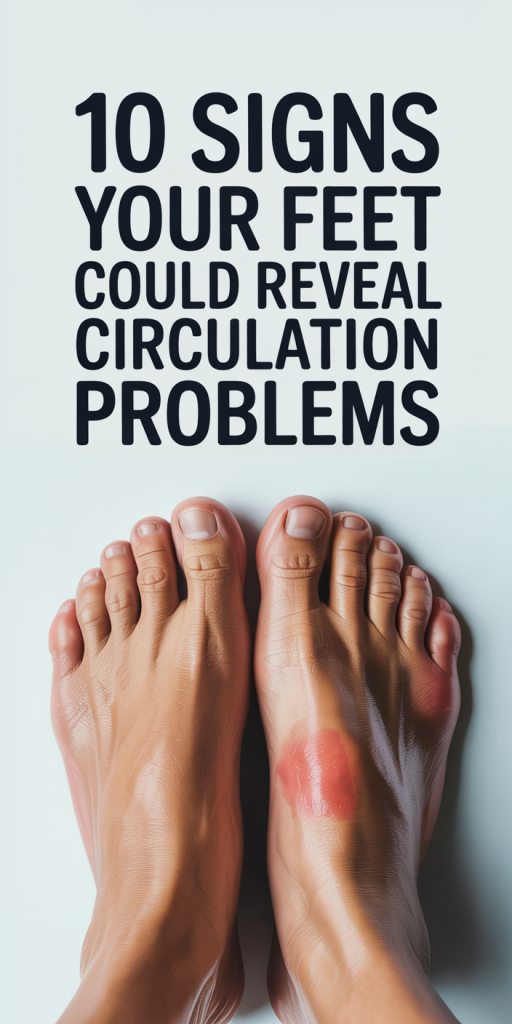
One of the most obvious signs of poor circulation is a change in color or temperature. Healthy feet usually have a warm, pink tone and feel similar in temperature to the rest of the body. When circulation is impaired we commonly see three distinct patterns: pallor (pale), cyanosis (bluish discoloration), and consistently cold feet.
Pale feet, especially when elevated, suggest reduced arterial inflow. If you lift your leg and it becomes very pale, then when you lower it it flushes slowly, that’s a classic sign of arterial insufficiency. Blue or purple discoloration often indicates inadequate oxygenation of blood in the extremity: this can happen in severe arterial blockages or in venous congestion where deoxygenated blood pools.
Cold feet occur because less warm blood is reaching the tissues. People with Raynaud’s phenomenon experience extreme color and temperature changes with cold exposure or stress: white (constriction), blue (deoxygenation), then red (reperfusion). While Raynaud’s is often benign, persistent cold feet accompanied by sores or pain should prompt further evaluation for peripheral arterial disease (PAD).
How to check: compare both feet side-by-side and note differences. Test capillary refill by pressing the toenail or skin until it blanches and timing how fast color returns, normal is under two seconds. If refill is delayed, or if color/temperature differences are marked, we should consider vascular testing. Simple observations at home can be very telling, but persistent or worsening changes require prompt medical attention because they can precede tissue damage.
Altered Sensation: Numbness, Tingling, Or Burning
Sensation changes in the feet, numbness, tingling (pins and needles), or burning, are common complaints. While these symptoms are often linked to nerve problems, circulation issues alone can produce similar sensations because nerves need a steady blood supply to function properly. Reduced perfusion can cause nerves to misfire, producing paresthesia (tingling) or numbness.
We frequently see altered sensation in people with diabetes, where a combination of neuropathy and poor circulation produces a dangerous combination: reduced sensation means small cuts go unnoticed, and poor blood flow makes healing slow. But sensation changes aren’t unique to diabetes. Chronic ischemia from peripheral arterial disease can cause a sensation of coldness and numbness, particularly when walking or when the foot is elevated.
Key clues that point toward vascular causes rather than pure neuropathy include: symptoms that fluctuate with activity or limb position, accompanying color/temperature changes, and pain related to walking (claudication). Neuropathy tends to produce more constant, glove-and-stocking distribution numbness and often includes night pain that improves with movement.
We’ll go deeper in the next subsection about how to distinguish nerve problems from circulation issues, because the distinction matters, it directs diagnostic tests and treatment choices.
Distinguishing Nerve Problems From Circulation Issues
Distinguishing neuropathy from vascular problems requires careful attention to the pattern of symptoms and some simple bedside checks. Neuropathy usually produces a stocking-glove distribution: both feet are affected symmetrically, sensation loss progresses from toes upward, and there may be burning or electric shocks without clear positional triggers. Vascular problems often present asymmetrically, have positional elements (worse when elevated, better when dependent), and show objective signs like coolness, delayed capillary refill, or weak pulses.
Physical exam tips we use: palpate dorsalis pedis and posterior tibial pulses, diminished or absent pulses suggest arterial disease. Check capillary refill and skin color changes with elevation. A tuning fork or monofilament test helps quantify sensory loss for neuropathy. Ask about pain with walking, claudication that stops with rest points toward arterial insufficiency. If both neuropathy and vascular disease are suspected, both conditions should be evaluated because treating one without recognizing the other can lead to poor outcomes, especially in diabetes.
When in doubt, we recommend prompt clinical vascular testing, even a simple ankle-brachial index (ABI), and nerve conduction studies when neuropathy is suspected. Early identification helps prevent ulcers, infections, and in severe cases, limb loss.
Slow‑To‑Heal Wounds, Ulcers, And Recurrent Infections
Wounds on the feet that don’t heal or that repeatedly get infected are red flags for poor circulation. Healthy blood flow is essential for delivering oxygen, immune cells, and nutrients necessary for tissue repair. When flow is reduced, even minor cuts, blisters, or toenail problems can progress to chronic ulcers. These ulcers often occur on pressure points, the tips of toes, the plantar surface, or around the ankle, and can deepen over time.
People with diabetes are at particularly high risk because of the combined effect of neuropathy and microvascular disease. Neuropathy reduces pain perception, so injuries may be neglected: microvascular damage undermines healing. But peripheral arterial disease in non-diabetics can produce similar non-healing wounds, especially when arterial blockage is significant.
Recurrent infections can begin as cellulitis (skin infection) or more localized abscesses and can progress rapidly if blood supply is inadequate. Signs that a wound is poorly perfused include pale wound beds, little or no granulation tissue, and minimal bleeding at the ulcer base. Foul smell, increased drainage, spreading redness, and systemic symptoms (fever, chills) indicate infection and need urgent care.
Early action matters. We advocate for regular foot inspections for at-risk patients, prompt cleaning and dressing of any wound, and seeing a clinician at the first sign of poor healing. In many cases, vascular assessment (ABI, toe pressures, duplex ultrasound) is essential before prolonged wound care, because revascularization can be the most effective route to healing.
Signs Of Infection, Ulcer Severity, And When To Act
We classify foot infections and ulcers by severity to guide urgency. Mild infection involves localized redness, warmth, and tenderness without systemic signs: moderate infection shows deeper tissue involvement or purulence: severe infection involves systemic signs like fever, tachycardia, or leukocytosis, or signs of limb-threatening infection such as extensive necrosis.
If an ulcer shows increased pain, foul odor, drainage, spreading redness, or if the patient develops fever or worsening blood sugar control, seek immediate medical care. For people with numb feet, any new ulcer should prompt prompt clinical evaluation because they may not perceive worsening. Imaging and cultures may be needed, and empiric antibiotics are often started while diagnostics proceed.
In advanced cases where arterial supply is the limiting factor, revascularization procedures (angioplasty, stenting, or bypass) may be necessary to restore blood flow and allow wounds to heal. This is why vascular evaluation shouldn’t be delayed when wounds aren’t progressing with standard wound care.
Swelling, Varicose Veins, Hair Loss, And Shiny Skin
Changes in skin texture and hair growth on the feet and lower legs can be subtle signs of circulation trouble. When venous return is impaired, we often see swelling (edema), aching, and the development of varicose veins. Venous insufficiency leads to blood pooling which increases pressure in superficial veins, causing them to dilate and become tortuous. Chronic venous hypertension can produce skin changes like brownish pigmentation from hemosiderin deposition, thickening, and even lipodermatosclerosis (hardened, tight skin around the ankles).
On the arterial side, reduced blood flow can cause hair loss on the toes and lower legs, because hair follicles are sensitive to nutrient and oxygen deprivation. The skin may also become smooth, thin, and shiny. These changes are gradual but telling: a shiny lower leg with few hairs and weak pulses is more suggestive of arterial disease than venous.
Edema can have many causes, heart failure, kidney disease, or prolonged sitting, but unilateral swelling (one leg bigger than the other) often points to a local problem such as deep vein thrombosis (DVT) or venous obstruction. Varicose veins, while common and often cosmetic, can cause aching, heaviness, and in advanced cases, contribute to ulcer formation.
We recommend that patients monitor not only symptoms but visible skin changes over weeks. Photographs taken weekly can document progression and be useful during medical visits. Compression therapy helps many venous problems but is contraindicated if significant arterial disease is present, another reason to get a vascular assessment before starting self-treatment.
When To See A Doctor, Common Diagnostic Tests, And Treatment Options
Deciding when to seek medical attention can be confusing. See a clinician promptly if you notice any of the following: persistent color or temperature changes, non-healing wounds, signs of infection (redness, drainage, fever), sudden severe pain, new or severe swelling, or changes in walking ability like claudication. For at-risk groups, people with diabetes, smokers, those with known heart or vascular disease, the threshold for evaluation should be lower.
Common diagnostic tests include:
- Ankle-Brachial Index (ABI): A simple, noninvasive comparison of blood pressure in the ankle versus the arm: ABI < 0.9 indicates peripheral arterial disease. Toe-brachial indices can be used when ABI is unreliable (for example in calcified arteries).
- Duplex ultrasound: Assesses blood flow and detects blockages, stenosis, or venous insufficiency.
- CT angiography or MR angiography: Provide detailed imaging of arterial anatomy when intervention is being considered.
- Doppler studies and segmental pressures: Localize blockages and quantify perfusion.
- Wound cultures and blood tests: For infected ulcers or systemic signs.
- Nerve conduction studies: If neuropathy is suspected.
Treatment options depend on the diagnosis and severity. For arterial disease we use lifestyle changes (smoking cessation, exercise programs such as supervised walking therapy), medical therapy (antiplatelets, statins), and revascularization procedures (angioplasty, stenting, surgical bypass) for severe disease or limb-threatening ischemia. For venous problems, compression therapy, leg elevation, exercise, sclerotherapy, or vein ablation are mainstays. Wound care for ulcers includes debridement, appropriate dressings, offloading pressure, and targeted antibiotics when infected.
We emphasize a multidisciplinary approach for complex cases: vascular surgeons, podiatrists, wound-care specialists, endocrinologists (for diabetes management), and infectious disease consultants when needed. Patient engagement matters, improving blood sugar, quitting smoking, maintaining activity, and learning proper foot care dramatically change outcomes.
Preventive steps we recommend now: inspect your feet daily, keep skin moisturized but not between toes, trim nails carefully, wear well-fitting shoes, and seek professional foot care if you can’t perform these tasks safely. Early detection and a tailored treatment plan dramatically reduce the risk of serious complications.
Conclusion
Our feet provide actionable clues about the state of our circulation. Color and temperature changes, altered sensation, non-healing wounds, swelling, varicose veins, hair loss, and shiny skin are all signs we should pay attention to, especially if we have diabetes, vascular risk factors, or a family history of circulation problems. We encourage daily checks, prompt medical evaluation for concerning symptoms, and lifestyle measures that support vascular health. With timely action and the right care team, most circulation-related foot problems are treatable and often preventable. Let’s make foot health a regular part of our routine in 2026 and beyond.