14 Surprising Uses For Lemon Around The House (Clever Ways To Clean, Brighten, And Freshen)
We use lemons a lot more than for a slice in our water. In this text, “14 Surprising Uses For Lemon Around The House”, we’ll walk through practical, science-backed ways to clean, brighten, and freshen almost every room. Lemon’s acidity, natural oils, and fresh scent make it an inexpensive, low-toxicity tool in our cleaning and personal-care kit. Whether you want to remove stubborn food odors from a cutting board, brighten dingy laundry, or make a quick, homemade surface spray, lemons often outperform single-purpose commercial products without the chemicals.
We’ve organized this guide by task and space so you can jump to what you need: the chemistry behind why lemon works, kitchen-specific solutions, multiroom hacks, beauty and personal-care tricks, and how to handle lemon safely. Each tip is practical, easy to follow, and designed for real homes, not just curated for clicks. Read on and you’ll find ways to save money, reduce waste, and get things cleaner and fresher using what’s probably already in your fridge.
How Lemon Works: The Science Behind Its Cleaning Power
Lemon’s usefulness around the house starts with a few simple chemical and physical properties. First, lemons are acidic, primarily citric acid, which dissolves mineral deposits (like limescale) and helps break down grease and grime. That acidity changes the environment on a surface, loosening bonds between soils and the material beneath so we can wipe them away more easily.
Second, lemon peel contains essential oils (most notably limonene) that act as natural solvents and degreasers and also carry that bright citrus scent we associate with cleanliness. Those oils can dissolve sticky residues and lift oily smudges when combined with warm water or a carrier like vinegar.
Third, lemon juice has mild antibacterial properties. It’s not a hospital-grade disinfectant, but for many everyday tasks it reduces bacterial load and neutralizes odor-causing compounds by altering pH and breaking down volatile molecules.
Finally, lemon’s natural bleaching action, a weak oxidizer when combined with sunlight or baking soda, can brighten fabrics and surfaces without harsh chlorine. The takeaway: lemon isn’t a cure-all, but its acidity, oils, and mild oxidizing effect make it a powerful, low-toxicity option for routine cleaning and refreshment.
We’ll show how to use these properties safely and effectively in the next sections.
Kitchen Cleaning And Freshening
The kitchen is where lemons shine: they cut grease, deodorize, and add shine to metal and wood. We rely on lemon juice and peels for quick fixes and deeper cleaning sessions alike because they’re cheap, effective, and food-safe. For everyday kitchen maintenance, combine lemon juice with water for a cutting-surface rinse, rub peels on stainless steel to remove fingerprints, or mix lemon with baking soda for a mildly abrasive paste that tackles stuck-on food.
For wooden cutting boards, a lemon half with coarse salt creates a scrub that lifts stains and reduces odors without harsh chemicals: it also helps condition the wood slightly. On stovetops and countertops, a spray of lemon juice diluted with water will release light grease and leave a fresh scent. When cleaning metal, from faucets to chrome handles, a lemon slice followed by a soft cloth often restores shine without damaging the finish if you don’t overdo the scrubbing.
We’ll cover several kitchen-specific applications next, including garbage disposals, microwaves, and the fridge, with step-by-step tips so you can do them quickly and safely.
Remove Odors From Cutting Boards, Garbage Disposals, And The Fridge
Cutting boards: For wooden or plastic boards, sprinkle coarse salt or baking soda over the surface, cut a lemon in half, and use the cut side to scrub. Let sit 5–10 minutes, then rinse with hot water and dry. The abrasive salt helps physically lift stains while citric acid breaks down odor compounds: it’s an easy way to remove fish or onion smells without bleach.
Garbage disposals: Run cold water and feed the disposal a few lemon peels while it’s on. The oils in the peel freshen and coat the blades, and the acid helps neutralize odors. For a deeper clean, pour 1/2 cup baking soda into the disposal, follow with 1 cup white vinegar, let fizz for a few minutes, then rinse with boiling water and grind lemon peels briefly.
Fridge: Keep an open container of baking soda to absorb odors, and for active deodorizing, slice a lemon and place it on a small plate to release a light citrus aroma. To clean sticky shelves, wipe with a solution of 1 part lemon juice to 3 parts warm water. Lemon brightens surfaces and leaves a fresh scent without the residue some scented cleaners leave behind.
These simple steps neutralize odors instead of just masking them, and they’re food-safe for kitchen areas.
Clean Microwave Splatters, Stovetop Grime, And Food Stains
Microwave: Place a microwave-safe bowl with 1 cup water and the juice of one lemon (or lemon slices) inside. Heat on high for 3–5 minutes until the interior steams, then leave the door closed for a couple minutes. The steam loosens dried-on splatters: we just wipe the interior with a soft cloth or sponge and everything comes off with minimal elbow grease.
Stovetop grime: For grease around burners and knobs, sprinkle baking soda over the affected area, spray lightly with lemon juice, and let it sit 10–15 minutes. The mild fizzing and acidity help lift grease: wipe clean with a damp cloth. For sealed cooktops, use the same paste applied gently to avoid scratching.
Food stains: Lemon juice is a mild bleaching agent. For tea or fruit stains on light countertops or cutting boards, apply lemon juice, let sit briefly in sunlight if possible (sunlight amplifies the bleaching effect), then rinse. On fabrics, pre-treat stains with lemon and a pinch of salt, test on an inconspicuous area first, then wash promptly. Remember: lemon brightens, but doesn’t replace oxygen bleach for heavily set or colored fabric stains.
These techniques let us remove messy kitchen problems without harsh chemicals and with tools most of us already have.
Household Cleaning Power: Multiroom Hacks
Lemon’s versatility extends beyond the kitchen. We can use lemon-based solutions in bathrooms, living areas, and outdoors for light disinfecting, stain removal, and even odor control. Its pleasant scent is a bonus, but the cleaning benefits are the real value: cutting through soap scum, neutralizing musty smells, and brightening grout or tile with minimal risk of toxic fumes.
For everyday surface cleaning in most rooms, we create a simple spray: 1 part fresh lemon juice to 3 parts distilled or filtered water, with a teaspoon of castile soap or a few drops of dish soap for extra degreasing. Use it on laminate, sealed stone, or painted surfaces, but avoid prolonged exposure on natural stone like marble, where acid can etch.
We also use whole peels as small odor absorbers in shoes, closets, or trash cans. Freeze peels and toss them into the garbage disposal or compost for added freshness. Outdoors, a lemon-and-water spray can discourage ants and some soft-bodied pests when applied along entry points (avoid spraying on beneficial plants directly). Below we share specific multiroom uses that maximize lemon’s natural chemistry.
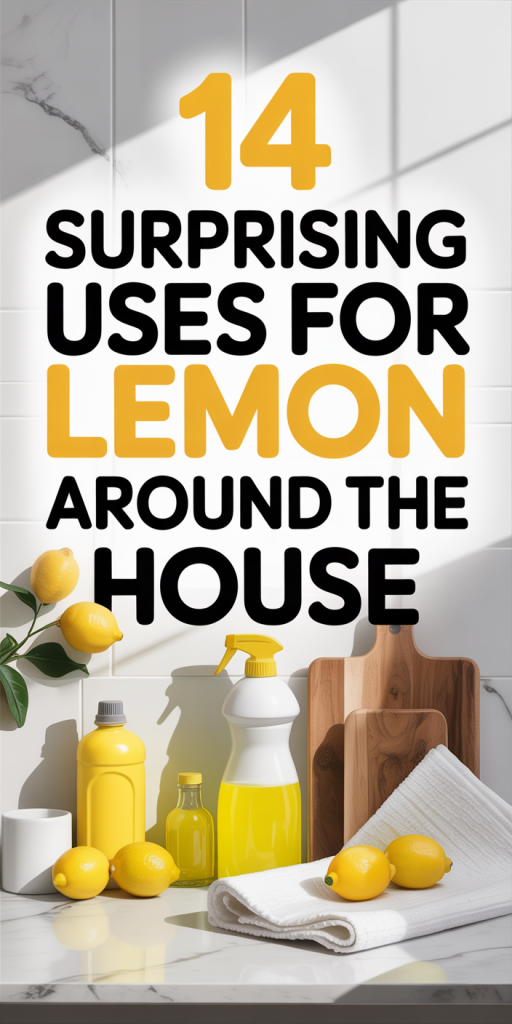
Use Lemon As An All-Purpose Cleaner, Laundry Brightener, And Outdoor Pest Deterrent
All-purpose cleaner: Combine 1/2 cup lemon juice, 2 cups water, and 1 tablespoon white vinegar in a spray bottle: add 1 teaspoon of liquid castile soap if you want more grease-fighting power. Shake gently and use on countertops, appliance exteriors, and sealed wood surfaces. We recommend testing a small area first. This blend cleans well and leaves a light citrus scent without harsh residues.
Laundry brightener: For whites, add 1/2 cup lemon juice to the wash cycle along with your regular detergent to boost brightness naturally. For sun-safe fabrics, lay damp, lemon-treated garments in direct sunlight for a short time, the combination of citric acid and UV light helps lift discoloration. Avoid using lemon on delicate dyes without testing.
Outdoor pest deterrent: Mix lemon juice with water (1:2 ratio) in a spray bottle and apply along door thresholds, windowsills, and areas where ants trail. The scent and acidity disrupt ant scent trails. For chewing pests and slugs, lemon peels create a mildly unpleasant barrier: again, effectiveness varies and this is best used as a complementary tactic to good sanitation and sealing entry points.
These multiroom hacks stretch what a single fruit can do and reduce our reliance on specialty chemical cleaners.
Beauty And Personal Care Hacks With Lemon
Lemon isn’t just for surfaces, we use it in modest, careful ways for beauty and personal care. Its astringent and brightening qualities can help with nails, skin marks, and scalp buildup when used sparingly and diluted. But a firm warning up front: undiluted lemon can irritate skin and increases sun sensitivity, so we always dilute, do a patch test, and avoid direct sun exposure after application.
For nails, lemon juice can reduce yellowing caused by polish or staining agents. A quick soak of 5–10 minutes in a mixture of warm water and lemon juice followed by moisturizing cuticle oil restores a cleaner look. For facial tweaks, lemon mixed with soothing ingredients like honey or yogurt can brighten dull areas when used as a short-contact mask: keep contact time under 10 minutes and rinse thoroughly.
When we use lemon in personal care, the goal is subtle improvement rather than radical change. It complements rather than replaces dermatologist-recommended treatments for persistent skin or scalp issues. Below are two specific, safe applications we use at home.
Natural Nail Whitener And Gentle Facial Brightening Mask
Natural nail whitener: Mix equal parts lemon juice and warm water in a small bowl, add 1 teaspoon baking soda to create a gentle paste, and use a soft brush to scrub nails for 1–2 minutes. Rinse well and apply a hydrating oil or lotion immediately: lemon can dry the cuticle area. Repeat once a week as needed. This method lifts surface stains without harsh chemicals: avoid vigorous scrubbing that damages the nail plate.
Gentle facial brightening mask: Combine 1 teaspoon fresh lemon juice with 1 tablespoon plain yogurt and 1 teaspoon honey. Yogurt’s lactic acid plus honey’s humectant properties balance lemon’s acidity, creating a milder brightening treatment. Apply to a clean face for no more than 8–10 minutes, avoiding the eye area. Rinse with lukewarm water and follow with moisturizer. Always patch-test behind the ear or on the inner forearm and don’t use if irritation occurs.
These personal-care uses exploit lemon’s natural chemistry responsibly. Keep sessions short, dilute when possible, and never apply lemon-treated skin to direct sunlight for several hours to avoid photosensitivity.
Safety, Storage, And Best Practices For Using Lemon Around The Home
Lemon is generally safe, but common-sense precautions protect surfaces and skin. First, never apply undiluted lemon juice to natural stone surfaces (marble, travertine, limestone) because acid can etch and dull them. For painted wood or delicate finishes, test a small, hidden area before broad application.
Second, skin safety: lemon juice can cause irritation, drying, or increased sun sensitivity (photosensitivity). Always dilute lemon for skincare, limit contact time, and rinse thoroughly. Don’t use lemon-infused treatments on sun-exposed skin or before going outside for several hours.
Storage: Fresh lemon juice lasts a few days in the refrigerator: freeze extra juice in ice cube trays for longer-term use in cleaning and laundry. Keep peels in the compost or freeze them for disposal or disposal-perk runs in the garbage disposal. For homemade sprays, make small batches and store in a cool, dark place: citrus-based solutions degrade faster than commercial cleaners.
Best practices: label homemade cleaners, keep them away from children and pets, and avoid mixing lemon with strong bleach (sodium hypochlorite), while lemon isn’t likely to create toxic chlorine gas itself, mixing acidic cleaners with bleach can produce hazardous byproducts. When in doubt for disinfection needs (e.g., after raw meat contact or illness), use EPA-registered disinfectants per guidelines. With these precautions, we can use lemon confidently and effectively.
Conclusion
Lemon is a small household powerhouse: an affordable, multipurpose tool that cleans, brightens, and freshens when used thoughtfully. Across the kitchen, laundry, bathrooms, and personal-care routines, the acidity and essential oils in lemons give us non-toxic alternatives for everyday tasks. We’ve shown 14 practical uses, from deodorizing cutting boards and reviving whites to homemade cleaners and gentle beauty hacks, all grounded in simple chemistry and real-world testing.
As we embrace lemons, let’s be practical: they’re effective for routine maintenance and odor control but not substitutes for disinfectants in situations that require hospital-grade sanitation. Use dilution, test surfaces, and protect skin, and lemons will serve as a safe, economical addition to our cleaning and self-care toolbox. Try a few of these tips this week and notice how much you can simplify while still keeping your home bright and fresh.