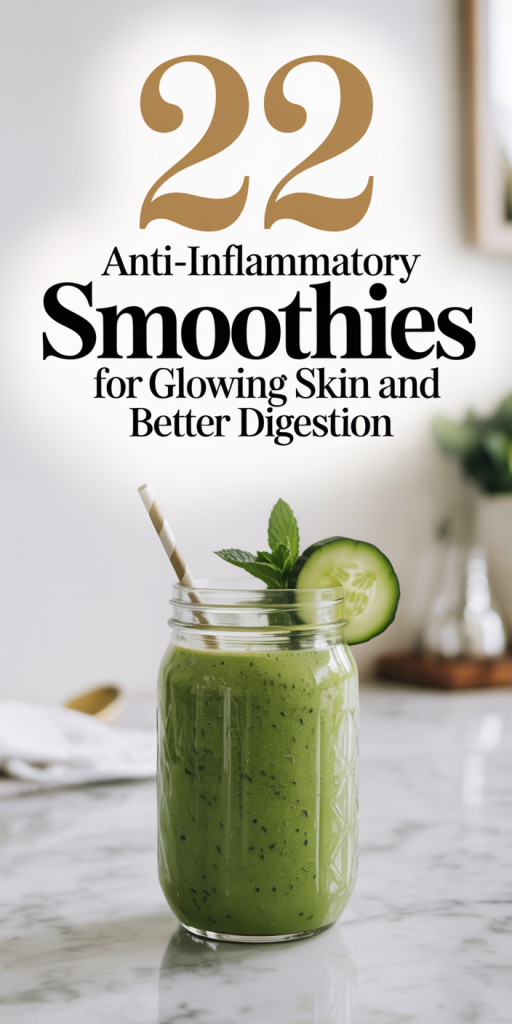
22 Anti-Inflammatory Smoothies for Glowing Skin and Better Digestion
We know how frustrating it is to chase glowing skin and calm digestion at the same time. Diet plays a huge role, and few tools are as convenient, or as versatile, as smoothies. In this guide we’ll explain why anti-inflammatory smoothies work, outline the key ingredients to keep on hand, show how to build balanced blends, and give you 22 recipes grouped by flavor and function. These smoothies focus on antioxidants, anti-inflammatory compounds, healthy fats, fiber, and gentle probiotics so you can sip toward clearer skin and a happier gut without fancy equipment or weird supplements.
Why Anti-Inflammatory Smoothies Work for Skin and Digestion
Chronic low-grade inflammation shows up in many ways: stubborn breakouts, dull skin texture, bloating, irregular bowel habits, and discomfort. Anti-inflammatory foods help by reducing oxidative stress, supporting the gut barrier, and feeding beneficial microbes. Smoothies are an ideal vehicle for these foods because they:
- Concentrate anti-inflammatory nutrients (vitamin C, polyphenols, omega-3s, curcumin) in an easy-to-digest form.
- Combine fiber and prebiotics with probiotics (when we add yogurt or kefir) to support microbial balance.
- Deliver healthy fats that help carry fat-soluble antioxidants (like beta-carotene and curcumin) for better absorption.
When we drink smoothies regularly, as part of a balanced diet, they can help reduce inflammation markers, improve skin elasticity and tone, and ease digestion simply by making nutrient-dense choices more convenient. That said, smoothies aren’t a magic bullet: they’re most effective combined with sleep, stress management, and a varied whole-food diet.
Key Anti-Inflammatory Ingredients to Keep on Hand
Below we list the core ingredient groups we rely on. Keep these stocked and you’ll be able to assemble effective smoothies in minutes.
Fruits, Berries, and Vegetables Rich in Antioxidants
- Blueberries, strawberries, raspberries: high in anthocyanins and polyphenols that reduce oxidative stress.
- Cherries (especially tart cherries): potent anti-inflammatory polyphenols linked to lower muscle- and joint-related inflammation.
- Mango, papaya: rich in vitamin A precursors and enzymes (papain) that can aid digestion.
- Leafy greens (spinach, kale): packed with vitamin C, magnesium, and phytonutrients: low in sugar but high in benefit.
- Cucumber and celery: hydrating, soothing, and low-calorie bases for more volume.
Herbs, Spices, and Functional Add‑Ins (Turmeric, Ginger, Probiotics)
- Turmeric: contains curcumin, a powerful anti-inflammatory compound. Use with black pepper and a healthy fat for absorption.
- Ginger: soothes the gut, reduces nausea, and has anti-inflammatory gingerols.
- Cinnamon: helps modulate blood sugar and adds anti-inflammatory polyphenols.
- Fresh herbs (mint, basil): add antioxidants and flavor without sugar.
- Probiotic-rich foods (plain yogurt, kefir, skyr): introduce live cultures that help digestion and gut immunity.
Healthy Fats, Proteins, and Fiber for Skin and Gut Health
- Avocado: provides monounsaturated fats, vitamin E, and a creamy texture that supports skin hydration.
- Nuts and nut butters (almond, cashew): supply vitamin E, protein, and healthy fats.
- Flaxseed and chia: excellent plant-based omega-3s (ALA) and soluble fiber to feed gut bacteria and support bowel regularity.
- Collagen peptides or plant protein powder: support skin structure and keep smoothies satiating.
- Oats: add soluble fiber (beta-glucans) that soothes digestion and keeps blood sugar steady.
How to Build a Balanced Anti-Inflammatory Smoothie
We think of a smoothie as a small ecosystem, each element plays a role. Use this framework to build balanced blends that promote skin and gut health.
Base, Liquid, and Texture: Simple Ratios and Swaps
Aim for a ratio that balances flavor, nutrition, and blendability:
- 1–1.5 cups base fruit/veggies (fresh or frozen)
- 3/4–1 cup liquid (dairy or non-dairy)
- 1/4–1/2 cup creamy element (avocado, yogurt, silken tofu) or 1 scoop protein
- 1–2 tablespoons seeds/nuts or 1 tablespoon nut butter
Liquid options: unsweetened almond or oat milk, coconut water (for electrolytes), plain kefir (for probiotics), or green tea (antioxidant boost). For thicker texture, use frozen fruit or add 1 tablespoon chia seeds and let sit 5–10 minutes.
Sweeteners, Boosters, and Portion Guidance
We prefer minimal added sweeteners. Use ripe banana, dates (1 small), or a splash of maple syrup only if needed. Boosters include:
- 1/2–1 teaspoon ground turmeric + pinch black pepper
- 1 teaspoon freshly grated ginger
- 1 tablespoon ground flax or chia seeds
- 1/2–1 teaspoon cinnamon
Portion size: keep most smoothies around 10–14 ounces (300–400 ml) to avoid excess calories and sugar in one sitting. If you’re using a smoothie as a meal replacement, add a protein source and healthy fat: if it’s a snack, keep it lighter.
22 Anti-Inflammatory Smoothie Recipes (Grouped for Ease)
We grouped the recipes so you can pick by flavor profile or function. Each recipe makes one serving (~12–14 oz). Adjust liquid for your preferred thickness.
Green Glow Smoothies (1–6)
- Spinach-Citrus Radiance
- Ingredients: 1 cup baby spinach, 1/2 cup frozen pineapple, 1/2 banana, 3/4 cup coconut water, 1 tablespoon chia seeds, juice of 1/2 lemon, pinch of turmeric.
- Directions: Blend until smooth. Lemon brightens skin with vitamin C: chia adds omega-3s.
2. Avocado-Kale Luminous
- Ingredients: 1 cup kale (stems removed), 1/4 ripe avocado, 1 small green apple (cored), 3/4 cup unsweetened almond milk, 1 tsp grated ginger, 1 tbsp hemp seeds.
- Directions: Blend until silky. Healthy fats from avocado improve skin hydration.
3. Cucumber-Mint Soother
- Ingredients: 1 cup chopped cucumber, 1/2 cup spinach, 1/2 cup frozen green grapes, 3/4 cup plain kefir, handful fresh mint, squeeze of lime, 1 tsp honey (optional).
- Directions: Blend: strain if desired. Cooling and hydrating for bloating.
4. Green Tea & Matcha Glow
- Ingredients: 1 cup brewed green tea (cooled), 1/2 banana (frozen), 1 cup spinach, 1/2 cup frozen mango, 1 tsp matcha, 1 tbsp almond butter.
- Directions: Blend. Antioxidant-rich, mildly caffeinated for morning glow.
5. Broccoli-Blueberry Repair
- Ingredients: 1/2 cup steamed and cooled broccoli florets, 1/2 cup blueberries, 1/2 banana, 3/4 cup oat milk, 1 tbsp ground flaxseed.
- Directions: Blend until smooth. Broccoli offers sulforaphane, a skin-protective compound.
6. Celery-Aloe Digestive Calm
- Ingredients: 1 cup celery, 1/2 cup green apple, 1/2 cup cucumber, 3/4 cup water or coconut water, 1 tbsp aloe vera gel (food-grade) or coconut yogurt, ice.
- Directions: Blend and drink fresh. Hydrating and soothing for mild digestive irritation.
Berry Bright Smoothies (7–12)
7. Classic Blueberry Antioxidant
- Ingredients: 1 cup frozen blueberries, 1/2 banana, 3/4 cup plain Greek yogurt, 1 tbsp chia seeds, 1/2 tsp cinnamon.
- Directions: Blend. High in anthocyanins, great for skin radiance and gut microbes.
8. Mixed Berry + Turmeric Silk
- Ingredients: 1 cup mixed berries, 1/2 cup silken tofu, 3/4 cup unsweetened almond milk, 1/2 tsp turmeric + pinch black pepper, 1 tsp maple syrup (optional).
- Directions: Blend. Protein-rich and anti-inflammatory.
9. Raspberry-Lemon Glow
- Ingredients: 3/4 cup frozen raspberries, 1/2 cup strawberries, juice of 1/2 lemon, 3/4 cup coconut water, 1 tbsp ground flaxseed.
- Directions: Blend: strain seeds if you prefer. High vitamin C supports collagen.
10. Cherry-Berry Recovery
- Ingredients: 3/4 cup frozen tart cherries, 1/4 cup blueberries, 1/2 banana, 3/4 cup plain kefir, 1 tsp honey (optional).
- Directions: Blend. Tart cherries help reduce inflammation and support recovery.
11. Elderberry-Blue Boost
- Ingredients: 1 cup mixed berries, 1 tbsp elderberry syrup (or 1 tsp elderberry powder), 3/4 cup oat milk, 1 tbsp almond butter.
- Directions: Blend. Elderberry adds immune-supporting flavonoids.
12. Strawberry-Cilantro Clarifier
- Ingredients: 1 cup strawberries, 1/2 cup spinach, small handful cilantro, 3/4 cup water or coconut water, 1 tbsp chia.
- Directions: Blend. Cilantro can aid mild detox pathways and adds freshness.
Tropical & Creamy Smoothies (13–17)
13. Mango-Coconut Glow
- Ingredients: 1 cup frozen mango, 1/2 cup coconut milk (light), 1/4 cup plain yogurt, 1 tbsp ground flaxseed, pinch turmeric.
- Directions: Blend. Mango provides beta-carotene for skin tone.
14. Papaya-Orange Enzyme Smoothie
- Ingredients: 3/4 cup papaya, juice of 1 orange, 1/2 banana, 3/4 cup unsweetened almond milk, 1 tsp lime zest.
- Directions: Blend. Papaya’s papain enzyme supports protein digestion.
15. Pineapple-Turmeric Anti-Inflammatory
- Ingredients: 3/4 cup frozen pineapple, 1/2 banana, 3/4 cup coconut water, 1/2 tsp turmeric + pinch black pepper, 1 tbsp chia seeds.
- Directions: Blend. Bromelain in pineapple can aid digestion and reduce inflammation.
16. Coconut-Avocado Hydrator
- Ingredients: 1/4 avocado, 1/2 cup pineapple, 3/4 cup coconut water, 1 tbsp shredded coconut, squeeze lime.
- Directions: Blend until creamy. Hydrating and skin-plumping.
17. Papaya-Kefir Tropical Probiotic
- Ingredients: 1/2 cup papaya, 1/2 cup kefir, 1/2 banana, 1 tsp grated ginger, 1 tbsp chia seeds.
- Directions: Blend. Combines enzymes and probiotics for digestion.
Protein‑Boosted and Gut‑Friendly Smoothies (18–22)
18. Collagen Berry Latte
- Ingredients: 1/2 cup mixed berries, 1 scoop collagen peptides, 3/4 cup cold brewed coffee or cold water, 1/4 cup unsweetened almond milk, 1 tsp cinnamon.
- Directions: Blend. Collagen supports skin matrix: caffeine optional.
19. Oat‑Banana Skin Smoother
- Ingredients: 1 small banana, 1/4 cup rolled oats (soaked 10 min), 3/4 cup oat milk, 1 tbsp almond butter, 1 tsp ground flax.
- Directions: Blend. Oats and flax feed gut microbes and stabilize blood sugar.
20. High‑Protein Turmeric Latte Smoothie
- Ingredients: 1 scoop vanilla protein (whey or plant), 1/2 banana, 3/4 cup almond milk, 1/2 tsp turmeric + pinch black pepper, 1 tbsp almond butter.
- Directions: Blend. Satisfying and anti-inflammatory for post-workout or breakfast.
21. Kefir-Blue Probiotic Repair
- Ingredients: 3/4 cup kefir, 1/2 cup frozen blueberries, 1 tbsp chia, 1/2 tsp cinnamon.
- Directions: Blend gently. Kefir supplies live cultures to support digestion and immunity.
22. Gut-Soothing Ginger-Peach Protein
- Ingredients: 1 cup frozen peaches, 3/4 cup unsweetened almond milk, 1 scoop unflavored protein, 1 tsp grated ginger, 1 tbsp ground flaxseed.
- Directions: Blend. Ginger calms the gut: protein and flax keep you full.
Practical Tips: Blending, Prep, and Storage
We learned a few practical rules that make smoothie life simpler:
- Use frozen fruit for thickness and to minimize added ice. Freeze extra portions in zip-top bags labeled with ingredients and date.
- Add delicate powders (probiotics, matcha) last and blend briefly to preserve beneficial strains, if using live probiotics, avoid hot liquids.
- Prep greens and herbs in airtight containers: they keep longer when layered with a paper towel.
- For make-ahead breakfasts: portion dry ingredients (seeds, powders, oats) into jars, and freeze the fruit in single-serve bags. In the morning, add liquid and blend.
- Storage: freshly blended smoothies are best within 24 hours. Store in an airtight jar in the fridge and give it a good shake: separation is natural. If you must freeze, freeze in an ice-cube tray and re-blend with a splash of liquid.
Timing, Serving Sizes, and How Often to Drink Smoothies
Smoothies can fit different roles in our routines: snack, meal, or recovery drink. Here’s how we recommend approaching timing and frequency:
- Breakfast: A protein- and fiber-rich smoothie (e.g., recipes 18–20) makes a balanced morning meal and helps regulate blood sugar.
- Post-workout: Aim for a 3:1 carb-to-protein ratio within 30–60 minutes after exercise, berries + protein works well.
- Midday snack: Keep it light (300–350 kcal) and focused on hydration and fiber to avoid an energy crash.
- Before bed: Avoid caffeine and heavy sugars: go for soothing blends (e.g., kefir-blue or almond-oat).
Frequency: Drinking an anti-inflammatory smoothie once daily is a sensible goal for many people: two a day can work if they replace meals and you balance calories. We caution against relying solely on smoothies long-term, diversity in whole foods matters.
Customization and Troubleshooting (Allergies, Blood Sugar, Kids)
We all have different needs: here’s how to adapt smoothies safely.
- Allergies & Intolerances: Swap dairy yogurt/kefir for coconut or almond-based yogurts (look for live cultures). For nut allergies, use seeds (sunflower or pumpkin) or seed butters.
- Blood Sugar Concerns: Focus on low-glycemic fruits (berries), add protein and healthy fats, and include fiber sources like oats or chia. Avoid fruit-only smoothies and limit high-sugar fruits like mango or ripe banana.
- Kids: Make smoothies fun, cut the sweetness slightly and add veggies masked by fruit (spinach + strawberry). Keep portions smaller (6–8 oz) and reduce or omit stimulants like matcha or coffee.
- Digestive Sensitivities: If smoothies cause bloating, reduce raw cruciferous veggies and high-FODMAP ingredients (apple, pear, large amounts of yogurt). Try lightly steaming vegetables before freezing or choose lower-FODMAP options (spinach, cucumber).
- Probiotic Use: If you’re adding probiotic powders, choose clinically backed strains and start with a low dose to assess tolerance. Avoid adding probiotics to hot liquids to preserve viability.
Conclusion
We’ve shown that anti-inflammatory smoothies are an accessible, enjoyable way to support glowing skin and better digestion. By including antioxidant-rich fruits and vegetables, spices like turmeric and ginger, healthy fats, fiber, and probiotic elements when appropriate, you can create blends that nourish your skin from the inside and calm your gut. Start with one smoothie a day, rotate recipes for variety, and pay attention to how your skin and digestion respond. Small, consistent changes add up, so blend consciously, sip mindfully, and enjoy the process.