10 Nail Changes That Could Point to Liver Trouble — What to Watch For
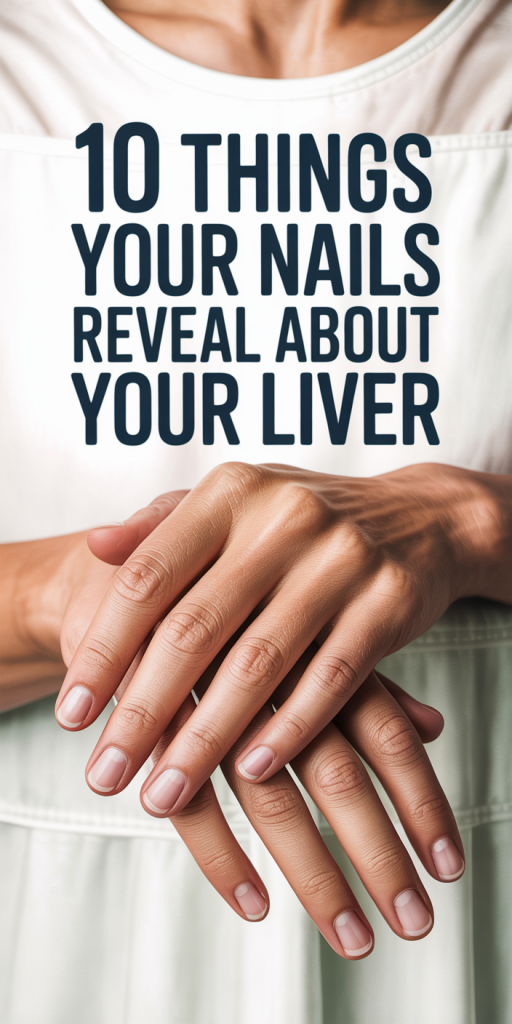
Our nails can tell us a surprising amount about what’s going on inside our bodies. In 2026, with routine screening more accessible and awareness higher, it’s worth paying attention to fingernails and toenails as part of our general health checks. Changes in color, texture, shape, or growth can sometimes be the first visible clues of liver dysfunction. In this text we’ll walk through ten specific nail changes that are associated with liver trouble, explain the mechanisms behind them, outline when to seek medical attention and testing, and give practical tips for monitoring and supporting nail health while investigating liver risk. This isn’t a substitute for medical care, but it will help us recognize signals early so we can act promptly.
Why Fingernails And Toenails Reflect Liver Health
Nails are a window into systemic health because they’re composed of keratin and depend on regular blood supply, nutrition, and metabolic balance to grow normally. The liver is central to many physiological processes, detoxification, protein synthesis, bile production, and regulation of hormones and nutrients, so when liver function is impaired, ripple effects can show in tissues with rapid turnover such as nails.
Several mechanisms link liver disease to nail changes:
- Altered serum proteins and albumin: The liver makes albumin and other proteins that influence fluid balance and tissue nutrition. Low albumin can lead to edema and subtle structural changes in the nail bed.
- Bilirubin accumulation and pigment changes: Cholestasis or impaired bilirubin clearance may deposit pigments in tissues, producing yellowing or brown discoloration visible in the nail plate.
- Vascular changes: Chronic liver disease, especially cirrhosis, disturbs hemodynamics and can produce clubbing or vascular spiders that sometimes correlate with nail findings.
- Nutritional deficiencies: People with advanced liver disease often develop deficiencies in zinc, iron, vitamin A, and the B vitamins: these vitamins and minerals are essential for normal nail growth and integrity.
- Immune and inflammatory mediators: Autoimmune liver diseases (like primary biliary cholangitis) and systemic inflammation can change nail texture and create ridging or pitting.
Important caveat: nail changes are nonspecific. A single nail abnormality rarely proves liver disease on its own: but, when nail changes occur alongside risk factors (heavy alcohol use, viral hepatitis, metabolic syndrome, unexplained jaundice, abdominal discomfort), they raise the index of suspicion and warrant further evaluation.
10 Nail Changes That Could Indicate Liver Trouble (What Each One Looks Like)
Below we list ten distinct nail findings that clinicians and patients have associated with liver dysfunction. For each change we describe the appearance, typical patterns, and what to look for on physical exam.
- Terry’s nails
- What it looks like: A white or pale nail plate with a narrow band of pink or brown at the distal edge (usually less than one-third of the nail). It often affects multiple nails symmetrically.
- Why it’s relevant: Classically associated with cirrhosis and congestive heart failure, Terry’s nails reflect changes in vascularity and decreased nail bed capillary density.
- Yellow nails
- What it looks like: Diffuse yellow discoloration of one or more nails, often with thickening and slowed growth.
- Why it’s relevant: Yellow nail syndrome is linked to pleural disease and lymphedema but can also accompany cholestatic liver disease where bilirubin and other pigments alter nail color.
- Leukonychia (white spots or plates)
- What it looks like: Partial or total whitening of the nail plate (true leukonychia involves the nail plate, while apparent leukonychia involves the nail bed).
- Why it’s relevant: Hypoalbuminemia from liver failure can produce apparent leukonychia, and punctate leukonychia may reflect past trauma or systemic illness.
- Nail bed hyperpigmentation
- What it looks like: Brownish or slate-gray streaks or diffuse darkening, sometimes most visible in the proximal nail fold.
- Why it’s relevant: Chronic liver disease and medications metabolized by the liver can cause increased pigmentation: hemochromatosis (iron overload) may also darken nails.
- Mee’s lines
- What it looks like: Single or multiple transverse white lines that run parallel to the lunula and do not move as the nail grows.
- Why it’s relevant: Classically linked to arsenic poisoning, Mee’s lines are also reported with severe systemic illness and have been noted in some liver disease cases, reflecting a temporary disruption of nail matrix function.
- Muehrcke’s lines
- What it looks like: Paired, transverse white lines in the vascular nail bed that disappear with pressure and do not move with nail growth.
- Why it’s relevant: Muehrcke’s lines are closely tied to low albumin states, frequently seen with hypoalbuminemia from advanced liver disease.
- Onycholysis with yellow-green discoloration
- What it looks like: Separation of the nail plate from the nail bed, often with secondary discoloration or infection.
- Why it’s relevant: While often fungal in origin, chronic cholestasis and altered immunity in liver disease can predispose to secondary infections and prolonged onycholysis.
- Clubbing (digital enlargement)
- What it looks like: Bulbous enlargement of the distal fingers or toes with loss of the normal angle between nail and nail bed.
- Why it’s relevant: Clubbing is most commonly linked to pulmonary disease but may appear in chronic liver conditions and reflects long-standing hypoxia or vascular mediators upregulation.
- Beau’s lines
- What it looks like: Transverse grooves or depressions across the nail plate that grow out over time.
- Why it’s relevant: Beau’s lines mark a temporary cessation of nail matrix activity during severe systemic stress, including acute liver injury or decompensation.
- Splinter hemorrhages and longitudinal ridging
- What it looks like: Small linear reddish-brown streaks under the nail (splinter hemorrhages) and vertical ridges running from cuticle to tip.
- Why it’s relevant: These findings are nonspecific but can accompany vasculopathy, coagulopathy, or chronic inflammation seen in liver disease.
Note on distribution and symmetry: Nail findings that affect multiple digits symmetrically, especially on both hands and feet, are more likely to reflect systemic disease such as liver dysfunction than isolated nail trauma.
How Liver Dysfunction Produces These Nail Changes
To interpret nail findings responsibly, we need to connect the physical signs to physiology. Here are the main pathways by which liver dysfunction can translate into visible nail abnormalities.
- Protein synthesis failure and hypoalbuminemia
The liver manufactures albumin and many binding proteins. When synthetic function declines, serum albumin falls: oncotic pressure shifts and microedema can change capillary dynamics in the nail bed. Clinically, this underlies Muehrcke’s lines (those paired white bands) and contributes to the pale appearance seen in Terry’s nails. Hypoalbuminemia also predicts worse outcomes in cirrhosis and often coexists with other systemic signs.
- Cholestasis and pigment deposition
When bile flow is obstructed or bilirubin clearance is impaired, whether from intrahepatic cholestasis or biliary obstruction, conjugated bilirubin and bile pigments accumulate. These pigments can deposit in the skin and nails, causing yellowing or brown discoloration. In advanced cases, the entire nail plate may take on a yellow hue and growth slows.
- Altered metabolism of hormones and toxins
The liver detoxifies xenobiotics and metabolizes hormones. Accumulated toxins or dysregulated estrogen and other hormones in liver disease can lead to vascular changes, telangiectasias, and, in some instances, clubbing through poorly understood mediator pathways.
- Nutritional deficiencies and malabsorption
Chronic liver disease often produces malabsorption (fat-soluble vitamin deficiencies) and reduced intake. Zinc, iron, and B-vitamin deficiency impair keratinocyte function and can manifest as brittle nails, ridging, or Beau’s lines. Hemochromatosis, a genetic cause of iron overload that damages the liver, may darken nails via iron deposition.
- Immune dysregulation and infection risk
Liver disease alters immune surveillance: complement levels fall, neutrophil function can be impaired, and portal hypertension predisposes to bacterial translocation. Reduced host defense increases susceptibility to onychomycosis and paronychia, which can produce thickened, discolored, or separated nails.
- Circulatory and coagulopathy effects
Portal hypertension and cirrhotic cardiomyopathy influence peripheral blood flow. Coagulopathy from reduced clotting factor synthesis may increase bleeding into the nail bed (splinter hemorrhages). Vascular remodeling and chronic hypoxia can contribute to clubbing in a subset of patients.
Putting it together: the same liver pathology rarely causes just one nail sign. Often a combination, for example, yellowing plus slowed growth and ridging, better suggests a hepatic contribution than any isolated abnormality.
When To See A Doctor: Red Flags, Tests, And Differential Diagnoses
Nail changes alone don’t confirm liver disease, but certain patterns and accompanying symptoms should prompt urgent evaluation. We recommend seeking medical attention if any of the following apply:
Red flags that warrant prompt assessment
- New, widespread nail changes affecting multiple digits over weeks to months, especially with jaundice (yellowing of skin or eyes).
- Fatigue, abdominal swelling, easy bruising, unexplained weight loss, or dark urine.
- Rapidly progressive nail changes such as sudden yellowing with slowed growth, or new clubbing.
- Signs of infection around nails (painful swelling, pus) in the context of immune compromise.
Initial clinical workup
Primary care physicians or hepatologists will combine history and physical exam with targeted testing. Typical first-line tests include:
- Liver function panel: ALT, AST, alkaline phosphatase, gamma-glutamyl transferase (GGT), total and direct bilirubin, and albumin.
- Coagulation profile: PT/INR and platelet count to assess synthetic function and bleeding risk.
- Viral hepatitis panel: hepatitis B and C serologies.
- Iron studies and ferritin: if pigmentation or hemochromatosis is suspected.
- Autoimmune markers: antinuclear antibody (ANA), anti–smooth muscle antibody, antimitochondrial antibody, depending on history and presentation.
- Imaging: abdominal ultrasound to evaluate liver architecture, biliary obstruction, or masses.
Specialized tests and referrals
If initial tests suggest chronic liver disease, we may order elastography (FibroScan) or MRI to stage fibrosis, or refer for hepatology consultation. Nail bed biopsy is rarely necessary but can help when a dermatologic diagnosis is unclear.
Differential diagnoses to consider
Many conditions mimic liver-related nail changes:
- Fungal infections (onychomycosis), cause yellow, thickened nails.
- Psoriasis, can produce pitting, onycholysis, and subungual hyperkeratosis.
- Nutritional deficiencies independent of liver disease (iron, biotin deficiency).
- Endocrine disorders, thyroid disease can cause brittle nails and ridging.
- Chronic kidney disease, can cause leukonychia and discoloration.
- Systemic infections or heavy metals exposure (arsenic causing Mee’s lines).
Weighing probabilities: patient context matters. For example, a middle-aged person with risk factors for viral hepatitis and new symmetric Terry’s nails plus low albumin is more likely to have hepatic disease than an otherwise healthy person with a single yellow toenail (which is more commonly fungal). Clinical judgment and appropriate testing guide us.
How To Monitor, Document, And Support Nail Health While Addressing Liver Risk
If we’re concerned about liver-related nail changes, active monitoring and supportive self-care help us track progress and improve nail integrity while pursuing diagnostic steps.
How to document nails effectively
- Take photographs: Use consistent lighting and angles and include a ruler or coin for scale. Photograph nails monthly to document changes because many nail signs evolve slowly.
- Keep a symptom log: Note concurrent symptoms such as fatigue, jaundice, abdominal pain, changes in stool or urine color, and any infections.
- Record treatments and exposures: List medications, supplements, occupational exposures (chemicals), and recent illnesses, all can influence nails.
Home care to support nail health
- Keep nails trimmed and clean. Short nails are less likely to split or harbor fungal infections.
- Use gentle moisturizers (e.g., emollients or nail oils) if nails are dry or ridged: avoid harsh solvents and excessive manicures that can traumatize the nail matrix.
- Protect hands and feet: wear gloves for wet work and breathable shoes for prolonged moisture.
- Treat suspected fungal infections promptly: topical antifungals help mild cases: oral options are more effective for extensive disease but require liver-safe assessment, don’t self-prescribe oral antifungals if you have liver disease or elevated liver enzymes without physician oversight.
Nutrition and supplements
- Aim for a balanced diet: sufficient protein, iron, zinc, and B vitamins support nail growth. We recommend discussing supplementation with a clinician if malnutrition or malabsorption is suspected.
- Avoid excessive alcohol intake: alcohol is a primary driver of liver injury and can worsen nail changes via nutritional depletion and direct hepatotoxicity.
Medical follow-up and treatment priorities
- Treat the underlying liver condition: whether antiviral therapy for hepatitis, chelation for hemochromatosis, or immunosuppression for autoimmune disease, fixing the root cause often improves nail abnormalities over months.
- Coordinate care: dermatology and hepatology collaboration can clarify diagnoses when nail findings are ambiguous.
- Monitor liver tests while using any systemic nail medications: many oral antifungals (e.g., terbinafine) and systemic agents affect liver enzymes: baseline and follow-up LFTs are essential.
When to biopsy or seek specialist input
- Persistent unexplained pigmentation, ulceration under the nail, or rapidly expanding lesions warrant dermatology evaluation and possible biopsy to exclude malignancy or primary nail disorders.
- If lab testing reveals severe hepatic dysfunction, prompt hepatology referral and possible hospitalization might be necessary depending on clinical severity.
Conclusion
Nails won’t give us a definitive diagnosis, but they provide an accessible, visible clue that can speed detection of liver issues when we pay attention. In 2026 we have better access to diagnostic testing and coordinated care, so noticing Terry’s nails, Muehrcke’s lines, unexplained yellowing, or other patterns should prompt us to seek medical evaluation, especially when accompanied by systemic symptoms or risk factors. We recommend documenting changes photographically, avoiding self-prescribing hepatically metabolized medications, addressing nutrition and alcohol use, and working with our clinicians to complete the appropriate liver workup. Acting early can help preserve liver function and, often, allow nail health to recover over time.