The 21-Day Carnivore Diet Meal Plan For Simplicity And Results: A Practical Step-By-Step Guide
We’re often drawn to diets that promise simplicity and clear results, fewer rules, fewer ingredients, and measurable shifts in how we feel. The 21-day carnivore diet does exactly that: it reduces food variables to mostly animal-based foods to help reset appetite, clarify energy patterns, and, for many people, reduce inflammation and cravings. Over three weeks we can observe meaningful changes in body composition, digestion, and mental focus, while keeping meal planning straightforward.
In this guide we’ll walk through how the 21-day carnivore diet works, who tends to benefit most, the practical prep essentials, and a full weekly meal structure with portion guidelines and sample swaps. We’ll also tackle common side effects and offer troubleshooting tips so you can adapt the plan safely for long-term success. Our aim is to give you a useful, realistic blueprint you can carry out today, without confusion or hype.
How The 21-Day Carnivore Diet Works And Who It’s Best For
The carnivore diet narrows food choices to animal-derived items, primarily beef, pork, poultry, fish, eggs, and limited dairy, and excludes plant-based carbohydrates, grains, legumes, nuts, most dairy (depending on tolerance), and added sugars. Over 21 days this restriction does several things physiologically: it reduces dietary fiber and plant antinutrients, significantly lowers carbohydrate intake (often to a keto-like level), and increases protein and fat consumption. Those changes can produce rapid appetite regulation, decreased blood sugar variability, and, for many, improved digestion and reduced autoimmune-like symptoms.
Who is most likely to benefit? We find three groups who commonly see positive results within 21 days:
- People with stubborn sugar cravings and frequent snacking. The high-protein, high-fat structure stabilizes hunger and often reduces cravings within a week.
- Individuals with chronic digestive complaints or bloating who suspect plant-based triggers. Removing fiber and FODMAPs can reveal whether plants are contributing to symptoms.
- Those pursuing body-composition changes or metabolic improvements and who respond well to lower-carb, higher-protein protocols.
That said, the carnivore diet isn’t a universal fix. We don’t recommend it for pregnant or breastfeeding people, adolescents in active growth phases without medical supervision, or anyone with advanced kidney disease. If you’re on medication for diabetes, blood pressure, or thyroid conditions, consult your clinician before starting, carbohydrate restriction and higher protein/fat can change medication needs quickly.
How strict should you be? For a clean 21-day reset, consistency matters. We suggest keeping to whole-animal foods and water, with simple seasonings (salt, pepper) and avoiding sauces and snacks that introduce sugars or plant oils. Small, planned deviations undermine the metabolic clarity this protocol is designed to create.
Finally, remember the goal: 21 days of clarity and data about how a mostly-animal-food diet affects your energy, digestion, and cravings. Use the period to observe, record, and refine, not to chase perfection.
Prep Essentials: Rules, Pantry Staples, Supplements, And Safety Considerations
To start the 21-day carnivore diet confidently, we’ll lay out simple rules, assemble a basic pantry, and cover supplements and safety. Preparation reduces decision fatigue and makes adherence realistic.
Core rules (our minimum viable list):
- Eat only animal-based foods: meat, organ meats, eggs, fish, and animal fats. Limited dairy only if tolerated (plain heavy cream, butter, hard cheeses).
- No plant foods, added sugars, grains, legumes, nuts, seeds, or vegetable oils.
- Drink water as your primary beverage: plain coffee and plain tea are optional if you tolerate them.
- Season sparingly: salt liberally, pepper as desired. Avoid spice blends with additives.
- Prioritize satiety over calorie counting the first 21 days: eat until satisfied.
Pantry and fridge staples to buy once for the plan:
- Ground beef (80/20 and 90/10) and chuck roast
- Ribeye, sirloin, and skirt steak for variety
- Pork chops, bacon (look for minimal sugar), and pork shoulder
- Whole chickens, chicken thighs, and wings
- Fatty fish (salmon, sardines) and shellfish if you tolerate seafood
- Eggs (at least a dozen per week per person)
- Butter, ghee, tallow, and lard for cooking and added calories
- Bone broth (homemade or plain store-bought) for electrolytes and comfort
- Organ meats (liver is a big one), aim for 1–2 servings per week for nutrient density
Supplements to consider (tailored to our needs):
- Electrolytes: sodium, potassium, and magnesium. We recommend ensuring adequate sodium (adding salt liberally) and considering magnesium citrate or glycinate if you notice cramps or poor sleep.
- Omega-3s: if our seafood intake is low, a purified fish oil can help balance omega-6:omega-3 ratio.
- Vitamin D: test if possible: supplement if low.
- Joint support: collagen can be helpful if we miss connective tissue from a reduced variety of matrix foods.
Safety considerations and monitoring:
- Hydration and electrolytes are the first line of prevention against “keto flu” symptoms. Drink water and salt meals.
- If you have diabetes or take blood-pressure meds, monitor glucose and blood pressure closely: inform your clinician because dose adjustments might be needed.
- Watch for signs of intolerance (severe constipation, extreme fatigue beyond the first week, or worsening lab markers). If any alarming symptoms occur, pause and consult a healthcare provider.
- Plan to get a baseline set of labs if possible (comprehensive metabolic panel, lipid panel, CRP, vitamin D, and thyroid panel). Repeat at the end of 21 days to see how you respond objectively.
Preparation isn’t glamorous, it’s practical. Stock the freezer, set aside two hours for batch-cooking roasts and hard-boiled eggs, and commit to logging your meals and symptoms. We’ll thank ourselves later when decision fatigue doesn’t derail our progress.
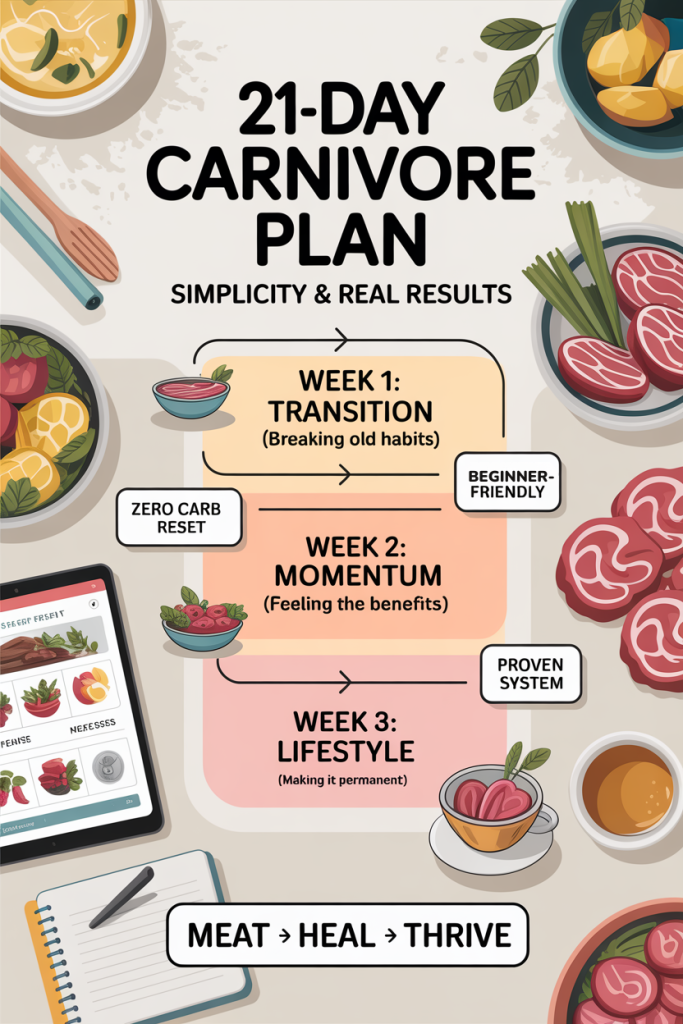
Pre-Diet Checklist And Meal-Prep Templates
Before day one we want practical checkboxes and a repeatable meal-prep routine. This reduces friction and keeps us eating well without overthinking.
Pre-Diet Checklist (what we do in the 48–72 hours before starting):
- Clean out obvious trigger foods from the pantry or put them out of sight so we’re not tempted.
- Stock up on 14–21 meals worth of protein (estimate 1–1.5 pounds of meat per day per person if you’re active: 0.6–1 lb if sedentary).
- Make or buy bone broth and chill portions for quick reheating.
- Buy electrolytes and a magnesium supplement.
- Schedule a baseline lab draw if available.
- Block time for cooking: two 90-minute sessions per week can be enough.
Meal-Prep Templates (two scalable options):
Template A, Minimalist (great for busy weeks)
- Breakfast: 3 eggs fried in butter + 3–4 ounces steak or leftover roast (or skip if intermittent fasting feels good)
- Lunch: Ground beef bowl (8–10 oz cooked) topped with butter or tallow
- Dinner: Roast or grilled steak (10–12 oz) + bone broth sip
- Snacks: Hard-boiled eggs, pork rinds, or leftover meat if hungry
Template B, Performance / Higher-Calorie
- Breakfast: Ribeye or large omelet (4 eggs + 6 oz steak pieces)
- Midday: Fatty fish or fatty pork (8–10 oz) + a tablespoon of butter
- Late afternoon snack: Bone broth and a few slices of hard cheese (if tolerated)
- Dinner: Slow-cooked beef chuck (10–12 oz) and optional liver mousse (1–2 oz)
Batch-cooking ideas we rely on:
- Slow-roasted chuck or brisket: 2–3 days of dinners: shred and portion in glass containers.
- Pan-roasted pork shoulder: versatile for breakfasts or lunches.
- Hard-boiled eggs and cooked bacon: quick protein for travel days.
- Liver pâté made with butter and salt: easy way to get organ nutrients without strong flavors.
Portion guidance (simple rules we follow):
- If weight loss is a goal, start with 0.8–1 pound of cooked meat per day for most people and adjust based on satiety.
- If performance or muscle gain is the goal, lean toward 1–1.5 pounds per day and include higher-fat cuts or added butter for calories.
- We prioritize protein at each meal: fat is used to reach satiety, not to artificially overconsume calories.
A note on fasting: many people pair carnivore with time-restricted eating. If we feel comfortable, skipping breakfast and eating two meals can simplify logistics and reduce appetite signals. But don’t force fasting if energy drops, we adjust to what keeps us consistent.
With these templates we’re not inventing gourmet dinners every night: we’re building a repeatable system that keeps us full, satisfied, and observant of how our body responds.
Troubleshooting, Common Side Effects, And How To Adapt For Long-Term Success
Even with good planning, we’ll likely face minor hurdles. Here’s how we troubleshoot common issues and build a sustainable path beyond 21 days.
Common early side effects and fixes:
- “Keto flu” (headache, fatigue, lightheadedness): Increase sodium (add 1–2 grams more salt per day), sip bone broth, and ensure magnesium supplementation: rest and lower activity for a few days if needed.
- Constipation: Increase dietary fats, hydrate, and consider magnesium citrate at night. If constipation persists beyond a week, add a small amount of low-FODMAP, non-fermentable fiber only as a last resort and monitor symptoms.
- Bad breath: Often temporary. Stay hydrated and include more fatty cuts and eggs. It usually resolves after adaptation.
- Digestive changes (diarrhea or loose stools): Reduce high-lactose dairy and test whether eggs or certain cuts cause sensitivity. Try removing the suspected food for 3–5 days and reintroducing.
When weight loss stalls:
- Check portion sizes, carnivore can still be calorically dense. We adjust total meat intake down 5–15% and increase activity slightly.
- Ensure we’re not compensating with high-calorie sauces, cheeses, or fatty add-ins.
- Reassess sleep and stress, both strongly influence weight and appetite.
If energy or performance drops:
- Add in more fatty fish or a low-dose carbohydrate refeed (e.g., a small sweet potato post-workout) once weekly to support glycogen if we’re highly active.
- Increase meal frequency temporarily to support training loads.
Adapting for long-term success (post-21-day options):
- Reintroduction phase: If we want more flexibility, reintroduce foods slowly, one food every 3–4 days while monitoring symptoms. Start with low-toxin vegetables (cooked zucchini, cucumber) or fermented dairy and evaluate.
- Cyclical approach: Some people adopt a primarily carnivore eating pattern with periodic plant refeeds or carb days for social flexibility and performance needs.
- Targeted carnivore: Maintain carnivore at breakfast/lunch and allow a dinner with vegetables if that improves adherence and social life.
Long-term nutrient considerations:
- Maintain organ meat intake for micronutrient density: liver once weekly, heart for CoQ10 and B vitamins, kidney occasionally.
- Keep seafood in rotation for DHA/EPA: aim for at least two servings of fatty fish per week.
- Continue periodic lab monitoring: lipid panel, metabolic markers, liver/kidney function, and nutrient status can detect adverse trends early.
Mental and social sustainability:
- Plan social meals in advance. Bring a steak or eggs-based dish to gatherings, or eat beforehand to avoid temptation.
- Remember the experiment mindset: 21 days gives us data. If we feel better, decide deliberately what to keep: if not, use the knowledge to adjust.
When to stop and seek help:
- If we experience persistent dizziness, fainting, severe mood changes, or worrying lab results, discontinue and consult a clinician.
- For chronic or unexplained changes in menstrual cycles, libido, or mood, seek medical assessment and consider modifying macronutrient balance.
With practical tweaks and honest monitoring we can turn a 21-day experiment into a personalized, sustainable approach that matches our goals and biology.
Conclusion
The 21-day carnivore diet is a pragmatic reset: simple rules, measurable feedback, and fast clarity on how our bodies respond when we limit foods to animal sources. By preparing thoughtfully, monitoring electrolytes and symptoms, and using the weekly structure and meal templates in this plan, we can minimize common side effects and learn whether this approach suits our health goals.
We recommend treating the 21 days as an experiment, log results, keep organ meats and seafood in rotation, and plan a sensible reintroduction if desired. With attention to safety and flexibility for individual needs, the carnivore plan can be a powerful tool in our toolkit for improved energy, appetite control, and digestion.