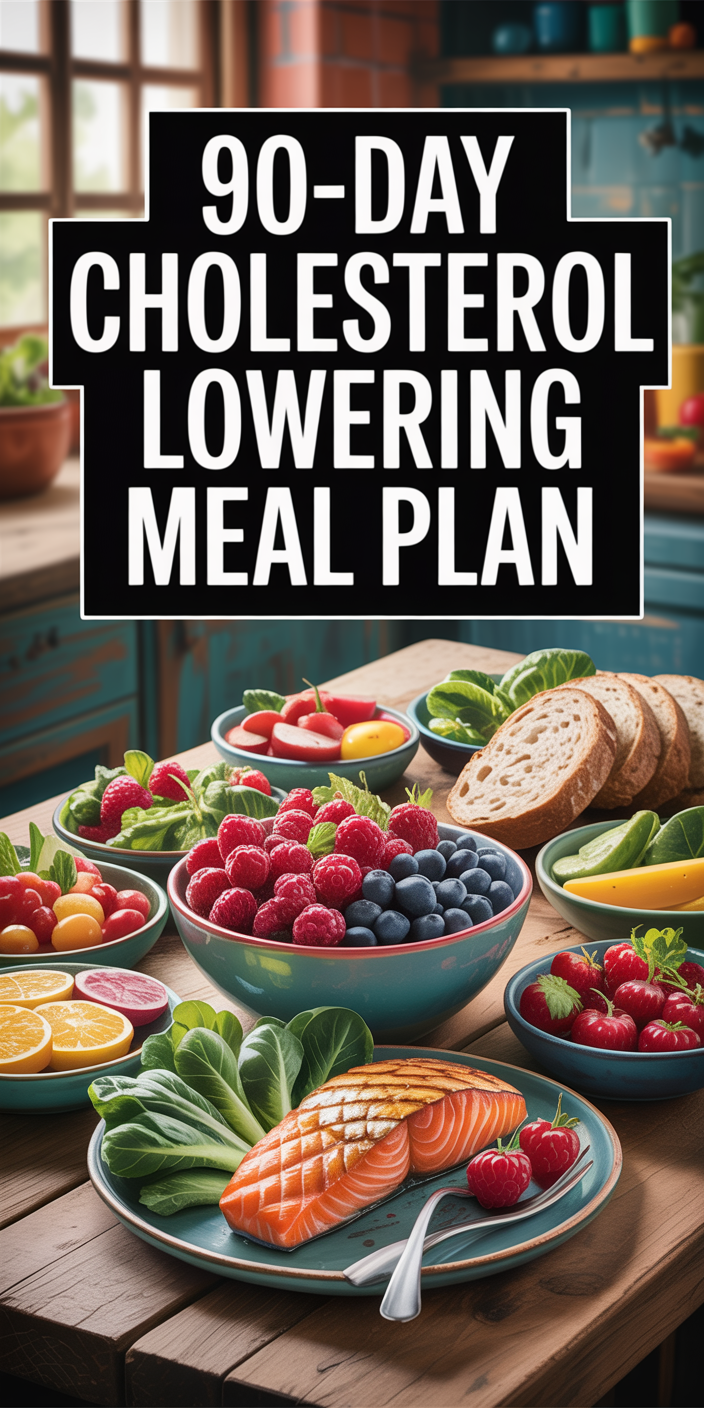
90-Day Cholesterol Lowering Meal Plan
Taking control of your cholesterol levels is one of the most powerful steps you can take to protect your heart and invest in your long-term health. High cholesterol, a condition that often presents with no symptoms, can quietly contribute to the buildup of plaque in your arteries, significantly increasing your risk for heart disease and stroke. But the good news is that you have the power to make a substantial impact on your cholesterol levels through a dedicated and strategic approach to your diet. This comprehensive 90-day meal plan is designed to be your roadmap to success, providing you with the evidence-based nutritional guidance, practical meal planning strategies, and delicious recipes you need to lower your cholesterol and build a foundation for a heart-healthy lifestyle. Over the next three months, you will learn how to harness the power of food to not only improve your cholesterol numbers but also to feel more energized, vibrant, and in control of your well-being.
Understanding Cholesterol: The Good, The Bad, and The Essential
Before embarking on a journey to lower your cholesterol, it’s crucial to understand what cholesterol is and the different roles it plays in your body. Cholesterol is a waxy, fat-like substance that is essential for building healthy cells, producing hormones, and synthesizing vitamin D. Your liver produces all the cholesterol your body needs, but you also get cholesterol from the foods you eat, particularly animal products. While cholesterol is necessary for life, having too much of it in your blood can lead to serious health problems.
There are two main types of cholesterol, often referred to as “good” and “bad” cholesterol, which are transported through your bloodstream by lipoproteins:
- Low-Density Lipoprotein (LDL): Often called “bad” cholesterol, LDL transports cholesterol particles throughout your body. When you have high levels of LDL, it can build up in the walls of your arteries, forming hard, thick deposits called plaque. This process, known as atherosclerosis, narrows the arteries and makes them less flexible, which can lead to blood clots, heart attacks, and strokes. [1]
- High-Density Lipoprotein (HDL): Known as “good” cholesterol, HDL acts as a scavenger, carrying excess cholesterol from other parts of your body back to your liver, where it is removed. Higher levels of HDL are associated with a lower risk of heart disease. [1]
- Triglycerides: These are another type of fat in your blood that your body uses for energy. High levels of triglycerides, especially when combined with high LDL or low HDL, can also increase your risk for heart disease. [1]
Recommended Cholesterol Levels
Your cholesterol levels are measured with a simple blood test called a lipid panel, which typically reports your total cholesterol, LDL, HDL, and triglycerides. The following are general guidelines for desirable cholesterol levels for adults, but your doctor may recommend different targets based on your individual risk factors for heart disease:
| Category | Desirable Level (mg/dL) |
|---|---|
| Total Cholesterol | Less than 200 |
| LDL Cholesterol | Less than 100 |
| HDL Cholesterol | 60 or higher |
| Triglycerides | Less than 150 |
It’s important to note that these are general guidelines, and your doctor will consider your overall cardiovascular risk profile when interpreting your cholesterol numbers. For example, individuals with a history of heart disease or other risk factors may have a lower LDL target. The American Heart Association (AHA) and the American College of Cardiology (ACC) have developed comprehensive guidelines to help healthcare providers assess and manage cholesterol levels effectively. [2]

The Power of Diet: How Food Impacts Your Cholesterol
While genetics can play a role in your cholesterol levels, your diet has a profound and direct impact on your lipid profile. The foods you eat can either contribute to the buildup of harmful LDL cholesterol or help your body manage cholesterol more effectively. The biggest dietary culprits that raise LDL cholesterol are saturated and trans fats. Saturated fats are typically found in animal products like red meat, full-fat dairy, and butter, as well as in some plant-based oils like coconut and palm oil. Trans fats, which are often found in processed and fried foods, are particularly harmful as they not only raise LDL but also lower protective HDL cholesterol. [3]
On the other hand, a diet rich in certain foods can actively help lower your cholesterol. These foods work in various ways to improve your lipid profile:
- Soluble Fiber: This type of fiber, found in foods like oats, barley, beans, and apples, dissolves in water to form a gel-like substance in your digestive tract. This gel binds to cholesterol and prevents it from being absorbed into your bloodstream. [4]
- Unsaturated Fats: Replacing saturated fats with unsaturated fats, found in foods like avocados, nuts, seeds, and olive oil, can help lower LDL cholesterol. [5]
- Plant Sterols and Stanols: These compounds, found naturally in small amounts in plant-based foods, have a similar structure to cholesterol and can help block its absorption in your digestive system. Some foods, like certain margarines and orange juice, are fortified with plant sterols and stanols. [4]
- Omega-3 Fatty Acids: Found in fatty fish like salmon, mackerel, and sardines, omega-3 fatty acids can help lower triglycerides and have other heart-protective benefits. [5]
By strategically incorporating these cholesterol-lowering foods into your diet and reducing your intake of saturated and trans fats, you can make a significant and positive impact on your cholesterol levels.
Your 90-Day Cholesterol-Lowering Meal Plan: A Phased Approach
This 90-day meal plan is designed to be a progressive and sustainable journey, divided into three 30-day phases. Each phase builds upon the previous one, gradually introducing new habits and dietary changes to help you achieve your cholesterol-lowering goals without feeling overwhelmed. The plan is based on the principles of the Mediterranean and DASH diets, both of which have been extensively studied and proven to be effective for heart health. [6, 7]
Phase 1: The Foundation (Days 1-30)
The first 30 days are focused on building a strong foundation of healthy eating habits. The primary goals of this phase are to increase your intake of fruits, vegetables, and whole grains, and to begin reducing your consumption of processed foods and saturated fats.
Key Objectives:
- Eat at least 5 servings of fruits and vegetables per day.
- Replace refined grains with whole grains.
- Reduce your intake of red meat to no more than twice a week.
- Eliminate sugary drinks and processed snacks.
Sample Week 1 Meal Plan:
| Day | Breakfast | Lunch | Dinner | Snack |
|---|---|---|---|---|
| Monday | Oatmeal with berries and nuts | Large salad with grilled chicken and vinaigrette | Baked salmon with roasted vegetables and quinoa | Apple with almond butter |
| Tuesday | Greek yogurt with fruit and granola | Leftover baked salmon and vegetables | Lentil soup with a side of whole-wheat bread | Handful of walnuts |
| Wednesday | Whole-wheat toast with avocado and a poached egg | Turkey and vegetable wrap on a whole-wheat tortilla | Chicken and vegetable stir-fry with brown rice | Pear |
| Thursday | Smoothie with spinach, banana, and protein powder | Leftover lentil soup | Black bean burgers on whole-wheat buns with a side salad | Baby carrots with hummus |
| Friday | Oatmeal with cinnamon and apples | Quinoa salad with chickpeas, cucumbers, and tomatoes | Grilled shrimp skewers with a side of grilled vegetables | Orange |
| Saturday | Scrambled eggs with spinach and whole-wheat toast | Leftover quinoa salad | Homemade pizza on a whole-wheat crust with lots of veggies | Small bowl of berries |
| Sunday | Whole-wheat pancakes with fruit | Large salad with canned tuna and a light vinaigrette | Roasted chicken with sweet potatoes and green beans | Celery sticks with peanut butter |
Phase 2: Intensification (Days 31-60)
In the second phase, you will build upon the foundation you established in Phase 1 by focusing on incorporating more cholesterol-lowering superfoods into your diet. The goal is to maximize your intake of soluble fiber, healthy fats, and plant-based proteins.
Key Objectives:
- Eat at least 7 servings of fruits and vegetables per day.
- Incorporate at least one serving of beans, lentils, or chickpeas into your daily diet.
- Eat at least two servings of fatty fish per week.
- Use olive oil as your primary cooking fat.
Sample Week 5 Meal Plan:
| Day | Breakfast | Lunch | Dinner | Snack |
|---|---|---|---|---|
| Monday | Oatmeal with flaxseeds and walnuts | Three-bean salad with a light vinaigrette | Baked cod with a side of steamed asparagus and brown rice | Edamame |
| Tuesday | Greek yogurt with chia seeds and berries | Leftover three-bean salad | Chicken and white bean chili | Handful of almonds |
| Wednesday | Smoothie with kale, pineapple, and almond milk | Hummus and vegetable sandwich on whole-wheat bread | Salmon burgers on whole-wheat buns with a side of sweet potato fries | Apple |
| Thursday | Whole-wheat toast with almond butter and banana | Leftover chicken and white bean chili | Tofu and vegetable curry with brown rice | Pear |
| Friday | Oatmeal with psyllium husk and peaches | Lentil and vegetable wrap on a whole-wheat tortilla | Grilled mackerel with a side of roasted broccoli and quinoa | Orange |
| Saturday | Tofu scramble with vegetables and whole-wheat toast | Leftover tofu and vegetable curry | Black bean and corn salsa with grilled chicken | Small bowl of mixed nuts |
| Sunday | Whole-wheat waffles with fruit and a sprinkle of nuts | Large salad with grilled tofu and a sesame ginger dressing | Pasta with a vegetable and lentil-based sauce | Berries with a dollop of Greek yogurt |
Phase 3: Optimization and Maintenance (Days 61-90)
The final phase is about optimizing your diet for long-term success and creating a sustainable lifestyle. You will focus on fine-tuning your meal plan, experimenting with new recipes, and developing strategies for navigating social situations and dining out.
Key Objectives:
- Experiment with new recipes and flavor combinations.
- Practice mindful eating and portion control.
- Develop a plan for healthy eating when dining out.
- Incorporate regular physical activity into your routine.
Sample Week 9 Meal Plan:
| Day | Breakfast | Lunch | Dinner | Snack |
|---|---|---|---|---|
| Monday | Savory oatmeal with mushrooms and spinach | Mason jar salad with quinoa, chickpeas, and vegetables | Baked halibut with a lemon-dill sauce, served with wild rice and green beans | Handful of pistachios |
| Tuesday | Chia seed pudding with fruit and nuts | Leftover baked halibut and rice | Vegetarian chili with a side of cornbread | Apple with sunflower seed butter |
| Wednesday | Breakfast burrito with black beans, eggs, and avocado | Leftover vegetarian chili | Grilled salmon with a mango salsa, served with a side of roasted sweet potatoes | Pear |
| Thursday | Smoothie with avocado, spinach, and protein powder | Leftover grilled salmon and sweet potatoes | Eggplant and lentil moussaka | Orange |
| Friday | Whole-wheat toast with smoked salmon and a sprinkle of dill | Leftover eggplant and lentil moussaka | Shrimp and vegetable skewers with a side of couscous | Small bowl of mixed berries |
| Saturday | Oatmeal bake with apples and cinnamon | Large salad with grilled tempeh and a balsamic vinaigrette | Homemade lentil burgers on whole-wheat buns with a side of baked fries | Celery sticks with hummus |
| Sunday | Buckwheat pancakes with berries and a drizzle of maple syrup | Leftover lentil burgers | Roasted vegetable and chickpea sheet pan dinner | A few squares of dark chocolate |
Beyond the 90 Days: Maintaining a Heart-Healthy Lifestyle
Completing this 90-day meal plan is a remarkable achievement, but the journey to a heart-healthy lifestyle doesn’t end here. The habits and knowledge you’ve gained over the past three months are the building blocks for a lifetime of well-being. To maintain your progress and continue to protect your heart, it’s important to embrace these principles as a long-term lifestyle rather than a temporary diet.
Here are some tips for staying on track:
- Continue to prioritize whole, unprocessed foods.
- Make meal planning and preparation a regular part of your routine.
- Stay physically active most days of the week.
- Get regular check-ups with your doctor to monitor your cholesterol levels and overall health.
- Don’t be discouraged by occasional slip-ups. Simply get back on track with your next meal.
By embracing a heart-healthy lifestyle, you are making a powerful investment in your future. You are not only lowering your cholesterol but also reducing your risk for a host of chronic diseases and improving your overall quality of life. Congratulations on taking this important step towards a healthier, happier you!
References
[1] American Heart Association. (2024, February 19). HDL (Good), LDL (Bad) Cholesterol and Triglycerides. https://www.heart.org/en/health-topics/cholesterol/hdl-good-ldl-bad-cholesterol-and-triglycerides
[2] American Heart Association. (2019, March 17). 2019 ACC/AHA Guideline on the Primary Prevention of Cardiovascular Disease. https://www.ahajournals.org/doi/10.1161/cir.0000000000000678
[3] Harvard T.H. Chan School of Public Health. (n.d.). Cholesterol. The Nutrition Source. https://nutritionsource.hsph.harvard.edu/what-should-you-eat/fats-and-cholesterol/cholesterol/
[4] Harvard Health Publishing. (2024, March 26). 11 foods that lower cholesterol. https://www.health.harvard.edu/heart-health/11-foods-that-lower-cholesterol
[5] Mayo Clinic. (2023, July 15). Mediterranean diet for heart health. https://www.mayoclinic.org/healthy-lifestyle/nutrition-and-healthy-eating/in-depth/mediterranean-diet/art-20047801
[6] Mayo Clinic. (2023, May 25). DASH diet: Healthy eating to lower your blood pressure. https://www.mayoclinic.org/healthy-lifestyle/nutrition-and-healthy-eating/in-depth/dash-diet/art-20048456
[7] EatingWell. (2025, July 17). You Have High Cholesterol—Try This 30-Day Meal Plan. https://www.eatingwell.com/30-day-low-cholesterol-meal-plan-for-beginners-8704246
[8] Rouse, V. (2023, January 27). 15 Oatmeal Recipes To Lower Cholesterol. The Heart Dietitian. https://theheartdietitian.com/15-oatmeal-recipes-to-lower-cholesterol/
[9] Schoeneck, M., & Iggman, D. (2021). The effects of foods on LDL cholesterol levels: A systematic review of the accumulated evidence from systematic reviews and meta-analyses of randomized controlled trials. Nutrition, Metabolism and Cardiovascular Diseases, 31(5), 1325-1338. https://pubmed.ncbi.nlm.nih.gov/33762150/
Evidence-Based Cholesterol-Lowering Foods: Your Arsenal for Heart Health
Based on extensive scientific research, certain foods have been proven to have significant cholesterol-lowering effects. Understanding these foods and incorporating them strategically into your meal plan can maximize your results. Here are the most powerful cholesterol-fighting foods, backed by scientific evidence:
High-Evidence Foods (Strong Scientific Support)
Oats and Oat-Based Products
Research shows that consuming 1.5 cups of cooked oatmeal daily (equivalent to 3/4 cup dry rolled oats or 1/2 cup dry steel-cut oats) can lower cholesterol by 5-8%, with some studies showing up to 15% reduction in just 8 weeks. [8] The key is the beta-glucan fiber content, with 3 grams daily being the optimal amount for cholesterol reduction.
Plant Sterols and Stanols
Foods fortified with plant sterols and stanols can reduce LDL cholesterol by approximately 10% when consumed at 2 grams daily. These compounds work by blocking cholesterol absorption in the digestive system. [4]
Soluble Fiber Sources
Foods high in soluble fiber, including barley, psyllium, beans, and certain fruits, provide moderate to significant LDL reductions (0.20-0.40 mmol/L). The recommended daily intake is 5-10 grams of soluble fiber, though most Americans get only half this amount. [4]
Moderate-Evidence Foods
Nuts and Seeds
Eating 2 ounces of nuts daily can lower LDL cholesterol by approximately 5%. Almonds, walnuts, and other tree nuts provide additional heart-protective nutrients beyond their cholesterol-lowering effects. [4]
Avocados
Studies show avocados can provide moderate to large reductions in LDL cholesterol, likely due to their high content of monounsaturated fats and fiber. [9]
Fatty Fish
Consuming fish 2-3 times weekly provides omega-3 fatty acids that can lower triglycerides and provide additional cardiovascular benefits. A serving size is 3-5 ounces for adults. [5]
Foods to Limit or Avoid
Unfiltered Coffee
Research indicates that unfiltered coffee can cause moderate to large increases in LDL cholesterol due to compounds called cafestol and kahweol. Stick to filtered coffee methods. [9]
Added Sugars
Studies show that sugar consumption can cause small but significant increases in LDL cholesterol levels. [9]
Saturated and Trans Fats
These remain the primary dietary culprits for raising LDL cholesterol and should be minimized in any cholesterol-lowering plan.
Meal Planning Strategies for Success
Successful cholesterol management requires more than just knowing which foods to eat—it requires a strategic approach to meal planning and preparation. Here are proven strategies to help you stay on track throughout your 90-day journey:
Weekly Meal Prep Approach
Batch Cooking Strategy
Dedicate 2-3 hours each weekend to prepare key components for the week ahead. This approach, used in successful meal plans, involves:
- Preparing one grain (quinoa, brown rice, or barley) in large batches
- Cooking one protein source (beans, lentils, or grilled chicken) for multiple meals
- Washing and chopping vegetables for easy assembly throughout the week
- Making overnight oats or chia puddings for quick breakfasts
Strategic Leftover Planning
Plan meals that intentionally create leftovers for the next day’s lunch. For example, make extra salmon on Monday night to use in Tuesday’s lunch salad, or prepare a large batch of vegetarian chili to serve over different bases throughout the week.
Calorie and Portion Guidelines
The meal plans in this guide are designed around 1,800 calories daily, with modifications available:
For 1,500 calories: Remove one snack or reduce portion sizes by 15-20%
For 2,000 calories: Add an additional snack of 1/4 cup nuts or seeds
Daily Targets:
- Protein: At least 74 grams daily
- Fiber: 30 grams daily (with 5-10 grams from soluble fiber)
- Fruits and vegetables: 5-7 servings daily, progressing through the phases
Shopping and Preparation Tips
Pantry Staples for Heart Health
Keep these cholesterol-fighting foods on hand:
- Steel-cut or rolled oats
- Canned beans and lentils (low-sodium)
- Nuts and seeds (almonds, walnuts, chia seeds, flaxseeds)
- Olive oil and avocado oil
- Whole grains (quinoa, brown rice, barley)
- Frozen berries and vegetables
Smart Shopping Strategies
- Shop the perimeter of the grocery store first (fresh produce, lean proteins, dairy)
- Read nutrition labels and choose products with less than 2g saturated fat per serving
- Look for foods with the American Heart Association’s Heart-Check mark
- Buy frozen fish and vegetables to always have heart-healthy options available