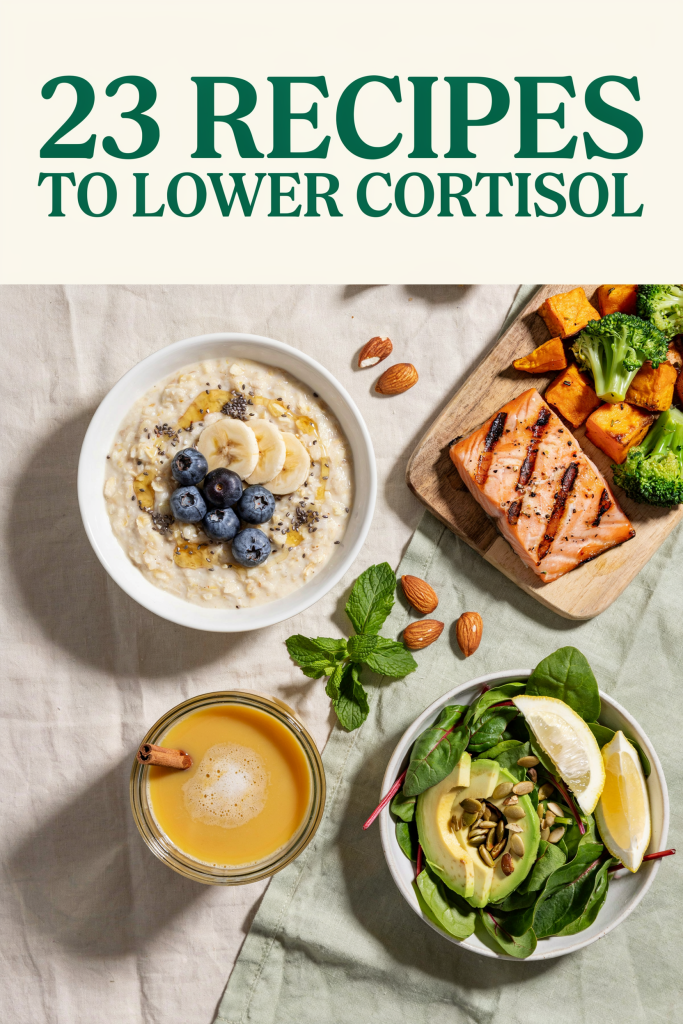
23 Recipes To Lower Cortisol
Cortisol is your body’s primary stress hormone. In short bursts it’s useful — it sharpens focus, mobilizes energy, and helps you respond to immediate threats. But when cortisol stays elevated chronically, it disrupts sleep, increases inflammation, promotes fat storage around the midsection, suppresses immune function, and creates a cycle of fatigue and anxiety that’s hard to break.
Food doesn’t cure chronic stress. But the research is clear that what you eat significantly influences your cortisol response. Magnesium-rich foods calm the nervous system. Omega-3 fatty acids reduce inflammatory signaling. Vitamin C blunts the cortisol spike triggered by stress. Probiotics support the gut-brain axis, which directly influences how your body regulates stress hormones. Dark leafy greens, fatty fish, fermented foods, seeds, berries, dark chocolate, and complex carbohydrates that stabilize blood sugar — these foods work together to lower the baseline.
Every recipe in this list is built around ingredients with demonstrated cortisol-lowering effects. They’re also genuinely good to eat.
Key Cortisol-Lowering Ingredients
Before the recipes, here’s what to look for and why:
Magnesium: Found in dark leafy greens, pumpkin seeds, dark chocolate, avocado, black beans, and almonds. Magnesium deficiency is directly linked to elevated cortisol and poor stress response. Most people don’t get enough.
Omega-3 fatty acids: Found in fatty fish (salmon, sardines, mackerel), walnuts, flaxseed, and chia seeds. Omega-3s reduce production of inflammatory cytokines that elevate cortisol.
Vitamin C: Found in bell peppers, citrus, kiwi, strawberries, and broccoli. Vitamin C directly blunts the adrenal cortisol response and speeds recovery from stress.
Probiotics and fermented foods: Found in yogurt, kefir, kimchi, sauerkraut, miso, and tempeh. The gut microbiome communicates directly with the HPA axis — the system that regulates cortisol production.
Complex carbohydrates: Found in oats, sweet potatoes, quinoa, legumes, and whole grains. Blood sugar spikes and crashes trigger cortisol release. Stable blood sugar means lower baseline cortisol.
Adaptogenic herbs: Ashwagandha, holy basil (tulsi), and rhodiola have clinical evidence for reducing cortisol. These can be incorporated into teas, smoothies, and warm drinks.
Phosphatidylserine: Found in organ meats and soy lecithin — shown in research to blunt the cortisol response to intense stress.
L-theanine: Found in green tea — promotes calm alertness and reduces cortisol-spiking anxiety without drowsiness.
Breakfasts
1. Ashwagandha Golden Milk Oats
Overnight oats built around two powerful cortisol-lowering tools: ashwagandha (an adaptogen with clinical evidence for reducing cortisol by up to 30% in some studies) and turmeric (anti-inflammatory). The oats themselves stabilize blood sugar, and the whole milk or full-fat coconut milk provides fat to slow glucose absorption.
Servings: 2 | Time: 5 minutes + overnight
Cortisol-Lowering Ingredients
Ashwagandha, oats, turmeric, black pepper (activates turmeric), cinnamon, full-fat milk
Ingredients
- 1 cup rolled oats
- 1.5 cups whole milk, oat milk, or full-fat coconut milk
- 1 tsp ashwagandha powder
- 1 tsp turmeric
- 1/2 tsp cinnamon
- 1/4 tsp ginger powder
- Pinch of black pepper (activates curcumin in turmeric)
- 1 tbsp maple syrup or raw honey
- 1 tbsp chia seeds
- Pinch of salt
Toppings:
- Sliced banana (potassium supports adrenal function)
- Pumpkin seeds (magnesium)
- A drizzle of honey
Instructions
- Combine oats, milk, ashwagandha, turmeric, cinnamon, ginger, black pepper, maple syrup, chia seeds, and salt in a jar or bowl. Stir thoroughly.
- Cover and refrigerate overnight (or for at least 4 hours).
- In the morning, stir and add a splash of milk if too thick. Taste and adjust sweetness.
- Top with sliced banana, pumpkin seeds, and a drizzle of honey.
- Eat cold or warm briefly in the microwave for 90 seconds.
2. Smoked Salmon and Avocado Scrambled Eggs
Omega-3s from smoked salmon, healthy fats from avocado, and protein from eggs — all three support steady blood sugar and reduce inflammatory signaling. This is one of the most complete cortisol-lowering breakfasts you can build.
Servings: 2 | Time: 10 minutes
Cortisol-Lowering Ingredients
Smoked salmon (omega-3s), avocado (magnesium, healthy fat), eggs (choline, protein), chives (vitamin C)
Ingredients
- 4 large eggs
- 3 oz smoked salmon, roughly torn
- 1 ripe avocado, sliced
- 2 tbsp butter
- 2 tbsp cream cheese or crème fraîche
- 2 tbsp fresh chives, chopped
- Salt and pepper
- Whole grain or sourdough toast for serving
- Lemon wedge
Instructions
- Beat eggs with cream cheese (or crème fraîche), salt, and pepper until smooth.
- Melt butter in a nonstick pan over medium-low heat. Add eggs.
- Cook slowly, gently folding with a spatula every 30 seconds, until just barely set — still slightly glossy and creamy. Remove from heat early; residual heat finishes them.
- Fold smoked salmon into the eggs off the heat.
- Serve on toast alongside sliced avocado. Scatter chives over the top and squeeze lemon over the avocado.
3. Magnesium Berry Smoothie
Spinach, frozen berries, almond butter, and cacao — four of the highest-magnesium ingredients in the kitchen, blended into a smoothie that tastes like dessert for breakfast.
Servings: 2 | Time: 5 minutes
Cortisol-Lowering Ingredients
Spinach (magnesium, folate), blueberries (antioxidants, vitamin C), almond butter (magnesium), cacao (magnesium, flavonoids), banana (potassium), flaxseed (omega-3)
Ingredients
- 2 cups fresh baby spinach (you won’t taste it)
- 1 cup frozen blueberries
- 1/2 cup frozen mixed berries (strawberries, raspberries)
- 1 ripe banana, frozen
- 2 tbsp almond butter
- 1 tbsp raw cacao powder
- 1 tbsp ground flaxseed
- 1 tsp ashwagandha powder (optional)
- 1 cup unsweetened almond milk or oat milk
- 1/2 cup plain kefir or Greek yogurt (probiotics)
Instructions
- Add all ingredients to a blender. Blend on high for 60 seconds until completely smooth.
- Taste and adjust — add more banana for sweetness, more milk for thinner consistency.
- Pour into two glasses. Drink immediately for maximum nutrient retention.
4. Kefir Parfait with Walnuts and Honey
Kefir is more probiotic-dense than yogurt and has a tangy, slightly thinner consistency that works well layered with fruit and nuts. The walnuts provide omega-3s, and honey has modest adaptogenic properties.
Servings: 2 | Time: 5 minutes
Cortisol-Lowering Ingredients
Kefir (probiotics, gut-brain axis), walnuts (omega-3s, magnesium), blueberries (antioxidants), honey (anti-inflammatory), pumpkin seeds (magnesium)
Ingredients
- 2 cups plain whole-milk kefir
- 1 cup fresh or frozen blueberries, thawed
- 1/2 cup fresh strawberries, sliced
- 1/4 cup walnuts, roughly chopped
- 2 tbsp pumpkin seeds
- 2 tbsp raw honey
- 1/2 tsp cinnamon
- 2 tbsp ground flaxseed
Instructions
- In two glasses or bowls, layer kefir, blueberries, and strawberries.
- Top with walnuts, pumpkin seeds, and flaxseed.
- Drizzle honey over the top and dust with cinnamon.
- Serve immediately, or refrigerate for up to an hour before serving.
5. Whole Grain Banana Walnut Pancakes
Blood sugar stability is one of the most important factors in cortisol regulation. These pancakes use whole wheat or oat flour for fiber, bananas for natural sweetness and potassium, and walnuts for omega-3s. They don’t spike blood sugar the way white flour pancakes do.
Servings: 4 | Time: 20 minutes
Cortisol-Lowering Ingredients
Whole wheat flour / oat flour (complex carbs, fiber), banana (potassium, B6), walnuts (omega-3s), eggs (protein), cinnamon (blood sugar regulation)
Ingredients
- 1 cup whole wheat flour or oat flour (blended rolled oats)
- 1 tsp baking powder
- 1/2 tsp cinnamon
- 1/4 tsp salt
- 1 cup whole milk or oat milk
- 2 large eggs
- 2 ripe bananas — 1 mashed, 1 sliced for topping
- 2 tbsp coconut oil or butter, melted
- 1 tbsp maple syrup
- 1/2 cup walnuts, roughly chopped
For serving:
- Extra sliced banana
- Walnuts
- Maple syrup
- A dollop of Greek yogurt
Instructions
- Whisk flour, baking powder, cinnamon, and salt in a large bowl.
- In a separate bowl, beat eggs with mashed banana, milk, melted coconut oil, and maple syrup until smooth.
- Pour wet ingredients into dry and stir until just combined — a few lumps are fine. Don’t overmix.
- Fold in walnuts.
- Heat a nonstick pan or griddle over medium heat. Lightly grease with butter or coconut oil.
- Pour batter in 1/4-cup portions. Cook for 2 to 3 minutes until bubbles form and edges look set. Flip and cook 1 to 2 more minutes.
- Serve with sliced banana, extra walnuts, a drizzle of maple syrup, and Greek yogurt.
Lunches and Salads
6. Salmon and Avocado Salad with Citrus Dressing
This salad is almost entirely composed of cortisol-lowering superfoods: salmon for omega-3s, avocado for magnesium and healthy fat, spinach for magnesium and folate, and citrus dressing for vitamin C. It’s also filling enough to be a full meal.
Servings: 2 | Time: 15 minutes
Cortisol-Lowering Ingredients
Salmon (omega-3s), avocado (magnesium), spinach (magnesium, folate), orange (vitamin C), walnuts (omega-3s), olive oil (anti-inflammatory)
Ingredients
- 2 salmon fillets (5 oz each), cooked (pan-seared, baked, or poached) and flaked
- 4 cups baby spinach
- 1 avocado, sliced
- 1 orange, segmented
- 1/4 red onion, thinly sliced
- 1/4 cup walnuts, toasted
- 2 tbsp pumpkin seeds
Citrus Dressing:
- 3 tbsp fresh orange juice
- 1 tbsp fresh lemon juice
- 2 tbsp extra virgin olive oil
- 1 tsp Dijon mustard
- 1 tsp raw honey
- Salt and pepper
Instructions
- Whisk all dressing ingredients together until emulsified. Taste and adjust.
- In a large bowl, combine spinach, orange segments, red onion, walnuts, and pumpkin seeds. Toss with dressing.
- Plate the dressed salad. Top with flaked salmon, avocado slices, and an extra drizzle of dressing.
7. Miso Soup with Tofu and Seaweed
Miso is a fermented food with significant probiotic activity. Seaweed (nori or wakame) is rich in iodine and magnesium and supports thyroid function, which is closely linked to cortisol regulation. Tofu provides plant-based protein and phosphatidylserine.
Servings: 4 | Time: 15 minutes
Cortisol-Lowering Ingredients
Miso (fermented, probiotic), tofu (phosphatidylserine, protein), seaweed (iodine, magnesium), ginger (anti-inflammatory)
Ingredients
- 6 cups water or dashi broth
- 4 tbsp white miso paste
- 14 oz firm tofu, cut into small cubes
- 1/4 cup dried wakame seaweed (rehydrated in water for 5 minutes and drained)
- 1 tbsp fresh ginger, grated
- 2 tbsp soy sauce or tamari
- 3 green onions, thinly sliced
- 1 tsp sesame oil
Instructions
- Bring water or dashi to a gentle simmer in a medium pot. Add ginger and soy sauce.
- Add tofu cubes and rehydrated wakame. Simmer for 3 minutes.
- Remove from heat. Ladle 1/2 cup of hot broth into a bowl and whisk in miso paste until completely dissolved — miso should never be boiled, as heat destroys its probiotic activity. Pour back into the pot.
- Add sesame oil. Stir gently.
- Serve topped with sliced green onions. Drink while hot.
8. Kimchi and Brown Rice Bowl
Kimchi is one of the most probiotic-rich fermented foods available, and its effects on gut health and the gut-brain axis are well-documented. Brown rice provides complex carbohydrates for blood sugar stability. Together with a fried egg and sliced avocado, this bowl covers all the major cortisol-lowering bases.
Servings: 2 | Time: 15 minutes
Cortisol-Lowering Ingredients
Kimchi (probiotics, fermented vegetables), brown rice (complex carbs, B vitamins), avocado (magnesium), egg (choline, protein), sesame seeds (magnesium)
Ingredients
- 2 cups cooked brown rice, warmed
- 1 cup kimchi (store-bought or homemade), roughly chopped
- 1 avocado, sliced
- 2 large eggs, fried sunny-side up
- 2 tbsp soy sauce or tamari
- 1 tsp sesame oil
- 1 tsp gochujang or sriracha (optional)
- 1 tsp sesame seeds
- 2 green onions, sliced
- 1 sheet nori, cut into strips
Instructions
- Divide warm brown rice between two bowls.
- Arrange kimchi, avocado slices, and a fried egg on top of each bowl.
- Drizzle with soy sauce, sesame oil, and gochujang if using.
- Top with sesame seeds, green onions, and nori strips.
- Break the egg yolk and mix everything together before eating.
9. Sweet Potato and Black Bean Soup
Sweet potatoes are rich in complex carbohydrates, vitamin B6, and potassium — all of which support adrenal health and cortisol regulation. Black beans add magnesium and plant-based protein to stabilize blood sugar throughout the afternoon.
Servings: 6 | Time: 40 minutes
Cortisol-Lowering Ingredients
Sweet potato (complex carbs, B6, potassium), black beans (magnesium, fiber, protein), spinach (magnesium), turmeric (anti-inflammatory), cumin
Ingredients
- 3 large sweet potatoes, peeled and diced
- 2 cans (15 oz each) black beans, drained and rinsed
- 1 large onion, diced
- 4 garlic cloves, minced
- 1 red bell pepper, diced (vitamin C)
- 1 can (14.5 oz) diced tomatoes
- 4 cups low-sodium vegetable broth
- 2 cups fresh spinach
- 1 tsp cumin
- 1 tsp smoked paprika
- 1/2 tsp turmeric
- 1/2 tsp cinnamon
- 2 tbsp olive oil
- Salt and pepper
- Fresh lime juice for serving
- Fresh cilantro for serving
Instructions
- Heat olive oil in a large pot over medium heat. Cook onion and bell pepper for 6 minutes until softened. Add garlic, cumin, paprika, turmeric, and cinnamon. Cook for 2 minutes until fragrant.
- Add sweet potatoes, diced tomatoes, black beans, and broth. Bring to a boil.
- Reduce heat and simmer for 20 minutes until sweet potatoes are very tender.
- Use an immersion blender to partially blend — leave plenty of texture. You want some smooth and some chunky.
- Stir in spinach until wilted. Taste and adjust seasoning.
- Serve with a squeeze of fresh lime and cilantro.
10. Omega-3 Tuna Salad Lettuce Wraps
Classic tuna salad upgraded with anti-inflammatory olive oil instead of mayonnaise, plenty of lemon (vitamin C), and served in crisp butter lettuce instead of bread to avoid blood sugar spikes.
Servings: 2 | Time: 10 minutes
Cortisol-Lowering Ingredients
Tuna (omega-3s, protein), olive oil (anti-inflammatory), lemon (vitamin C), celery (stress-reducing minerals), walnuts (omega-3s)
Ingredients
- 2 cans (5 oz each) wild-caught tuna in olive oil, drained
- 1/4 cup celery, finely diced
- 1/4 cup red onion, finely minced
- 2 tbsp walnuts, roughly chopped
- 3 tbsp extra virgin olive oil
- 2 tbsp fresh lemon juice
- 1 tsp lemon zest
- 1 tsp Dijon mustard
- 2 tbsp fresh parsley, chopped
- Salt and pepper
- 1 head butter lettuce, leaves separated
- Sliced avocado for serving
Instructions
- In a bowl, combine drained tuna, celery, red onion, and walnuts.
- Whisk olive oil, lemon juice, lemon zest, and Dijon together. Pour over tuna mixture and toss gently to combine. Season with salt and pepper.
- Fold in parsley.
- Spoon tuna mixture into butter lettuce cups. Top with sliced avocado.
- Serve with extra lemon wedges.
Dinners
11. Baked Salmon with Garlic Lemon and Asparagus
Wild salmon is one of the single most effective cortisol-lowering foods. It provides omega-3 fatty acids EPA and DHA, vitamin D, and B vitamins — all of which directly support healthy cortisol regulation. Asparagus adds folate and the amino acid asparagine, which supports nervous system function.
Servings: 4 | Time: 25 minutes
Cortisol-Lowering Ingredients
Salmon (omega-3s, vitamin D, B vitamins), asparagus (folate, asparagine), garlic (anti-inflammatory), lemon (vitamin C)
Ingredients
- 4 salmon fillets (6 oz each)
- 2 bunches asparagus, woody ends snapped off
- 4 tbsp olive oil, divided
- 6 garlic cloves, minced
- 3 tbsp fresh lemon juice
- 1 tsp lemon zest
- 1 tsp dried dill or fresh dill
- Salt and pepper
- Lemon slices for serving
Instructions
- Preheat oven to 400°F. Line a large baking sheet with parchment.
- Toss asparagus with 2 tablespoons olive oil, salt, and pepper. Arrange on the baking sheet.
- Place salmon fillets on the same sheet. Mix remaining olive oil with garlic, lemon juice, zest, and dill. Spoon over each fillet. Season with salt and pepper.
- Roast for 18 to 20 minutes until salmon is opaque and flakes easily, and asparagus tips are slightly crispy.
- Serve with fresh lemon squeezed over everything.
12. Turmeric and Ginger Chicken Soup
A deeply anti-inflammatory soup built around turmeric and ginger — two of the most researched anti-inflammatory compounds — combined with chicken for protein and B vitamins, and sweet potato for complex carbohydrates.
Servings: 6 | Time: 50 minutes
Cortisol-Lowering Ingredients
Turmeric (curcumin, anti-inflammatory), ginger (gingerols, anti-inflammatory), chicken (tryptophan, B6, protein), sweet potato (B6, potassium), spinach (magnesium)
Ingredients
- 2 lbs boneless skinless chicken thighs
- 2 medium sweet potatoes, peeled and diced
- 1 large onion, diced
- 3 carrots, diced
- 4 celery stalks, diced
- 6 garlic cloves, minced
- 2 tbsp fresh ginger, grated
- 1.5 tsp turmeric
- 1 tsp cumin
- 1/2 tsp black pepper (enhances turmeric absorption)
- 8 cups low-sodium chicken broth
- 2 cups baby spinach
- 2 tbsp olive oil
- Juice of 1 lemon
- Fresh cilantro for serving
- Salt to taste
Instructions
- Heat olive oil in a large pot over medium-high heat. Season chicken with salt and pepper. Brown on both sides, about 4 minutes per side. Remove and set aside.
- Cook onion, carrots, and celery for 6 minutes until softened. Add garlic, ginger, turmeric, cumin, and black pepper. Stir and cook for 2 minutes until very fragrant.
- Return chicken to the pot. Add sweet potatoes and broth. Bring to a boil.
- Reduce heat and simmer for 25 minutes until chicken is cooked through and sweet potatoes are tender.
- Remove chicken and shred. Return to the pot.
- Stir in spinach until wilted. Add lemon juice. Taste and adjust seasoning.
- Serve with fresh cilantro.
13. Walnut-Crusted Baked Trout
Trout is rich in omega-3s and slightly more affordable than salmon. A walnut crust doubles down on the omega-3 content and adds magnesium and vitamin E — both important for stress hormone regulation.
Servings: 4 | Time: 25 minutes
Cortisol-Lowering Ingredients
Trout (omega-3s, vitamin D), walnuts (omega-3s, magnesium), lemon (vitamin C), garlic (anti-inflammatory)
Ingredients
- 4 rainbow trout fillets (5 to 6 oz each), skin on
- 3/4 cup walnuts, finely chopped
- 2 tbsp fresh parsley, minced
- 2 tbsp Parmesan, grated
- 1 tsp lemon zest
- 2 garlic cloves, minced
- 2 tbsp Dijon mustard
- 2 tbsp olive oil
- Salt and pepper
- Lemon wedges for serving
- Steamed broccoli or roasted vegetables for serving
Instructions
- Preheat oven to 400°F. Line a baking sheet with parchment.
- Mix chopped walnuts, parsley, Parmesan, lemon zest, and garlic together.
- Brush the flesh side of each trout fillet with Dijon mustard. Press walnut mixture firmly onto the mustard to create a crust.
- Drizzle olive oil over the walnut crust. Season with salt and pepper.
- Bake for 12 to 15 minutes until crust is golden and fish flakes easily.
- Serve with lemon wedges and steamed broccoli.
14. Lentil and Spinach Dal
Lentils are high in magnesium, folate, and fiber, and they provide slow-digesting complex carbohydrates that keep blood sugar stable for hours. This dal is also loaded with anti-inflammatory turmeric and ginger, making it one of the most genuinely cortisol-lowering meals in the list.
Servings: 6 | Time: 40 minutes
Cortisol-Lowering Ingredients
Red lentils (magnesium, folate, complex carbs), spinach (magnesium, iron, folate), turmeric (anti-inflammatory), ginger (anti-inflammatory), cumin, coriander
Ingredients
- 1.5 cups red lentils, rinsed
- 5 cups water or low-sodium vegetable broth
- 4 cups fresh spinach
- 1 large onion, diced
- 5 garlic cloves, minced
- 2 tbsp fresh ginger, grated
- 1 can (14.5 oz) diced tomatoes
- 1.5 tsp turmeric
- 1.5 tsp cumin
- 1 tsp coriander
- 1/2 tsp smoked paprika
- 1/4 tsp cayenne
- 3 tbsp coconut oil or ghee
- 1 tsp mustard seeds
- Juice of 1 lemon
- Salt to taste
For serving:
- Brown basmati rice or whole wheat naan
- Plain Greek yogurt or coconut yogurt
- Fresh cilantro
- Sliced red onion
Instructions
- In a large pot, combine lentils and water or broth. Bring to a boil, reduce heat, and simmer for 20 to 25 minutes until lentils are completely soft and beginning to fall apart. Stir occasionally.
- While lentils cook, heat coconut oil in a large skillet over medium-high heat. Add mustard seeds and let them pop for 30 seconds.
- Add onion and cook for 8 minutes until deep golden. Add garlic and ginger, cook for 2 minutes. Add all dry spices and stir for 1 minute.
- Add diced tomatoes and cook for 5 minutes until thickened.
- Pour the tomato-spice mixture into the cooked lentils and stir to combine.
- Add spinach and stir until wilted. Add lemon juice. Taste and season generously with salt.
- Serve over brown rice with Greek yogurt, cilantro, and red onion.
15. Roasted Sweet Potato and Chickpea Bowl with Tahini
A plant-based dinner that covers every cortisol-lowering base: sweet potatoes for complex carbs and B6, chickpeas for magnesium and protein, tahini for magnesium and healthy fat, and a base of greens for folate.
Servings: 4 | Time: 35 minutes
Cortisol-Lowering Ingredients
Sweet potato (B6, complex carbs, potassium), chickpeas (magnesium, protein, fiber), tahini (magnesium, calcium), spinach (magnesium, folate), olive oil (anti-inflammatory)
Ingredients
Roasted Vegetables:
- 2 large sweet potatoes, cubed
- 2 cans (15 oz each) chickpeas, drained, rinsed, and patted dry
- 2 tbsp olive oil
- 1 tsp cumin
- 1 tsp smoked paprika
- 1/2 tsp turmeric
- Salt and pepper
Tahini Dressing:
- 3 tbsp tahini
- 2 tbsp fresh lemon juice
- 1 garlic clove, pressed
- 2 to 4 tbsp warm water (to thin)
- Salt to taste
Bowl base:
- 4 cups spinach or arugula
- 1 cup cooked brown rice or quinoa
- 1/2 cup pomegranate seeds or sliced red onion
- Fresh parsley
- Lemon wedges
Instructions
- Preheat oven to 425°F. Toss sweet potato cubes and chickpeas separately with olive oil, cumin, paprika, turmeric, salt, and pepper. Arrange on a baking sheet in a single layer (keep sweet potato and chickpeas together is fine — just spread in one layer).
- Roast for 25 to 30 minutes, tossing halfway, until sweet potatoes are caramelized and tender and chickpeas are crispy.
- Make tahini dressing: whisk tahini, lemon juice, and garlic. Add warm water gradually until dressing is pourable. Season with salt.
- Build bowls: brown rice and spinach as the base, roasted sweet potato and chickpeas on top, pomegranate seeds or red onion scattered over.
- Drizzle tahini dressing generously over everything. Garnish with parsley and serve with lemon.
16. Sardine and White Bean Pasta
Sardines are one of the most omega-3-rich, most affordable, and most overlooked foods in the grocery store. In pasta with white beans, garlic, and lemon, they taste completely different from straight out of the can — rich, savory, and deeply satisfying.
Servings: 4 | Time: 20 minutes
Cortisol-Lowering Ingredients
Sardines (omega-3s, vitamin D, B12), white beans (magnesium, fiber, protein), garlic (anti-inflammatory), lemon (vitamin C), olive oil (anti-inflammatory)
Ingredients
- 12 oz spaghetti or linguine (whole wheat preferred)
- 2 cans (4.4 oz each) sardines in olive oil, drained
- 1 can (15 oz) cannellini beans, drained and rinsed
- 6 garlic cloves, thinly sliced
- 1/2 tsp red pepper flakes
- 1/4 cup extra virgin olive oil
- 3 tbsp fresh lemon juice
- 1 tsp lemon zest
- 1/4 cup fresh flat-leaf parsley, chopped
- Salt and pepper
- Reserved pasta water
Instructions
- Cook pasta in well-salted water until al dente. Reserve 1 cup pasta water.
- Heat olive oil in a large skillet over medium heat. Add garlic and red pepper flakes. Cook for 2 to 3 minutes until garlic is golden.
- Add sardines. Use a wooden spoon to break them into smaller pieces as they cook, about 2 minutes.
- Add white beans and cook for 2 minutes to heat through.
- Add drained pasta, lemon juice, and lemon zest. Toss over medium heat, adding pasta water as needed to create a light sauce.
- Remove from heat. Stir in parsley. Taste and adjust seasoning.
17. Chicken and Broccoli Stir-Fry with Brown Rice
Broccoli is exceptionally high in vitamin C — 1 cup cooked provides more vitamin C than an orange — which directly blunts the adrenal cortisol response. Combined with chicken for tryptophan and B vitamins, and brown rice for complex carbs, this stir-fry is a complete cortisol-lowering dinner.
Servings: 4 | Time: 25 minutes
Cortisol-Lowering Ingredients
Broccoli (vitamin C, folate), chicken (tryptophan, B6, protein), brown rice (complex carbs), ginger (anti-inflammatory), garlic (anti-inflammatory), sesame seeds (magnesium)
Ingredients
- 2 lbs boneless skinless chicken breast, thinly sliced
- 4 cups broccoli florets
- 1 red bell pepper, sliced (additional vitamin C)
- 5 garlic cloves, minced
- 2 tbsp fresh ginger, grated
- 2 tbsp avocado oil
- 3 cups cooked brown rice for serving
- Sesame seeds for garnish
- Green onions for garnish
Sauce:
- 1/4 cup soy sauce or tamari
- 2 tbsp rice vinegar
- 1 tsp sesame oil
- 1 tsp arrowroot or cornstarch
- 1/4 cup water
Instructions
- Whisk all sauce ingredients together and set aside.
- Season chicken with salt and pepper. Heat avocado oil in a wok or large skillet over very high heat. Cook chicken in batches until golden and cooked through, about 4 minutes. Remove and set aside.
- Add broccoli and bell pepper to the pan. Cook over high heat for 4 minutes until charred in spots and crisp-tender.
- Add garlic and ginger. Cook for 30 seconds.
- Return chicken to the pan. Pour sauce over everything and toss. Cook for 1 to 2 minutes until sauce thickens.
- Serve over brown rice, garnished with sesame seeds and green onions.
18. Slow Cooker Beef and Vegetable Stew
This is the kind of meal that’s working for you while you do other things. Bone broth provides glycine — an amino acid shown to improve sleep quality, and poor sleep is one of the biggest drivers of chronic cortisol elevation. Combined with magnesium-rich vegetables and anti-inflammatory garlic, this stew actively supports cortisol recovery.
Servings: 6 | Time: 15 minutes active / 7 hours slow cooker
Cortisol-Lowering Ingredients
Bone broth (glycine, collagen, gut-healing), sweet potato (B6, complex carbs), spinach (magnesium), garlic (anti-inflammatory), carrots (beta-carotene), olive oil (anti-inflammatory)
Ingredients
- 2 lbs beef chuck roast, cut into 2-inch cubes
- 2 medium sweet potatoes, peeled and cubed
- 3 large carrots, cut into chunks
- 3 celery stalks, diced
- 1 large onion, diced
- 5 garlic cloves, minced
- 2 cups baby spinach (add at the end)
- 3 cups low-sodium beef bone broth
- 1 can (14.5 oz) diced tomatoes
- 2 tsp smoked paprika
- 1 tsp dried thyme
- 1 tsp dried rosemary
- 1 bay leaf
- 2 tbsp olive oil
- Salt and pepper
Instructions
- Season beef cubes with salt, pepper, and paprika. Heat olive oil in a skillet over high heat and sear beef on all sides until deeply browned, about 6 to 8 minutes. (You can skip this step but the flavor is noticeably better with it.)
- Transfer beef to the slow cooker. Add onion, garlic, carrots, celery, sweet potato, diced tomatoes, broth, thyme, rosemary, and bay leaf.
- Cover and cook on LOW for 7 to 8 hours or HIGH for 4 to 5 hours until beef is fork-tender.
- Remove bay leaf. Stir in spinach and let wilt for 3 minutes.
- Taste and adjust seasoning. Serve in wide bowls.
19. Miso-Glazed Eggplant with Brown Rice
Miso provides fermented probiotic activity that supports gut health and the gut-brain axis. Eggplant contains nasunin, a potent antioxidant. This plant-based dinner is deeply savory, satisfying, and completely cortisol-friendly.
Servings: 4 | Time: 30 minutes
Cortisol-Lowering Ingredients
Miso (fermented, probiotic), eggplant (antioxidants, nasunin), sesame seeds (magnesium), brown rice (complex carbs), ginger (anti-inflammatory)
Ingredients
- 2 large eggplants, halved lengthwise and scored in a crosshatch pattern
- 3 tbsp white or red miso paste
- 2 tbsp mirin or rice vinegar with 1 tsp sweetener
- 1 tbsp sake or dry sherry
- 1 tbsp sesame oil
- 1 tsp fresh ginger, grated
- 1 garlic clove, minced
- 3 cups cooked brown rice for serving
- Sesame seeds for garnish
- Sliced green onions
- Pickled ginger (optional)
Instructions
- Preheat oven to 400°F. Score eggplant halves in a deep crosshatch, cutting nearly through to the skin.
- Whisk miso, mirin, sake, sesame oil, ginger, and garlic into a smooth glaze.
- Brush glaze generously over the scored eggplant flesh, getting it into the cuts.
- Place on a parchment-lined baking sheet flesh-side up.
- Roast for 25 to 30 minutes until flesh is very soft and glaze is caramelized and slightly charred in spots.
- Serve over brown rice, garnished with sesame seeds, green onions, and pickled ginger.
20. Avocado and Black Bean Tacos with Lime Slaw
Black beans are one of the highest-magnesium foods available and pair with avocado — another magnesium powerhouse — and lime for vitamin C. This plant-based taco takes 15 minutes and addresses cortisol from multiple nutritional angles simultaneously.
Servings: 4 | Time: 15 minutes
Cortisol-Lowering Ingredients
Black beans (magnesium, fiber, protein), avocado (magnesium, healthy fat), lime (vitamin C), cabbage (vitamin C, fiber), cilantro (anti-inflammatory)
Ingredients
Black Beans:
- 2 cans (15 oz each) black beans, drained
- 1 tsp cumin
- 1/2 tsp smoked paprika
- 1/2 tsp garlic powder
- 2 tbsp olive oil
- Salt to taste
Lime Slaw:
- 3 cups green cabbage, finely shredded
- 2 tbsp fresh lime juice
- 1 tbsp olive oil
- 1 tsp apple cider vinegar
- 1/4 tsp cumin
- Salt to taste
For serving:
- 8 corn or whole wheat tortillas
- 2 ripe avocados, sliced
- Fresh cilantro
- Sliced jalapeños
- Lime wedges
- Hot sauce
Instructions
- Make slaw: toss cabbage with lime juice, olive oil, vinegar, cumin, and salt. Let sit for 10 minutes — it softens and improves with time.
- Heat olive oil in a skillet over medium heat. Add black beans, cumin, paprika, and garlic powder. Mash roughly with a fork — about half mashed, half whole. Add a splash of water if too thick. Season with salt and warm through for 3 minutes.
- Warm tortillas in a dry skillet.
- Fill each tortilla with beans, slaw, and avocado slices.
- Top with cilantro, jalapeños, and a squeeze of lime. Add hot sauce to taste.
Snacks and Drinks
21. Dark Chocolate and Almond Butter Energy Balls
Dark chocolate (70% or higher) contains magnesium and flavonoids that lower blood pressure and reduce cortisol. Almond butter adds magnesium and healthy fat, and oats provide slow-digesting carbs. These are the most portable cortisol-lowering snack in the list.
Makes: 16 balls | Time: 15 minutes + chilling
Cortisol-Lowering Ingredients
Dark chocolate (magnesium, flavonoids), almond butter (magnesium, vitamin E), oats (complex carbs), chia seeds (omega-3s), cacao (magnesium, flavonoids)
Ingredients
- 1 cup rolled oats
- 1/2 cup almond butter (natural, no added sugar)
- 1/4 cup raw honey or maple syrup
- 3 tbsp raw cacao powder
- 2 tbsp chia seeds
- 2 tbsp ground flaxseed
- 1/2 cup dark chocolate chips (70% or higher)
- 1 tsp vanilla extract
- Pinch of salt
Instructions
- Combine all ingredients in a large bowl. Mix thoroughly until a uniform, slightly sticky dough forms. If it’s too wet to roll, add a tablespoon of oats. If too dry, add a drizzle of honey.
- Refrigerate the mixture for 20 minutes — it firms up and becomes much easier to roll.
- Roll into balls about 1 inch in diameter using slightly wet hands.
- Place on a parchment-lined plate or baking sheet. Refrigerate for at least 30 minutes until firm.
- Store in an airtight container in the refrigerator for up to 2 weeks.
22. Ashwagandha and Cinnamon Moon Milk
Moon milk is a warm, calming bedtime drink with roots in Ayurvedic medicine. Ashwagandha has the most clinical evidence of any adaptogen for reducing cortisol — multiple human trials have shown significant reductions with consistent use. Taken warm before bed, this drink also supports the sleep quality that cortisol management depends on.
Servings: 2 | Time: 10 minutes
Cortisol-Lowering Ingredients
Ashwagandha (adaptogen, direct cortisol reduction), cinnamon (blood sugar regulation), nutmeg (promotes sleep), honey (anti-inflammatory), warm milk (tryptophan, calming)
Ingredients
- 2 cups whole milk or unsweetened oat milk
- 1 tsp ashwagandha powder
- 1/2 tsp cinnamon
- 1/4 tsp cardamom
- 1/8 tsp nutmeg
- 1 tbsp raw honey (add off the heat — heat destroys some of honey’s benefits)
- 1/2 tsp vanilla extract
- Pinch of black pepper (enhances ashwagandha absorption)
Instructions
- Warm milk in a small saucepan over medium heat until hot but not boiling.
- Add ashwagandha, cinnamon, cardamom, nutmeg, and black pepper. Whisk vigorously for 1 to 2 minutes.
- Remove from heat. Stir in honey and vanilla.
- Pour into mugs. Dust with a pinch of cinnamon.
- Drink warm 30 to 60 minutes before bed.
23. L-Theanine Green Tea Latte
Green tea contains L-theanine — an amino acid that promotes calm, focused alertness and directly reduces the cortisol-spiking anxiety response. Unlike coffee, green tea’s combination of L-theanine and moderate caffeine produces sustained energy without the cortisol spike that high-caffeine drinks trigger.
Servings: 1 | Time: 5 minutes
Cortisol-Lowering Ingredients
Green tea (L-theanine, moderate caffeine, EGCG antioxidants), oat milk (cortisol-neutral, blood sugar stable), honey (anti-inflammatory), cinnamon (blood sugar regulation)
Ingredients
- 2 green tea bags or 2 tsp high-quality matcha powder
- 3/4 cup hot water (175°F — not boiling, which makes green tea bitter)
- 3/4 cup oat milk or whole milk, steamed or frothed
- 1 tsp raw honey
- 1/4 tsp cinnamon
- Optional: 1/4 tsp ashwagandha powder for an added adaptogen boost
Instructions
For brewed green tea latte:
- Steep 2 green tea bags in 3/4 cup water at 175°F for 3 minutes. Remove bags without squeezing.
- Stir in honey and cinnamon while hot.
- Froth milk using a frother, small blender, or by warming in a saucepan and whisking vigorously.
- Pour frothed milk over the tea. Dust with cinnamon.
For matcha latte:
- Sift matcha powder into a mug. Add 2 tablespoons hot water and whisk vigorously in a Z pattern until a smooth, frothy paste forms with no lumps.
- Stir in honey and cinnamon.
- Steam or froth milk and pour over the matcha. The matcha will swirl through the milk.
- Dust with a pinch of matcha or cinnamon and serve immediately.
How to Build a Low-Cortisol Day of Eating
Morning: Stabilize blood sugar first. The cortisol awakening response — the natural cortisol peak that happens within 30 to 45 minutes of waking — is normal and healthy. What you eat (or don’t eat) after that matters. A breakfast with protein, complex carbohydrates, and healthy fat stabilizes blood sugar before the day’s stressors arrive. Skipping breakfast or eating refined carbs alone causes blood sugar to spike and crash — each crash triggers a cortisol release.
Midday: Anti-inflammatory anchor. Lunch built around omega-3-rich protein or magnesium-rich plant foods maintains the stable blood sugar environment and provides the raw materials for neurotransmitters — serotonin, GABA, dopamine — that regulate the stress response.
Afternoon: Avoid the blood sugar trap. The 2 to 4pm window is when blood sugar drops for most people, which triggers cortisol. A snack with protein and fat — the energy balls in this list, a handful of walnuts and dark chocolate, a Greek yogurt with berries — prevents this.
Evening: Wind down the HPA axis. Dinner should be warm, satisfying, and based on complex carbohydrates and protein rather than highly processed foods, alcohol, or excessive caffeine. Moon milk or green tea in the evening supports the cortisol drop that needs to happen for sleep — cortisol and melatonin are inversely related. When cortisol stays elevated at night, sleep quality suffers, which elevates cortisol the next day, creating a cycle that diet alone won’t fix but diet can significantly help interrupt.
Consistency matters more than any single meal. Cortisol regulation is a cumulative process. Eating two or three of these meals once will not measurably affect your stress hormones. Building a diet consistently rich in magnesium, omega-3s, fermented foods, complex carbohydrates, and vitamin C — while avoiding the blood sugar spikes, alcohol, and excess caffeine that spike cortisol — creates the physiological environment where stress hormones can normalize over time.
This article is for informational purposes only and does not constitute medical advice. If you are experiencing symptoms of chronic stress or adrenal dysfunction, consult a qualified healthcare provider.