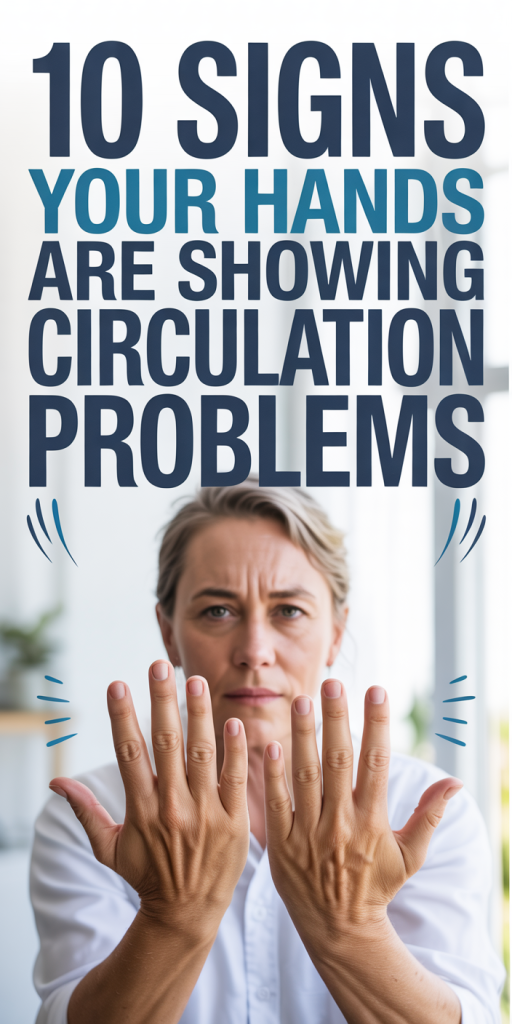
10 Signs Your Hands Are Showing Circulation Problems
Our hands are intricate and essential tools that we rely on for countless daily tasks. However, they can also serve as a window into our overall health, sometimes displaying the first subtle signs of underlying medical issues. One such issue is poor circulation, a condition that arises when the flow of blood to and from the hands is restricted or insufficient. Recognizing the warning signs early is crucial for seeking timely medical advice and preventing more serious complications down the line.
Poor circulation means that parts of your body — particularly the extremities like your hands and feet — are not receiving enough oxygen-rich blood. This can be caused by a variety of factors, ranging from lifestyle choices such as smoking to serious medical conditions including peripheral artery disease, diabetes, and autoimmune disorders 1. The hands are especially vulnerable because they are the farthest point from the heart, making them among the first places where reduced blood flow becomes apparent. Here are ten signs your hands might be showing that could indicate a circulation problem.
1. Persistently Cold Hands and Fingers
One of the most common and recognizable symptoms of poor circulation is having hands and fingers that feel cold to the touch, even in a relatively warm environment. When blood flow is restricted, less warm, oxygen-rich blood reaches the extremities, causing a noticeable and persistent drop in temperature 1. The body naturally prioritizes blood flow to vital organs during times of stress or cold, which means the hands and fingers are among the first areas to feel the effects of compromised circulation.
While everyone experiences cold hands from time to time — especially in cold weather — persistent coldness that does not resolve after warming up, or that occurs even indoors at room temperature, could be a red flag. Specialists at the Indiana Hand to Shoulder Center note that “cold intolerance” is one of the two most frequent signs of poor hand circulation, alongside visible color changes 4. If your hands consistently feel like ice cubes even when the rest of your body is warm, it warrants a conversation with your doctor.
2. Numbness and Tingling (“Pins and Needles”)
A classic sensation associated with poor circulation is the feeling of numbness or tingling in the hands and fingers, often described as “pins and needles.” This occurs because the nerve cells in your hands are not receiving an adequate supply of oxygen and nutrients from the bloodstream 2. When blood flow is reduced, the nerves begin to misfire, producing these uncomfortable and sometimes alarming sensations.
This symptom can range from mild and intermittent to severe and persistent. It is important to distinguish between the temporary numbness that comes from sitting in an awkward position (which resolves quickly once you move) and the chronic numbness that accompanies a true circulation problem. If the tingling in your hands occurs regularly without an obvious positional cause, or if it is accompanied by other symptoms on this list, it should not be ignored. Persistent numbness can also indicate nerve damage, which itself may be a consequence of long-term poor circulation.
3. Skin Color Changes
A noticeable change in the color of the skin on your hands and fingers is one of the most visually striking and diagnostically significant indicators of poor circulation. Depending on the underlying cause and severity, you might observe your skin turning pale (pallor), blue or purple (cyanosis), or developing a mottled, blotchy appearance 3. These color changes occur because of the reduced oxygen supply to the skin and underlying tissues; without sufficient oxygenated blood, the skin loses its healthy pink hue.
The classic example of circulation-related color change is seen in Raynaud’s phenomenon, a condition in which the small arteries supplying the fingers undergo spasms, dramatically restricting blood flow. During an episode, the fingers can turn stark white as blood flow ceases, then blue as oxygen is depleted from the remaining blood, and finally red and flushed as blood flow returns 5. According to the Mayo Clinic, these color changes are often accompanied by numbness and a stinging or throbbing pain upon rewarming 5. Even outside of Raynaud’s, persistent paleness or a bluish tint to the fingernails and fingertips is a warning sign that should be evaluated promptly.
4. Swelling in the Hands and Fingers (Edema)
When the circulatory system is not functioning efficiently, fluid can accumulate in the tissues of the extremities, leading to swelling known as edema. If you notice that your hands and fingers appear puffy, swollen, or feel unusually tight, it could be a sign that your circulatory system is struggling to return blood back to the heart effectively 2. This pooling of fluid is a consequence of increased pressure in the blood vessels and reduced venous return.
Swollen hands may feel heavy and stiff, and rings may become difficult to remove. While edema in the hands can have several causes — including kidney disease, heart failure, and certain medications — it is a recognized symptom of poor circulation and venous insufficiency. If the swelling is persistent, worsens throughout the day, or is accompanied by other symptoms such as pain or discoloration, it is important to seek medical evaluation to identify the underlying cause.
5. Slow Capillary Refill Time
A simple but telling test of hand circulation is the capillary refill test, which measures how quickly blood returns to the fingertips after pressure is applied. To perform this test, press firmly on the tip of a fingernail for a few seconds until the skin beneath turns white, then release the pressure and observe how long it takes for the normal pink color to return. In a healthy individual with good circulation, this should take less than two seconds 3.
If it takes longer than two to three seconds for the color to return, this is considered an abnormally slow capillary refill time and may indicate poor peripheral circulation 3. Medical professionals use this test as a quick bedside assessment of circulatory status. While it is not a definitive diagnostic tool on its own, a consistently slow capillary refill in your hands is a meaningful signal that blood is not flowing to your fingertips as efficiently as it should be.
6. Weak Grip Strength and Reduced Hand Mobility
A less obvious but equally important sign of poor circulation is a noticeable decline in grip strength or difficulty moving the fingers freely. Your hand muscles and joints require a steady, continuous supply of oxygen and nutrients delivered through the bloodstream to function at their best. Reduced blood flow can lead to muscle weakness and fatigue, making it difficult to perform tasks that require a firm grip or precise finger movements 6.
You might find yourself struggling to open jars, turn door handles, or hold onto objects for extended periods. In some cases, the fingers may feel stiff or difficult to flex, particularly in the morning or after periods of inactivity. The Medical News Today notes that difficulty moving the fingers is a recognized symptom of poor hand circulation 3. While grip weakness can also be caused by neurological conditions and arthritis, when it occurs alongside other circulatory symptoms, it strongly suggests that blood flow to the hand muscles is compromised.
7. Slow-Healing Sores or Wounds
Proper blood circulation is absolutely essential for the body’s natural healing process. When you sustain a cut, scrape, or sore on your hand, a robust supply of nutrient-rich, oxygenated blood is required to deliver the immune cells, growth factors, and building blocks needed for tissue repair and infection control. If you notice that even minor injuries on your hands are taking an unusually long time to heal, this is a serious warning sign of poor circulation 7.
In severe cases of arterial insufficiency, non-healing wounds can develop into chronic ulcers — open sores that persist for weeks or months and are at high risk of infection. These arterial ulcers are typically painful, have a punched-out appearance, and are located on the fingertips or over bony prominences 7. The presence of a slow-healing or non-healing wound on the hand is a medical concern that requires prompt professional attention, as untreated vascular insufficiency can lead to tissue death (gangrene) and, in extreme cases, may necessitate amputation.
8. Brittle Nails and Slow Nail Growth
Your fingernails, like every other part of your body, depend on a healthy blood supply to grow strong and maintain their integrity. The nail matrix — the tissue at the base of the nail responsible for nail production — requires a consistent flow of nutrients and oxygen delivered by the capillaries in the fingertips. Poor circulation can deprive the nail beds of these essential resources, leading to nails that are brittle, thin, and prone to splitting, breaking, or peeling 8.
You might also notice that your nails are growing significantly more slowly than they used to. Changes in nail texture and growth rate are often gradual and easy to overlook, but they can be meaningful indicators of compromised blood flow to the hands. Additionally, nails may appear pale or develop a bluish tinge at the nail bed, reflecting the reduced oxygen content of the blood reaching the fingertips. While nail changes can have many causes, when they occur in conjunction with other symptoms of poor circulation, they reinforce the need for a medical evaluation.
9. Hair Loss on the Hands and Fingers
While perhaps the least commonly discussed sign on this list, the loss of hair on the back of the hands and fingers is a recognized indicator of poor circulation and peripheral artery disease. The hair follicles in these areas require a steady stream of blood to sustain hair growth. When blood flow is chronically insufficient, the follicles become starved of nutrients and oxygen, causing them to become dormant and eventually cease producing hair 9.
Physicians examining patients for peripheral artery disease will often look for the absence of hair on the dorsum (back) of the hand and the fingers as part of their physical assessment. This sign, while subtle, can be an early clue that the arteries supplying the hand are narrowed or compromised. If you have noticed a gradual thinning or disappearance of hair on your hands and fingers that cannot be explained by other factors, it is worth mentioning to your doctor, particularly if you have other risk factors for vascular disease such as smoking, diabetes, or high cholesterol.
10. Pain, Aching, or Cramping in the Hands
Pain, aching, or cramping in the hands and fingers — particularly during physical activity or use — can be a significant symptom of poor circulation. This type of pain, known as claudication, occurs when the muscles are not receiving enough oxygen-rich blood to meet their metabolic demands during exertion 11. The resulting buildup of lactic acid and other metabolic byproducts causes the characteristic aching or cramping sensation.
In the hands, this might manifest as a deep ache or burning pain that develops when you perform repetitive tasks such as typing, writing, or gripping tools, and that subsides with rest. In more severe cases of arterial insufficiency, pain can occur even at rest, which is a sign of critical limb ischemia and requires urgent medical attention 11. A vascular surgeon at Mass General Brigham emphasizes that pain is one of the key warning signs of reduced arterial blood flow 1. Do not dismiss persistent or recurring hand pain as simply the result of overuse or aging, especially if it is accompanied by any of the other signs described in this article.
Understanding the Underlying Causes
The signs described above can arise from a range of underlying conditions, each of which affects circulation in a different way. Understanding the most common causes can help contextualize these symptoms and guide conversations with a healthcare provider.
| Condition | Mechanism | Common Hand Symptoms |
|---|---|---|
| Raynaud’s Disease/Phenomenon | Arterial spasms triggered by cold or stress | Color changes (white, blue, red), numbness, pain |
| Peripheral Artery Disease (PAD) | Plaque buildup narrowing the arteries | Cold hands, pain, slow-healing wounds, hair loss |
| Atherosclerosis | Fatty deposits restricting blood flow | Cold hands, pain, numbness |
| Diabetes | Blood vessel damage from high glucose | Numbness, tingling, slow wound healing |
| Anemia | Insufficient red blood cells to carry oxygen | Pale skin, weakness, cold hands |
| Autoimmune Disorders (e.g., lupus, scleroderma) | Inflammation and damage to blood vessels | Color changes, swelling, pain, Raynaud’s symptoms |
| Smoking | Nicotine causes vessel constriction and plaque | Cold hands, reduced circulation, ulcers |
When to See a Doctor
If you are experiencing any of the signs described in this article, it is important to consult with a healthcare professional. While some of these symptoms can occasionally result from benign and temporary causes, their persistent or recurring presence may indicate a serious underlying vascular condition. A doctor can perform a thorough physical examination, review your medical history, and order appropriate diagnostic tests — such as blood tests, Doppler ultrasound, or CT angiography — to determine the root cause and recommend a targeted treatment plan 4.
Certain symptoms require immediate medical attention, including sudden severe pain in the hand, a hand that becomes cold, pale, and numb very rapidly (which may indicate an acute arterial blockage), or any chest pain, difficulty breathing, or loss of consciousness 1. Do not delay seeking care if you experience these emergency warning signs.
Early intervention is key. Many of the conditions that cause poor hand circulation can be managed effectively with lifestyle modifications, medication, or minimally invasive procedures, especially when identified at an early stage. Paying close attention to what your hands are telling you may be one of the most important steps you can take for your long-term vascular health.