
10 Hand Symptoms That Could Point to Nerve Damage (What To Watch For In 2026)
We don’t usually think about the nerves in our hands until something goes wrong, then every twinge or numb patch feels urgent. In 2026, with new diagnostic tools and better awareness about neurological health, recognizing early warning signs is more useful than ever. This article, “10 Hand Symptoms That Could Point to Nerve Damage,” will help us spot subtle changes in sensation, strength, and coordination that often precede more serious problems. We’ll explain how nerve injuries affect hand function, walk through the 10 most important symptoms to watch, outline which nerves are likely involved, review common causes and tests, and cover practical treatment and home-care steps. By the end, we’ll know when to monitor symptoms at home, when to try conservative measures, and when to seek urgent medical attention.
How Nerve Damage Affects Hand Function
Nerves are the communication lines between the brain, spinal cord, and the muscles and skin of the hand. When those lines are damaged, by compression, inflammation, trauma, or disease, the signals that control touch, temperature, pain, and movement can be distorted or blocked. That leads to the range of symptoms we’ll describe below.
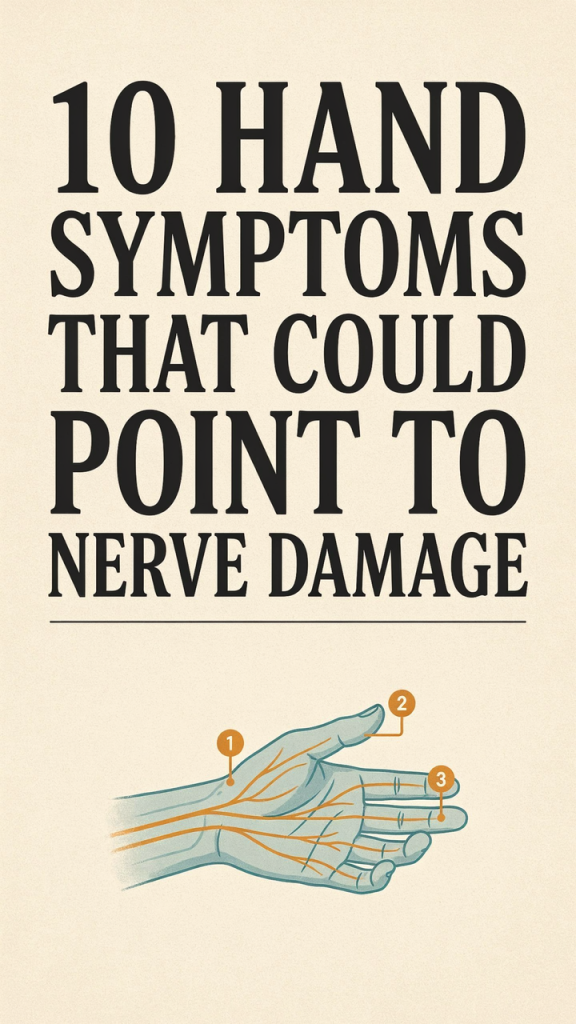
Physiology in plain terms: sensory nerves carry information from the hand to the brain (what we feel), while motor nerves carry commands from the brain to muscles (how we move). Many nerves carry mixed signals. For example, the median nerve provides sensory input to the thumb, index, middle fingers, and half the ring finger and also supplies motor control to some thumb muscles. Damage can hence cause both numbness and weakness in the same area.
The pattern of symptoms gives clues about the location and severity of the injury. A focal compression at the wrist (carpal tunnel) produces a different symptom pattern than a brachial plexus stretch at the shoulder or a systemic neuropathy that affects both hands symmetrically. Timing matters too: acute injuries, like lacerations or fractures, often present with sudden loss of function, whereas chronic conditions, like diabetic neuropathy, progress slowly.
Nerve injuries are classified by severity: neurapraxia (temporary conduction block), axonotmesis (axon damage with preserved connective tissue), and neurotmesis (complete nerve transection). Recovery prospects differ: neurapraxia often resolves within weeks to months, axonotmesis may require longer recovery as axons regrow, and neurotmesis typically needs surgical repair.
Understanding these basics helps us interpret symptoms logically. When we notice a change in sensation or movement in the hand, thinking about which nerves supply that area, and whether the change is sudden or gradual, guides the next steps: monitoring, conservative care, diagnostic testing, or urgent referral.
10 Warning Symptoms That Could Point To Nerve Damage
Below are ten hand symptoms that commonly indicate nerve injury. We’ll group them into two sets (1–5 and 6–10) to make them easier to remember and to connect symptoms with likely nerve problems.
Nerve Damage Symptoms 1–5: Numbness, Tingling, Pain, Weakness, And Loss Of Coordination
- Numbness or reduced sensation
Numbness, partial or complete loss of feeling, is one of the most common early signs of nerve compromise. It may be localized to the fingers, an entire hand, or follow a nerve’s distribution (for example, median-nerve numbness affecting the thumb, index, and middle fingers). Numbness that comes on after certain movements (like holding a phone or sleeping with the wrist bent) often points to compressive causes such as carpal tunnel syndrome.
- Tingling or “pins and needles” (paresthesia)
Tingling sensations, often described as pins and needles, indicate abnormal nerve firing. This can be intermittent or constant and may worsen at night or with repetitive use. Paresthesias are typical in entrapment neuropathies but also occur with systemic neuropathies (e.g., from diabetes or vitamin deficiencies).
- Sharp, burning, or radiating pain
Neuropathic pain is often sharp, burning, electric, or radiating. It may shoot from the wrist into a finger or up the forearm. This pain is distinct from musculoskeletal pain (which is usually dull or aching) and often responds poorly to standard analgesics.
- Muscle weakness or trouble gripping
When motor fibers are affected we’ll notice weakness, difficulty squeezing, pinching, or holding objects. This may start subtly (dropping small items, reduced endurance) and progress. In carpal tunnel, for instance, early loss of thumb opposition weakens grip and fine motor tasks.
- Loss of fine motor coordination and dexterity
Tasks that require precise finger movements, buttoning a shirt, handling small parts, typing, become clumsy. This loss of coordination comes from impaired sensory feedback, motor weakness, or both. It’s often one of the first functional complaints patients report, even before frank weakness is measurable on exam.
Nerve Damage Symptoms 6–10: Muscle Wasting, Temperature Sensitivity, Electric-Shock Sensations, Clumsiness, And Persistent Swelling/Pain
- Muscle wasting (atrophy)
Wasting of intrinsic hand muscles (especially the thenar eminence, the muscle mass at the base of the thumb) indicates chronic denervation. Atrophy suggests more severe, longstanding nerve injury and often signals the need for prompt evaluation to prevent permanent loss.
- Abnormal sensitivity to temperature or touch (allodynia/hyperalgesia)
Nerve injury can make normally non-painful stimuli feel painful (allodynia) or amplify painful stimuli (hyperalgesia). We might feel that light touch or cool air produces disproportionate discomfort. These changes are common in neuropathic pain syndromes and complex regional pain syndrome (CRPS).
- Electric-shock or jolt-like sensations
Brief, shock-like jolts, especially when moving the neck, bending the wrist, or tapping over a nerve, are a classic neuropathic sign. For example, tapping the median nerve at the wrist producing shocks into the fingers (positive Tinel’s sign) suggests local nerve irritation.
- Clumsiness, dropping objects, or decreased grip precision
Related to weakness and sensory loss, clumsiness signals functional impairment. If we begin dropping objects more often or can’t manage buttons or zippers, the problem is no longer subtle and should prompt assessment.
- Persistent swelling, stiffness, or pain that doesn’t follow a clear musculoskeletal pattern
Sometimes nerve irritation occurs alongside swelling or stiffness, think of a wrist fracture or inflammatory arthritis compressing a nerve. Pain that persists even though treatment, or pain accompanied by numbness and weakness, raises suspicion for a neuropathic origin rather than pure tendon or joint disease.
Putting the symptoms together: a single sign may be harmless (a transient numb patch after poor sleeping posture), but clusters, numbness plus weakness plus nocturnal tingling, are more suggestive of nerve damage and need evaluation. Pattern, timing, and associated triggers (repetitive work, trauma, systemic illness) all help us prioritize next steps.
Which Nerves Are Usually Involved And What Each Symptom Suggests
To interpret hand symptoms accurately, we have to map problems to the nerves most commonly involved: the median, ulnar, and radial nerves, plus more proximal structures like the brachial plexus and cervical nerve roots.
Median nerve
- Typical territory: palmar side of the thumb, index, middle, and radial half of the ring finger: part of the palm. Motor supply includes thumb opposition muscles (thenar eminence).
- Common symptoms: nocturnal numbness/tingling in the first three fingers, weakened thumb opposition, difficulty gripping small objects, and thenar muscle wasting in chronic cases.
- Common causes: carpal tunnel compression at the wrist, pronator teres syndrome at the forearm, or proximal entrapment.
Ulnar nerve
- Typical territory: small finger and ulnar half of the ring finger: ulnar side of the hand and intrinsic hand muscles (interossei and adductor pollicis).
- Common symptoms: numbness and tingling in the small finger, grip weakness, difficulty with finger abduction/adduction (spreading fingers), and muscle wasting in the hypothenar eminence and interossei (leading to clawing in severe chronic cases).
- Common causes: compression at the elbow (cubital tunnel), wrist (Guyon’s canal), or trauma.
Radial nerve
- Typical territory: dorsal radial forearm and back of the hand, primarily sensory to the dorsum of the thumb and index finger base: motor supply to wrist and finger extensors (proximal injury affects extension).
- Common symptoms: wrist drop (inability to extend the wrist and fingers) with proximal lesions, sensory loss on the back of the hand, and trouble releasing objects.
- Common causes: humeral fractures, compression in the spiral groove, or prolonged pressure.
Proximal nerves, brachial plexus, and cervical roots
- When symptoms include the entire arm or follow a dermatomal pattern up the shoulder and neck, we suspect more proximal involvement such as cervical radiculopathy or brachial plexus injury. Radicular pain that worsens with neck movements, accompanied by dermatome-distributed numbness or weakness, suggests a cervical root issue.
Peripheral polyneuropathy
- Systemic processes (diabetes, autoimmune conditions, toxins, medications) often cause length-dependent polyneuropathy: symptoms begin in the fingertips and toes symmetrically and progress slowly. Early signs are distal numbness and tingling, often paired with decreased ankle reflexes.
Interpreting symptom patterns
- Sensory-only symptoms (numbness, paresthesia) suggest isolated sensory fiber involvement or mild compression.
- Combined sensory and motor signs (numbness with weakness) point to mixed-fiber injury and warrant expedited evaluation.
- Sudden onset after trauma or with severe pain suggests acute injury (laceration, fracture), needing urgent care.
By matching where we feel symptoms to the nerve maps above, we can often make a reasonable guess about the site of injury. That directional thinking speeds diagnosis and guides the choice of tests and treatments.
Common Causes, Risk Factors, Diagnosis, And Tests
Causes and risk factors
- Repetitive strain and entrapment: Repeated wrist flexion/extension, vibrating tools, or prolonged keyboard use can compress nerves, carpal tunnel (median nerve) is the classic example.
- Trauma: Fractures, lacerations, dislocations, or blunt force can directly injure nerves or create secondary compression from swelling or hematoma.
- Systemic disease: Diabetes, hypothyroidism, vitamin B12 deficiency, chronic kidney disease, and autoimmune disorders (like rheumatoid arthritis) predispose to neuropathy.
- Toxins and medications: Alcohol, chemotherapy agents (e.g., platinum compounds, taxanes), and certain antibiotics can cause peripheral neuropathy.
- Anatomical variants and space-occupying lesions: Cysts, tumors, or anomalous muscles can compress nerves.
- Inflammatory or infectious causes: Conditions such as Guillain-Barré syndrome, Lyme disease, or herpes zoster can lead to nerve dysfunction.
Initial clinical evaluation
A thorough history and physical exam are our first, and often most powerful, diagnostic tools. Key history points include onset (sudden vs gradual), pattern (one hand vs both, fingers affected), activities that provoke symptoms, systemic illnesses, recent injuries, and medication exposures.
On exam we test:
- Sensation using light touch, pinprick, and vibration
- Muscle strength across multiple muscle groups (thumb opposition, finger abduction, wrist extension)
- Reflexes (to detect more widespread neuropathy)
- Provocative tests: Tinel’s sign (tapping over a nerve), Phalen’s test (wrist flexion), and elbow flexion tests for ulnar nerve irritation
Electrodiagnostic tests
- Nerve conduction studies (NCS) measure how quickly electrical signals travel along nerves and can localize compression sites and quantify severity.
- Electromyography (EMG) assesses muscle electrical activity and helps detect denervation and chronicity.
Imaging and labs
- Ultrasound can visualize nerve swelling or compressive structures at the wrist or elbow. High-resolution ultrasound is increasingly useful for dynamic assessment.
- MRI is helpful when proximal lesions, brachial plexus injuries, or structural causes are suspected.
- Blood tests to screen for diabetes (A1c), thyroid dysfunction, B12 deficiency, inflammatory markers, or infectious causes are often indicated.
When to escalate testing
We prioritize electrodiagnostic testing when functional impairment is present (weakness, atrophy), symptoms are progressive, or when surgery is being considered. For bilateral symmetric symptoms with systemic risk factors, metabolic and toxic causes should be investigated early.
Putting it together
Diagnosis is rarely a single test. We combine history, physical exam, and targeted testing to identify the cause and gauge severity. Early diagnosis improves outcomes: compressive neuropathies often respond to conservative measures if caught early, while chronic denervation can lead to irreversible muscle loss.
Treatment Options, Home Care, And When To Seek Urgent Help
Treatment begins with matching therapy to cause and severity. We prioritize conservative measures for mild-to-moderate entrapment and reserve surgery for severe or refractory cases. Concurrently, we address underlying systemic factors.
Conservative and non-surgical treatments
- Activity modification: Reducing repetitive wrist motions, using ergonomic tools, and altering sleep positions often reduces symptoms.
- Splinting: Night splints that maintain the wrist in neutral are inexpensive and effective for carpal tunnel and many entrapment syndromes.
- Anti-inflammatory measures: Short courses of NSAIDs can help with pain and inflammation, though they don’t reverse nerve compression. Topical agents and neuropathic agents (gabapentin, pregabalin) may reduce symptoms when indicated.
- Corticosteroid injections: Local injections around the carpal tunnel or other entrapment sites often provide temporary relief and can delay or obviate surgery in some patients.
- Physical therapy and hand therapy: Exercises to mobilize nerves, improve posture, and strengthen hand muscles, guided by a therapist, help restore function. Occupational therapy focuses on task modification and adaptive techniques.
- Addressing systemic causes: Optimizing glucose control, correcting vitamin deficiencies, and discontinuing offending medications reduces progression in systemic neuropathies.
Surgical options
Surgery is considered when conservative care fails, when there’s persistent weakness or muscle wasting, or when electrodiagnostic tests show severe compression. Procedures include:
- Carpal tunnel release (open or endoscopic) to relieve median nerve compression
- Ulnar nerve transposition or decompression at the elbow or release at Guyon’s canal
- Nerve repair or grafting for lacerations and severe traumatic injuries
- Tumor or cyst excision when a space-occupying lesion compresses a nerve
Postoperative rehabilitation
Hand therapy after surgery optimizes return of function, maintains range of motion, and helps prevent scar adhesions. Recovery timelines vary: many patients see symptom relief within weeks, but full recovery, especially of motor function, can take months.
Home-care measures we recommend
- Use a neutral wrist splint at night for symptomatic relief
- Take regular breaks during repetitive tasks: employ ergonomic keyboards, tool grips, or wrist supports
- Practice gentle nerve gliding exercises as advised by a therapist
- Maintain good control of chronic conditions (blood sugar, thyroid function)
When to seek urgent or emergency care
Seek urgent evaluation if we notice:
- Sudden, severe weakness or inability to move the fingers or wrist
- New, severe, or spreading numbness after trauma
- Signs of compartment syndrome (rapid swelling, severe pain out of proportion, tense hand, loss of pulses), this is an emergency
- Progressive motor loss or rapidly worsening sensory loss
In those urgent situations, prompt imaging, electrodiagnostic testing, or surgical intervention may be required to prevent permanent damage.
Prognosis and prevention
Many compressive neuropathies respond well to conservative measures, especially if treated early. Preventive strategies, ergonomics, activity modification, tight control of chronic illnesses, and early attention to symptoms, reduce long-term nerve injury risk. When surgery is needed, outcomes are generally favorable, though chronic cases with muscle atrophy carry a higher risk of incomplete recovery.
Conclusion
Recognizing the “10 Hand Symptoms That Could Point to Nerve Damage” helps us move from worry to action. Numbness, tingling, pain, weakness, coordination loss, muscle wasting, temperature sensitivity, shock-like sensations, clumsiness, and persistent swelling or pain each paint part of the diagnostic picture. By mapping symptoms to the median, ulnar, and radial nerves, and considering systemic causes, we can choose appropriate tests and treatments. Most importantly, early identification and targeted care improve outcomes and often prevent permanent loss. If we notice clusters of these symptoms, worsening signs, or sudden severe deficits, we shouldn’t wait: prompt medical assessment can make all the difference.


