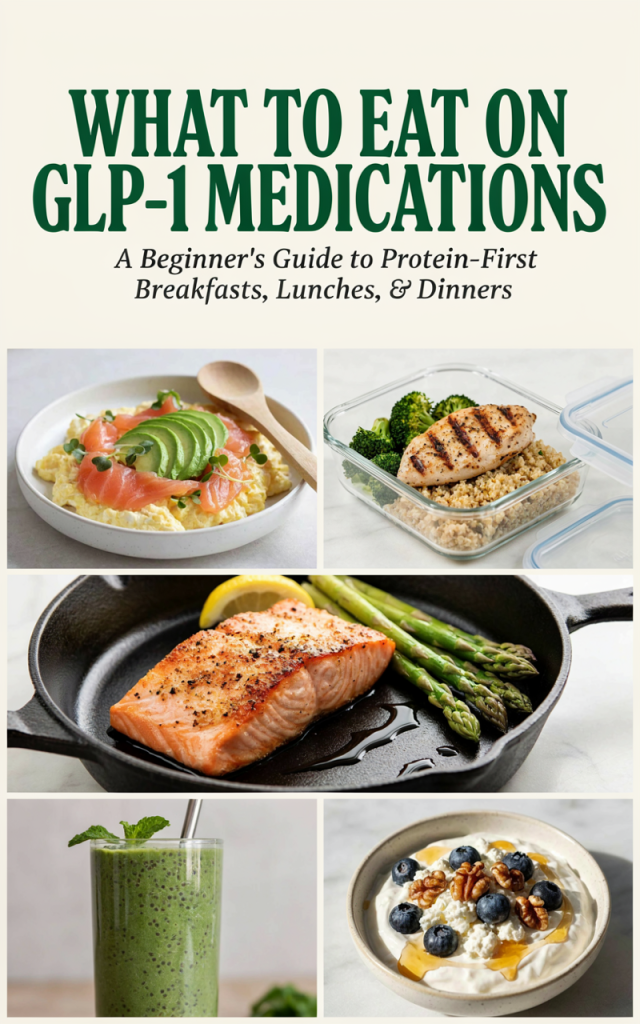
What to Eat on GLP-1 Medications: A Beginner’s Guide to Protein-First Breakfasts, Lunches, and Dinners
Introduction
Starting a GLP-1 medication (like semaglutide, liraglutide, or tirzepatide) often brings changes to appetite, fullness cues, and how your body tolerates food. For many people this leads to easier weight loss and better blood sugar control — but it can also mean nausea, early fullness, or changes in energy levels. The good news: you can shape your meals to support these changes. A “protein-first” approach — prioritizing high-quality protein at the start of meals — helps preserve muscle, increase satisfaction, stabilize blood sugar, and reduce overeating when appetite is altered.
This guide is a practical, beginner-friendly resource with evidence-informed guidance, food strategies, and 12 easy, tasty recipes (4 breakfasts, 4 lunches, 4 dinners) formatted so you can start cooking today. Each recipe includes ingredients and step-by-step instructions. Always check with your prescribing clinician or dietitian for personalized advice.
How GLP-1 Medications Change Appetite and Digestion
- Appetite regulation: GLP-1 agonists act on brain centers that control hunger and reward, often reducing appetite and cravings for calorie-dense foods.
- Satiety and gastric emptying: They slow gastric emptying, so small amounts of food may make you feel full more quickly.
- Side effects: Nausea, bloating, and early fullness are common, especially when starting or increasing dose.
- Why food choices matter: Choosing nutrient-dense, protein-focused meals helps prevent unintentional nutrient loss, preserves muscle mass during weight change, and reduces glucose swings.
Why “Protein-First” Works
- Preserves lean mass: When calorie intake falls, dietary protein helps protect muscle.
- Increases satiety: Protein is the most satiating macronutrient; eating it first can reduce total meal intake.
- Stabilizes blood sugar: Protein slows carbohydrate absorption when paired with carbs, lowering blood sugar spikes.
- Boosts energy: Adequate protein helps maintain activity levels and supports recovery after exercise.
Practical Principles for Eating on GLP-1 Medications
- Start meals with protein: Put a protein-rich portion on your plate first (eggs, Greek yogurt, poultry, fish, tofu, legumes).
- Keep portions modest: Because fullness comes on faster, aim for smaller, frequent meals if that feels comfortable.
- Favor lean protein and moderate fat: Too much high-fat food at once may increase nausea for some people. Choose healthy fats in moderate amounts.
- Include low-glycemic carbs and fiber: Oats, quinoa, non-starchy vegetables, berries and legumes help keep blood sugar steady and support gut health.
- Hydrate between bites: Take small sips between bites; rapid drinking with meals can increase fullness and nausea for some.
- Choose texture-smart foods: If nausea appears, softer textures (purees, soups, smoothies) can be easier to tolerate.
- Use nausea-friendly tricks: Ginger, peppermint tea, and smaller cold foods (like chilled yogurt) may reduce queasiness.
- Monitor protein needs: General adult protein guidance is 0.8–1.2 g/kg body weight for maintenance, and higher (1.2–1.6 g/kg) if you’re active or losing weight fast — ask your dietitian for personalized targets.
- Keep regular follow-up: Report persistent GI symptoms or unintentional weight loss to your clinician.
Breakfast: Protein-First Ideas to Start Your Day
A protein-first breakfast helps control morning hunger and reduces impulsive snacking later. Below are 4 breakfast recipes designed to be gentle on the stomach, nutrient-dense, and easy to scale.
Greek Yogurt Power Bowl (serves 1)
Ingredients
– 3/4 cup plain Greek yogurt (or non-dairy high-protein yogurt alternative)
– 1/4 cup mixed berries (fresh or thawed frozen)
– 1 tbsp chia seeds or ground flaxseed
– 1 tbsp chopped nuts (almonds or walnuts)
– 1 tsp honey or a squeeze of lemon (optional)
– Pinch of cinnamon
Instructions
1. Spoon the Greek yogurt into a bowl.
2. Top with mixed berries and sprinkle with chia seeds or ground flaxseed.
3. Add chopped nuts and a pinch of cinnamon.
4. Drizzle honey or lemon if you want a touch of sweetness. Eat slowly, starting with the yogurt/protein.
Spinach, Feta & Egg Scramble (serves 1)
Ingredients
– 2 large eggs (or 1 egg + 2 egg whites)
– 1 cup fresh spinach, roughly chopped
– 2 tbsp crumbled feta cheese
– 1 tsp olive oil or cooking spray
– Salt and pepper to taste
– 2 tbsp cooked quinoa (optional, for added carbs)
Instructions
1. Whisk the eggs with salt and pepper in a small bowl.
2. Heat oil in a nonstick skillet over medium heat; add spinach and sauté 1–2 minutes until wilted.
3. Pour eggs into the skillet and gently scramble until mostly set.
4. Stir in feta cheese and remove from heat. Spoon onto a plate and serve with cooked quinoa if using.
Protein Smoothie for Sensitive Stomachs (serves 1)
Ingredients
– 1 scoop protein powder (20–25 g protein; choose whey, pea, or collagen as tolerated)
– 3/4 cup unsweetened almond milk or milk of choice
– 1/4 cup Greek yogurt or silken tofu (for extra protein)
– 1/2 small banana or 1/4 cup frozen mango (for mild sweetness)
– 1 tbsp ground flaxseed or chia seed
– Ice cubes as desired
Instructions
1. Combine all ingredients in a blender.
2. Blend until smooth; add water or more milk to reach preferred thickness.
3. Sip slowly through the first half to gauge fullness and tolerance.
Overnight Oats with Protein Powder (serves 1)
Ingredients
– 1/3 cup rolled oats
– 3/4 cup milk of choice
– 1 scoop protein powder (unflavored or vanilla)
– 1 tbsp nut butter (almond or peanut)
– 1 tbsp chia seeds
– 1/4 cup fresh berries or sliced apple
Instructions
1. In a jar, mix oats, milk, protein powder, nut butter, and chia seeds until combined.
2. Cover and refrigerate overnight (or at least 4 hours).
3. Top with fresh berries or sliced apple and stir before eating.
Lunch: Midday Meals That Keep You Fueled
Lunch should be satisfying but not overly heavy. Aim to prioritize protein and vegetables, and include a moderate portion of whole grains or legumes if you tolerate them.
Grilled Chicken & Lentil Salad (serves 2)
Ingredients
– 12 oz grilled chicken breast, sliced (about 340 g)
– 1 cup cooked green or brown lentils
– 4 cups mixed salad greens
– 1/2 cup cherry tomatoes, halved
– 1/4 cup diced cucumber
– 2 tbsp chopped fresh parsley
– Dressing: 2 tbsp olive oil, 1 tbsp lemon juice, salt and pepper
Instructions
1. Combine salad greens, lentils, cherry tomatoes, cucumber, and parsley in a large bowl.
2. Whisk olive oil, lemon juice, salt, and pepper to make the dressing.
3. Toss salad with dressing and top with sliced grilled chicken. Eat the chicken first if practicing protein-first.
Turkey & Avocado Lettuce Wraps (serves 2)
Ingredients
– 8 large butter lettuce leaves
– 8 oz sliced turkey breast (deli quality or leftover roast turkey)
– 1 ripe avocado, sliced
– 1/2 cup shredded carrots
– 2 tbsp hummus or Greek yogurt spread
– Fresh lemon or lime juice, salt and pepper
Instructions
1. Lay out the lettuce leaves and spread a little hummus or Greek yogurt on each.
2. Place turkey slices, avocado, and shredded carrots on each leaf.
3. Squeeze lemon or lime, season with salt and pepper, and fold into wraps. Eat one wrap slowly and check fullness.
Creamy Chickpea & Veggie Bowl (serves 2)
Ingredients
– 1 can (15 oz) chickpeas, drained and rinsed
– 2 cups steamed broccoli florets
– 1 cup roasted sweet potato cubes
– 2 tbsp tahini
– 1 tbsp lemon juice
– 1 clove garlic, minced
– Salt, pepper, and water to thin the sauce
Instructions
1. Mix tahini, lemon juice, garlic, salt, and a little water to make a creamy dressing.
2. Arrange chickpeas, steamed broccoli, and roasted sweet potato in bowls.
3. Drizzle the tahini dressing over the bowl and mix. Eat the chickpeas first to prioritize protein.
Miso Salmon Poke Bowl (serves 1)
Ingredients
– 4–5 oz cooked or seared salmon, flaked (or use firm tofu for vegetarian)
– 1/2 cup cooked brown rice or cauliflower rice
– 1/2 cup shredded cabbage or mixed greens
– 1/4 cup edamame (shelled)
– 1 tbsp low-sodium miso paste mixed with 1 tbsp rice vinegar and 1 tsp sesame oil
Instructions
1. Warm the rice and arrange it in a bowl with cabbage and edamame.
2. Place flaked salmon on top.
3. Drizzle miso dressing and mix gently. Start with the salmon first.
Dinner: Satisfying Evenings Without Overeating
Dinner on GLP-1 medications can be smaller than pre-treatment dinners and still feel satisfying. Focus on lean protein, lots of vegetables, and a moderate portion of whole grain or starchy veg if needed.
Baked Lemon Herb Cod with Roasted Vegetables (serves 2)
Ingredients
– 12 oz cod or other white fish fillets
– 2 tbsp lemon juice
– 1 tbsp olive oil
– 1 tsp dried oregano or chopped fresh herbs
– 2 cups mixed vegetables (zucchini, bell pepper, asparagus)
– Salt and pepper
Instructions
1. Preheat oven to 400°F (200°C).
2. Toss mixed vegetables with 1 tbsp olive oil, salt, and pepper. Spread on a baking sheet.
3. Place cod fillets on the baking sheet, drizzle with lemon juice, olive oil, and sprinkle herbs, salt, and pepper.
4. Roast 12–15 minutes until fish flakes easily and vegetables are tender. Eat the fish first.
Turkey Meatballs with Zucchini Noodles (serves 2)
Ingredients
– 1 lb lean ground turkey
– 1/4 cup grated Parmesan (optional)
– 1 clove garlic, minced
– 1 egg (or egg substitute)
– 2 medium zucchinis, spiralized
– 1 cup low-sugar marinara sauce
– 1 tbsp olive oil, salt and pepper
Instructions
1. Preheat oven to 375°F (190°C). In a bowl, combine ground turkey, Parmesan, garlic, egg, salt, and pepper. Form into 12 small meatballs.
2. Place meatballs on a baking sheet and bake 18–20 minutes until cooked through.
3. Heat olive oil in a skillet, add zucchini noodles and toss 1–2 minutes to warm.
4. Add marinara sauce and meatballs to the skillet to combine. Serve, beginning with meatballs.
Tofu & Vegetable Stir-Fry with Buckwheat (serves 2)
Ingredients
– 14 oz firm tofu, pressed and cubed
– 2 cups mixed stir-fry vegetables (snap peas, bell pepper, broccoli)
– 1 tbsp low-sodium soy sauce or tamari
– 1 tsp grated ginger
– 1 tsp sesame oil
– 1 cup cooked buckwheat or brown rice
Instructions
1. Heat sesame oil in a nonstick skillet or wok over medium-high heat. Add cubed tofu and brown on all sides.
2. Add ginger and mixed vegetables, stir-fry 3–4 minutes until tender-crisp.
3. Add soy sauce and toss to coat.
4. Serve over cooked buckwheat. Eat tofu first to get protein early in the meal.
Salmon & White Bean Salad with Greens (serves 2)
Ingredients
– 10 oz cooked salmon (leftover or canned wild salmon)
– 1 can (15 oz) white beans, drained and rinsed
– 4 cups mixed greens
– 1/4 red onion, thinly sliced
– Dressing: 2 tbsp olive oil, 1 tbsp apple cider vinegar, 1 tsp Dijon mustard, salt and pepper
Instructions
1. Whisk dressing ingredients in a small bowl.
2. Toss mixed greens, white beans, and red onion with dressing.
3. Flake salmon over the salad and serve. Prioritize eating the salmon and beans first.
Snack and Side Tips (Quick Ideas)
These are optional quick ideas to complement the protein-first meals (not full recipes): cottage cheese with cucumber, a hard-boiled egg with cherry tomatoes, edamame, a small handful of nuts with a string cheese, Greek yogurt dip with veggie sticks. Keep snacks protein-focused and modest in portion to avoid overwhelming fullness.
Sample Day: Protein-First Meal Flow
- Start breakfast by eating the protein portion first (e.g., Greek yogurt or eggs).
- Mid-morning: small protein snack only if needed.
- Lunch: protein-first salad or wrap, focus on vegetables next.
- Afternoon: light protein-based snack if energy dips (e.g., small smoothie).
- Dinner: lean protein and vegetables; eat protein early in the plate.
- Hydrate throughout the day, and consider ginger tea if mild nausea appears.
Managing Common Issues While on GLP-1 Medications
- Nausea: Try cold foods, ginger, peppermint tea, smaller frequent meals, and bland, low-fat options until tolerance improves.
- Early fullness: Reduce plate size; focus on protein and nutrient density rather than volume.
- Reduced appetite: Track your protein intake across meals; you may need protein supplements or fortified foods if you struggle to meet targets.
- Constipation: Increase fiber slowly, hydrate, and include legumes, fruits, and vegetables; consider discussing fiber supplements with your provider.
- Food aversions: Rotate proteins and cooking methods (baked, poached, grilled) and try softer textures if needed.
When to Contact Your Healthcare Team
Contact your prescriber or dietitian if you experience:
– Unintended rapid weight loss beyond the expected plan
– Persistent nausea, vomiting, or inability to eat
– Signs of malnutrition (dizziness, excessive fatigue, hair loss)
– New or worsening gastrointestinal symptoms
Conclusion
GLP-1 medications can be powerful tools for managing appetite, weight, and blood sugar. Pairing them with a protein-first eating plan helps preserve muscle, keep hunger in check, and make meals more satisfying even when portions naturally shrink. Use the practical principles and 12 recipes in this guide as a starting point: prioritize protein at the beginning of meals, include plenty of vegetables and fiber-rich carbs you tolerate, choose moderate healthy fats, and listen to your body. Start simple, adjust portions for your comfort, and lean on your healthcare team when you need individualized targets or help managing side effects. Small, consistent changes to meal structure and composition can make a big difference in how you feel while taking GLP-1 medications — you’ve got this.