
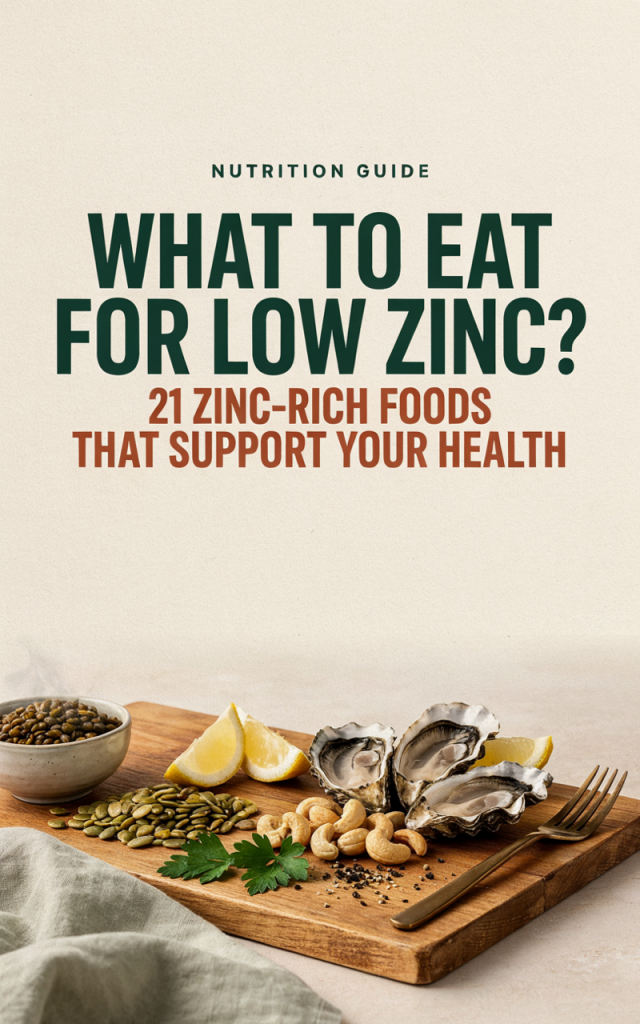
What Should I Eat for Low Zinc? 21 Zinc-Rich Foods That Support Your Health
Zinc is a small mineral with big influence. It supports immune function, wound healing, DNA synthesis, taste and smell, and healthy growth and development. If you’ve been diagnosed with low zinc or suspect your intake is low, the good news is that dietary changes can make a major difference. This guide walks you through 21 zinc-rich foods, practical tips to boost absorption, simple meal ideas, and three easy recipes you can start using today.
Whether you’re plant-based, omnivorous, or somewhere in between, this article equips you to choose smart foods that steadily increase zinc intake and support overall health.
Why zinc matters
Zinc is involved in hundreds of enzymatic reactions. Key roles include:
– Immune system regulation — zinc helps immune cells develop and function.
– Wound healing and tissue repair.
– Protein and DNA synthesis.
– Normal taste and smell.
– Growth during pregnancy, childhood, and adolescence.
Recommended daily intake (approximate):
– Adult men: 11 mg/day
– Adult women: 8 mg/day
– Pregnant women: 11–12 mg/day
– Breastfeeding women: 12–13 mg/day
Upper limit for most adults is about 40 mg/day from all sources unless supervised by a clinician — more isn’t always better and excess zinc can cause nausea, copper deficiency, and immune problems.
Signs of low zinc and when to test
Common symptoms of zinc deficiency:
– Frequent infections or slow wound healing
– Loss of appetite, weight loss
– Hair loss
– Changes in taste or smell
– Delayed growth in children
– Dermatitis or skin lesions
If you suspect deficiency, talk with your healthcare provider. Zinc status is often assessed clinically (symptoms, diet history) and via blood tests, and your provider will advise if you need supplementation.
How to improve zinc absorption
Zinc absorption depends on the food source and how you prepare it:
– Animal proteins (meat, shellfish, dairy) provide zinc in a highly bioavailable form.
– Plant foods contain phytates (in whole grains, legumes, seeds) that bind zinc and reduce absorption, but you can reduce phytates by soaking, sprouting, fermenting, and cooking.
– Pair plant zinc foods with vitamin C–rich foods and a small amount of animal protein to improve uptake.
– Avoid taking calcium- or iron-heavy supplements at the same time as zinc supplements — space them out.
– If using supplements, follow medical guidance; long-term high-dose zinc can harm copper levels.
Now, let’s explore 21 zinc-rich foods that are practical, tasty, and accessible.
21 Zinc-Rich Foods
Below are 21 foods to help raise or maintain healthy zinc levels. Values are approximate and can vary by variety and preparation; they’re listed to give a practical sense of how zinc can add up in meals.
1. Oysters
Why: The most zinc-dense food. Excellent if you enjoy seafood.
Approximate zinc: Very high — a small serving provides more than the daily need for many adults.
2. Beef (lean cuts)
Why: Readily available and rich in bioavailable zinc; grilling, roasting, or stewing retains zinc.
Approximate zinc: Moderate to high per 3-oz cooked serving.
3. Lamb
Why: Similar to beef in zinc content with a distinct flavor profile; great for roasts or stews.
Approximate zinc: Moderate to high per serving.
4. Pork
Why: A convenient zinc source, especially in lean cuts like tenderloin.
Approximate zinc: Moderate per serving.
5. Crab
Why: Shellfish like crab offer good zinc and make elegant, protein-rich meals.
Approximate zinc: Moderate to high per 3-oz cooked serving.
6. Lobster
Why: Another shellfish option with meaningful zinc; delicious steamed or grilled.
Approximate zinc: Moderate per serving.
7. Mussels
Why: Affordable shellfish with good zinc and iron content — try steamed with herbs.
Approximate zinc: Moderate per serving.
8. Shrimp
Why: Lower than oysters and crab but still a useful seafood zinc source, especially in larger portions.
Approximate zinc: Low to moderate per serving.
9. Pumpkin seeds (pepitas)
Why: A top plant-based zinc source; easy to snack on or sprinkle on yogurt or salads.
Approximate zinc: About 1–3 mg per ounce depending on variety.
10. Sesame seeds (and tahini)
Why: Versatile — sprinkle on dishes or use tahini in dressings and dips.
Approximate zinc: Moderate per tablespoon/ounce.
11. Hemp seeds
Why: Nutrient-dense, with a helpful mix of protein, healthy fats, and zinc.
Approximate zinc: Around 2–3 mg per 3 tablespoons.
12. Cashews
Why: Tasty snack with a decent zinc punch compared to other nuts.
Approximate zinc: About 1–2 mg per ounce.
13. Almonds
Why: Not as zinc-rich as cashews, but still contribute to daily intake when eaten regularly.
Approximate zinc: Around 0.9–1.0 mg per ounce.
14. Chickpeas
Why: A practical legume for hummus, soups, and salads. Soak and cook to reduce phytates.
Approximate zinc: Around 1–3 mg per cup cooked.
15. Lentils
Why: High in fiber and plant protein; pair with vitamin C foods to improve zinc absorption.
Approximate zinc: About 1–3 mg per cup cooked.
16. Black beans (and other beans)
Why: Common pantry staple that contributes zinc plus fiber and protein.
Approximate zinc: Around 1–2 mg per cup cooked.
17. Greek yogurt
Why: Dairy provides zinc in a bioavailable form; Greek yogurt is also protein-rich.
Approximate zinc: Around 1 mg per cup (varies with type).
18. Cheddar cheese
Why: Cheese is an easy way to add a little extra zinc to meals or snacks.
Approximate zinc: Around 1 mg per ounce.
19. Eggs
Why: A modest zinc source and flexible ingredient for any meal.
Approximate zinc: Around 0.5–1 mg per large egg.
20. Oats
Why: A zinc-containing whole grain; soak or cook and pair with seeds/nuts to boost intake.
Approximate zinc: Around 1 mg per cooked cup.
21. Quinoa
Why: A gluten-free grain-like seed with modest zinc and complete protein profile.
Approximate zinc: Around 1–2 mg per cup cooked.
Note: Fortified breakfast cereals and meal replacement products can be high in zinc, but amounts vary widely and can exceed recommended levels if combined with supplements. Read labels and consider fortified foods as one tool — not the only one.
Practical meal ideas to raise zinc intake
Below are easy ways to combine the foods above into satisfying meals. These are quick, flexible, and work for different diets.
- Breakfast: Greek yogurt + oats + hemp seeds + a handful of pumpkin seeds and fresh fruit.
- Lunch: Quinoa salad with chickpeas, roasted pumpkin seeds, spinach, and lemon-tahini dressing.
- Dinner: Beef or lamb stir-fry over quinoa, or mussels steamed with garlic and whole-grain bread.
- Snack: Handful of cashews and a small piece of cheddar or whole-grain crackers with tahini.
If you’d like complete recipes, try the ones below — each recipe lists ingredients and step-by-step instructions.
Recipes and meal ideas
All recipes below include zinc-rich ingredients from the list and are written with simple pantry-friendly steps.
Recipe 1: Greek Yogurt Oat Bowl with Hemp & Pumpkin Seeds (Breakfast)
Ingredients:
– 1 cup Greek yogurt
– 1/2 cup cooked oats (or quick oats prepared)
– 1 tbsp hemp seeds
– 1 tbsp pumpkin seeds (pepitas)
– 1 tbsp chopped almonds or cashews (optional)
– 1 small handful berries or sliced banana
– Drizzle of honey or maple syrup (optional)
Instructions:
1. Spoon Greek yogurt into a bowl.
2. Add cooked oats on top or swirl them into the yogurt.
3. Sprinkle hemp seeds, pumpkin seeds, and chopped nuts over the top.
4. Add berries or banana slices and drizzle honey/maple syrup if desired.
5. Stir and eat immediately, or cover and refrigerate for up to 24 hours.
Why it helps: This bowl combines dairy (bioavailable zinc), oats, hemp, and pumpkin seeds to deliver a concentrated, balanced zinc boost at breakfast.
Recipe 2: Pumpkin Seed & Chickpea Power Bowl (Vegan/Lunch)
Ingredients:
– 1 cup cooked quinoa
– 1 cup cooked chickpeas (or canned, drained and rinsed)
– 1/2 cup roasted pumpkin seeds (pepitas)
– 2 cups mixed greens or spinach
– 1/2 cup diced cucumber
– 1/2 cup cherry tomatoes, halved
– 2 tbsp tahini
– 1 tbsp lemon juice
– 1 tbsp olive oil
– Salt and pepper to taste
Instructions:
1. In a bowl, whisk tahini, lemon juice, olive oil, salt, and pepper to make a simple dressing. Add water if too thick.
2. Place cooked quinoa and chickpeas in a serving bowl.
3. Add mixed greens, cucumber, and cherry tomatoes.
4. Sprinkle roasted pumpkin seeds evenly over the bowl.
5. Drizzle the tahini dressing and toss lightly before serving.
Why it helps: Combines plant zinc sources (pumpkin seeds, chickpeas, quinoa) with a tahini-based dressing to amplify flavor and nutrient density. Soaking/cooking chickpeas reduces phytates and improves zinc availability.
Recipe 3: Quick Beef & Quinoa Stir-Fry (Dinner)
Ingredients:
– 8 oz lean beef strips (sirloin or flank), sliced thin
– 2 cups cooked quinoa
– 1 cup broccoli florets
– 1/2 red bell pepper, sliced
– 1 small onion, thinly sliced
– 2 cloves garlic, minced
– 1 tbsp soy sauce or tamari
– 1 tbsp olive or sesame oil
– 1 tsp grated ginger (optional)
– 1 tbsp toasted sesame seeds (optional)
Instructions:
1. Heat oil in a large skillet or wok over medium-high heat.
2. Add beef strips and sear for 2–3 minutes until browned; remove and set aside.
3. In the same pan, add a touch more oil if needed and sauté onion, garlic, and ginger for 1–2 minutes.
4. Add broccoli and bell pepper, stir-fry until vegetables are crisp-tender (about 4–5 minutes).
5. Return beef to the pan, add soy sauce, and toss to combine.
6. Serve the stir-fry over cooked quinoa and sprinkle with sesame seeds.
Why it helps: Beef provides bioavailable zinc while quinoa adds plant zinc and complete protein — a balanced dinner to boost zinc intake.
Recipe 4: Steamed Mussels with Garlic & Lemon (Simple Seafood Option)
Ingredients:
– 2 lbs fresh mussels, cleaned and debearded
– 2 tbsp olive oil
– 3 cloves garlic, minced
– 1/2 cup dry white wine or low-sodium broth
– Zest and juice of 1 lemon
– 2 tbsp chopped parsley
– Salt and pepper to taste
– Whole-grain bread for dipping (optional)
Instructions:
1. Rinse and inspect mussels; discard any that don’t close when tapped.
2. Heat olive oil in a large pot over medium heat and sauté garlic for about 30 seconds.
3. Add the wine or broth, lemon zest, and juice; bring to a simmer.
4. Add mussels, cover, and steam for 4–6 minutes until mussels open (discard any that remain closed).
5. Stir in chopped parsley, season with salt and pepper, and serve with whole-grain bread.
Why it helps: Mussels are a cost-effective shellfish that provide a meaningful zinc boost and pair well with whole grains to make a balanced meal.
How to build a daily meal plan for zinc support
- Start with a zinc-containing breakfast: Greek yogurt bowl, fortified cereal with milk, or oats with seeds.
- Add a lunch that includes beans, lentils, chickpeas, tofu, or a grain + seeds.
- Enjoy animal protein at dinner if you eat meat or seafood a few times weekly — even two to three servings a week of shellfish or red meat can help maintain zinc status.
- Snack on nuts and seeds (pumpkin seeds, cashews) rather than ultra-processed options.
- Use food prep tactics to reduce phytates: soak dried beans, toast seeds lightly, or use fermented breads and tempeh.
Vegetarian and vegan strategies: Combine different plant zinc sources across meals, reduce phytates by soaking/sprouting/fermenting, and include vitamin C-rich foods (peppers, citrus, strawberries) to enhance absorption.
Supplements — when to consider them
Supplements can help when dietary improvements aren’t enough or when deficiency is confirmed. Consider these points:
– Talk to your provider before starting zinc supplements.
– Typical supplemental zinc forms include zinc gluconate, zinc sulfate, and zinc picolinate.
– Avoid long-term high-dose zinc (>40 mg/day) without medical supervision due to risk of copper deficiency.
– If you’re pregnant or breastfeeding, get personalized dosing advice from your provider.
Final tips and cautions
- Balance matters: Don’t overload on one food; variety ensures you get other essential nutrients.
- Read labels: Fortified foods can deliver zinc but also contain other nutrients — check totals if you’re supplementing.
- Monitor medications: Zinc supplements can interact with certain antibiotics and diuretics; consult a clinician.
- If symptoms persist despite dietary changes, pursue medical evaluation — persistent deficiency can indicate malabsorption or other health issues.
Conclusion
Addressing low zinc through food is practical and empowering. From oysters and shellfish to beef, seeds, legumes, and dairy, there are many tasty ways to raise zinc intake. Small, consistent changes — a Greek yogurt breakfast with hemp and pumpkin seeds, a chickpea power bowl at lunch, and a beef-quinoa stir-fry for dinner — add up fast. Use soaking, sprouting, and pairing vitamin C with plant-based meals to boost absorption, and consult your healthcare provider before starting supplements.
Start with one meal a day that focuses on zinc-rich foods, and build from there. With thoughtful choices and a few simple recipes, you can support immune function, healing, growth, and overall well-being — one satisfying bite at a time.

