What Should I Eat for High Cortisol? 18 Nourishing Foods That Support Stress Management
Stress is part of life, but chronic high cortisol — the primary stress hormone — can affect sleep, energy, mood, weight, and immune function. The good news: what you eat can help support healthier stress responses and steady cortisol throughout the day. This guide explores 18 evidence-informed foods that help manage cortisol and offers practical recipes and meal ideas you can use right away.
Below you’ll find how diet affects cortisol, the 18 most helpful foods and why they matter, and easy recipes that combine them into stress-supportive meals. Read on for realistic, science-friendly strategies to feel calmer, more resilient, and more energized.
How diet affects cortisol and stress response
Cortisol follows a daily rhythm: high in the morning to wake you up and lower at night to allow sleep. Chronic stress, poor sleep, and unstable blood sugar can blunt that rhythm and keep cortisol elevated when it should be low.
Food affects cortisol in several ways:
- Blood sugar stability: High-refined-sugar meals cause insulin spikes and may trigger a compensatory cortisol response. Balanced meals with protein, fiber, and healthy fats promote steady glucose and calmer cortisol levels.
- Inflammation: Chronic inflammation can dysregulate the HPA axis (hypothalamic–pituitary–adrenal) and cortisol. Anti-inflammatory foods (omega-3s, polyphenols, turmeric) help.
- Micronutrients: Magnesium, vitamin C, B vitamins, zinc, and selenium support adrenal function and neurotransmitter synthesis.
- Gut-brain axis: A healthy microbiome (from fermented foods and fiber) modulates stress signaling and anxiety.
- Neurotransmitter precursors: Protein-rich and nutrient-dense foods support serotonin and GABA production, promoting calm.
Eating patterns matter as much as single foods. Aim for regular meals and snacks that include protein, fiber, healthy fats, and whole-food carbohydrates. Now, the 18 foods to prioritize.
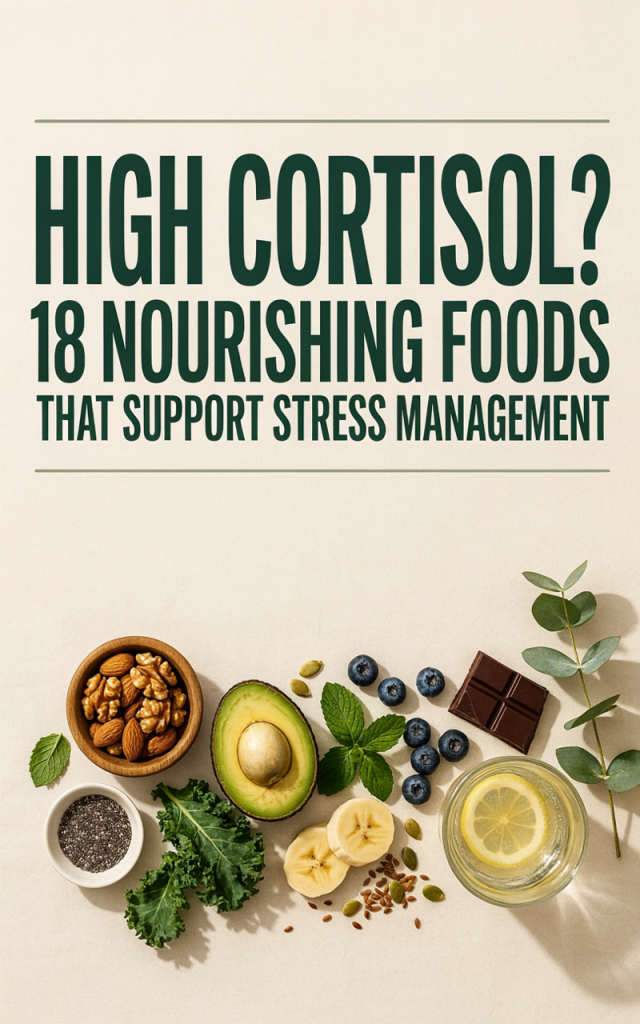
18 Nourishing Foods That Support Stress Management
1. Fatty fish (salmon, mackerel, sardines)
Omega-3 fatty acids (EPA and DHA) reduce inflammation and are linked to lower stress and improved mood. Aim for 2–3 servings of fatty fish per week.
How to enjoy: grilled salmon, tuna salad with leafy greens.
2. Leafy greens (spinach, kale, Swiss chard)
Rich in magnesium, folate, and antioxidants — all supportive of stress resilience and mood regulation.
How to enjoy: sautéed spinach with garlic, blended into smoothies, or as salad greens.
3. Berries (blueberries, strawberries, raspberries)
High in antioxidants and vitamin C, berries help reduce oxidative stress and can blunt cortisol spikes after stressful events.
How to enjoy: add to yogurt, oats, or smoothies.
4. Walnuts
Contain ALA (a plant omega-3), polyphenols, and magnesium. Walnuts are a portable, mood-supporting snack that may help modulate stress hormones.
How to enjoy: trail mix, chopped into salads, or as oat toppers.
5. Pumpkin seeds
A magnesium and zinc powerhouse. Magnesium is a key mineral for relaxation and helps keep cortisol in check.
How to enjoy: sprinkled on yogurt, salads, or roasted as a snack.
6. Yogurt and fermented foods
Probiotics from yogurt, kefir, miso, and sauerkraut support a healthy gut microbiome and the gut-brain axis — linked to reduced anxiety and improved stress response.
How to enjoy: plain Greek yogurt with toppings, miso soup, or fermented vegetables.
7. Oats (whole grain)
Oats provide soluble fiber and slow-burning carbohydrates that stabilize blood sugar and support steady energy — lowering the risk of cortisol surges.
How to enjoy: porridge, overnight oats, or added to smoothies.
8. Lentils and legumes
Lentils, chickpeas, and beans are rich in protein, fiber, and B vitamins needed for adrenal support and neurotransmitter production.
How to enjoy: lentil stews, hummus, bean salads.
9. Turmeric (curcumin)
Curcumin has potent anti-inflammatory and antioxidant effects and may blunt stress-related inflammation. Pair with black pepper and a fat for better absorption.
How to enjoy: turmeric-laced soups, golden milk, or lentil stews.
10. Green tea
Contains L-theanine, an amino acid that promotes calm alertness and counterbalances caffeine’s jitteriness. Green tea polyphenols also reduce inflammation.
How to enjoy: a cup in the morning or early afternoon; choose decaf if sensitive to caffeine.
11. Dark chocolate (70%+)
Rich in flavonoids that can lower stress reactivity and promote feelings of wellbeing. Keep portions small (a square or two).
How to enjoy: a piece after lunch, melted into yogurt, or paired with berries.
12. Avocado
High in monounsaturated fats, potassium, and fiber — nutrients that support brain health, blood pressure, and steady energy.
How to enjoy: on toast, in salads, or blended into smoothies.
13. Citrus fruits (oranges, grapefruits)
Excellent sources of vitamin C, which is used in adrenal hormone production and shown to help reduce cortisol responses to acute stress.
How to enjoy: fresh orange slices, squeezed into water, or in smoothies.
14. Eggs
A complete protein with choline and B vitamins needed for neurotransmitter synthesis and stable blood sugar.
How to enjoy: boiled, poached, omelets with veggies.
15. Sweet potatoes
Complex carbohydrate with fiber, vitamin A, and potassium. They provide stable energy and can help avoid sugar cravings that spike cortisol.
How to enjoy: roasted wedges, mashed, or in bowls.
16. Mushrooms (shiitake, maitake, reishi)
Nutrient-dense; culinary mushrooms provide B vitamins and selenium. Reishi and some other medicinal mushrooms are adaptogens that may help balance stress (consult practitioner before using concentrated supplements).
How to enjoy: sautéed with garlic or added to soups and bowls.
17. Olive oil
Extra-virgin olive oil supplies healthy monounsaturated fats and polyphenols that support heart and brain health and inflammatory balance.
How to enjoy: drizzled on salads, roasted vegetables, or used for light sautéing.
18. Bananas
Offer quick but stable carbohydrates, potassium, and tryptophan precursors for serotonin — helpful in mood stabilization and avoiding blood sugar dips that trigger cortisol.
How to enjoy: as a snack, in smoothies, or sliced over oats.
Practical tips for building a cortisol-friendly plate
- Balance your plate: include a lean protein source (eggs, fish, legumes), fiber (vegetables, whole grains), and healthy fats (olive oil, avocado, nuts).
- Eat regularly: aim for meals every 3–4 hours to prevent blood sugar dips that cause cortisol spikes.
- Prioritize sleep: food supports cortisol but good sleep is essential for resetting the HPA axis.
- Reduce stimulants late in the day: switch to decaf green tea or herbal alternatives in the afternoon.
- Hydrate: mild dehydration can increase cortisol — aim for regular water intake.
- Use spices and herbs: turmeric, ginger, garlic, and rosemary reduce inflammation and make meals more satisfying.
Recipes & Meal Ideas
Below are practical recipes that explicitly combine the foods listed above. Each recipe includes ingredients and step-by-step instructions to make it easy to try.
Calming Berry Oat Smoothie (Breakfast or Snack)
Ingredients:
– 1/2 cup rolled oats (soaked if preferred)
– 1/2–1 cup mixed berries (fresh or frozen)
– 3/4 cup plain yogurt (or kefir for more probiotics)
– 1/2 banana
– 1 tablespoon walnuts (chopped)
– 1 teaspoon chia seeds
– 1/2 cup water or milk of choice
– Optional: 1 teaspoon honey or maple syrup, a pinch of cinnamon
Instructions:
1. Add oats, berries, yogurt, banana, walnuts, chia seeds, and liquid to a blender.
2. Blend until smooth, adding extra liquid for desired consistency.
3. Taste and sweeten if needed. Pour into a glass and sprinkle with a few more chopped walnuts or berries.
4. Enjoy as a balanced breakfast or mid-afternoon stress-reducing snack.
Salmon & Sweet Potato Bowl (Lunch or Dinner)
Ingredients:
– 4–6 oz salmon fillet
– 1 medium sweet potato, cubed
– 2 cups mixed leafy greens (spinach, kale, arugula)
– 1/2 avocado, sliced
– 1 tablespoon extra-virgin olive oil
– 1 teaspoon turmeric (mixed into a dressing or into roasted sweet potato)
– Salt and pepper to taste
– Optional: lemon wedge
Instructions:
1. Preheat oven to 400°F (200°C). Toss cubed sweet potato with 1/2 tablespoon olive oil, turmeric, salt, and pepper; spread on a baking sheet and roast 20–25 minutes until tender.
2. While sweet potato roasts, season salmon with salt, pepper, and a drizzle of olive oil. Pan-sear or bake the salmon until cooked through (about 4–6 minutes per side depending on thickness).
3. Arrange leafy greens in a bowl. Top with roasted sweet potato, sliced avocado, and cooked salmon.
4. Drizzle remaining olive oil and a squeeze of lemon over the bowl. Serve warm.
Turmeric Lentil & Mushroom Stew (Comforting Dinner)
Ingredients:
– 1 cup dried lentils, rinsed
– 1 tablespoon olive oil
– 1 small onion, diced
– 2 garlic cloves, minced
– 1 cup sliced mushrooms (shiitake or cremini)
– 1 teaspoon ground turmeric + pinch of black pepper
– 1/2 teaspoon ground cumin
– 4 cups vegetable broth
– 2 cups fresh spinach
– Salt and pepper to taste
– Optional: fresh cilantro for garnish
Instructions:
1. Heat olive oil in a large pot over medium heat. Add onion and sauté until translucent, 4–5 minutes.
2. Add garlic and mushrooms; cook until mushrooms are soft and fragrant, about 4 minutes.
3. Stir in turmeric, cumin, lentils, and vegetable broth. Bring to a boil, then reduce heat to low and simmer 20–25 minutes, until lentils are tender.
4. Stir in fresh spinach and cook until wilted, 1–2 minutes. Season with salt and pepper.
5. Serve hot, garnished with cilantro if desired. Pair with whole-grain toast or brown rice.
Avocado Toast with Egg & Pumpkin Seeds (Quick Breakfast)
Ingredients:
– 1 slice whole-grain bread
– 1/2 ripe avocado
– 1 egg (poached, boiled, or fried)
– 1 tablespoon pumpkin seeds
– Salt, pepper, and chili flakes (optional)
Instructions:
1. Toast the whole-grain bread to your liking.
2. Mash the avocado and spread it over the toast; season with salt and pepper.
3. Top with the cooked egg.
4. Sprinkle pumpkin seeds and chili flakes over the toast. Serve immediately.
Yogurt Parfait with Berries & Walnuts (Snack or Breakfast)
Ingredients:
– 1 cup plain Greek yogurt
– 1/2 cup mixed berries
– 2 tablespoons chopped walnuts
– 1 tablespoon pumpkin seeds
– 1 teaspoon honey or maple syrup (optional)
Instructions:
1. Spoon yogurt into a bowl or jar.
2. Layer berries on top of the yogurt.
3. Sprinkle walnuts and pumpkin seeds over the berries.
4. Drizzle with honey or maple syrup if desired. Enjoy chilled.
Green Tea + Dark Chocolate Ritual (Stress-Reducing Pause)
Ingredients:
– 1 cup brewed green tea (hot or cooled)
– 1–2 squares dark chocolate (70% cocoa or higher)
– Optional: a few orange slices or a cinnamon stick for infusion
Instructions:
1. Brew green tea according to package instructions. Pour into a cup.
2. Sit comfortably and sip the tea slowly, focusing on your breath for 2–5 minutes.
3. Enjoy one square of dark chocolate alongside the tea, savoring the flavor to create a calming break in your day.
Sample Stress-Support One-Day Meal Plan (Ideas combined into a day)
Ingredients:
– Breakfast: rolled oats, berries, milk, walnuts, yogurt
– Mid-morning snack: banana and a handful of pumpkin seeds
– Lunch: salmon, sweet potato, mixed greens, olive oil
– Afternoon snack: plain Greek yogurt with berries and dark chocolate square
– Dinner: turmeric lentil stew with mushrooms and whole-grain bread
– Beverages: green tea in the morning/afternoon, water throughout the day
Instructions:
1. Prepare the berry oat smoothie or a bowl of oats with berries and walnuts for breakfast.
2. Mid-morning, enjoy a banana and pumpkin seeds to keep blood sugar steady.
3. For lunch, assemble the salmon & sweet potato bowl for a balanced meal of protein, healthy fats, and complex carbs.
4. In the afternoon, have yogurt with a small piece of dark chocolate to support mood and satiety.
5. For dinner, make the turmeric lentil & mushroom stew for an anti-inflammatory, comforting meal.
6. Sip green tea earlier in the day and prioritize hydration; aim for a calming bedtime routine and consistent sleep schedule.
Lifestyle and food habits that also help cortisol
- Move gently: short walks, yoga, and resistance training lower stress hormones long-term.
- Practice breathing and relaxation: diaphragmatic breathing, progressive muscle relaxation, or a short mindfulness practice can reduce cortisol spikes.
- Limit ultra-processed foods and excess sugar: these worsen blood sugar swings and inflammation.
- Consider targeted supplements only with a clinician: magnesium, omega-3 fish oil, and vitamin C may be helpful when diet falls short.
- Seek professional support: chronic stress, anxiety, or sleep problems may need counseling or medical evaluation.
Conclusion
Managing high cortisol isn’t about a magic food — it’s about a pattern of nourishing choices that stabilize blood sugar, reduce inflammation, support the gut, and provide key micronutrients your body needs to cope with stress. The 18 foods above offer practical, science-informed building blocks: fatty fish, leafy greens, berries, nuts and seeds, fermented foods, whole grains, legumes, turmeric, green tea, dark chocolate, avocado, citrus, eggs, sweet potatoes, mushrooms, olive oil, and bananas.
Start small: swap refined snacks for a yogurt parfait, add a serving of leafy greens to your lunch, or build a calming 10-minute tea-and-dark-chocolate ritual. Combine these foods into regular, balanced meals — and pair them with sleep, movement, and relaxation practices — to support a healthier cortisol rhythm and greater resilience.
You don’t have to overhaul everything at once. Pick one recipe from this post to try this week, and notice how small, consistent changes help you feel calmer and more in control.