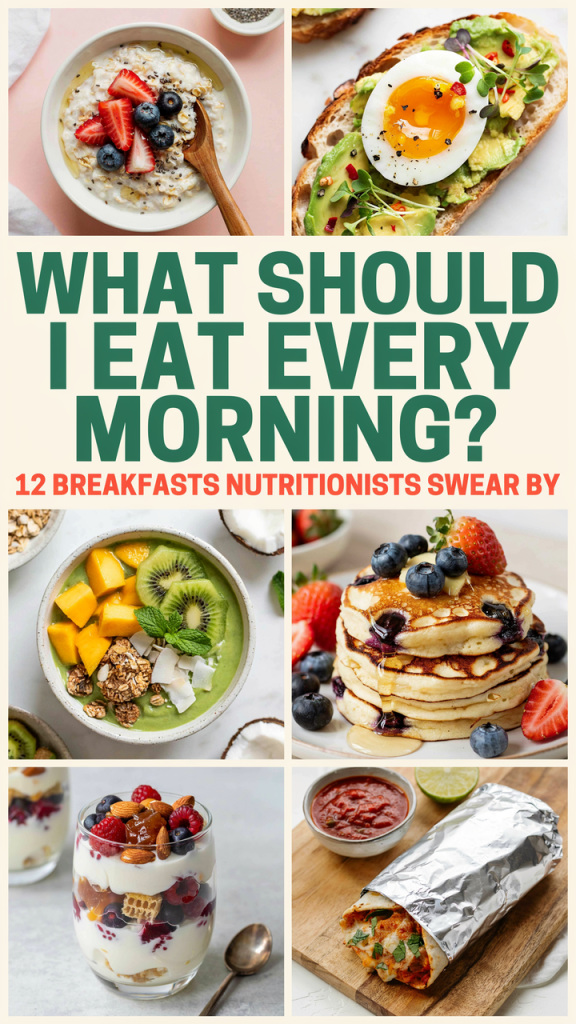
What Should I Eat Every Morning? 12 Breakfasts Nutritionists Swear By
Eating a productive, energized morning starts with a breakfast that balances protein, fiber, healthy fats, and micronutrients. Nutritionists don’t agree on a single “perfect” breakfast because everyone’s needs differ, but there are patterns that consistently deliver steady blood sugar, sustained energy, and mental focus. Below are 12 breakfasts nutritionists swear by — each chosen for nutrient density, practicality, and taste. You’ll get clear reasons why each works, plus ingredients and step-by-step instructions so you can make them at home.
Whether you want quick options for busy mornings, make-ahead choices for planning, plant-based picks, or higher-protein approaches, this list covers a variety of dietary styles. Pick a few to rotate through the week to avoid breakfast boredom and support consistent energy and hunger control.
Why nutritionists focus on certain breakfast components
A “good” breakfast typically includes:
– Protein: keeps you full and helps maintain muscle mass.
– Fiber: slows digestion, stabilizes blood sugar, and feeds gut bacteria.
– Healthy fats: support satiety and absorption of fat-soluble vitamins.
– Fruits/vegetables: provide vitamins, minerals, and antioxidants.
– Whole grains or starchy vegetables: for sustained energy and B vitamins.
Now, here are 12 breakfasts nutritionists recommend, each with ingredients and instructions.
1. Classic Steel-Cut Oats with Berries and Nuts
Nutritionist rationale: Steel-cut oats are minimally processed and high in soluble fiber (beta-glucan), which supports heart health and steady energy. Topping with berries adds antioxidants, and nuts add healthy fats and additional protein.
Ingredients
- 1/2 cup steel-cut oats
- 1 1/4 cups water (or water + milk alternative)
- Pinch of salt
- 1/2 cup mixed berries (fresh or frozen)
- 1 tablespoon chopped walnuts or almonds
- 1 teaspoon chia or ground flaxseed
- 1 teaspoon honey or maple syrup (optional)
Instructions
- Bring water and salt to a boil in a small saucepan.
- Stir in oats, reduce heat, and simmer for 15–20 minutes, stirring occasionally, until tender.
- Remove from heat and stir in chia or flaxseed.
- Top with berries, nuts, and a drizzle of honey or maple syrup if desired.
- Serve hot. Store leftovers in the fridge for up to 3 days and reheat with a splash of milk.
2. Greek Yogurt Parfait with Fruit and Granola
Nutritionist rationale: Greek yogurt provides concentrated protein and probiotics; fruit offers fiber and vitamins; choose low-sugar granola or make your own for crunch without excess sugar.
Ingredients
- 1 cup plain Greek yogurt (2% or full fat)
- 1/2 cup fresh fruit (berries, chopped apple, or peach)
- 1/4 cup low-sugar granola
- 1 tablespoon chia seeds or hemp hearts
- 1 teaspoon honey or a few drops of vanilla (optional)
Instructions
- Layer half the yogurt in a bowl or jar.
- Add half the fruit, then sprinkle half the granola and seeds.
- Repeat with remaining yogurt, fruit, granola, and seeds.
- Drizzle honey or vanilla if desired.
- Eat immediately for crunch, or assemble the night before (keep granola separate) for a quick grab-and-go.
3. Avocado Toast with a Poached or Fried Egg
Nutritionist rationale: Whole grain bread provides complex carbs and fiber; avocado supplies monounsaturated fats and potassium; eggs add high-quality protein and choline for brain health.
Ingredients
- 1–2 slices whole-grain or sourdough bread
- 1/2 ripe avocado
- 1 large egg
- Pinch of salt and pepper
- Optional: red pepper flakes, lemon juice, microgreens or arugula
Instructions
- Toast the bread until golden.
- Mash avocado in a bowl with a squeeze of lemon, salt, and pepper.
- Poach or fry the egg to your preferred doneness.
- Spread mashed avocado on toast, top with the egg, and season with red pepper flakes or microgreens.
- Serve immediately.
4. Veggie-Packed Omelet or Scramble
Nutritionist rationale: A veggie omelet is a protein-rich breakfast with vitamins, fiber, and antioxidants. Adding vegetables boosts volume and micronutrient density without many calories.
Ingredients
- 2–3 large eggs (or 1 egg + 2 egg whites)
- 1/2 cup chopped vegetables (spinach, bell pepper, tomato, mushrooms, onion)
- 1 tablespoon olive oil or butter
- 2 tablespoons shredded cheese (optional)
- Salt and pepper to taste
Instructions
- Whisk eggs with a pinch of salt and pepper.
- Heat oil in a non-stick skillet over medium heat and sauté vegetables until soft.
- Pour eggs over vegetables and let set for a minute, then gently stir (for scramble) or let cook and fold (for omelet).
- Add cheese, fold the omelet, or fully scramble until cooked through.
- Serve with whole-grain toast or fresh fruit.
5. Green Smoothie Bowl
Nutritionist rationale: Smoothie bowls are a great way to pack vegetables, leafy greens, protein, and fiber into one visually appealing breakfast—especially useful for those who prefer a lighter, on-the-go texture.
Ingredients
- 1 cup unsweetened almond milk (or milk of choice)
- 1 cup spinach or kale (packed)
- 1/2 frozen banana
- 1/2 cup frozen mango or pineapple
- 1 scoop protein powder or 2 tablespoons nut butter
- Toppings: sliced fruit, granola, chia seeds, coconut flakes
Instructions
- Blend milk, greens, banana, frozen fruit, and protein powder until smooth and thick.
- Pour into a bowl and smooth the top with a spoon.
- Arrange toppings in sections for texture and crunch.
- Eat with a spoon. Keep consistency thick to hold toppings.
6. Overnight Oats with Chia (Make-Ahead)
Nutritionist rationale: Overnight oats are fiber-forward, convenient, and customizable. Chia seeds add omega-3s and extra fiber for prolonged fullness.
Ingredients
- 1/2 cup rolled oats
- 1 tablespoon chia seeds
- 3/4 cup milk or milk alternative
- 1/4 cup plain yogurt (optional for creaminess)
- 1/2 teaspoon cinnamon
- 1/2 cup fruit (berries or sliced banana)
- 1 teaspoon nut butter or honey (optional)
Instructions
- Combine oats, chia seeds, milk, yogurt, and cinnamon in a jar.
- Stir well, seal, and refrigerate overnight (or at least 4 hours).
- In the morning, stir and add fruit and nut butter or honey.
- Eat cold or warm briefly in the microwave.
7. Cottage Cheese Bowl with Fruit and Seeds
Nutritionist rationale: Cottage cheese is a relatively lean dairy source of casein protein, which digests more slowly — ideal for satiety. Pairing with fruit and seeds adds fiber and healthy fats.
Ingredients
- 1 cup low-fat or full-fat cottage cheese
- 1/2 cup chopped fresh fruit (pineapple, peach, or berries)
- 1 tablespoon sunflower seeds or pumpkin seeds
- 1 teaspoon honey or maple syrup (optional)
- Sprinkle of cinnamon
Instructions
- Spoon cottage cheese into a bowl.
- Top with chopped fruit and seeds.
- Drizzle a little honey and sprinkle cinnamon if desired.
- Stir slightly and enjoy.
8. Whole-Grain Banana Pancakes with Nut Butter
Nutritionist rationale: Using whole-grain flour or oats raises fiber and nutrient content compared to refined pancakes. Adding nut butter increases protein and healthy fats for balance.
Ingredients
- 1 ripe banana
- 1 large egg
- 1/2 cup rolled oats (or 1/2 cup whole-wheat flour)
- 1/2 teaspoon baking powder (if using flour)
- 1 teaspoon cinnamon
- 1 tablespoon nut butter for topping
- Cooking spray or butter
Instructions
- Blend banana, egg, oats (or flour), baking powder, and cinnamon until smooth.
- Heat a non-stick skillet over medium heat and coat with spray or butter.
- Pour 1/4-cup batter for each pancake and cook 2–3 minutes per side until golden.
- Stack pancakes and spread nut butter on top. Add fruit if desired.
- Serve warm.
9. Savory Quinoa Breakfast Bowl
Nutritionist rationale: Quinoa is a complete plant protein with fiber and minerals like magnesium. A savory bowl with vegetables and an egg provides balanced macronutrients and keeps you satisfied.
Ingredients
- 1/2 cup cooked quinoa
- 1 cup steamed or roasted vegetables (zucchini, cherry tomatoes, spinach)
- 1 large egg (poached, fried, or soft-boiled)
- 1 tablespoon olive oil
- Salt, pepper, and a splash of lemon or hot sauce
Instructions
- Warm cooked quinoa in a bowl.
- Sauté or roast vegetables with olive oil and season.
- Cook the egg to your preference.
- Assemble quinoa, vegetables, and place egg on top.
- Season with salt, pepper, and a squeeze of lemon or hot sauce.
10. Smoked Salmon and Whole-Grain Bagel Thin
Nutritionist rationale: Smoked salmon delivers omega-3 fatty acids and lean protein; pairing with whole-grain bread or a bagel thin adds fiber and B vitamins. Add capers and greens for flavor and micronutrients.
Ingredients
- 1 whole-grain bagel thin or slice of dense whole-grain bread
- 2–3 oz smoked salmon
- 2 tablespoons light cream cheese or mashed avocado
- Slices of cucumber, red onion, and a few capers
- Fresh dill and lemon wedge
Instructions
- Toast the bagel thin or bread.
- Spread cream cheese or avocado on top.
- Layer smoked salmon, cucumber slices, red onion, and capers.
- Garnish with dill and a squeeze of lemon.
- Enjoy with a side of fresh fruit or a small salad.
11. Tofu Scramble with Turmeric (Vegan)
Nutritionist rationale: Tofu is a plant-based protein that pairs well with veggies. Turmeric adds anti-inflammatory benefits; nutritional yeast gives a cheese-like flavor plus B vitamins.
Ingredients
- 6 oz firm tofu, crumbled
- 1/2 cup chopped vegetables (spinach, bell pepper, onion)
- 1 tablespoon olive oil
- 1/2 teaspoon turmeric
- 1 tablespoon nutritional yeast
- Salt and pepper to taste
- Optional: salsa or avocado slices
Instructions
- Heat olive oil in a skillet and sauté onions and peppers until softened.
- Add crumbled tofu, turmeric, nutritional yeast, salt, and pepper.
- Cook, stirring, for 5–7 minutes until tofu is warmed and slightly browned.
- Stir in spinach until wilted.
- Serve with salsa or avocado on whole-grain toast or in a warm tortilla.
12. Muesli with Milk and Fresh Fruit
Nutritionist rationale: Muesli is a raw mix of rolled oats, nuts, seeds, and dried fruit that can be soaked or eaten with milk. It’s less sweet than many commercial cereals and provides fiber, healthy fats, and micronutrients.
Ingredients
- 3/4 cup muesli (look for low-sugar blends)
- 1 cup milk or milk alternative
- 1/2 apple or pear, grated or chopped, or 1/2 cup berries
- 1 tablespoon chopped nuts or seeds
- 1 teaspoon maple syrup (optional)
Instructions
- Place muesli in a bowl and pour milk over it.
- Let sit 5–10 minutes to soften (or soak overnight for a creamier texture).
- Top with fresh fruit and nuts or seeds.
- Drizzle maple syrup if extra sweetness is desired.
- Eat cold or warm briefly if preferred.
How to choose which breakfasts to rotate
- For quick mornings: Greek yogurt parfait, cottage cheese bowl, overnight oats, muesli.
- For higher-protein needs: Omelet, Greek yogurt, smoked salmon bagel, quinoa bowl.
- For plant-based diets: Tofu scramble, green smoothie bowl, overnight oats with plant protein, savory quinoa.
- For make-ahead planning: Overnight oats, muesli, Greek yogurt parfait (assembled), steel-cut oats can be made in bulk.
Mixing a few of these into a weekly rotation helps ensure variety and broader micronutrient coverage. Pay attention to portion sizes and added sugars (syrups, sweetened granolas) — nutritionists recommend minimizing added sugars while using natural fruit or modest sweeteners if needed.
Breakfast prep tips nutritionists recommend
- Pre-portion nuts, seeds, and granola into small containers for quick topping.
- Cook grains (quinoa, steel-cut oats) in bulk and refrigerate for 3–4 days.
- Keep hard-cooked eggs on hand for fast protein.
- Use frozen fruit for smoothies or bowls to avoid waste and improve texture.
- Plan at least one make-ahead breakfast for mornings when time is tight.
Conclusion
There’s no single breakfast that fits everyone, but there are clear patterns that nutritionists recommend: prioritize protein, include fiber, add healthy fats, and choose whole, minimally processed foods. These 12 breakfasts offer a balance of convenience, variety, and nutrient density, whether you need a fast, make-ahead option or a hearty start to fuel a busy day. Rotate through a few of these choices, adjust portions to your hunger and activity level, and you’ll set a strong foundation for your mornings — and for the rest of your day.
Ready to try one? Pick a favorite from this list, stock the ingredients, and make it part of your morning routine for a week. Small, consistent changes to breakfast can lead to better energy, mood, and long-term health.