
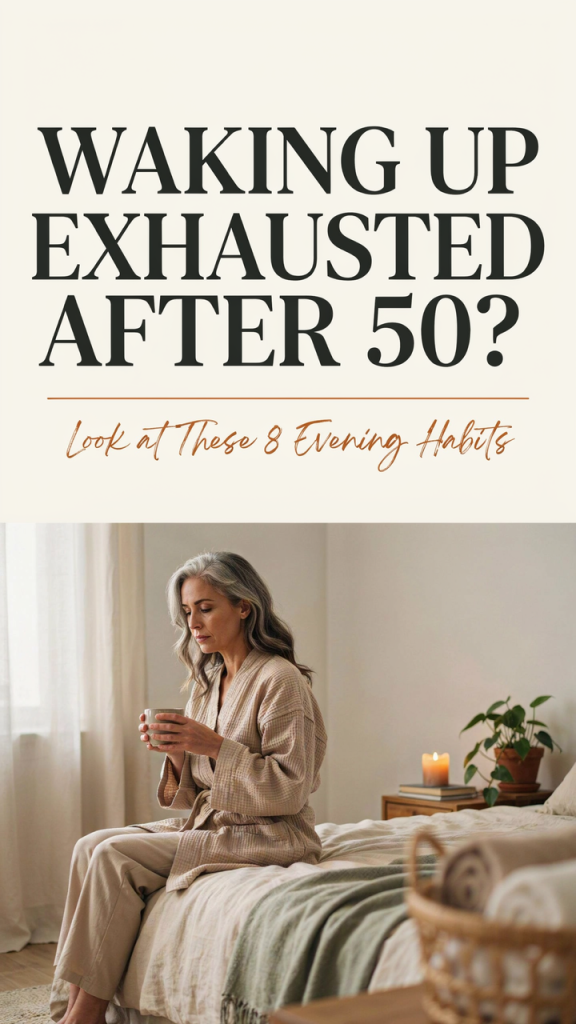
Waking Up Exhausted After 50? Look at These 8 Evening Habits
A good night’s sleep should leave you refreshed, clear-headed, and ready for the day. But if you’re 50 or older and you keep waking up feeling exhausted, you’re not alone. Midlife brings hormonal shifts, changes in body composition, and new health and lifestyle challenges that can silently erode sleep quality. The good news: many of these problems are connected to evening habits that you can change quickly — with big results.
Below are eight evening habits that commonly cause poor sleep for people over 50, why each habit matters, and practical, science-backed swaps you can make tonight. Included are easy-to-follow recipes and snack ideas designed to support sleep-promoting hormones and digestion. Read through, pick three changes to try this week, and give each at least two weeks to see improvement.
Why evening habits matter after 50
As we age, sleep architecture shifts: deep slow-wave sleep often decreases, circadian rhythm may shift earlier (you may get sleepy earlier but also wake earlier), and hormonal changes — especially during menopause and andropause — affect melatonin and cortisol. Evening choices around food, light, activity, and stress can amplify these changes. The goal isn’t perfection; it’s consistency. Small evening adjustments add up to better sleep without medication for many people.
1) Eating heavy or late dinners
Why it matters
Large, fatty, or spicy meals close to bedtime can cause indigestion, reflux, and impaired sleep continuity. Metabolism and gastric motility slow as you get older, so the same meal that used to be fine may now disturb your sleep. Late-night eating can also shift circadian rhythms and blunt nighttime melatonin release.
What to do instead
- Aim to finish large meals 2–3 hours before bed.
- Keep evening portions moderate and favor lean protein, vegetables, and complex carbs.
- If you must eat later, choose a light, digestion-friendly meal or snack.
Light dinner idea: Mediterranean Salmon & Quinoa Bowl
Ingredients:
– 4 oz (about 115 g) salmon fillet
– 1/2 cup cooked quinoa
– 1 cup mixed salad greens or baby spinach
– 1/4 cup cherry tomatoes, halved
– 1/4 cucumber, sliced
– 1 tbsp extra-virgin olive oil
– 1 tsp lemon juice
– Salt and pepper to taste
– Fresh dill or parsley, chopped (optional)
Instructions:
1. Preheat oven to 400°F (200°C). Season salmon with salt, pepper, and a drizzle of olive oil.
2. Bake salmon for 10–12 minutes, until cooked through.
3. Place cooked quinoa in a bowl; add salad greens, tomatoes, and cucumber.
4. Flake the salmon over the quinoa mixture and drizzle with olive oil and lemon juice.
5. Toss gently, garnish with herbs if using, and serve. Finish at least 2 hours before bed for best sleep.
2) Drinking alcohol in the evening
Why it matters
Many people use alcohol to fall asleep, but it disrupts sleep architecture. Alcohol can reduce REM sleep and cause fragmented sleep later in the night as blood alcohol levels decline. It also exacerbates snoring and sleep apnea—conditions that become more common with age—leading to daytime fatigue.
What to do instead
- Limit alcohol to earlier in the evening and stay within recommended limits (and consider skipping it several nights a week).
- Replace your nightcap with a relaxing nonalcoholic drink like herbal tea or a warm magnesium cacao.
Bedtime alternative drink: Chamomile + Tart Cherry Soother
Ingredients:
– 1 cup hot water
– 1 chamomile tea bag
– 2 tbsp tart cherry juice (unsweetened)
– 1 tsp honey (optional)
– Pinch of cinnamon (optional)
Instructions:
1. Steep the chamomile tea bag in hot water for 5 minutes.
2. Add tart cherry juice and stir; sweeten with honey if desired.
3. Sprinkle a pinch of cinnamon if you like. Sip slowly 30–60 minutes before bed.
(Tart cherries contain melatonin precursors and can modestly improve sleep; chamomile has mild sedative properties.)
3) Excessive evening screen time and blue light exposure
Why it matters
Blue light from phones, tablets, laptops, and LEDs suppresses melatonin — the hormone that signals your body it’s time to sleep. Overstimulation from social media or news late at night also increases cognitive arousal, making falling and staying asleep more difficult. After 50, circadian signaling may already be weakened, so blue light has a proportionally bigger impact.
What to do instead
- Set a “digital sunset”: stop screens 60–90 minutes before bed.
- Use blue-light filters in the evening and enable night mode on devices if you must use them.
- Create a calming screen-free routine: reading (paper book), gentle stretches, journaling, or a warm bath.
4) High evening caffeine intake
Why it matters
Caffeine has a half-life of about 5–6 hours in most people, but sensitivity increases with age and with certain medications. Drinking coffee, tea, or caffeinated sodas late in the day can reduce total sleep time and sleep quality.
What to do instead
- Avoid caffeine after early afternoon (often 2–3 PM).
- Switch to decaf or herbal teas in the evening.
- If you rely on caffeine due to daytime sleepiness, focus on improving sleep quality first, then reassess caffeine use.
5) Sedentary evenings or exercising too close to bedtime
Why it matters
Physical activity improves sleep when done regularly, but timing matters. Vigorous exercise within one hour of bedtime can elevate core body temperature and arousal, making it harder to fall asleep. Conversely, being too sedentary in the evening can reduce sleep drive and leave you not tired enough at bedtime.
What to do instead
- Aim for moderate exercise earlier in the day when possible.
- If you exercise in the evening, finish at least 90 minutes before bed.
- Use gentle evening movement: a 20-minute walk, restorative yoga, or light stretching to relax.
6) Irregular sleep schedule
Why it matters
Irregular bed and wake times confuse your circadian clock. As people age, the circadian system can become more rigid, and inconsistency makes it harder to fall asleep and wake refreshed. Social obligations and caregiving often disrupt consistent schedules, but even small regularity helps.
What to do instead
- Choose a 30–60 minute window for bedtime and wake time and stick to it daily, including weekends.
- Use light exposure to anchor your rhythm: get morning sunlight and reduce evening bright light.
- If you need to change your schedule, shift it gradually by 15–30 minutes per night.
7) Evening stress, rumination, and poor wind-down routines
Why it matters
Chronic stress elevates evening cortisol and cognitive arousal, making it difficult to fall asleep and causing night awakenings. For many over 50, caregiving, retirement transitions, financial concerns, or health worries can lead to an active mind at bedtime.
What to do instead
- Build a structured wind-down: 30–60 minutes of calming activities.
- Try brief, bedtime-specific practices: progressive muscle relaxation, guided breathing, journaling a “worry list” with next-day action steps.
- Keep a notebook by the bed to offload thoughts without reaching for a device.
Bedtime journaling routine (simple)
Ingredients:
– A small bedside notebook and pen
– A timer (optional)
Instructions:
1. 20–30 minutes before your set bedtime, sit in a comfortable, dimly lit spot.
2. Write a quick “brain dump” for 6–10 minutes: everything on your mind.
3. List three small realistic tasks you’ll do tomorrow to address any actionable worries.
4. Close the notebook and put it out of sight. Spend the remaining wind-down time in calming activity (tea, breathing, reading).
(Explicit “ingredients” and “instructions” are used here to present this as a ritual you can follow.)
8) Poor bedroom environment and temperature
Why it matters
Sleep is temperature-dependent. Older adults often feel colder at night and may layer up, but overheating or too many blankets can fragment sleep. Light, noise, and an uninviting sleep environment also reduce sleep efficiency.
What to do instead
- Keep bedroom temperature between 60–67°F (15–19°C) or find your comfortable range.
- Use breathable bedding and sleepwear; breathable fabrics (cotton, bamboo) help regulate temperature.
- Make the bedroom dark (blackout curtains or eye mask), quiet (earplugs or white noise), and reserved for sleep and intimacy only.
- Consider a small humidifier or fan for comfort if needed.
When to see your doctor
If you try these changes for several weeks and still wake exhausted, see your healthcare provider. Possible medical causes of persistent daytime fatigue in midlife include:
– Sleep apnea (loud snoring, gasping, daytime sleepiness)
– Restless legs syndrome
– Thyroid dysfunction
– Depression or anxiety disorders
– Medication side effects or drug interactions
– Chronic pain or inflammatory conditions
Bring a sleep diary noting bedtime, wake time, sleep quality, and any nighttime awakenings for two weeks — it helps your clinician evaluate sleep patterns and decide whether testing (like a sleep study) is needed.
Quick evening menu ideas to support sleep (explicitly listed)
Below are three simple, sleep-friendly meal/snack ideas you can use as part of your evening routine. Each is presented with ingredients and step-by-step instructions.
1) Light Dinner: Lemon-Herb Grilled Chicken with Steamed Veggies
Ingredients:
– 4 oz boneless, skinless chicken breast
– 1 tsp olive oil
– 1 tsp lemon juice
– 1/2 tsp dried oregano or fresh herbs
– Salt and pepper to taste
– 1 cup mixed steamed vegetables (broccoli, carrots, green beans)
Instructions:
1. Marinate the chicken briefly with olive oil, lemon juice, herbs, salt, and pepper for 10–15 minutes.
2. Grill or pan-sear chicken for 5–7 minutes per side until cooked through.
3. Steam the vegetables until tender-crisp (about 4–6 minutes).
4. Plate chicken with vegetables. Finish eating 2–3 hours before bedtime.
2) Light Snack: Greek Yogurt, Walnuts & Cherries
Ingredients:
– 1/2 cup plain Greek yogurt (low-fat or full-fat based on preference)
– 2 tbsp chopped walnuts
– 2 tbsp tart cherries (fresh or unsweetened frozen/thawed)
– 1 tsp honey or maple syrup (optional)
Instructions:
1. Spoon yogurt into a small bowl.
2. Top with walnuts and tart cherries.
3. Add a drizzle of honey if desired. Enjoy 30–60 minutes before bed if you feel slightly hungry.
3) Relaxing Beverage: Warm Almond Milk with Cinnamon
Ingredients:
– 1 cup unsweetened almond milk (or dairy milk if preferred)
– 1/4 tsp ground cinnamon
– 1/4 tsp vanilla extract (optional)
– 1 tsp honey or maple syrup (optional)
Instructions:
1. Warm almond milk on the stove or in the microwave until comfortably warm, not boiling.
2. Stir in cinnamon and vanilla; sweeten lightly if desired.
3. Sip slowly 30–45 minutes before bed to help signal relaxation.
Practical plan: How to implement changes this week
- Pick three of the habits above to focus on (e.g., stop screens 90 minutes before bed, finish dinner by 7 PM, and try the chamomile + tart cherry drink).
- Use a sleep log: record bedtime, wake time, perceived sleep quality, and any nighttime awakenings.
- Give each change two weeks, since circadian adjustments and habit formation take time.
- Celebrate small wins (earlier bedtime, fewer nighttime awakenings) and iterate.
Final thoughts
Waking up exhausted after 50 is common but often reversible. Evening habits — what you eat, drink, view, and do — have a large impact on sleep quality. Your body is still highly responsive to changes; small, consistent swaps can restore deeper, more restorative sleep. Start with one or two manageable habits from this list, create a simple wind-down ritual, and be patient as your body recalibrates. If fatigue persists despite lifestyle changes, reach out to your healthcare provider to rule out medical causes.
Sleep is restorative medicine. Nightly habits are the prescription — be kind to your body and persistent with healthy evening routines. You deserve mornings where you feel energized, alert, and ready to enjoy the decades ahead.

