The #1 One Sheet Pan Meal To Lose Weight
In the quest for sustainable weight loss, simplicity and nutritional efficacy are paramount. One-sheet pan meals have emerged as a culinary hero, offering a convenient, healthy, and delicious solution for those looking to shed pounds without sacrificing flavor or spending hours in the kitchen. This article delves into the benefits of this cooking method, highlights key ingredients for weight loss, identifies those to avoid, and presents a stellar high-protein, gluten-free, low-carb recipe, along with four exciting variations.
Why Sheet Pan Meals for Weight Loss?
Sheet pan meals are inherently conducive to weight loss for several compelling reasons:
- Minimal Cleanup: The most obvious advantage is the single pan used for cooking, drastically reducing post-meal cleanup. This encourages more home cooking, which is strongly linked to higher quality food intake, lower calorie consumption, and better weight management over time [1].
- Portion Control: By preparing individual servings or a set number of servings on one pan, it becomes easier to manage portion sizes and avoid overeating.
- Easy Meal Prep: Many components of a sheet pan meal can be prepped in advance, such as chopping vegetables, marinating proteins, or mixing seasonings. This makes weeknight dinners quick and stress-free, reducing the temptation for unhealthy takeout [2].
- Nutrient Density: Sheet pan meals typically combine lean proteins with a generous array of vegetables, ensuring a high intake of essential vitamins, minerals, fiber, and protein. This combination promotes satiety, keeping you fuller for longer and reducing overall calorie intake [3].
- Even Cooking: When ingredients are properly spaced and cut uniformly, they cook evenly, resulting in perfectly roasted vegetables and tender proteins [4].
Key Ingredients for Weight Loss Sheet Pan Meals
To maximize the weight loss benefits of your sheet pan meals, focus on high-protein, low-carb, and naturally gluten-free ingredients:
The following table outlines the most effective ingredients for constructing a weight-loss-friendly sheet pan meal, categorized by their nutritional role.
| Category | Recommended Ingredients | Nutritional Benefits |
|---|---|---|
| Lean Proteins | Chicken breast/thighs, Salmon, Cod, Shrimp, Turkey sausage, Sirloin steak | High satiety, muscle maintenance, and essential amino acids [5]. |
| Low-Carb Vegetables | Broccoli, Cauliflower, Brussels sprouts, Asparagus, Green beans, Zucchini | High fiber, low calorie density, and rich in micronutrients [12]. |
| Flavorful Aromatics | Red onion, Garlic, Shallots, Bell peppers, Mushrooms | Enhances taste without adding significant calories or sugars. |
| Healthy Fats | Extra virgin olive oil, Avocado oil | Supports nutrient absorption and provides heart-healthy monounsaturated fats. |
| Herbs & Spices | Rosemary, Thyme, Oregano, Paprika, Cumin, Chili powder | Provides antioxidant properties and intense flavor profiles. |
| Acidic Brighteners | Lemon juice, Lime juice, Balsamic vinegar, Apple cider vinegar | Balances flavors and aids in tenderizing proteins. |
Ingredients to Avoid (or Use Sparingly)
To optimize a sheet pan meal for weight loss, it is essential to be discerning about the ingredients that can inadvertently increase caloric density or trigger inflammatory responses. The following table highlights common pitfalls and suggests healthier alternatives.
| Ingredient to Avoid | Reason for Avoidance | Recommended Alternative |
|---|---|---|
| Starchy Fillers | High glycemic index; can lead to blood sugar spikes and fat storage [12]. | Cauliflower, radishes, or daikon radish. |
| Sugary Marinades | Often contain high-fructose corn syrup or hidden sugars. | Homemade herb-and-oil rubs or vinegar-based dressings. |
| Processed Meats | High in sodium, nitrates, and saturated fats. | Fresh chicken, turkey, or wild-caught fish. |
| Refined Seed Oils | Can be pro-inflammatory (e.g., canola, soybean oil). | Extra virgin olive oil or avocado oil. |
| Heavy Cream Sauces | Extremely calorie-dense and often high in saturated fat. | Pesto, salsa, or a squeeze of fresh citrus. |
| Excessive Cheese | Adds significant calories and sodium quickly. | Nutritional yeast or a small sprinkle of hard cheese (e.g., Parmesan). |
Beyond specific ingredients, the technical execution of the meal is equally important. A common error is overcrowding the pan, which prevents the dry heat of the oven from circulating around the food. This results in steaming rather than roasting, which compromises the texture and flavor profile of the meal [10]. For optimal results, ensure that all ingredients are spread in a single, non-overlapping layer.
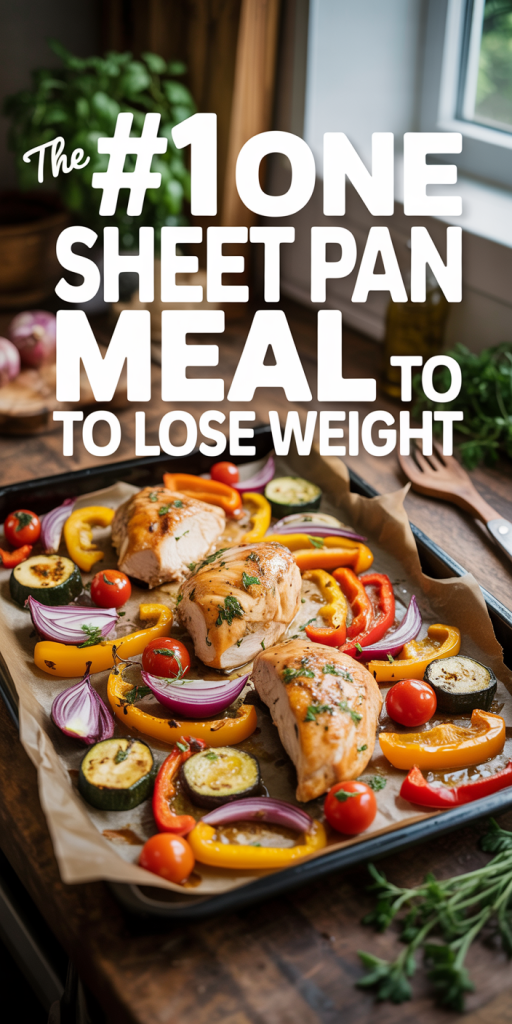
The #1 One Sheet Pan Meal To Lose Weight: Lemon Herb Chicken and Rainbow Vegetables
This recipe is a perfect example of a high-protein, gluten-free, low-carb sheet pan meal that is both satisfying and effective for weight loss. It features juicy chicken thighs roasted with a colorful medley of non-starchy vegetables, seasoned with aromatic herbs.
Yields: 4 servings
Prep time: 15 minutes
Cook time: 30-35 minutes
Ingredients:
- 1.5-2 lbs bone-in, skin-on chicken thighs (or 1 lb boneless, skinless chicken breast for leaner option)
- 12 oz green beans, trimmed
- 1 medium red onion, cut into wedges
- 1 head broccoli, cut into florets (approx. 12 oz)
- 2 bell peppers (any color), deseeded and sliced
- 3-4 cloves garlic, minced
- 1 tbsp fresh rosemary, chopped (or 1 tsp dried)
- 2 tsp fresh thyme leaves (or ¾ tsp dried)
- ½ tbsp olive oil or avocado oil (use 1 tbsp if using skinless chicken)
- ½ tsp fine salt
- ½ tsp black pepper
- Lemon wedges, for serving (optional)
Preparation Instructions:
- Preheat Oven: Preheat your oven to 425°F (220°C). Line a large rimmed baking sheet with parchment paper for easy cleanup.
- Prepare Vegetables: In a large bowl, combine the green beans, red onion, broccoli florets, and bell peppers. Add the minced garlic, chopped rosemary, thyme, and olive oil. Toss until all vegetables are evenly coated.
- Arrange on Pan: Spread the seasoned vegetables in a single layer on the prepared baking sheet. Ensure they are not overcrowded; use a second pan if necessary to allow for proper roasting [10].
- Season Chicken: Pat the chicken thighs dry with paper towels. Season both sides generously with salt and black pepper.
- Add Chicken to Pan: Nestle the chicken thighs among the vegetables on the baking sheet, ensuring the skin side is up for bone-in, skin-on thighs to crisp up.
- Roast: Bake for 30-35 minutes, or until the chicken is cooked through and reaches an internal temperature of 165°F (74°C) [9]. The vegetables should be tender-crisp and slightly caramelized. Toss the vegetables halfway through cooking for even roasting.
- Serve: Remove from oven. Serve immediately with fresh lemon wedges, if desired.
Nutritional Information (per serving, approximate for chicken thighs and vegetables) [9]:
- Calories: 450 kcal
- Protein: 35 g
- Carbohydrates: 15-20 g (adjust based on specific vegetable choices)
- Fiber: 8 g
- Fat: 20-25 g
To maintain variety in your diet, consider the following four variations, each designed to be high-protein, gluten-free, and low-carb.
| Variation | Primary Protein | Key Vegetables | Signature Seasonings |
|---|---|---|---|
| Mediterranean Salmon | Salmon fillets (4-6 oz) | Asparagus, cherry tomatoes, Kalamata olives | Lemon juice, oregano, garlic, feta cheese [6] |
| Tex-Mex Steak Fajitas | Flank steak (thinly sliced) | Bell peppers, red onion, jalapeño | Cumin, chili powder, lime juice, cilantro [7] |
| Pesto Shrimp & Zucchini | Large shrimp (peeled) | Zucchini slices, cherry tomatoes | Basil pesto, garlic powder, olive oil [8] |
| Sausage & Brussels | Turkey sausage (sliced) | Brussels sprouts, cauliflower, bell peppers | Smoked paprika, garlic, red pepper flakes |
Variation Preparation Details
For the Mediterranean Salmon, arrange the asparagus and tomatoes around the salmon fillets, drizzling everything with a lemon-oregano vinaigrette before roasting at 400°F for 12-15 minutes. The Tex-Mex Steak Fajitas require a higher heat (425°F) for approximately 15-18 minutes to ensure the steak is seared while the peppers remain crisp.
The Pesto Shrimp and Zucchini variation is particularly quick, requiring only 10-12 minutes at 400°F; ensure the shrimp are pink and opaque before removing from the oven. Finally, the Turkey Sausage and Brussels Sprouts bake should last 20-25 minutes at 425°F, allowing the sprouts to achieve a desirable char and the sausage to brown effectively.
Tips for Sheet Pan Meal Success
- Uniformity is Key: Cut all vegetables to a similar size to ensure even cooking [4]. Denser vegetables (like carrots or broccoli stems) may need to be cut smaller or given a head start in the oven.
- Don’t Overcrowd: Give your ingredients space on the pan to roast, not steam. Use two pans if necessary [10].
- High Heat: Most sheet pan meals benefit from high oven temperatures (400-425°F / 200-220°C) to achieve proper caramelization and tenderness.
- Parchment Paper: Always line your sheet pan with parchment paper for non-stick cooking and super easy cleanup.
- Meal Prep: Chop vegetables and portion proteins ahead of time. Store them in airtight containers in the fridge, ready to be tossed and roasted on a busy weeknight [2].
- Season Generously: Don’t be shy with herbs and spices. They add flavor without adding calories.
Conclusion
One-sheet pan meals are a powerful tool in your weight loss arsenal. They simplify healthy eating, making it accessible, enjoyable, and sustainable. By focusing on lean proteins, abundant low-carb vegetables, and smart seasoning, you can create countless delicious meals that support your health and weight goals. Embrace the simplicity and savor the flavors – your waistline will thank you!