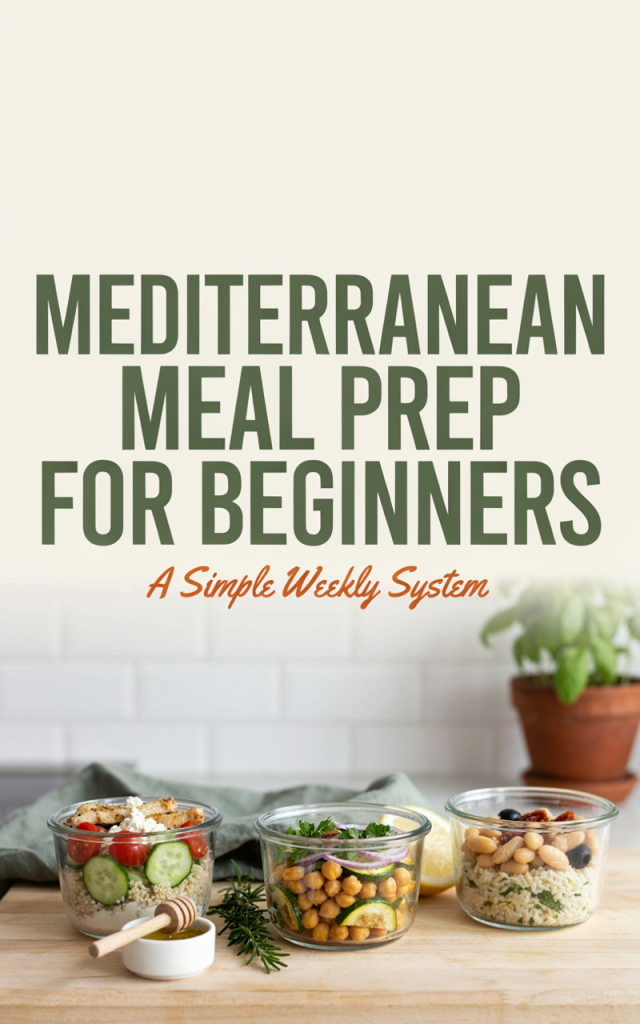
Mediterranean Meal Prep for Beginners: A Simple Weekly System
If you like flavorful food that’s easy to prepare and keeps well, a Mediterranean-style meal-prep system can be a game changer. The Mediterranean eating pattern emphasizes vegetables, fruits, whole grains, legumes, olive oil, nuts, fish, and modest amounts of poultry and dairy. That combination makes it naturally suited to batch cooking: many ingredients hold up well in the fridge or freezer, reheat nicely, and mix into different meals.
Ready to make Mediterranean eating easier? Get the 30-Day Mediterranean Meal Plan System with a complete 30-day calendar, 53 recipes, grocery lists, preparation guidance, and three bonus guides. You can also add the 30-page Quick-Meal Vault for fast, practical meal ideas.
This guide gives a simple, realistic weekly system you can follow today. You’ll get a practical prep schedule, a smart grocery list, storage and reheating tips, and three beginner-friendly recipes with step-by-step instructions. No complicated techniques, no specialty equipment required—just reliable steps to make healthy, tasty meals easy during a busy week.
What the Mediterranean eating pattern looks like in real life
The Mediterranean eating pattern is less a strict rulebook and more a flexible approach. Key features you’ll see in everyday meals:
- Plenty of vegetables and fruit at every meal
- Whole grains such as farro, brown rice, bulgur, or whole-wheat pasta
- Legumes (beans, lentils, chickpeas) as frequent protein sources
- Olive oil as the primary cooking fat
- Nuts, seeds, and herbs for flavor and satisfying texture
- Fish and seafood eaten regularly, poultry and eggs in moderation
- Modest amounts of cheese or yogurt for cooking and snacks
When you apply these patterns to meal prep, the aim is to make it easy to combine these elements into breakfasts, lunches, dinners, and snacks without feeling repetitive.
Why meal prep works for beginners
Meal prep reduces daily decision fatigue and makes it easier to put together balanced meals quickly. Benefits you’ll notice after one week:
- Faster weekday meals: reheat or assemble in minutes
- Less food waste: you buy and use ingredients with purpose
- More variety from simple building blocks: a grain, a protein, a vegetable, a dressing
- Easier grocery shopping and consistent pantry rotation
The trick is to prep components (grains, roasted vegetables, proteins, dressings) rather than fully assembled meals every time. Components mix and match easily, keeping flavor interesting while minimizing cooking time.
A simple weekly system (60–90 minutes)
This plan is built for someone prepping for 3–5 days of meals, with about 60–90 minutes of kitchen time on one day (often Sunday). Adjust quantities for your household size.
- Plan 3 core meals for the week: breakfast, lunch, dinner.
- Shop the list (see pantry and grocery list below).
- Batch cook three types of components:
- Grains (one or two kinds)
- Roasted or sautéed vegetables + one legume
- One or two proteins (baked salmon, roasted chicken, or a marinated tofu)
- Make two simple dressings or sauces (lemon-olive oil vinaigrette, tahini-lemon sauce, or yogurt-herb sauce).
- Assemble ready-to-eat lunches and pre-portion snacks.
A typical schedule for one person preparing for 4–5 days:
– 0–15 minutes: Preheat oven, wash produce, measure grains
– 15–45 minutes: Roast vegetables and beans; cook grains
– 45–70 minutes: Bake protein(s); make dressings and chop herbs
– 70–90 minutes: Cool, portion into containers, refrigerate/freezer
This is intentionally compact—oven time overlaps and you can use downtime (while something roasts) to wash, chop, or make dressings.
Pantry and fridge staples to keep on hand
Stocking basic Mediterranean-style staples makes weekly prep faster. Adjust quantities based on household size and how many meals you plan to prepare.
- Extra virgin olive oil
- Lemons and red wine vinegar
- Dried oregano, thyme, cumin, smoked paprika
- Garlic and red onion
- Canned chickpeas, canned tomatoes
- Brown rice, quinoa, farro, or whole-wheat couscous
- Whole-wheat pita or flatbreads (optional)
- Canned or frozen fish (tuna, salmon) and fresh/ frozen fish fillets
- Plain Greek yogurt
- Feta cheese or ricotta (optional)
- Nuts and seeds (almonds, walnuts, pumpkin seeds)
- Fresh herbs: parsley, cilantro, basil
- Leafy greens (spinach, arugula), cruciferous vegetables (broccoli), bell peppers, tomatoes
- Frozen vegetables (peas, green beans) for quick additions
- Tahini (for sauces)
- Olives and capers (for flavoring bowls)
- Eggs
Storage and safety basics
- Cooked grains, legumes, and roasted vegetables: 3–5 days in the fridge in airtight containers.
- Cooked fish and chicken: 2–4 days in the fridge; freeze if you need to store longer.
- Dressings and sauces: 1–2 weeks in the fridge depending on ingredients (yogurt-based sauces shorter).
- Freeze portions you won’t use within a few days; thaw in the fridge overnight.
- Cool cooked food to room temperature before refrigerating; don’t leave perishable food out more than 2 hours.
Three easy Mediterranean meal-prep recipes
Below are three recipes designed to be components you can mix and match into breakfast, lunch, and dinner. Quantities listed serve about 4 portions.
1) Lemon-Roasted Vegetable & Chickpea Grain Bowl (meal-prep grain bowl)
Ingredients:
– 2 cups farro or brown rice (uncooked)
– 1 large eggplant, cut into 1-inch cubes
– 2 red bell peppers, sliced
– 1 large red onion, cut into wedges
– 1 can (15 oz) chickpeas, drained and rinsed
– 3 tbsp extra virgin olive oil
– Juice and zest of 1 lemon
– 1 tsp smoked paprika
– 1 tsp dried oregano
– Salt and pepper to taste
– 1/4 cup chopped parsley
– 1/4 cup crumbled feta (optional)
Dressing:
– 3 tbsp olive oil
– 2 tbsp lemon juice
– 1 clove garlic, minced
– Pinch of salt and pepper
Instructions:
1. Preheat oven to 425°F (220°C). Line a baking sheet with parchment or foil.
2. Toss eggplant, bell peppers, red onion, and chickpeas with 3 tbsp olive oil, lemon zest, smoked paprika, oregano, salt, and pepper. Spread in a single layer.
3. Roast 25–30 minutes, stirring once halfway, until vegetables are golden and chickpeas are slightly crisp.
4. While vegetables roast, cook farro or brown rice according to package instructions. Fluff and set aside.
5. Whisk together dressing ingredients in a small bowl.
6. Portion cooked grain into four containers. Top each with equal portions of roasted vegetables and chickpeas. Drizzle dressing over bowls or store dressing separately.
7. Garnish with parsley and feta before serving or when reheating.
How to use: Warm or eat cold. Add a handful of greens or a boiled egg for extra protein at serving time.
2) Greek-Style Baked Salmon with Yogurt-Herb Sauce (quick protein)
Ingredients:
– 4 salmon fillets (about 4–6 oz each)
– 2 tbsp olive oil
– 1 tsp dried oregano
– 1 lemon (zested and juiced)
– Salt and pepper
Yogurt-Herb Sauce:
– 1 cup plain Greek yogurt
– 2 tbsp chopped fresh dill or parsley
– 1 tbsp lemon juice
– 1 small garlic clove, minced
– Salt and pepper to taste
Instructions:
1. Preheat oven to 400°F (200°C). Line a baking dish or rimmed sheet pan with foil.
2. Place salmon fillets on the pan. Drizzle with olive oil, sprinkle with oregano, lemon zest, salt, and pepper.
3. Bake for 12–15 minutes, or until salmon flakes easily with a fork (time varies by thickness). Remove from oven and squeeze lemon juice over the fillets.
4. While salmon bakes, stir together yogurt, herbs, lemon juice, garlic, salt, and pepper in a small bowl.
5. Cool salmon slightly and portion into containers. Add a dollop of yogurt-herb sauce on the side or store in a separate small container.
6. Refrigerate. Reheat gently in the oven (300°F/150°C for 8–10 minutes) or enjoy cold over a salad.
How to use: Flake over greens, add to grain bowls, or serve with pita and roasted vegetables.
3) Mediterranean Yogurt Parfait (make-ahead breakfast or snack)
Ingredients:
– 3 cups plain Greek yogurt
– 1 cup rolled oats or cooked farro (for texture)
– 1/2 cup chopped walnuts or almonds
– 1 cup mixed berries (fresh or thawed frozen)
– 2 tbsp honey or maple syrup
– 1 tsp ground cinnamon
– Zest of 1 orange (optional)
Instructions:
1. In a large bowl, stir together yogurt, honey, cinnamon, and orange zest.
2. Layer jars or containers with yogurt, a spoonful of oats or cooked farro, a sprinkle of nuts, and berries. Repeat for two or three layers.
3. Seal and refrigerate. These parfaits keep well for 3–4 days.
4. To serve, add a drizzle of extra honey or a sprinkle of seeds if desired.
How to use: Eat for breakfast or as an afternoon snack. Swap in seasonal fruit, figs, or a spoonful of fruit compote to vary flavors.
Ready to make Mediterranean eating easier? Get the 30-Day Mediterranean Meal Plan System with a complete 30-day calendar, 53 recipes, grocery lists, preparation guidance, and three bonus guides. You can also add the 30-page Quick-Meal Vault for fast, practical meal ideas.
Breakfast, lunch, and dinner ideas using your prep components
Use the components you prepped to create a variety of meals during the week. Here are quick assembly ideas:
- Breakfast: Yogurt parfait + a small handful of nuts
- Quick breakfast swap: Warm whole-grain toast topped with ricotta and a spoonful of berries or sliced tomato and olive oil
- Lunch bowl: Grain + roasted vegetables + chickpeas + flaked salmon + lemon dressing
- Salad: Mixed greens + leftover veg + a scoop of quinoa + chopped nuts + yogurt-herb dressing
- Dinner: Warm roasted vegetables and grains with baked salmon or grilled halloumi; serve with a wedge of lemon and fresh herbs
- Sandwich/wrap: Whole-wheat pita + left-over roasted veg + feta + tzatziki (yogurt-herb sauce)
- Snack: Fresh fruit, olives and cheese, or hummus with raw vegetables
Mix and match to keep meals interesting: a single grain or protein can be turned into multiple different meals by changing dressings, herbs, and small add-ins like olives, capers, or a different cheese.
Vegetarian and vegan swaps
- Replace salmon with marinated and grilled tofu or baked tempeh.
- Use additional legumes (lentils, black beans) for protein.
- Swap Greek yogurt sauce for tahini-lemon sauce: 1/3 cup tahini, 3 tbsp lemon juice, 2 tbsp water, 1 small minced garlic clove, salt; whisk until smooth.
- Use plant-based yogurt for parfaits and sauces.
Time-saving tips and equipment
- Use a sheet pan to roast multiple vegetables at once. Line it to speed cleanup.
- Cook grains in a rice cooker or pressure cooker while you prep other items.
- Use frozen vegetables and pre-washed greens to shorten prep time.
- Mason jars or shallow airtight containers are great for portioning and stacking in the fridge.
- Invest in a good chef’s knife and a sturdy cutting board—chopping quickly saves the most time.
Week-one sample menu (4 days)
Day 1 (prep day)
– Breakfast: Yogurt parfait
– Lunch: Grain bowl with roasted veg + chickpeas
– Dinner: Baked salmon + roasted vegetables + greens
Day 2
– Breakfast: Yogurt parfait
– Lunch: Salad with salmon, grains, and yogurt-herb sauce
– Dinner: Grain bowl with added olives and a fried egg
Day 3
– Breakfast: Toast with ricotta and citrus zest + fruit
– Lunch: Wrap with roasted veg and feta
– Dinner: Leftover salmon warmed gently with lemon, side of sautéed greens
Day 4
– Breakfast: Yogurt parfait with different nuts
– Lunch: Warm farro and chickpea bowl with tahini dressing
– Dinner: Quick stir of leftover veg, chickpeas, and whole-grain pasta
Rotate dressings and swap small toppings (capers, olives, different herbs) to keep flavors fresh.
Troubleshooting common beginner questions
- My roasted vegetables get soggy: Cut vegetables into similar-sized pieces, avoid overcrowding the pan, and roast at a higher temperature (400–425°F / 200–220°C) for caramelization.
- My grains are dry: Use the correct water-to-grain ratio and allow grains to rest covered for 5–10 minutes after cooking to absorb steam.
- My meals taste repetitive: Change the dressing or add new toppings (fresh herbs, citrus zest, toasted nuts) to reinvent the same components.
- I don’t like salmon: Use another protein such as sardines, canned tuna, chicken thighs, tofu, or a hearty legume mix.
Final tips to keep you motivated
- Start small: prep just breakfasts and lunches for your first week to get comfortable with timing and portions.
- Make a short checklist for your prep day so you don’t forget the small steps: preheat oven, start grains, chop veg, roast, bake protein, cool, portion.
- Pair meal prep with a weekly shopping routine so you always have staple ingredients on hand.
- Use leftovers creatively: bowl, salad, wrap, or mixed into scrambled eggs or omelets.
Conclusion
Mediterranean-style meal prep is about simple building blocks and flexible assemblies, not perfection. With a one- to two-hour prep session and a few reliable recipes, you can streamline weekdays, reduce waste, and enjoy varied, flavorful meals. Start with the three recipes and the 60–90 minute system described here—once those become routine, you can expand flavors and ingredient combinations without adding complexity. Small, consistent steps are the easiest way to make a new eating pattern fit your life.
Ready to make Mediterranean eating easier? Get the 30-Day Mediterranean Meal Plan System with a complete 30-day calendar, 53 recipes, grocery lists, preparation guidance, and three bonus guides. You can also add the 30-page Quick-Meal Vault for fast, practical meal ideas.