How To Make Gluten-Free Meatballs
Making gluten-free meatballs is easier than you might think. Whether you’re navigating dietary restrictions or simply want to explore new culinary avenues, we’re here to guide you every step of the way. Meatballs can be deliciously satisfying and versatile, and with the right techniques and ingredients, we can ensure they are just as flavorful as their traditional counterparts. Let’s jump into the world of gluten-free meatballs and explore how to make them perfect for any occasion.
Understanding Gluten-Free Ingredients
To get started, we need to understand what makes a meatball gluten-free. The key lies in choosing the right ingredients that not only avoid gluten but also enhance the flavor and texture of our meatballs.
Choosing the Right Meat
The type of meat we choose will have a significant impact on the flavor and texture of our meatballs. Ground beef, pork, turkey, and chicken are all excellent options. If we’re aiming for a more unique flavor, we might consider using lamb or a combination of meats. When shopping for meat, it’s best to opt for fresh, high-quality products, which can make a noticeable difference in our final dish.
Gluten-Free Binders and Fillers
In traditional meatballs, breadcrumbs often provide structure and moisture. For gluten-free alternatives, we can use a variety of options:
- Gluten-Free Breadcrumbs: These are readily available and can be used directly in our mixture.
- Oats: Gluten-free oats can be ground into flour or used whole for added texture.
- Rice or Quinoa: Cooked rice or quinoa can be excellent fillers that provide bulk without gluten.
- Ground Nuts or Seeds: Ground almonds or flaxseeds can help bind our meatballs while adding a nutty flavor.
By selecting these ingredients thoughtfully, we can create meatballs that are both delicious and gluten-free.
Essential Seasonings and Flavorings
Seasoning is what elevates our meatballs from ordinary to extraordinary. Here’s a breakdown of the essential seasonings we’ll want to consider:
- Salt and Pepper: Basic but crucial for enhancing the flavors of our meat.
- Garlic and Onion: Fresh or powdered versions can add depth to our mixture. We recommend sautéing fresh garlic and onions before adding them for richer flavor.
- Herbs: Dried herbs like oregano, basil, and parsley work well. We can also experiment with fresh herbs for a vibrant touch.
- Spices: Adding spices like paprika or red pepper flakes can introduce a pleasant kick. Don’t hesitate to get creative.
The right combination of these seasonings can really define our meatballs, making them memorable at any meal.
Classic Meatball Recipe: Step-by-Step Guide
Now that we have our ingredients figured out, let’s get into the meatball-making process. Below is a classic recipe we can follow for delicious gluten-free meatballs.
Ingredients
- 1 pound ground beef (or chosen meat)
- 1 cup gluten-free breadcrumbs or 1 cup cooked rice/quinoa
- 1/4 cup grated Parmesan cheese (optional)
- 1 egg
- 2 cloves garlic, minced
- 1 small onion, finely chopped
- 1 tablespoon chopped fresh parsley (or 1 teaspoon dried)
- Salt and pepper to taste
Instructions
- Preheat the oven to 400°F (200°C) if we’re baking.
- In a large mixing bowl, combine the meat, gluten-free breadcrumbs, Parmesan, egg, garlic, onion, parsley, salt, and pepper. Mix until thoroughly combined but do not overmix to prevent tough meatballs.
- Use your hands to form the mixture into meatballs, about 1-2 inches in diameter.
- Cooking Methods for Gluten-Free Meatballs: We can choose to either bake or pan-fry our meatballs, each offering unique flavors and textures.
Baking Vs. Pan-Frying
- Baking: Place the formed meatballs on a baking sheet lined with parchment paper. Bake for about 20-25 minutes until golden brown and cooked through (internal temperature should be 160°F/70°C).
- Pan-Frying: Heat some olive oil in a skillet over medium heat. Add the meatballs in batches, cooking until browned on all sides (about 8-10 minutes). Transfer to a plate lined with paper towels to absorb excess oil.
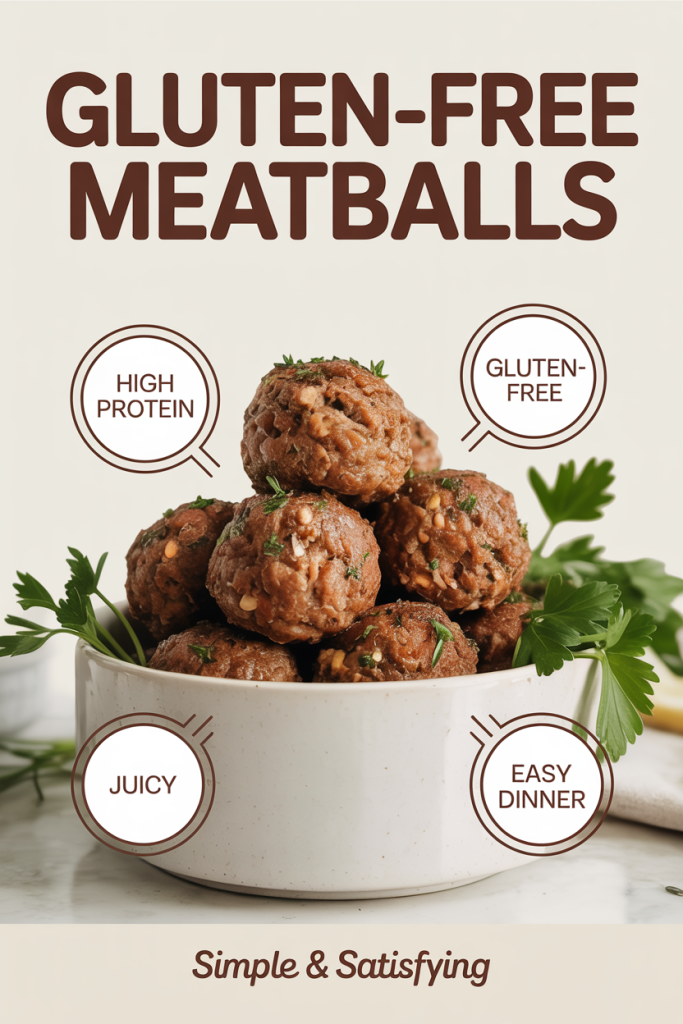
After cooking, our meatballs are ready to serve. They can be enjoyed as is, with marinara sauce, or tossed in pasta.
Serving Suggestions and Pairings
While our meatballs are delicious on their own, they shine even more when paired with the right accompaniments. Here are some serving suggestions:
- Marinara Sauce: A classic choice that complements the flavor of the meatballs beautifully.
- Zoodles or Gluten-Free Pasta: These are excellent alternatives that pair perfectly with meatballs and sauce.
- Salads: A fresh green salad can balance the richness of the meatballs.
- Sandwiches: Consider using gluten-free bread to create scrumptious meatball sandwiches.
Also, we can create a meatball platter by including appetizers like olives, cheese, and bruschetta, perfect for parties.
Storing and Freezing Meatballs
Our gluten-free meatballs can be made in advance, making them a convenient meal option. Here’s how to store and freeze them effectively:
- Refrigeration: Store cooked meatballs in an airtight container in the refrigerator for up to three days.
- Freezing: To freeze, let the meatballs cool completely. Place them in a single layer on a baking sheet and freeze until solid. Once frozen, transfer the meatballs to a freezer-safe bag or container. This method prevents them from sticking together and allows us to take out only as many as we need.
- Reheating: When ready to enjoy, we can reheat them in the oven or in a sauce on the stove until warmed through.
Tips and Variations for Gluten-Free Meatballs
To keep our meatball-making interesting, here are some tips and variations to consider:
- Add Veggies: Incorporate finely chopped vegetables like bell peppers, carrots, or zucchini into the mixture for added nutrition.
- Spice It Up: Experiment with different spices or sauces, try adding some Italian seasoning, or even barbecue sauce for a twist.
- Cheesy Meatballs: Add mozzarella cheese into the center of the meatball for a gooey surprise.
- Global Flavors: Explore flavors from around the world, add curry powder for Indian-style meatballs or cumin for a Middle Eastern twist.
With these tips, we can adjust our meatballs to fit any occasion.
Conclusion
Making gluten-free meatballs is not only achievable but also a fun and satisfying cooking experience. By choosing the right ingredients and seasonings, and experimenting with different techniques and flavors, we can create a dish that everyone at the table will love, whether they are gluten-free or not. So let’s roll up our sleeves, gather our ingredients, and get started on our meatball journey.